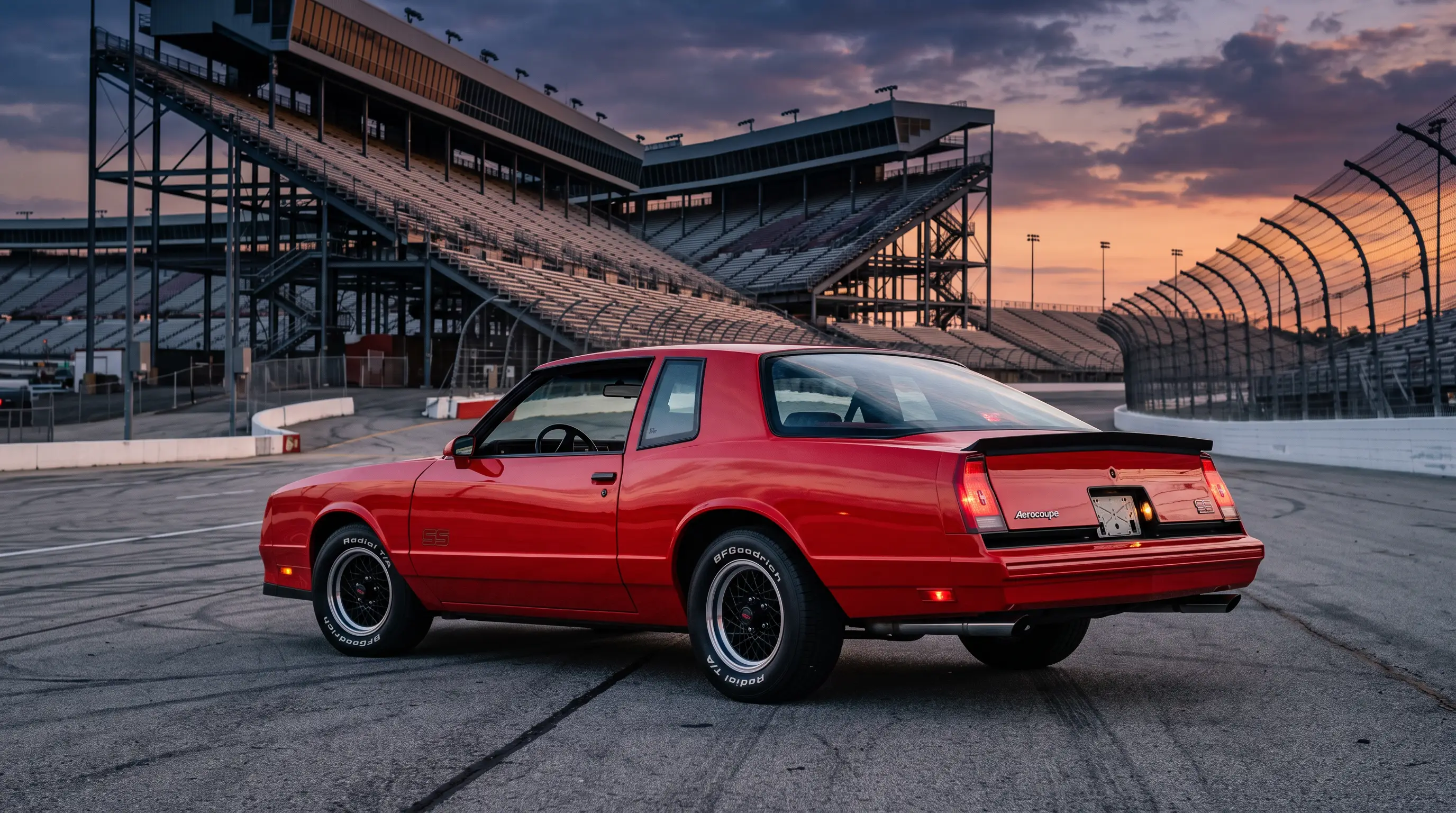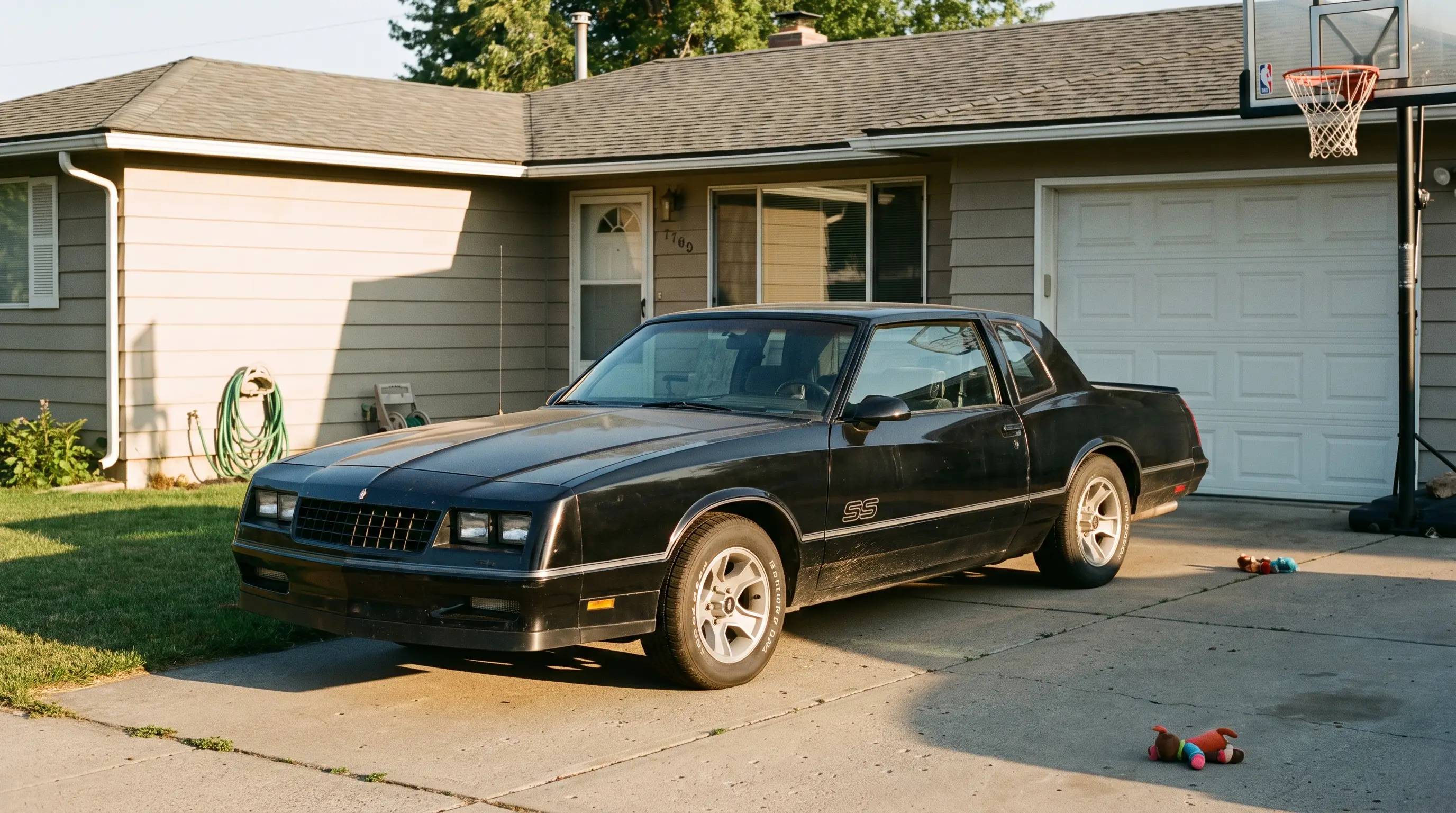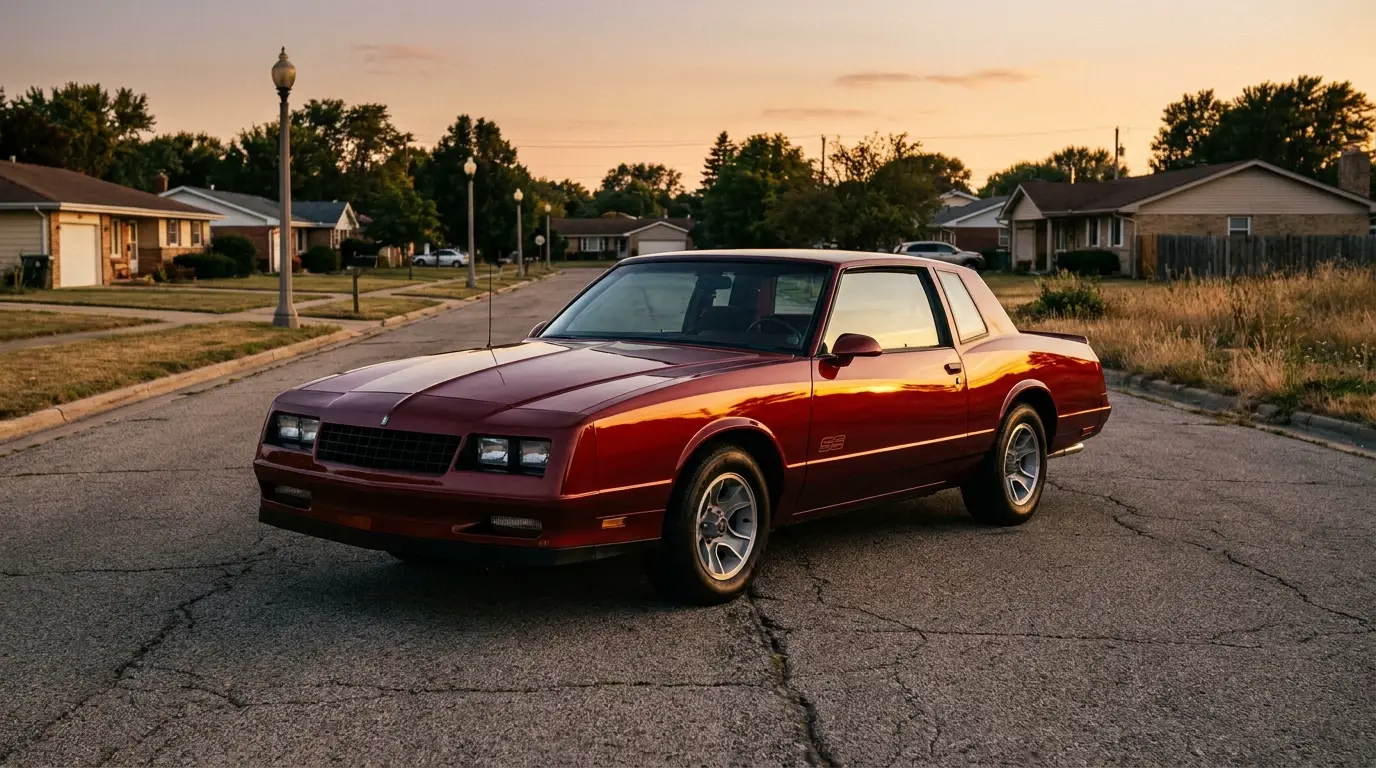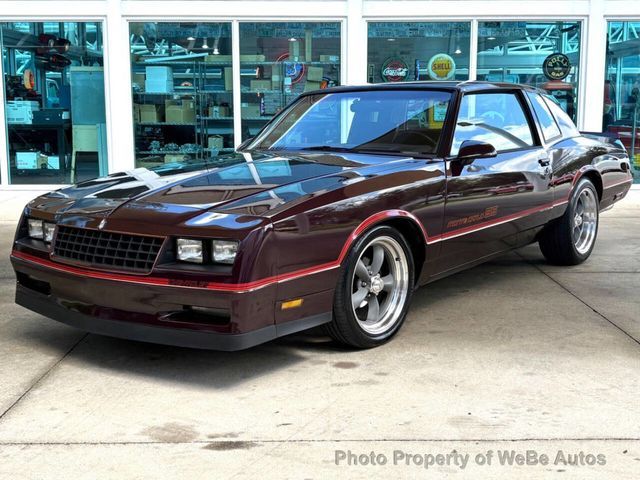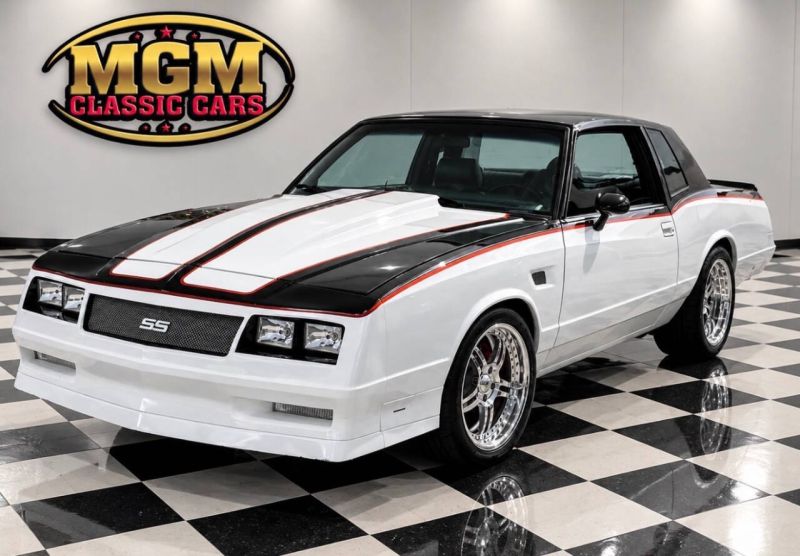
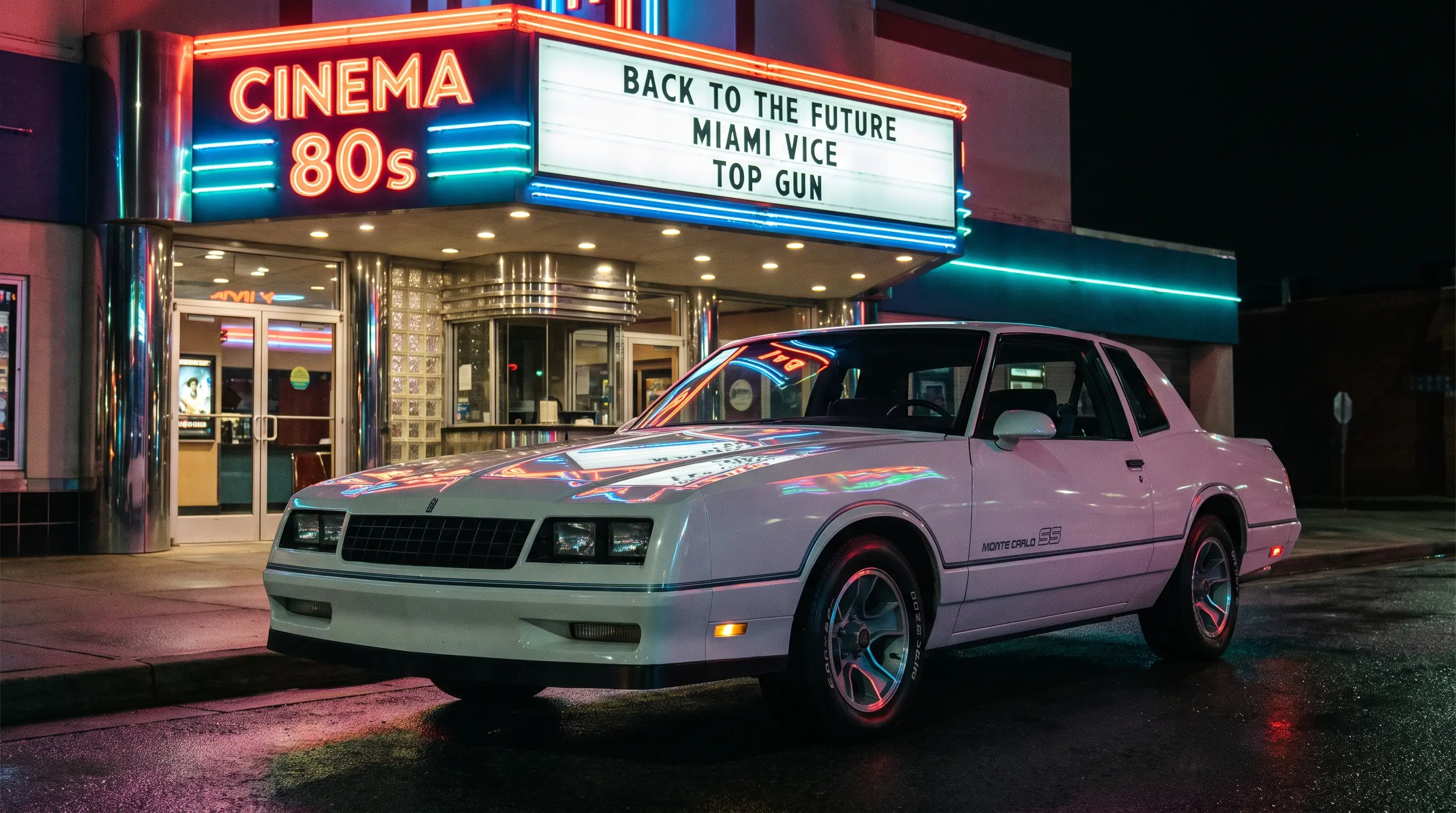
There is a specific kind of memory a lot of people carry from the mid-1980s, a car flashing by in the background of a music video or parked outside a diner in a film nobody quite remembers the plot of, and years later they cannot name the movie but they can describe the car perfectly. For a surprising number of those memories, the car in question is a Monte Carlo SS, its blacked-out trim and aggressive stance making it exactly the kind of background detail a director reaches for when the scene needs to say "this character has taste and a little bit of edge" without a single line of dialogue.
A car built for the decade it appeared in
The SS arrived at a moment when American film and television were leaning hard into a very specific visual language, sharp angles, dark two-tone paint schemes, and a general sense that a car could function as a character trait. The Monte Carlo SS fit that language naturally. It was not a supercar, and it did not need to be. It needed to look purposeful in a two-second shot, and the aero nose and blacked-out grille that Chevrolet's designers gave it did exactly that work without any help from a set decorator.
Music video culture of the period leaned on cars constantly, sometimes as a status symbol, sometimes simply as a moving backdrop that gave a performer something to lean against while the camera circled. The SS shows up in that role often enough that longtime fans of the era have started compiling informal lists, the kind of project that never quite finishes because somebody always spots the car in one more forgotten video from a cable rerun.
"What I find moving about these appearances is how incidental most of them are. Nobody was trying to make a statement about the car. It was simply what a certain kind of person drove in 1986, and the camera just happened to catch it."
- Nora Beckett
The human moment behind the pop culture footnote
Behind every one of these background appearances is a smaller, quieter story that rarely makes it into any retrospective. A production assistant who needed a car for a scene and borrowed one from a crew member's brother. A local dealership that loaned a demo unit to a film shoot in exchange for a mention in the credits nobody reads. These arrangements were common and almost entirely undocumented, which means most of the specific stories behind why a given Monte Carlo SS ended up on screen are lost, known only to the people who were there that day and have long since stopped telling the story to anyone but family.
That loss is worth sitting with for a moment. Cars carry human stories even when nobody thought to write them down at the time, and the SS in the background of a half-remembered video represents somebody's actual car, borrowed for an afternoon, driven home afterward, probably sold years later without anyone involved realizing they had been part of a small piece of the decade's visual record.
The regional flavor of these appearances
Many of the productions where the SS turns up in the background were shot in the American South and Midwest, regions where the car was genuinely common on the road at the time, rather than in the coastal production centers that dominated bigger budget filmmaking. That geographic pattern is not a coincidence. Location scouts and production coordinators working on smaller budgets tended to use whatever local cars were available and willing, and in Chevrolet-heavy markets across those regions, an SS parked outside a diner or cruising past in a wide shot was simply an accurate reflection of what was actually parked in those towns at the time.
This regional authenticity gives these appearances a documentary quality that more deliberately styled productions often lack. A film crew in Los Angeles selecting cars for a period piece might reach for something more obviously stylized. A low-budget production shooting on location in Ohio or Georgia in the mid-1980s was often simply filming what was already there, and the SS's genuine popularity in those markets meant it appeared not because anyone chose it for symbolic value, but because it was accurately, unglamorously, part of the scenery.
Why the SS specifically, and not other cars of the era
Plenty of other American cars from the same years had their own moments on screen, but the SS carried something particular that made it a favorite for a certain kind of scene. It read as accessible rather than aspirational, a car a regular character could plausibly own rather than a car that only signaled unreachable wealth. That accessibility made it useful storytelling shorthand. A character driving a Monte Carlo SS was coded as someone with a bit of style and a bit of attitude, but still grounded, still someone the audience could recognize from their own neighborhood.
The Aerocoupe variant specifically, with its distinctive sloped rear glass, shows up less often in these appearances than the standard notchback, likely simply because it was produced in smaller numbers and was less common in the general population that supplied borrowed cars to low-budget productions. When it does appear, though, it tends to stand out precisely because the shape reads as slightly unusual even to viewers who cannot articulate why.
How memory and nostalgia intersect with collecting
There is a documented pattern in collector behavior generally, where people gravitate toward cars connected to their own formative years rather than purely toward objective rarity or performance. The Monte Carlo SS benefits enormously from this pattern, since the generation that grew up watching these background appearances in music videos and low-budget films is now solidly in the demographic range that actually buys and restores collector cars. That timing is not a coincidence. It is a fairly reliable rhythm in the collector car world, where a car's cultural footprint from someone's teenage years becomes their collecting priority decades later, once they have the resources to act on that nostalgia.
This dynamic partly explains why interest in the SS has remained steady rather than fading the way some less culturally visible eighties cars have. A car does not need to have been the star of a beloved film to benefit from this effect. It only needs to have been present often enough, in enough half-remembered scenes, that a critical mass of people carry some version of that half-memory forward into their adult lives, eventually acting on it by buying the real thing.
The affectionate afterlife of a background car
What eventually happens to these cultural footnotes is a kind of quiet second life among fans who rewatch old films and videos specifically looking for them. It is a gentle, unhurried form of appreciation, closer to birdwatching than to serious automotive scholarship, and it has kept a certain nostalgic warmth attached to the SS that pure racing history or auction results do not quite capture on their own. The car becomes a shared, half-private joke among people who noticed the same thing and want someone else to confirm they were not imagining it.
For readers who want to trace this cultural footnote back to where the car itself actually began, mechanically and historically, where this started covers the SS story from the ground up, filling in the specifications and development history that the pop culture appearances never bothered to explain.
And for anyone who has spent this whole piece thinking about a half-remembered scene and wondering whether they might want one of these parked in their own driveway, there is a steady supply of opportunities to shop classic Monte Carlo listings and turn that half-memory into something you can actually drive.