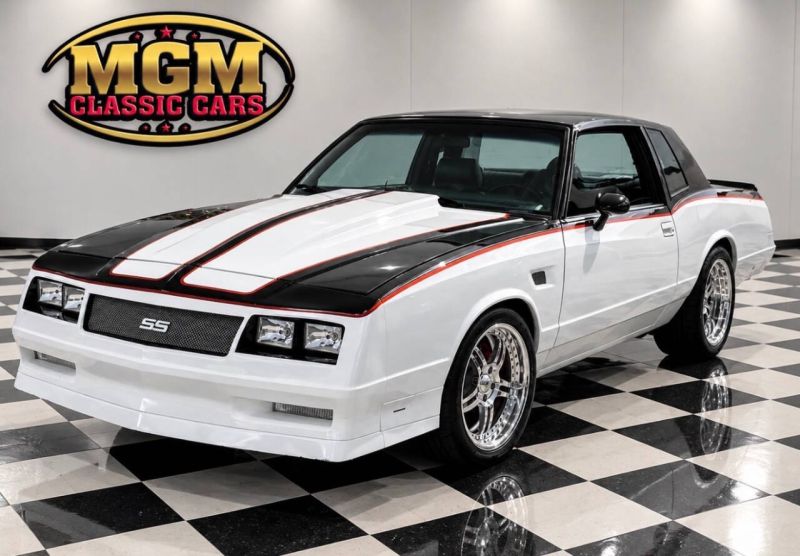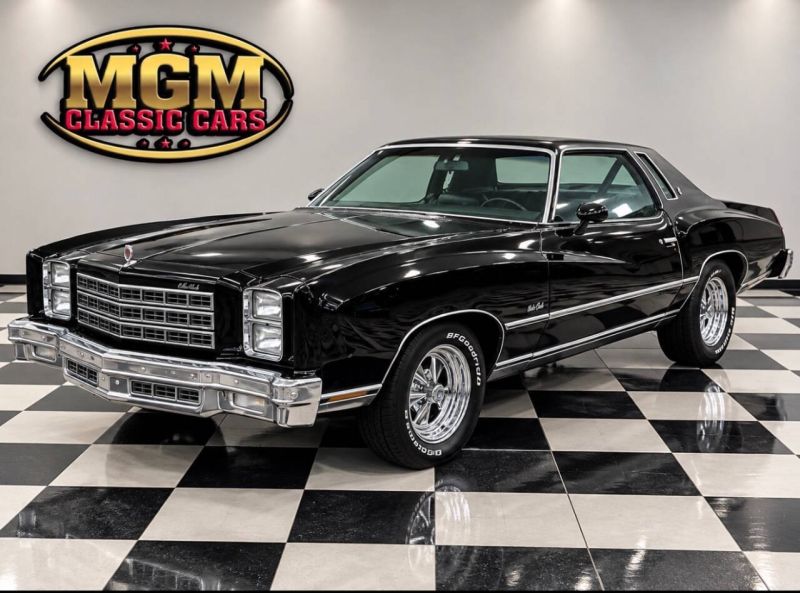
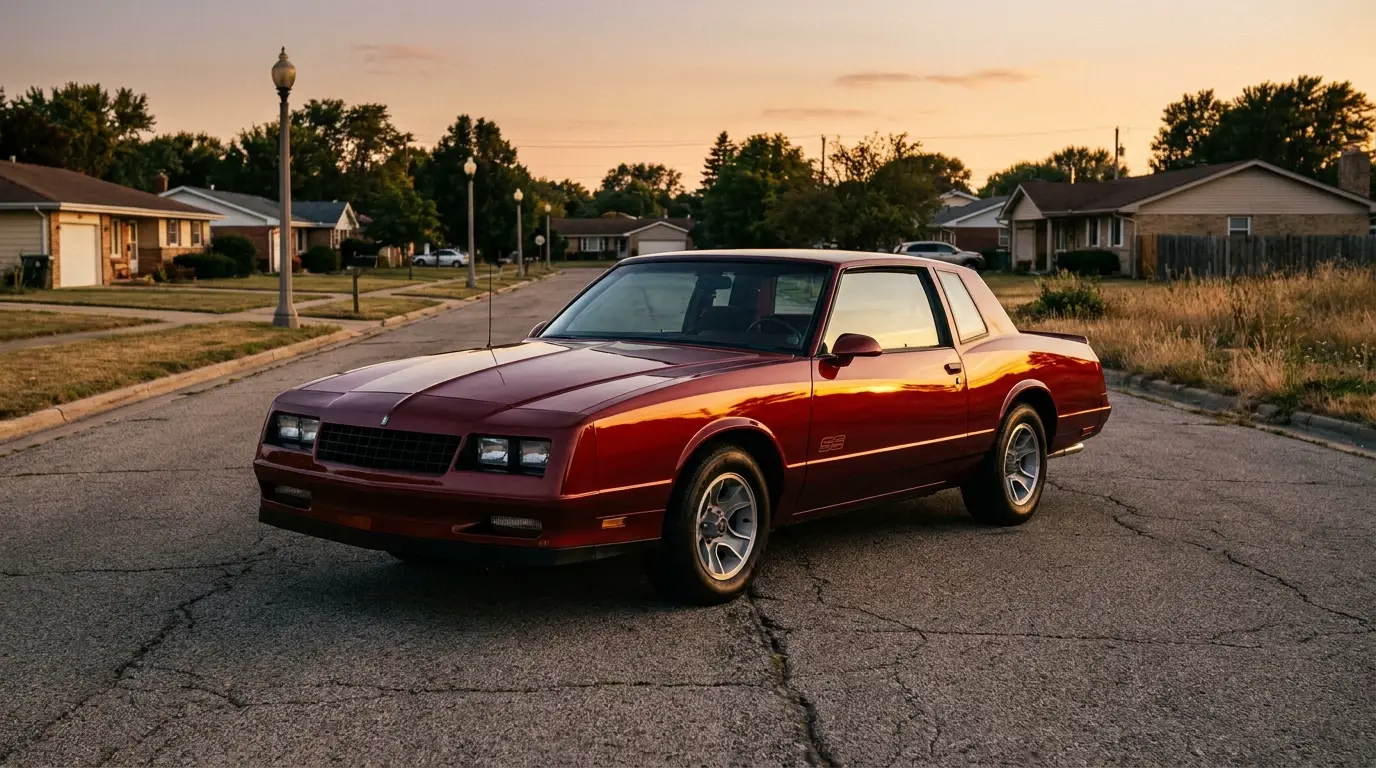
Collectors comparing a 1986 Monte Carlo SS against its 1987 and 1988 successors often assume the changes across those three years were minor, a running production update rather than anything worth documenting carefully. The factory record tells a more precise story, and the details matter enormously for anyone trying to correctly identify or value a specific car today.
1986, the key year for the Aerocoupe
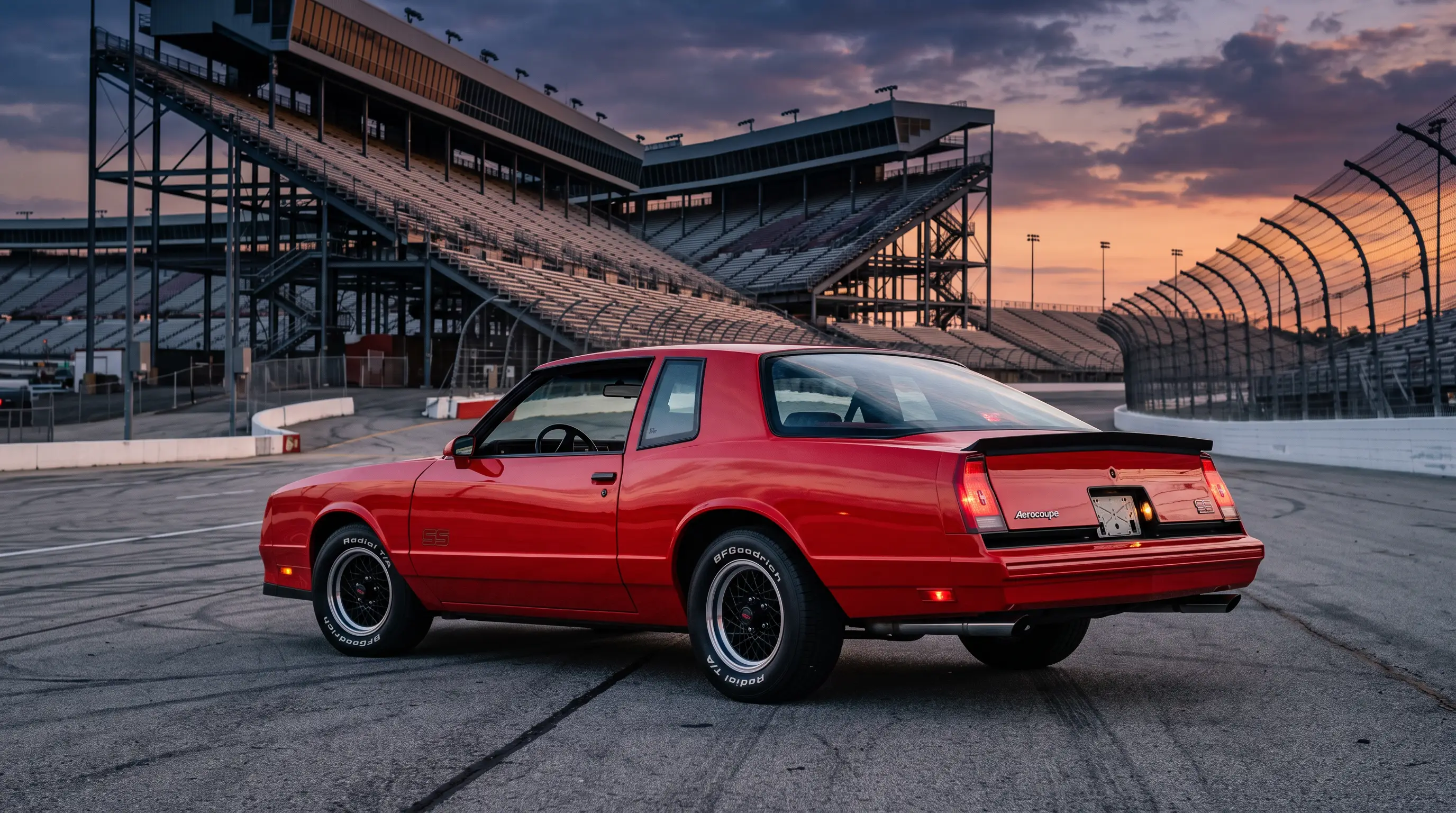
The 1986 model year holds particular significance because it introduced the Aerocoupe body style in limited numbers, built specifically to satisfy NASCAR's homologation requirement for the sloped rear glass that Chevrolet's racing teams needed for superspeedway competition. This was a genuinely limited production run of only 200 cars, and that scarcity is the primary reason 1986 examples are treated distinctly from the more widely available 1987 cars, even though the two years share the vast majority of their mechanical specification.
Standard notchback SS production continued alongside the Aerocoupe in 1986, and for most buyers at the time the notchback remained the default choice. The Aerocoupe was a specialty order in most markets, and dealer awareness of exactly what it represented varied considerably, which is part of why documentation from this specific year carries outsized importance for collectors trying to verify a car's history today.
"The 1986 to 1988 window looks like a footnote in most general histories of the Monte Carlo, but for anyone trying to correctly identify a specific car, it is three years where getting the details wrong means getting the value badly wrong."
- Sarah Whitfield
1987, expanded Aerocoupe production
By 1987, Chevrolet expanded Aerocoupe production significantly compared to the prior year, building 6,052 units, making the sloped-glass body style considerably more available to ordinary buyers than it had been in its introductory year. This expansion reflected both stronger demand and a more settled production process now that the initial homologation requirement had been satisfied and the car had proven itself on track through the 1986 racing season.
This production increase is precisely why 1986 Aerocoupes generally command a stronger scarcity premium than 1987 examples in today's collector market, even though the two model years are extremely similar mechanically. Buyers frequently conflate the two years when shopping casually, and sellers do not always volunteer the distinction, which makes VIN verification and build sheet documentation essential rather than optional for anyone serious about buying an Aerocoupe specifically for its scarcity value.
Interior and equipment differences across the run
Beyond the headline Aerocoupe production story, buyers should be aware that interior trim, gauge packages, and available color combinations shifted in smaller ways across all three model years, reflecting the sort of ordinary running changes that most manufacturers made during any multi-year production run. These changes were rarely dramatic enough to be marketed as new features, which means period sales literature does not always spell them out clearly, and researchers comparing cars from different years sometimes discover a detail difference only by examining multiple original examples side by side rather than relying on brochures alone.
This is another area where the ownership and research community has effectively filled a documentation gap that factory records left incomplete. Enthusiasts comparing notes across owned examples from each of the three years have built up a more granular picture of these running changes than any single official source provides, and that crowd-sourced knowledge has become an important reference point for anyone trying to date or verify a specific car's originality with precision.
Comparing the three years directly
| Model year | Aerocoupe availability | Notable status |
|---|---|---|
| 1986 | Limited introductory production | Homologation year, strongest scarcity premium |
| 1987 | Expanded production run | More available, still collectible |
| 1988 | Final model year for the body style | Last rear-drive G-body SS before the platform ended |
1988, the closing chapter
The 1988 model year brought the rear-drive G-body Monte Carlo SS era to a close, as Chevrolet transitioned the nameplate toward the front-drive platform that would define the next generation of the car. This closing status gives 1988 examples their own distinct significance among collectors, separate from the Aerocoupe scarcity story that dominates conversations about 1986 and 1987 cars specifically. A 1988 SS represents the final expression of a rear-drive performance formula that Chevrolet had been refining since the SS badge returned to the Monte Carlo lineup earlier in the decade.
Some collectors specifically seek out 1988 cars for this "last of its kind" significance, independent of whether the specific example is an Aerocoupe or a standard notchback. That collecting motivation runs parallel to, rather than in direct competition with, the Aerocoupe scarcity premium discussed above, which means a documented 1988 Aerocoupe can appeal to both collecting motivations simultaneously, a combination that shows up in auction results as a meaningful premium over either factor considered alone.
Common misidentification mistakes
Research into online marketplace listings across this three-year window reveals a consistent pattern of misidentification, usually unintentional rather than deliberately deceptive. Sellers frequently list a car simply as "eighties Monte Carlo SS Aerocoupe" without specifying the model year, either because they genuinely do not know or because they assume the distinction does not matter to a casual buyer. For a buyer specifically chasing the 1986 scarcity premium or the 1988 final-year significance, this vagueness is a real problem, and it means a serious buyer should always request the specific VIN before treating any online listing's year claim as reliable.
Trim level confusion compounds this problem further. Some sellers use "SS" loosely to describe any Monte Carlo from this era with certain appearance packages, when the genuine SS designation involved specific factory codes and equipment that a casual appearance package did not replicate. Cross-referencing the VIN and any available build sheet against known factory codes for the SS designation remains the only reliable way to confirm genuine SS status, separate entirely from the Aerocoupe and model-year questions already discussed.
Practical identification advice
For anyone examining a specific car and trying to place it correctly within this three-year window, the VIN decode remains the most reliable starting point, followed immediately by any surviving build sheet or dealer paperwork. Visual inspection alone is genuinely unreliable across these three years given how similar the body styles remained throughout the run, and sellers who cannot produce documentation should be treated with appropriate caution regardless of how confidently they describe the car's history verbally.
For readers who want the complete year-by-year account behind these distinctions, more on the 1986 monte carlo ss provides the detailed development history that this comparison summarizes, and the broader nameplate history is covered in full in our complete history of the Monte Carlo across every generation.
For buyers actively comparing examples from these three specific years, there is a rotating inventory of classic Monte Carlos on the market, and cross-referencing any listing's stated year and body style against the distinctions covered here is a worthwhile step before any serious inquiry.