
Ask anyone who has spent a Sunday at a car show in East Los Angeles or San Antonio why the G-body Monte Carlo became the platform of choice, and you will get the same answer in different words. We did not pick this car because it was the cheapest thing on the lot. We picked it because the body lines gave us something to work with, and the frame underneath gave us something we could trust when the hydraulics started doing their job. Ask why the monte carlo lowrider why gbody favorite question keeps coming up, and the answer is always the same combination of shape, strength, and price.
Car Features
7 min read
Why the G-Body Monte Is the Lowrider's Choice
The G-body Monte Carlo's frame, proportions, and affordability made it the lowrider community's platform of choice, and the reasons still hold up today.

The shape that made the decision easy
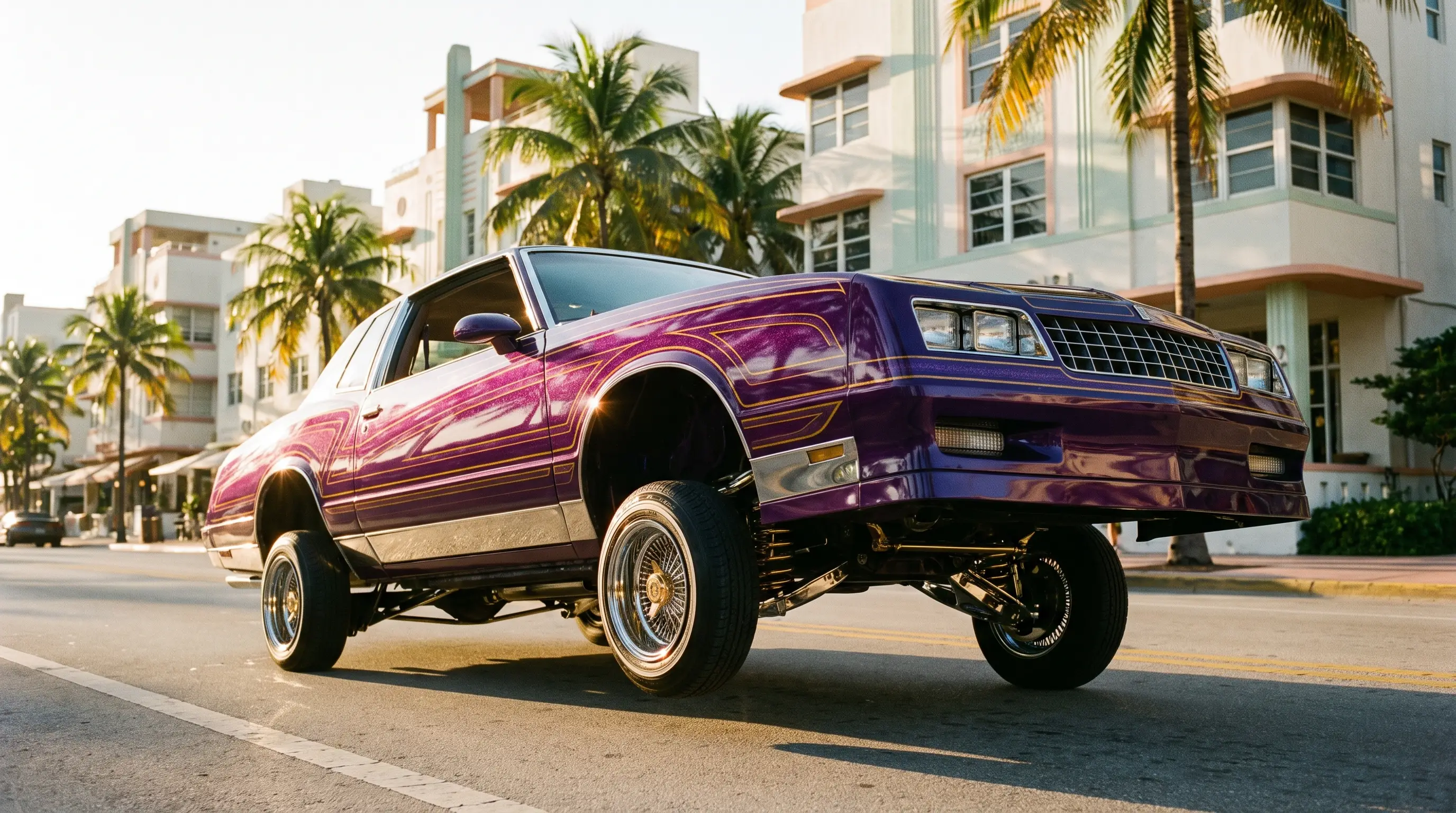
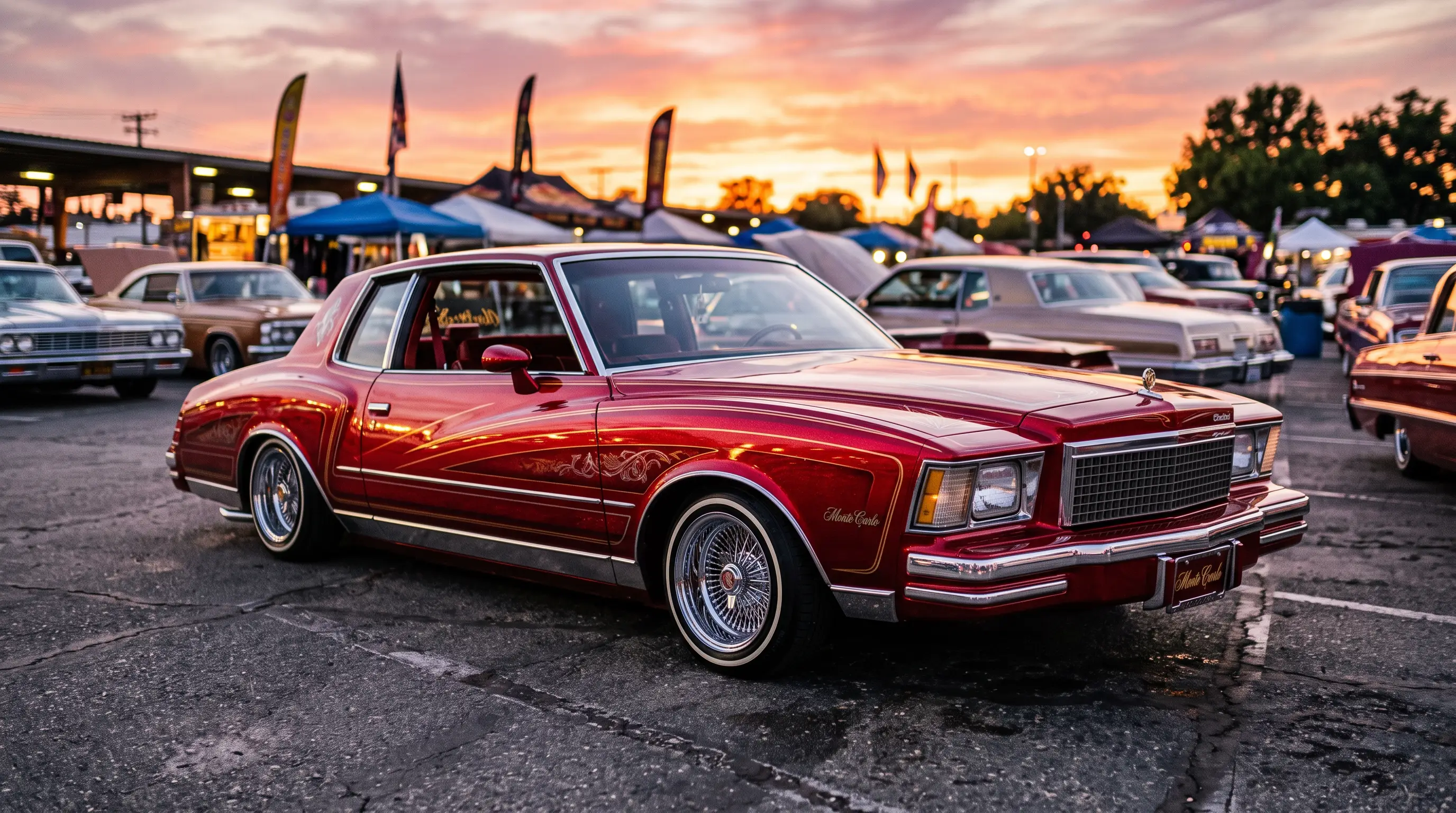
The 1981 through 1988 Monte Carlo has a low, wide stance that a Cutlass Supreme or a Regal shares in spirit but never quite matches in proportion. That notchback roofline, the long hood, the way the rear haunches sit over the wheel wells, all of it reads as a canvas rather than just a body. When our community started building show cars in earnest through the late eighties and into the nineties, we were not just buying whatever was cheap and rear wheel drive. We were choosing the shape that would carry a mural, hold a paint job with real depth, and still look intentional sitting three inches off the ground on a Saturday afternoon.
The G-body's flat rear deck and gently sloped rear window also matter more than people outside the culture realize. That flat deck is where a lot of us mounted batteries and pumps in the early builds, and the trunk depth on the Monte Carlo gave us room the smaller GM coupes simply did not have.
A frame built for the job, even if Detroit never intended it that way
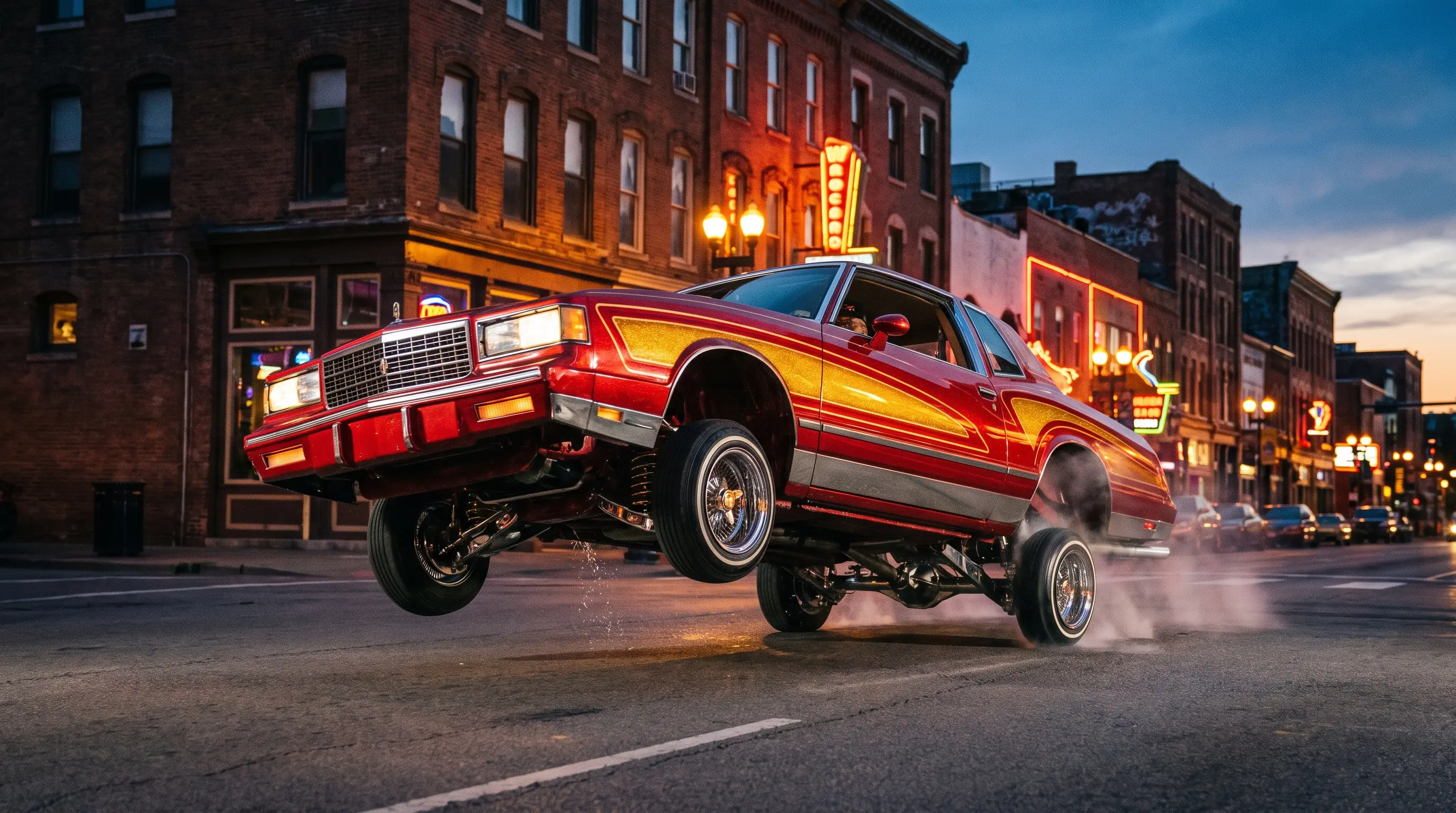
Chevrolet engineered the G-body chassis for comfort, not for hopping, but the body-on-frame construction turned out to be exactly what our community needed. Unibody cars flex and crack under sustained hydraulic stress in ways a separate frame simply does not. The Monte Carlo's perimeter frame gave builders a foundation solid enough to reinforce and trust, which is why so many of the cars that show up in a related story on hydraulics are G-body Chevrolets rather than anything built on a unibody platform from the same era.
We also inherited a huge parts ecosystem from Chevrolet building this platform across the Malibu, Cutlass, and Regal for nearly a decade. Suspension components, control arms, and rear end housings are shared enough across GM's G-body lineup that builders never struggled to find what they needed, even decades after the last one rolled off the line.
| Feature | Why it matters to lowrider builds |
|---|---|
| Body-on-frame construction | Handles sustained hydraulic stress without cracking |
| Production years 1981-1988 | Deep used market, affordable entry point |
| Shared G-body parts bin | Suspension and drivetrain parts widely available |
| Flat trunk floor | Room for batteries, pumps, and hydraulic cylinders |
| Notchback roofline | Clean surfaces for murals and multi-stage paint |
The affordability that got everybody in the door
None of the shape or the frame would have mattered if these cars had stayed expensive. By the time our community started building in numbers, the G-body Monte Carlo was a used car that regular families could afford, which meant a young builder with a job and a garage could actually buy one. That accessibility is the real reason the platform spread the way it did. We were not a scene of collectors with disposable income. We were mechanics, welders, painters, and their friends, pooling money and skill to build something that represented us, and the Monte Carlo happened to be sitting in driveways at a price we could reach.
Why the choice still holds up decades later
We keep coming back to the G-body Monte Carlo for the same reasons the first generation of builders did. The proportions still photograph beautifully. The frame still takes hydraulic punishment other platforms cannot handle. And the community around this car, the clubs, the shops, the family that shows up to help finish a build before a show deadline, is deep enough that a new builder today can find mentors who were laying frame in the same garages thirty years ago. That continuity is worth more than any spec sheet number.
If you want the fuller monte carlo lowrider history, we cover the clubs, the paint traditions, and the music video era that carried this car into mainstream culture. And if the itch to build one yourself is real, Monte Carlos for sale now still turn up regularly, usually closer to that same accessible price point that got the rest of us started.
"We did not choose this car because a magazine told us to. We chose it because it held up under hydraulics, it looked right on the street, and it was parked in our neighborhood at a price we could actually pay."
- Hector Morales
What a first-time builder should know before buying one
New builders reach out to us constantly asking which year to start with, and the honest answer is that the exact model year matters less than the condition of the frame and the floors. Rust in the trunk pan or the frame rails is the one thing that turns a promising project into a money pit, because reinforcing a hydraulic setup on compromised metal is not something anyone in our community recommends. Beyond that, any 1981 through 1988 Monte Carlo gives you the same fundamentals to build on, so buy the straightest, most solid example you can find and let the community help with the rest.
We also tell new builders not to underestimate the interior. The Monte Carlo's cabin was built for comfort buyers in 1983, not for a car that would spend its life bouncing on a hydraulic setup, and stock upholstery, door panels, and dash pads age differently once a car takes on a second life as a show piece. Sourcing good original interior parts has gotten harder every year, so a lot of builders now budget for reupholstery from the start rather than treating it as an afterthought once the paint and the frame work are finished.
There is also a generational piece to this that outsiders miss. Fathers who built these cars in the eighties are now handing tools, and sometimes the actual cars, to sons and daughters finishing their own builds. Walk any major lowrider show today and you will see three generations standing around the same Monte Carlo, each one having added something to it. That kind of inheritance does not happen with a platform people treat as disposable, and it is one more reason this particular Chevrolet earned its place at the center of our culture rather than just passing through it. It is a car that rewards patience, and our community has never been short on that.
Sources and notes
Related Reading
Have a
Chevrolet Monte Carlo
for Sale?
Reach thousands of serious classic car collectors across the US.
Sell It Here →
Are You a Classic Car Dealer?
List your full inventory and connect with targeted classic car buyers.
Join as a Dealer →

About the author
Hector Morales
East LA lowrider builder and lifelong member of the car-club scene, writing lowrider culture, hydraulics and custom paint from the inside.
Related Listings - Chevrolet Monte Carlo

Comments (1)
P
Paul Bergmann
1 week ago
My neighbor's son here in Rochester built a 1984 Monte Carlo on hydraulics last summer, and I confess I walked over expecting to disapprove; instead I spent an afternoon studying how he had boxed and plated the perimeter frame around the rear arch. My 2002tii, being of unitary construction, would have torn its rear spring mounts out under such loads.