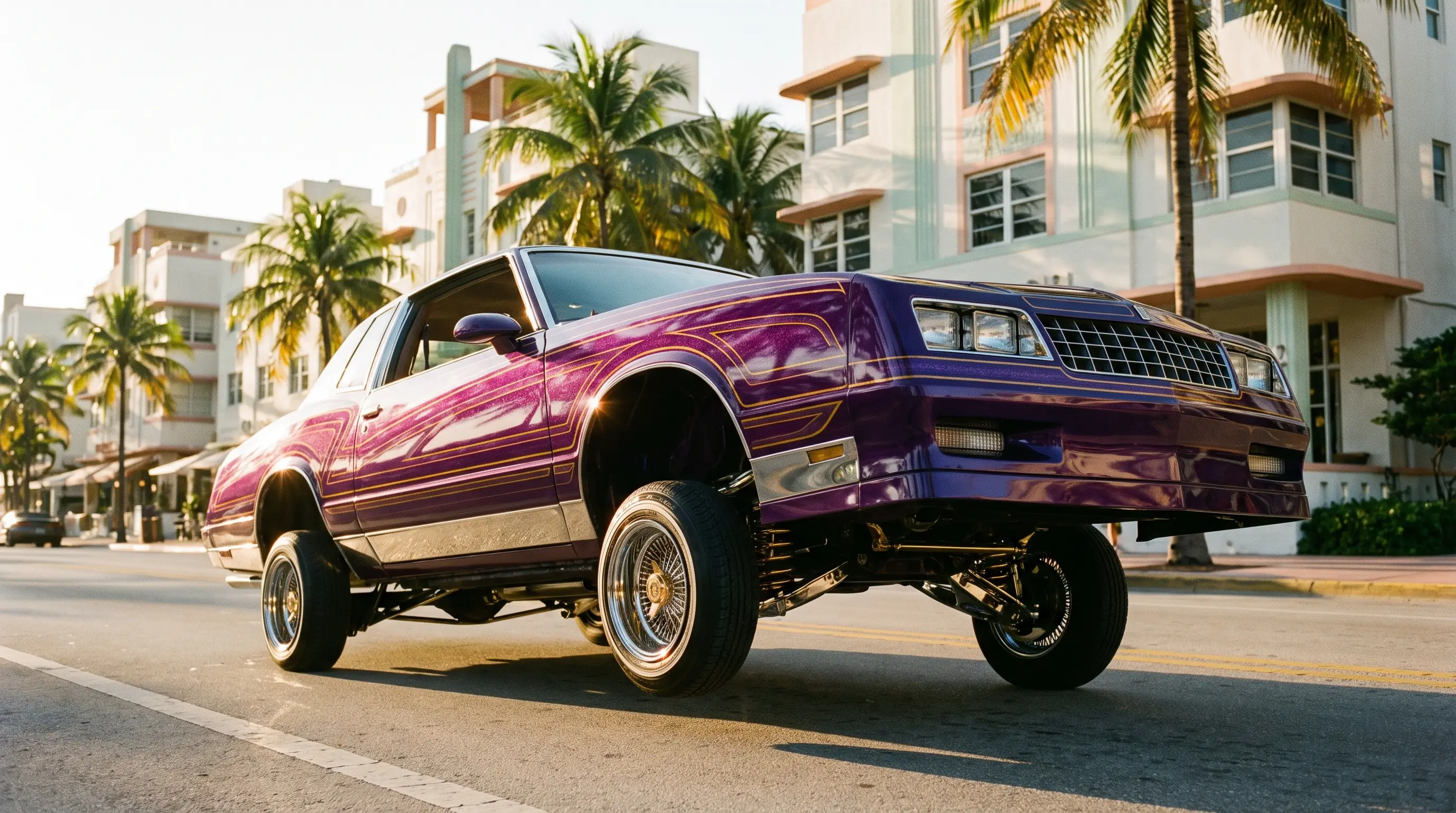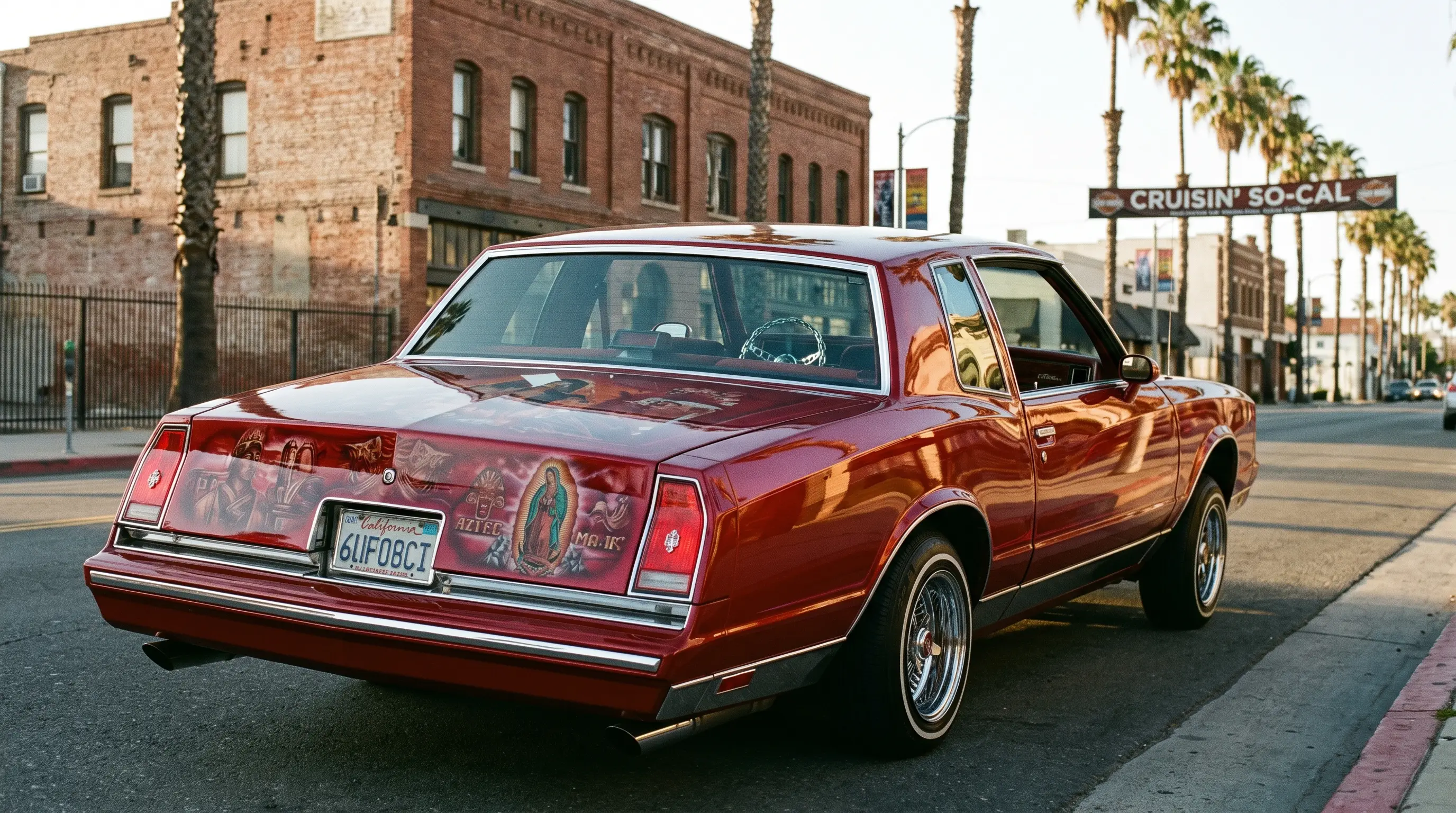
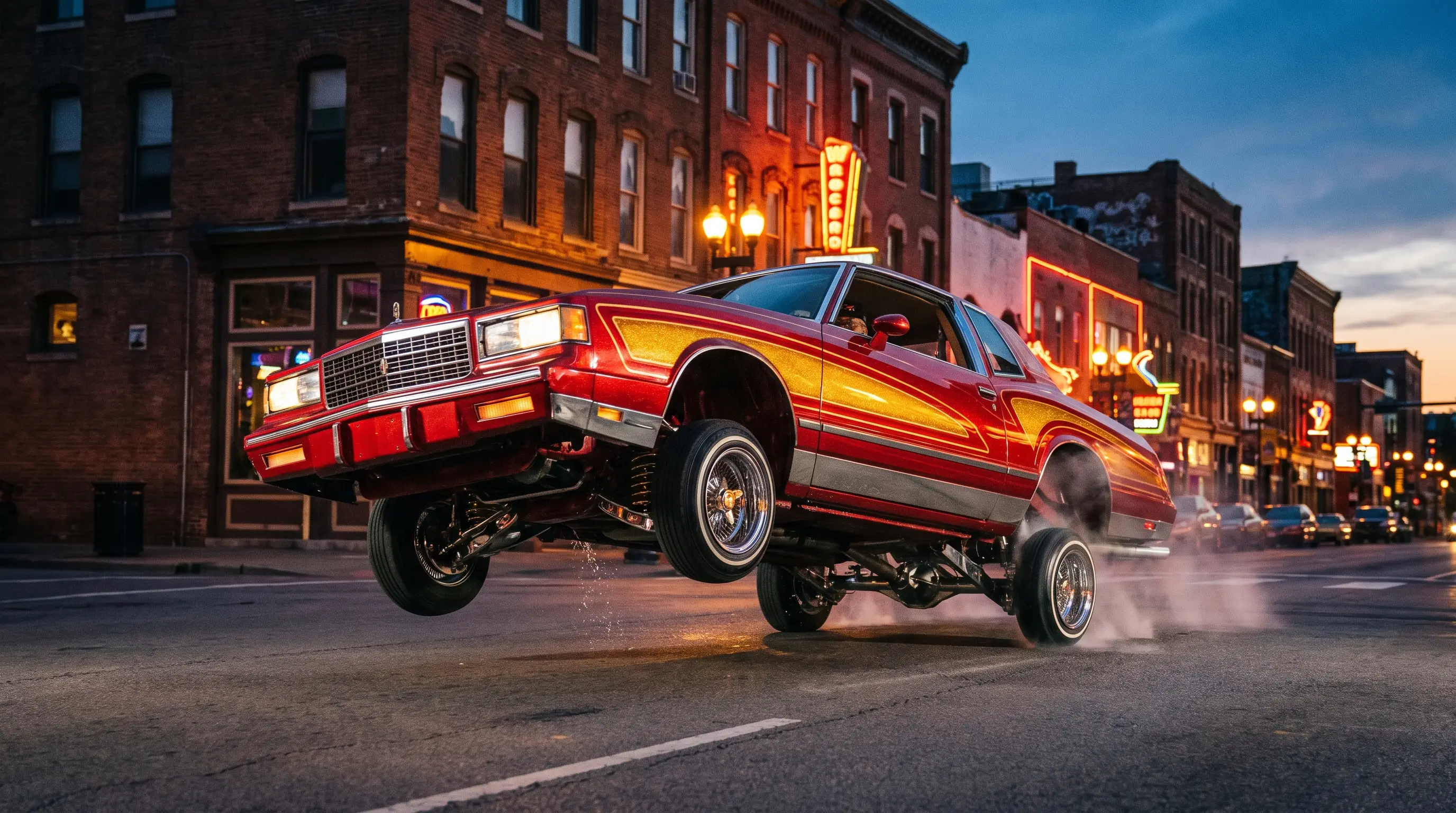
We have all stood in a parking lot at midnight, generator running somewhere off to the side, watching a Monte Carlo bounce three feet off its wheels while a crowd counts the licks out loud. That is the monte carlo lowrider hydraulics scene at its most visible, the hop, and for anyone new to our world it looks like showmanship first. It is that, but underneath the show is a body of hydraulic engineering our community built ourselves, largely without a manual, over four decades of trial and error on this specific Chevrolet.
How the setup actually works
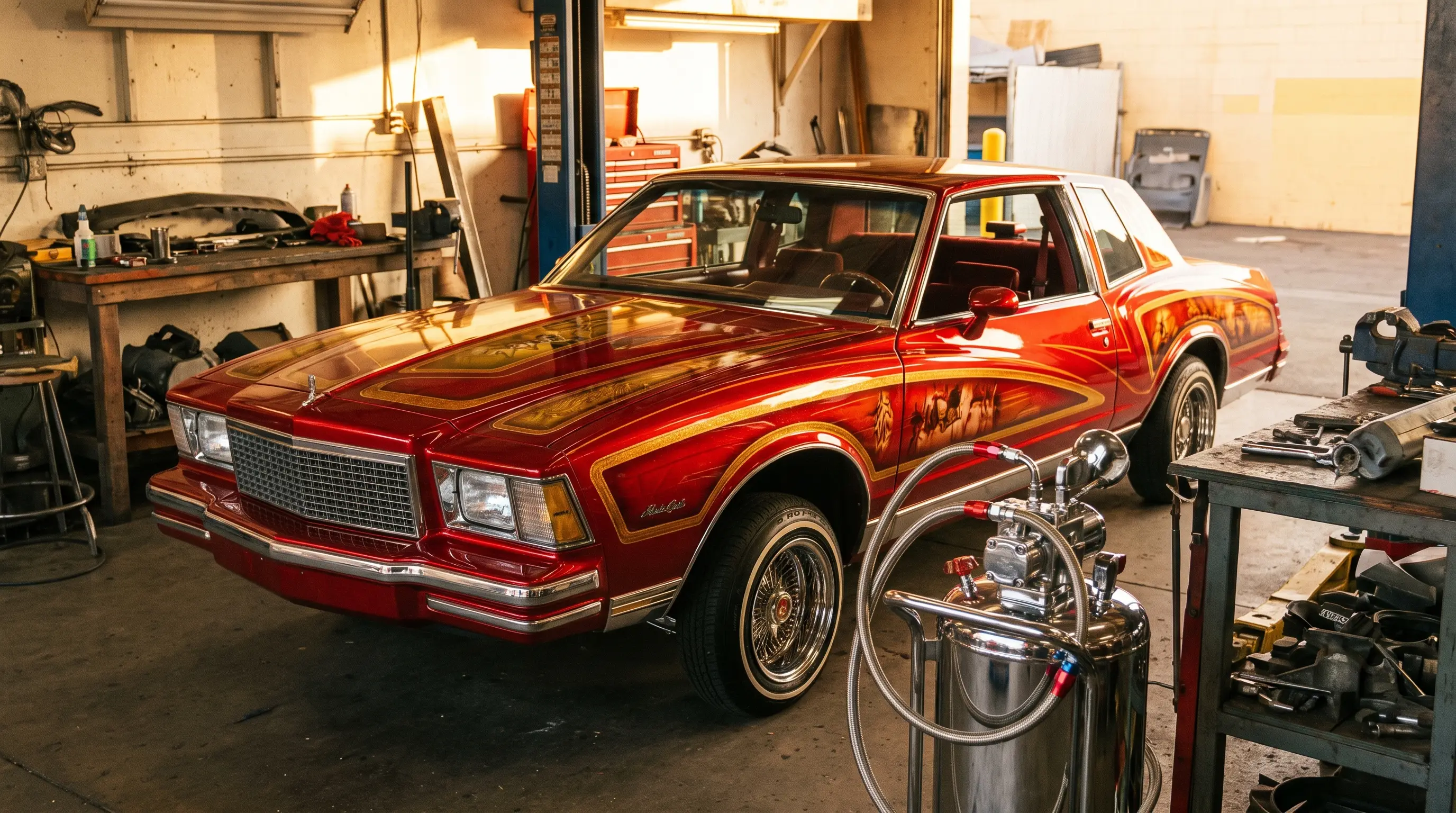
A hydraulic suspension replaces the factory coil springs or leaf springs with hydraulic cylinders, powered by pumps that draw from a battery bank mounted in the trunk. Solenoid valves controlled from a switch box let the driver dump fluid to drop the car or send pressure to the cylinders to raise it, corner by corner. On a Monte Carlo the rear setup usually runs a pair of cylinders tied into the stock rear end housing, while the front gets its own pair working against the upper control arms. Get the timing right between front and rear, and the car does not just lift, it rocks, and with enough battery power and the right pump gear ratio, it hops clean off the ground.
None of this is factory equipment, and none of it came with instructions. Builders learned pump gear ratios, cylinder stroke lengths, and battery counts from each other, one garage at a time, and that shared knowledge is as much a part of the culture as the paint jobs everybody photographs.
Why the Monte Carlo became the hop car of choice
The body-on-frame construction we lean on constantly in our other pieces matters even more here than it does for a static show car. Hopping puts massive stress through the frame rails every time the suspension slams back down, and a unibody car will crack around the shock towers or the trunk floor within a season of serious hopping. The Monte Carlo's separate frame lets builders weld in reinforcement plates and cross bracing without fighting the body's structural role, which is exactly why so many record-setting hop cars over the decades have been G-body Chevrolets rather than anything else GM built in that era.
The trunk depth helps too. A serious hop setup needs room for multiple batteries, at least two pumps, and the plumbing to connect it all, and the Monte Carlo's trunk swallows that hardware without forcing builders to cut into the spare tire well or the rear seat back the way a smaller coupe would.
| Component | Typical role in a Monte Carlo hop setup |
|---|---|
| Battery bank | Powers pumps, usually four to eight deep cycle batteries |
| Hydraulic pumps | Push fluid to cylinders, gear ratio tuned for speed vs power |
| Cylinders | Replace coil or leaf springs, mounted front and rear |
| Solenoid switch box | Driver control for lift, drop, and hop sequencing |
| Reinforced frame | Handles repeated impact stress from hopping |
The competitive side nobody outside the scene expects
Hop contests are judged on measured height, and builders have spent decades chasing extra inches the way any motorsport chases lap times. That competitive pressure pushed the engineering forward year after year, more batteries, better pump gears, smarter cylinder placement, until cars built on this same 1980s Chevrolet platform were clearing heights nobody in Detroit ever imagined when they drew up the G-body chassis. It is genuinely competitive, with rules, categories, and reputations on the line every time a car rolls up to the pit.
What this scene means to the people building in it
For us, the hop is never just a stunt. It is proof of work. Every inch a car clears represents hours in a garage, money saved from a paycheck, and knowledge passed down from someone who built before you. The Monte Carlo earned its spot at the center of this because it gave builders a platform that could survive the abuse and still look right doing it, and that combination is rare enough that the car has held its place in the culture for going on forty years now.
We cover the clubs and the community history behind all of this in our complete history, and if watching all this makes you want to start your own project, find a classic Monte Carlo to build on before you even think about ordering your first cylinder.
"Nobody hands you a manual for this. You learn pump ratios and cylinder placement from the guy who built before you, and someday you pass it forward the same way."
- Hector Morales
Respecting the mechanical limits
We would be doing new builders a disservice if we did not mention the wear side of this hobby honestly. Hopping is hard on ball joints, control arm bushings, and the rear end housing itself, and any Monte Carlo built for serious hop competition needs regular inspection of those components between events. The builders who last decades in this scene are the ones who treat maintenance as part of the craft, not an afterthought, checking welds and fittings after every session the same way a racer checks a chassis after a lap. That discipline is what separates a car that hops for one summer from one that is still clearing records ten years later.
There is also a quieter side to this scene that outsiders rarely see, the trust between builders who compete against each other every weekend but still lend tools, batteries, or a spare pump when someone's rig fails before a show. That generosity is baked into how our community operates, and it is part of why the Monte Carlo hop scene has stayed close knit even as the cars themselves have gotten more valuable and more competitive over the years. Reputation still matters more than money in most of these garages, and a builder who cuts corners or talks down someone else's work does not stay welcome for long.
The history of this scene stretches back to backyard experiments in the early 1980s, when the first Monte Carlos with rear end mounted cylinders started showing up at informal gatherings rather than sanctioned events. What began as a handful of builders comparing notes in driveways grew into an organized competitive circuit with real prize money, magazine coverage, and a following that now spans generations of the same families. The Monte Carlo was there from the start of that evolution, and it has never really left.
Talk to any builder who has been around long enough and they will tell you the same thing about where this is headed. Parts availability is the real challenge now, not enthusiasm. Original rear end housings, control arms, and body panels are getting harder to source every year, and that scarcity is pushing prices up on solid donor cars faster than most people expected a decade ago. Even so, nobody in our community is walking away from the Monte Carlo. If anything, the scarcity has made builders more careful, more resourceful, and more willing to teach the next generation exactly what they know before that knowledge gets harder to pass along.