
Bobby Allison's car left the ground at Talladega in May 1987 at close to 210 mph, tore through the catch fence, and sent debris into the grandstands. Nobody died that day, but everyone in the garage understood that NASCAR could not let cars keep getting that fast, and the Chevrolet Monte Carlo, built for years specifically to be as fast as possible in a straight line, suddenly found itself on the wrong side of a rule change that reshaped superspeedway racing overnight.
Car Features
7 min read
When the Rules Killed the Aerocoupe Advantage
After Bobby Allison's terrifying Talladega crash, NASCAR's 1988 restrictor plate rules blunted the aero advantage the Monte Carlo Aerocoupe had been built to exploit.
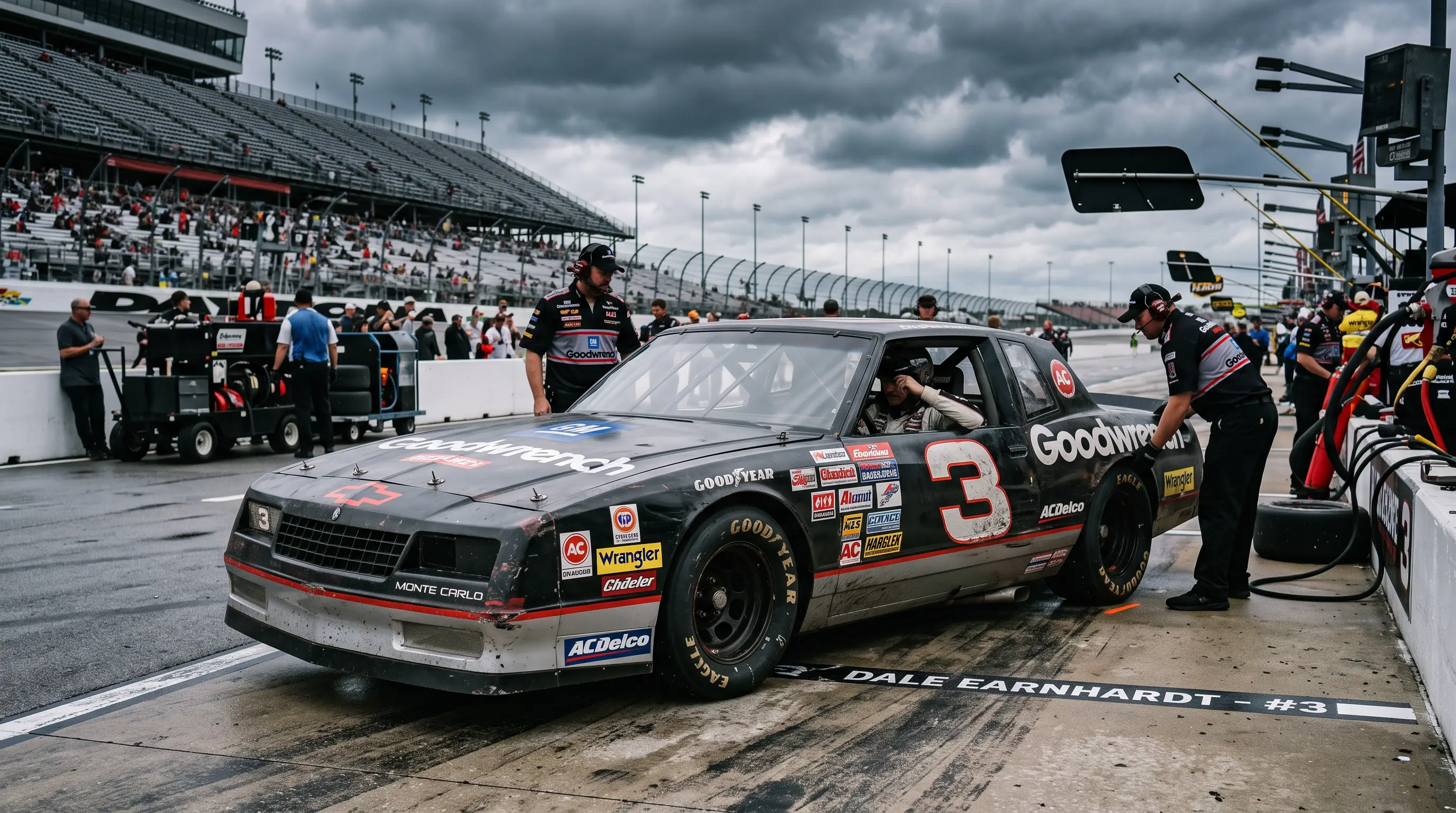
The crash that changed everything
Allison was driving a Buick that day, not a Monte Carlo, but the danger the crash exposed applied to every manufacturer chasing the same aero targets, Chevrolet included. Speeds at Daytona and Talladega had been climbing steadily for years as Chevrolet, Ford, Buick and Pontiac all refined their bodies in wind tunnels, and the Monte Carlo Aerocoupe was one of the most visible results of that arms race, its sloped rear glass built specifically to cut drag at exactly the kind of speed that had just put a car into the fence.
NASCAR's response for the 1988 season was restrictor plates at Daytona and Talladega, small carburetor spacers that choked airflow into the engine and cut horsepower dramatically at those two tracks. The effect on the Monte Carlo's competitive advantage was immediate. A car built to slip through the air efficiently mattered far less when every engine on the grid was suddenly limited to roughly the same reduced power output, and the aero advantage Chevrolet had spent years developing became worth less overnight.
What it meant for the Aerocoupe specifically
Chevrolet had built the Aerocoupe body largely to win the aero war on the two biggest tracks on the schedule. With restrictor plates leveling the playing field at exactly those tracks, some of the urgency behind the Aerocoupe program cooled. The road-going Aerocoupe itself was already a low-volume homologation special, starting at just 200 cars built in 1986 to meet NASCAR's minimum, then rising to roughly 6,052 units for 1987 as demand grew, and by the end of the 1988 model year Chevrolet stopped building it entirely as the Monte Carlo nameplate moved toward the end of its G-body run.
That timing was not a coincidence. The restrictor plate era changed what teams needed from a body shape, shifting emphasis toward handling in the tight, bunched-up racing that plates produced rather than pure top-end slipperiness. A car's aero numbers still mattered everywhere else on the schedule, but the two races where the Aerocoupe's shape had been most valuable were suddenly the two races where raw aero counted for the least.
"The Aerocoupe was built to answer one question, how fast can this car go at Daytona and Talladega. The plates changed the question, and the car never quite got asked the new one in the same way."
- Patrick Walsh
How teams adjusted their Monte Carlos to the new reality
Crews that had spent years chasing incremental aero gains had to relearn what actually made a plate-track Monte Carlo fast. With horsepower capped for everyone, drafting technique became more important than any single body panel, and setups shifted toward stability in a tightly bunched pack rather than outright top speed in clean air. Some teams struggled with the transition more than others, and the ones that adapted fastest tended to be the crews who had already built a reputation for patient, long-run racing rather than pure qualifying speed.
The Monte Carlo's inherent stability, a byproduct of years of aero development even if that development no longer translated into the same raw speed advantage, turned out to be useful in the new pack-racing style that restrictor plates produced. A car that handled predictably in traffic held real value when 30 cars were running nose to tail at reduced power, even if the reason for that stability had originally been about something else entirely.
The end of an era, not the end of the story
It would be too simple to say restrictor plates killed the Monte Carlo's NASCAR relevance. The car kept racing and kept winning after 1988, and the Monte Carlo nameplate itself stayed on the track well into the following decade even as the underlying production car changed dramatically. What ended was a specific chapter, the one where a manufacturer's engineers could point to a wind tunnel number and know it translated directly into a faster race car on the biggest stage in the sport. After 1988, speed at Daytona and Talladega became a more complicated equation involving pack racing, drafting strategy and plate-specific setups that had little to do with the aero work that built the Aerocoupe in the first place.
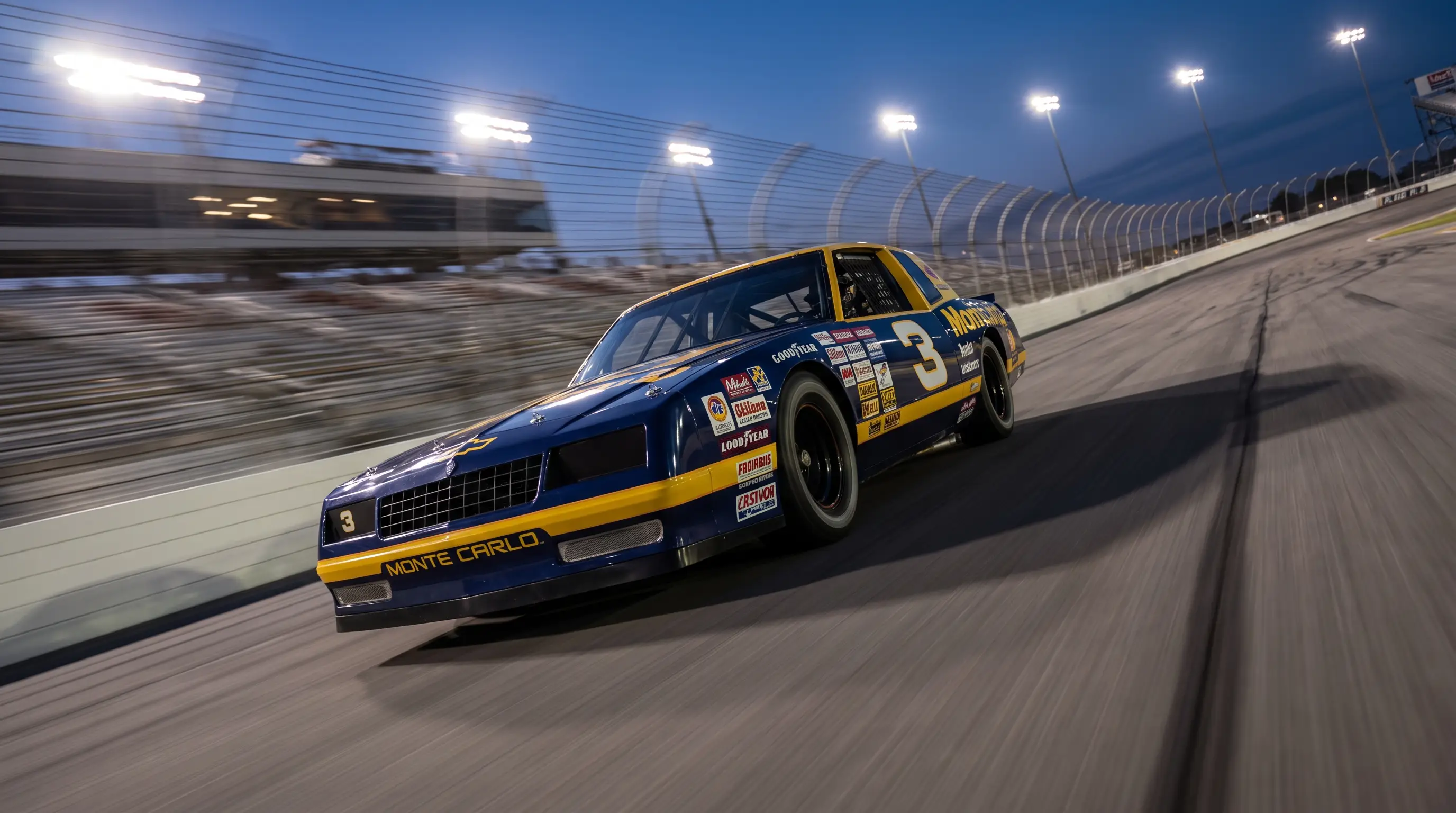
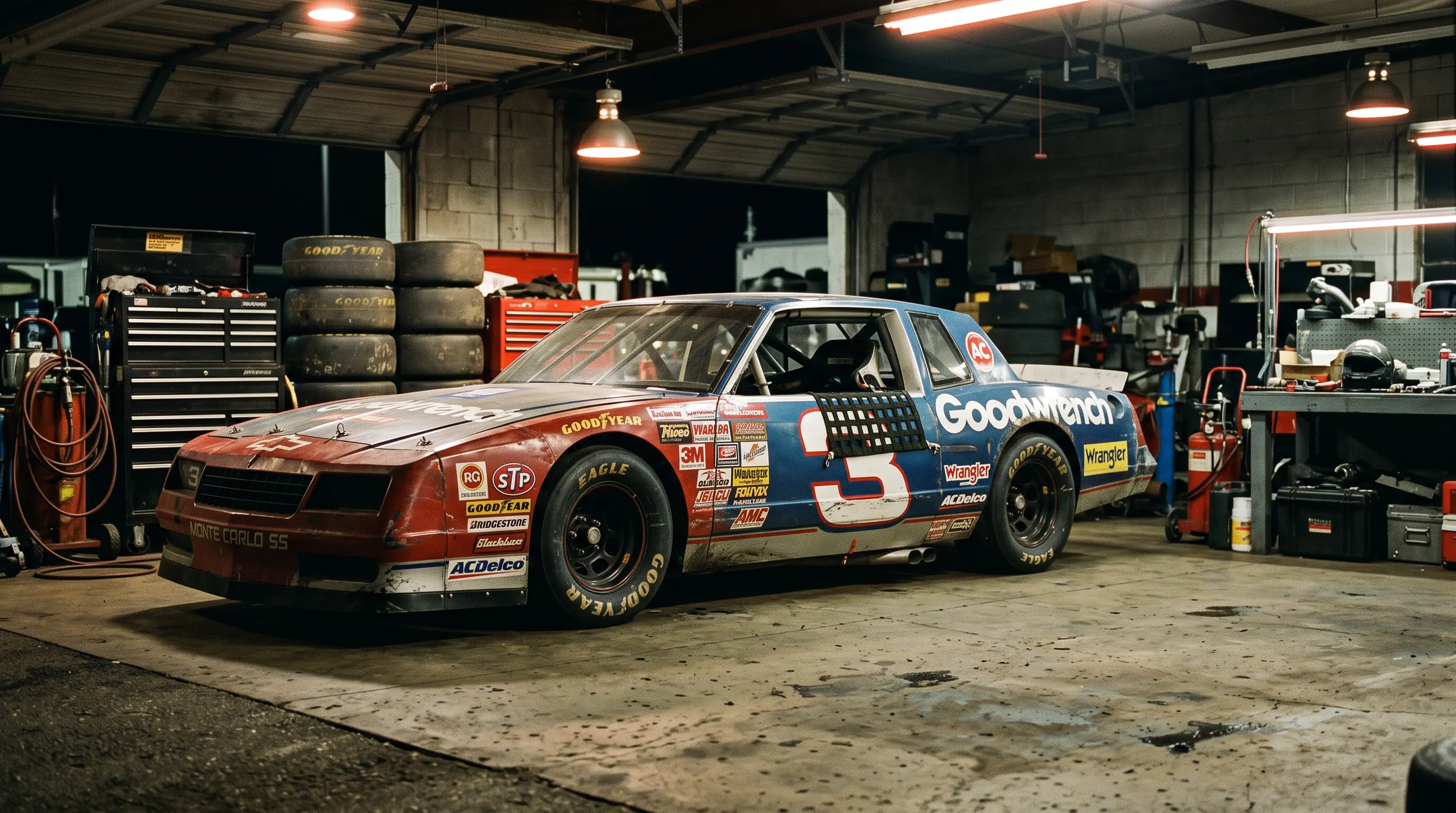
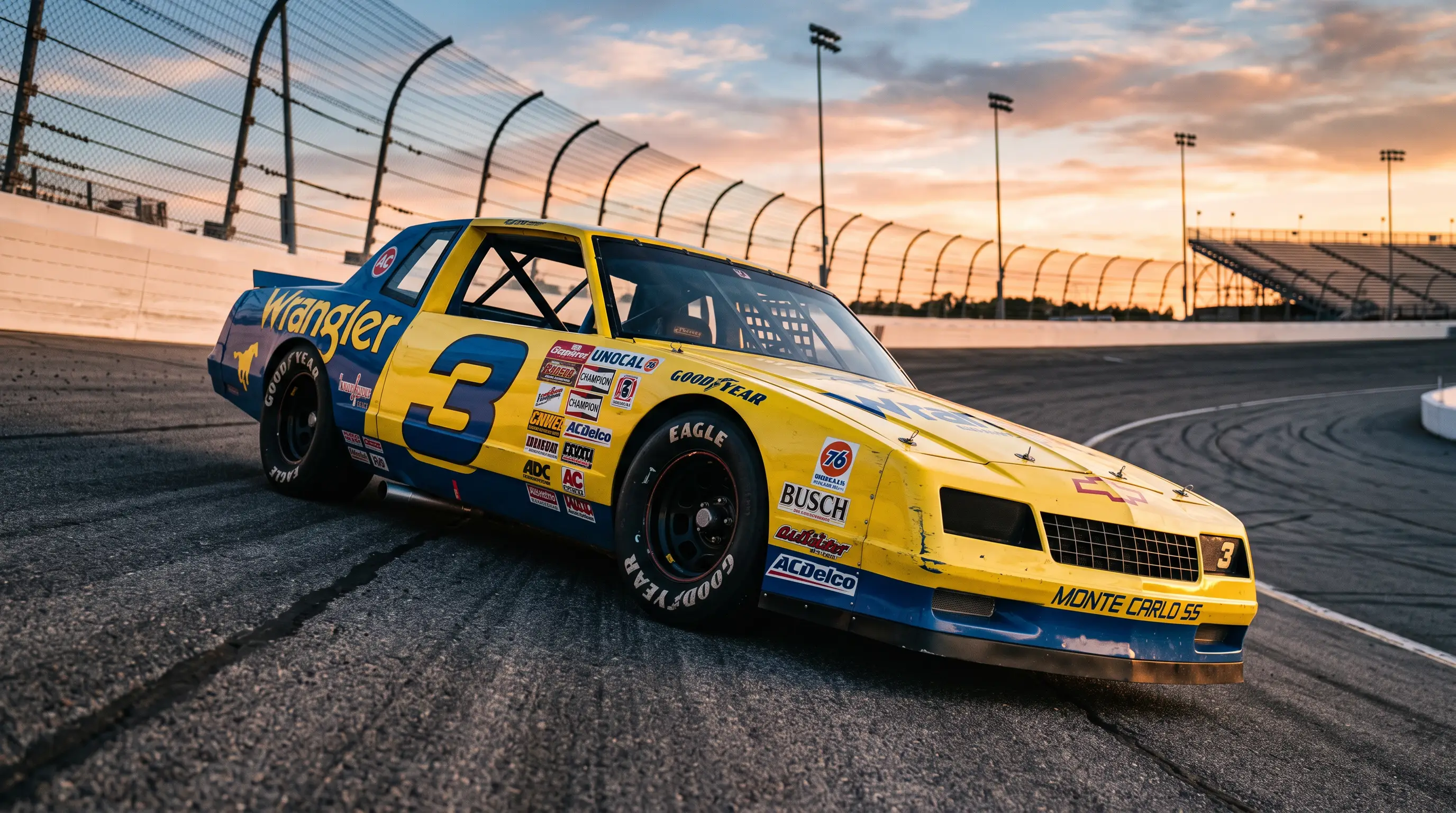
For collectors, that shift is part of what makes the 1986 to 1988 Aerocoupe such a specific and desirable slice of Monte Carlo history. It represents a brief window when a production based body shape genuinely mattered at the highest level of stock car racing, before the sport moved to a rules package that made that kind of engineering advantage far less decisive. Our monte carlo nascar retrospective covers the fuller arc of that program, and readers curious about the visual side of that same era can find a related story on the liveries that carried those cars through their final aero-focused seasons.
The Aerocoupe's short production run and its role in a rules era that ended abruptly are exactly why surviving examples draw serious attention today, and buyers looking for that history in person can still find Monte Carlos for sale now carrying the sloped glass that made the whole story possible.
Why the rule change still gets debated
Ask racing fans from that era whether restrictor plates were the right call and opinions split fast. Some argue NASCAR had no choice after Talladega, others argue the sport traded genuine engineering competition for a more artificial kind of racing that lasted for decades afterward. Whatever side of that argument a fan lands on, the Monte Carlo sits at the center of the story, a car built to win a specific kind of race that the sanctioning body decided, almost overnight, it no longer wanted run that way.
What is not up for debate is how quickly the sport moved. A rule package drawn up over a single off-season permanently altered how Daytona and Talladega were raced for decades afterward, and the Monte Carlo Aerocoupe stands as one of the clearest physical artifacts of the brief period just before that change, a car whose entire shape was justified by a style of racing that essentially stopped existing the following February. Few production based race cars anywhere in NASCAR history can claim a story quite that specific, and that is exactly why the Aerocoupe still commands attention from people who were not even alive to watch it race.
Sources and notes
Related Reading
Have a
Chevrolet Monte Carlo
for Sale?
Reach thousands of serious classic car collectors across the US.
Sell It Here →
Are You a Classic Car Dealer?
List your full inventory and connect with targeted classic car buyers.
Join as a Dealer →
#Chevrolet racing history
#talladega
#NASCAR history
#aerocoupe
#monte carlo nascar
#restrictor plates

About the author
Patrick Walsh
Automotive journalist covering classic car shows, events, and the enthusiast community across North America.
Related Listings - Chevrolet Monte Carlo



Comments
Be the first to comment on this article.