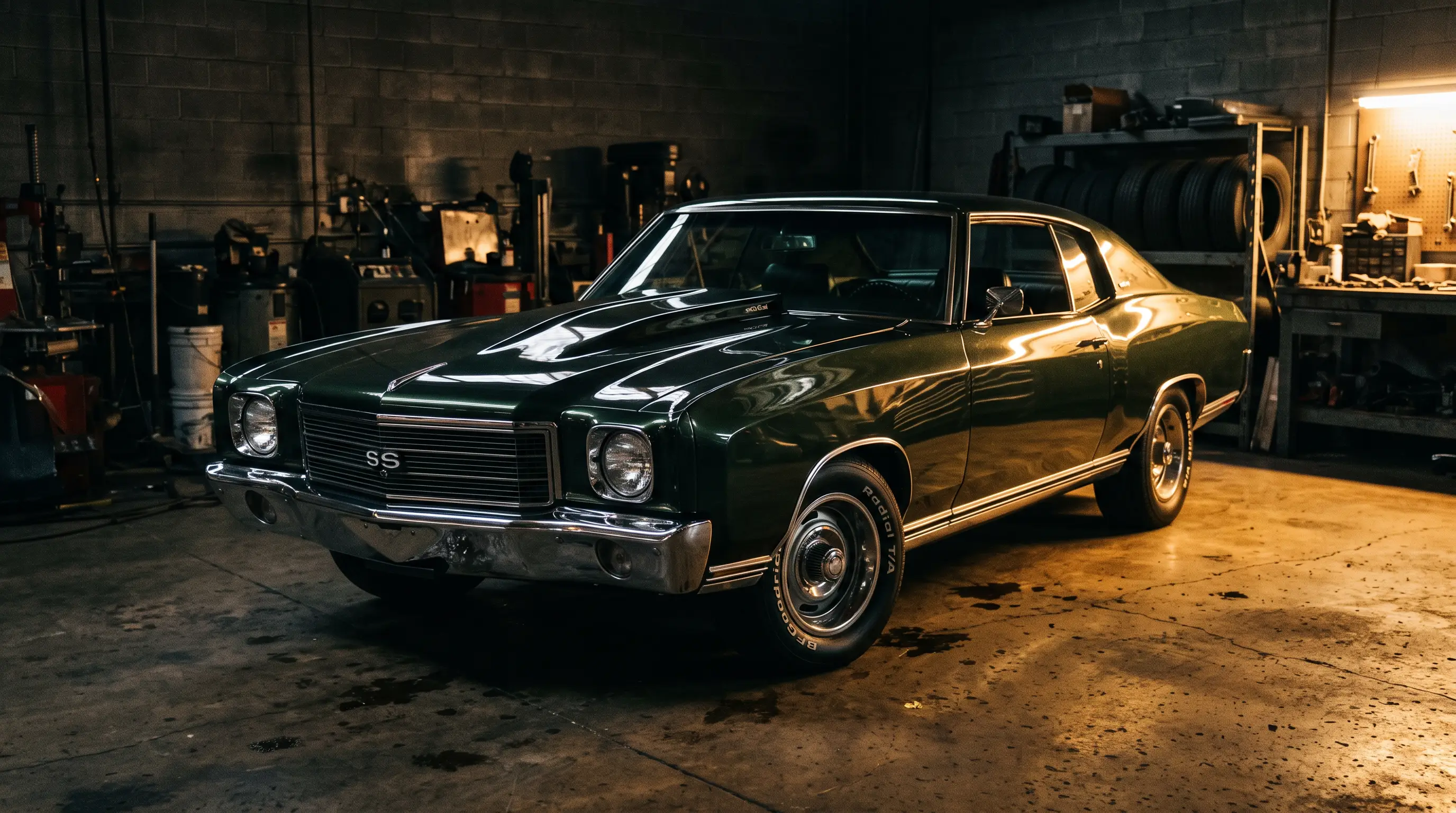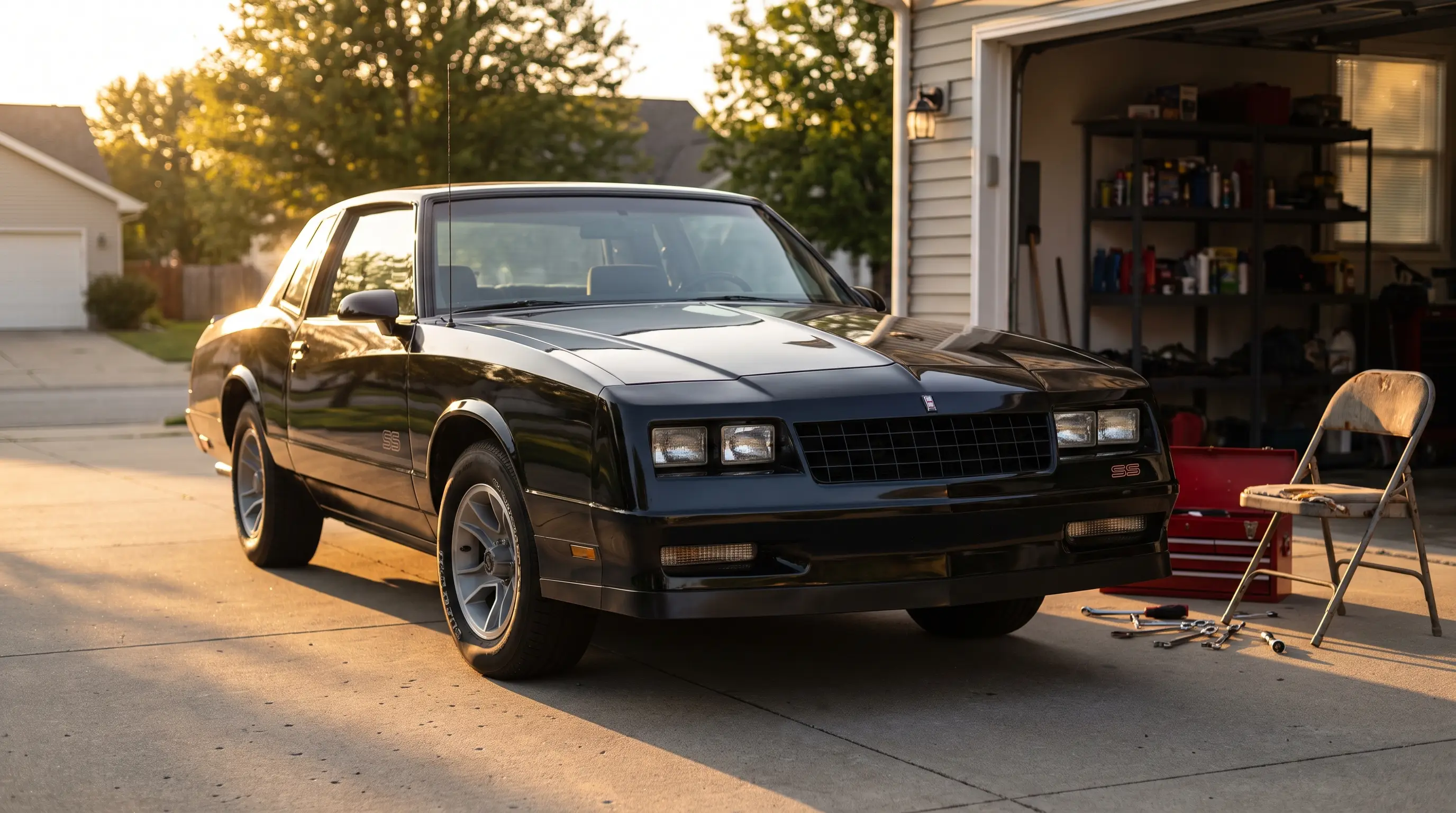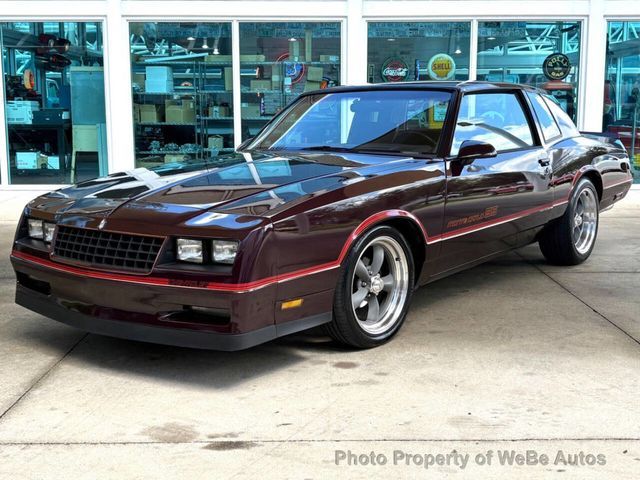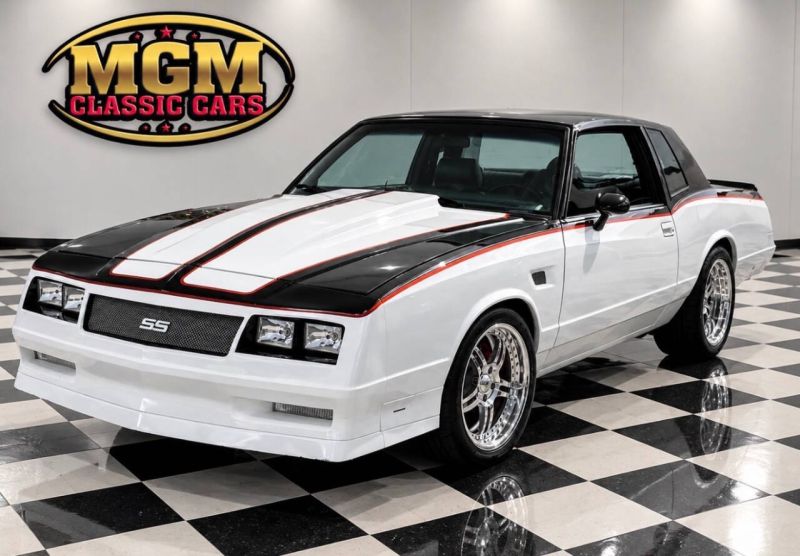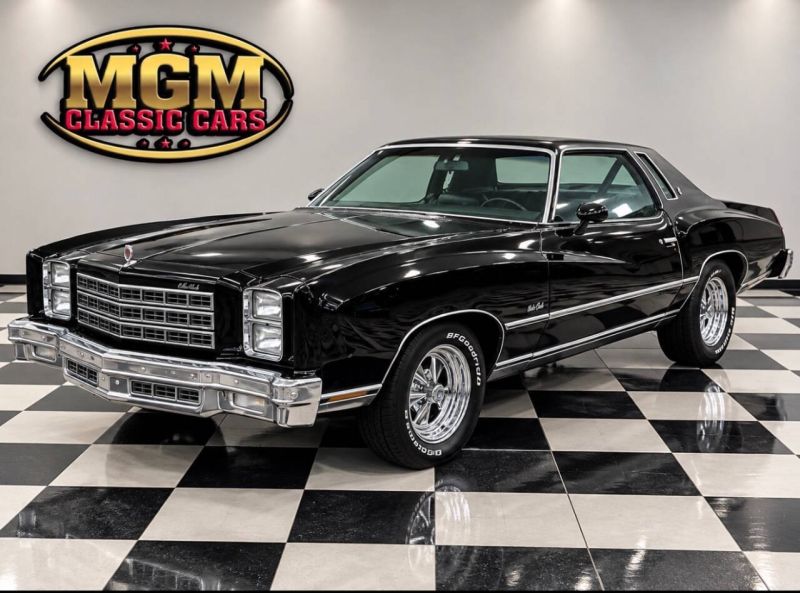
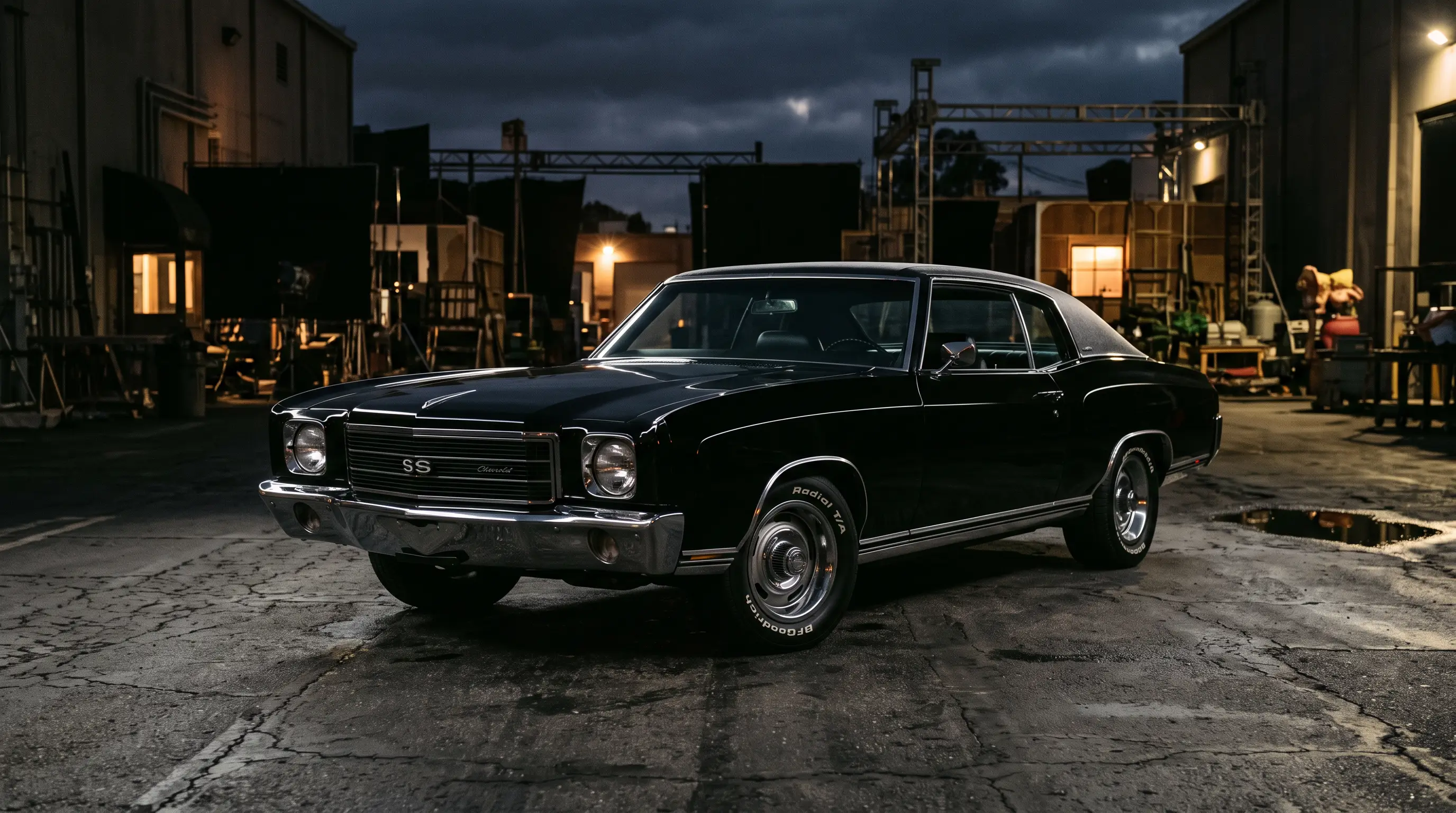
There is a particular kind of recognition that happens when a car appears on screen without being the point of the scene. Nobody wrote a script around the Monte Carlo SS the way they wrote one around a Bullitt Mustang or a Vanishing Point Challenger. Instead the monte carlo ss movies tv appearances story is a quieter one, a car that kept showing up in the background of the decade it belonged to, parked in a driveway, idling at a stoplight, doing exactly what it did in real life: being the coupe a certain kind of American household actually owned in the middle of the 1980s.
A car that read as background, not as a star
Set dressers and prop coordinators working on films and television shows set in the 1980s reached for cars that would read as authentic without pulling focus from the actors, and the Monte Carlo SS fit that role naturally because it was, quite simply, everywhere. A production dressing a suburban street scene or a small-town parking lot in the mid-1980s could put an SS in frame and audiences would register it the way they registered a particular brand of soda in a fridge, correct, unremarkable, exactly what belonged there. That kind of casual on-screen presence rarely earns a car a Wikipedia page of its own screen credits, but it did something arguably more important for the car's long-term identity. It cemented the Monte Carlo SS in the visual memory of an entire generation who grew up watching it appear in the corner of frame after frame without ever consciously noticing it.
The NASCAR connection gave it a different kind of screen life
Where the SS did earn deliberate, front-and-center screen time was through motorsport coverage and documentary features tied to its NASCAR era. The Aerocoupe's connection to Dale Earnhardt's championship run gave the car a genuine sports narrative that television broadcasts and later retrospective racing documentaries returned to again and again. That footage is different in character from a background prop appearance in a drama. It shows the car as a competitor, sliding through a corner at speed, and it is the reason a segment of today's SS fan base came to the car through racing history first and the street car second. For a lot of younger enthusiasts, the Aerocoupe's on-track television legacy is the entry point into caring about the whole nameplate.
"There's something moving about a car that never needed a dramatic close-up to matter. It just kept showing up, quietly, in the background of an entire decade's memory, and that kind of presence sticks with people longer than any single dramatic car chase does."
- Nora Beckett
Why authenticity mattered more than screen time
Production designers working on any period piece face a constant tension between what looks authentic and what audiences will actually notice, and background vehicles are usually where budget and authenticity get tested hardest. A car that was genuinely common in a given year, rather than a rare or expensive model dressed up to look period-appropriate, does more work toward selling an audience on the setting than almost any other single prop choice, because viewers register wrongness in a background car even when they cannot articulate why a scene feels off. The Monte Carlo SS solved that problem cheaply and effectively for any production set in the middle 1980s, since real examples were genuinely plentiful and inexpensive to source for a shoot, unlike a rarer or more exotic model that would have required a dedicated picture car coordinator and a much bigger budget line. That practical reality, as much as any stylistic choice, is why the car shows up as often as it does in period productions.
Why background presence built a different kind of nostalgia
Cars that star in a single iconic film often get frozen in that one identity forever. Ask most people what a certain green Mustang means and they will describe a chase scene before they describe the car itself. The Monte Carlo SS avoided that fate by never being reduced to one moment, and the nostalgia it generates today is broader and more personal because of it. People remember the SS from their own neighborhood, their own uncle's driveway, their own memory of a specific stretch of highway, layered on top of whatever glimpses of it showed up on a television screen growing up. That kind of nostalgia is harder to package into a single highlight reel, but it runs deeper, because it belongs to individual memory rather than to a single shared cultural reference point.
| Type of screen presence | Character | Effect on the car's legacy |
|---|---|---|
| Background set dressing in period dramas | Unremarkable, authentic, everyday | Cemented visual memory across a generation |
| NASCAR broadcast and documentary footage | Competitive, dramatic, on-track | Introduced younger fans through racing history |
None of this screen history is dramatic in the way a single famous chase scene is, and that is exactly the point. If you want the fuller story of where this quiet, everywhere-at-once presence started, where this started traces the SS badge back to its introduction and its motorsport ties. And if watching for these background appearances has put you in the mood to actually own a piece of that decade rather than just spot it on a screen, you can shop classic Monte Carlo listings and find one for yourself.
Sources and notes
- Chevrolet Monte Carlo - Wikipedia
- Hagerty: 1983-88 Chevy Monte Carlo SS buyer's guide
- Curbside Classic: 1987 Monte Carlo SS Aerocoupe
- MonteCarloSS.com: Production Figures FAQ
- GBodyNation: Monte Carlo archives
How that background presence shapes today's collector market
There is a measurable effect from this kind of quiet screen ubiquity, even if it never shows up as a single line item on an auction listing. Buyers who first connected with the Monte Carlo SS through a half-remembered background appearance, rather than through active car culture, tend to come to the market later in life once they have the means to actually chase that memory down, and they tend to prioritize condition and originality over a documented ownership pedigree, because their attachment was visual and emotional rather than built on tracking a specific example. That buyer profile has kept demand broader than it would be if the car's fan base were built entirely from people who followed it through motorsport or through car magazines at the time. A nameplate that shows up in the corner of enough frames over enough years earns itself a bigger, more varied audience decades later, and that audience is a meaningful part of why the Monte Carlo SS market has stayed as active as it has.
The legacy of being everywhere
The Monte Carlo SS never needed a signature film moment to earn its place in the culture of its era. It earned that place the ordinary way, by being the car people actually drove, actually parked in their driveways, and actually saw reflected back at them on screen without ever being told to notice it. Forty years later, that quiet ubiquity has become its own kind of legend, one built from a thousand small glimpses instead of one big scene.