
Six figures for a car that started life as a budget-conscious option package built to undercut the Road Runner on price. That's the reality of the modern Judge market for anyone who hasn't checked recent auction results, and it's worth understanding exactly which factors push a specific car into that territory while a nearly identical-looking example brings a fraction of the price. Having covered the Judge across a lot of appraisals over the years, I can tell you the gap between a six-figure car and a fifty-thousand-dollar car usually comes down to four things, and none of them are visible in a photograph from across a show field.
Car Features
7 min read
Why the Most Valuable Judges Sell for Six Figures
Condition gets a Judge into the conversation, but documentation, rarity, provenance, and market timing are what actually push the top cars into six figures.
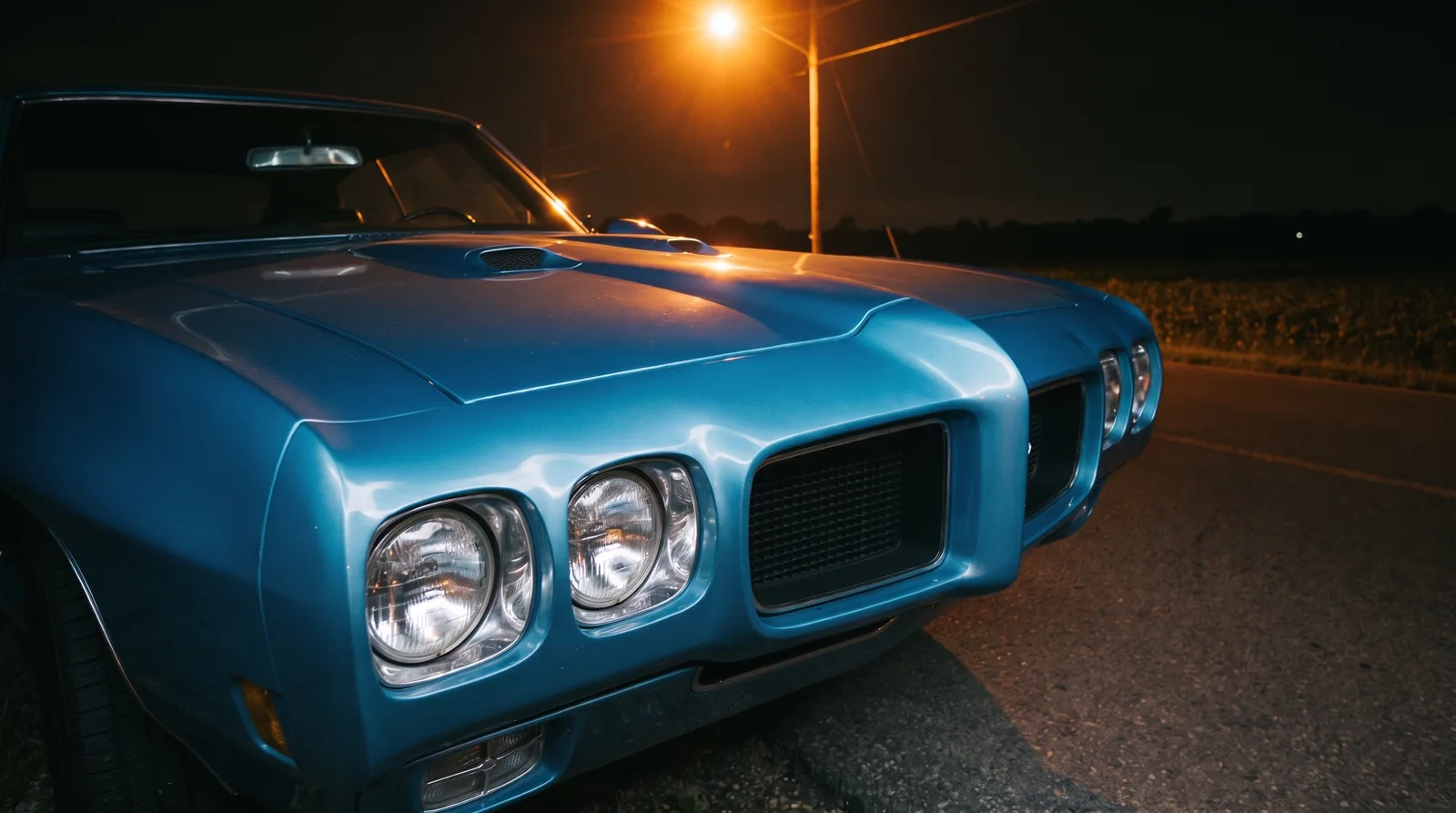
Condition is the entry fee, not the whole story
Let's start with the obvious one, because buyers get this backwards constantly. Condition determines whether a car is eligible for top money, not whether it will actually bring top money. A Judge in concours-quality restored or exceptionally preserved original condition clears the first hurdle. It does not, by itself, guarantee a six-figure result. I've seen beautifully restored Judges bring solid but unremarkable prices because the other three factors weren't there to support a premium result. Condition without the rest is a nice car. Condition combined with the rest is a record-setting car.
Documentation separates story from proof
The second factor, and the one I spend the most time on in any serious appraisal, is documentation. A car with a complete, verifiable paper trail, PHS documentation, original build sheet, matching VIN and cowl tag decode, consistent ownership history, sells for meaningfully more than an equally nice car with gaps in its story. Buyers spending six figures are not buying based on how a car looks in the photos. They're buying certainty, and certainty has a price attached to it that inconsistent or missing paperwork simply cannot deliver, no matter how sharp the paint is.
This is where I tell clients to think like an underwriter, not a romantic. A car with no documentation might be entirely genuine. It also might not be, and at six-figure price points, the buyer pool that's willing to bet six figures on "probably genuine" is much smaller than the pool willing to pay for "provably genuine." That gap in buyer pool size is reflected directly in the final hammer price.
| Value driver | Effect on price |
|---|---|
| Concours-level condition | Qualifies car for top-tier bidding, does not guarantee it alone |
| Complete documentation (PHS, build sheet, VIN match) | Largest single premium driver; a verified numbers-matching drivetrain alone can add roughly 20% or more over an otherwise comparable undocumented car |
| Rarity (convertible, Ram Air IV, rare color/option combo) | Compounds with documentation to push top results |
| Provenance (known ownership chain, notable history) | Adds premium, especially with celebrity or racing history |
Rarity within rarity
Every Judge is already a relatively low-production variant of the GTO, but within that population there are further tiers of scarcity that matter enormously to serious buyers. A Ram Air IV car is rarer than a standard Ram Air III car. A convertible is far rarer than a hardtop. A documented rare color and option combination, the kind of thing a factory-order enthusiast can point to on a build sheet and say "this exact combination was ordered only a handful of times," adds another layer of desirability that stacks on top of everything else.
None of these rarity factors work in isolation, though. A rare option combination on an undocumented car with mediocre condition is still just a mediocre car with an interesting story nobody can verify. The six-figure results happen when rarity, documentation, and condition all line up on the same VIN. That alignment doesn't happen often, which is exactly why it commands the premium it does.
Provenance is the quiet multiplier
The fourth factor gets less attention than it deserves. A car with a known, traceable ownership history, especially one that includes a long-term single owner, a documented low-mileage story, or a connection to notable period racing or dealership history, carries a premium that goes beyond what condition and documentation alone would predict. Buyers at the top of this market aren't just purchasing a machine. They're purchasing a complete, defensible story they can tell the next owner when they eventually sell, and a strong provenance chain is the backbone of that story.
"At six figures, you're not selling a car anymore, you're selling certainty. Every gap in the paperwork is a discount the market applies whether the seller likes it or not."
Marcus Feld
Where and when a car sells matters more than people admit
Timing and venue are a fifth factor that rarely gets discussed alongside condition, documentation, rarity, and provenance, but I've watched it move final hammer prices by a meaningful margin more than once. A well-documented, rare Judge crossing the block at a marquee national auction with strong media coverage and a room full of committed collector-car bidders tends to bring a different result than the same car sold quietly through a private listing or a regional auction with a thinner crowd. Auction dynamics create competitive bidding pressure that a private sale simply cannot replicate, and for a car this rare, that pressure can add a real premium on top of everything the car itself brings to the table.
Broader market cycles matter too. Muscle car values as a category have moved up and down over the decades, tracking generational buying power and shifting collector interest. A Judge that would have struggled to find a six-figure buyer during a soft period in the market can bring a very different result once demand recovers and a new wave of buyers with real purchasing power enters the hobby. None of this changes what the car actually is, but it absolutely changes what a seller can expect to realize on a given day, which is why serious sellers pay attention to auction calendars and market sentiment, not just their own car's spec sheet.
What this means if you're buying, not just watching auction results
If you're shopping in this market rather than admiring it from the sidelines, the practical lesson is straightforward. Don't pay a documentation-and-rarity premium for a car that only clears the condition bar. Ask for the paperwork before you ask about the price. And understand that the gap between an honest, solid driver-quality Judge and a record-setting example isn't really about which one is the "better" car in any everyday sense. It's about which one satisfies the specific, narrow set of criteria that the top tier of this market has learned to demand.
For the full arc of how this whole silo of Pontiac performance history fits together, the complete GTO story is worth your time. And if six figures is out of reach but you still want in on this generation of Pontiac muscle, you can browse GTO listings to see what's actually available at prices well below the headline auction numbers. The next piece in this series looks at how Pontiac sold the Judge's attitude to the public in the first place. Read on for that story.
Sources and notes
- Hagerty - All Rise for the Judge: $1.1M Ram Air IV is the world's most expensive GTO
- Hagerty - The 10 most expensive Pontiacs ever sold at auction
- HotCars - Muscle cars that quietly became million-dollar cars
- Barn Finds - 1969 Pontiac GTO The Judge Ram Air IV auction notes
- Classic.com - Pontiac GTO Judge market data
Related Reading
Have a
Pontiac GTO
for Sale?
Reach thousands of serious classic car collectors across the US.
Sell It Here →
Are You a Classic Car Dealer?
List your full inventory and connect with targeted classic car buyers.
Join as a Dealer →
#collector car appraisal
#Pontiac GTO
#GTO Judge
#muscle car values
#gto auction results
#judge documentation

About the author
Marcus Feld
Accredited collector-car appraiser who reads the market through hammer prices, condition tiers and risk.
Related Listings - Pontiac GTO

Comments
Be the first to comment on this article.