
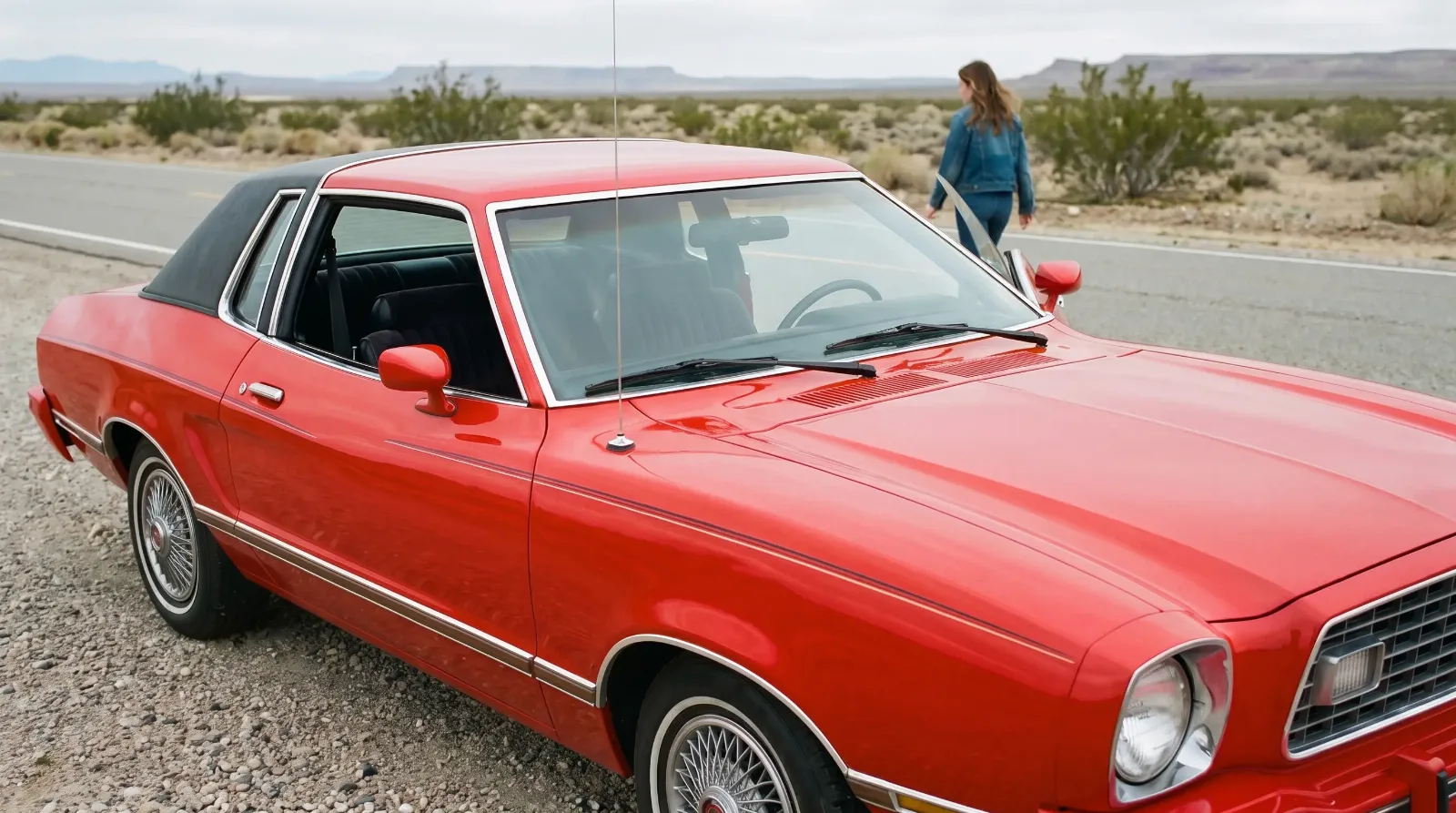
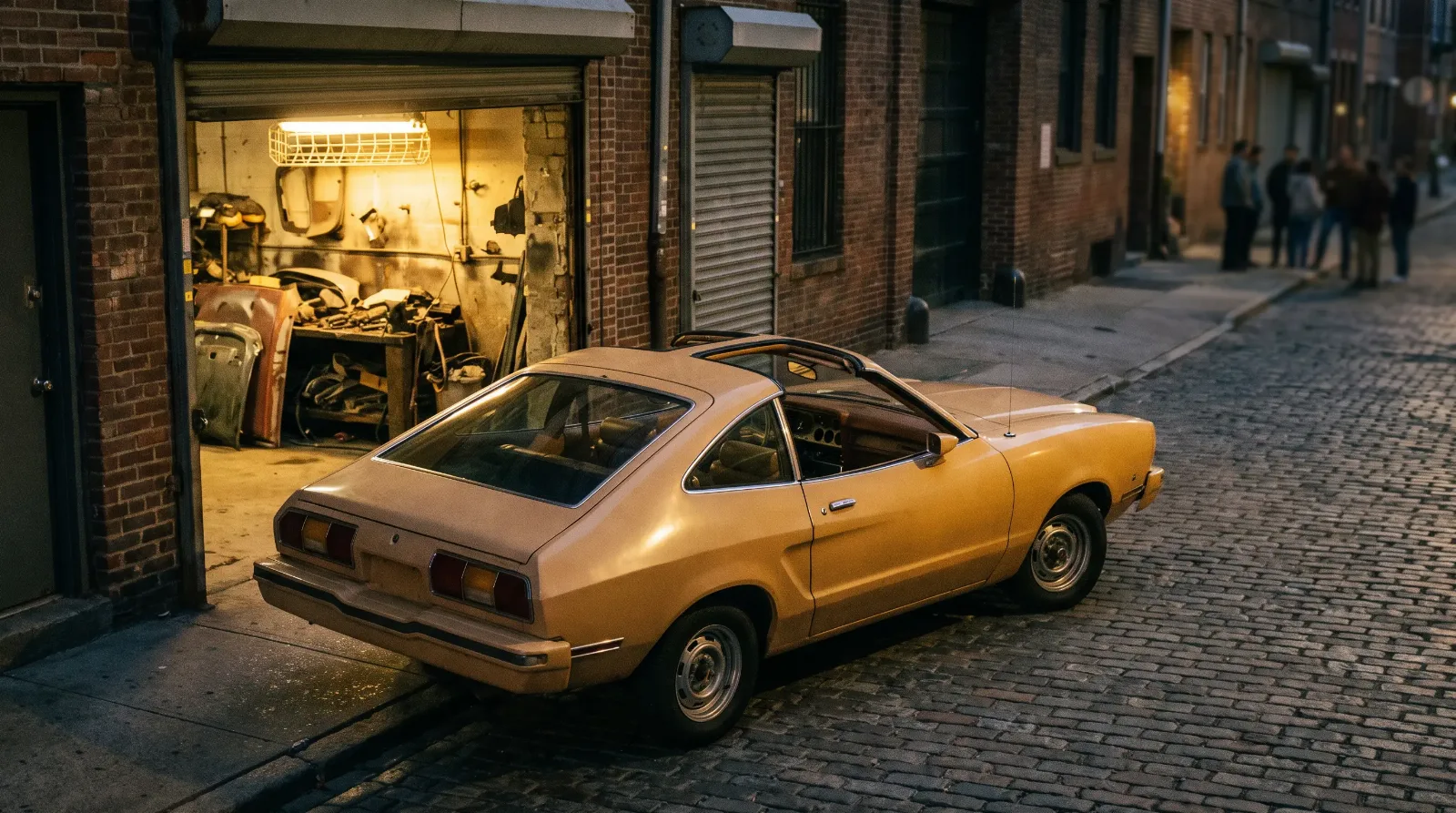
Open the door of a 1974 Mustang II Ghia that has been kept the way it left the dealer and the first thing you notice is the floor. The carpet is shag, deep enough to lose a dime in. Then the door panel, with its strip of wood-tone trim, and the little digital clock that once told some commuter how late they were running in the fall of 1973, when the gas lines started. Nobody bought this car to go fast. They bought it because it felt like a small, well-furnished room, and in a year when a big car suddenly looked like a liability, a small room with nice furniture made a lot of sense. The Mustang II Ghia was Ford's luxury pony, and for five model years it was a much bigger part of the Mustang story than the cars with stripes.
Car Features
7 min read
The Mustang II Ghia: Ford's Luxury Pony
Shag carpet, opera windows and Westminster cloth: the 1974 to 1978 Ghia outsold the Mach 1 every year, 243,552 cars in all.
The whole program, from the downsizing decision to the Car of the Year award, has its own long telling, and there is more on that here. This piece is about the Ghia alone: what it was, what it came with, how it changed, and why so many people chose it.
What made a Mustang II Ghia
When the Mustang II was introduced on September 21, 1973, it came in four forms: the hardtop, the 2+2 hatchback, the Mach 1 and the Ghia. The Ghia was the luxury model, and it was built on the notchback body, the formal two-door roofline that grew out of a Ghia-inspired proposal and that Lee Iacocca personally brought back into development in 1972. That body suited the job. Iacocca had asked for an upscale "little jewel," and of all the Mustang II versions, the Ghia is the one that took that brief literally.
The name was a real connection, not a borrowed one. Ford had taken control of the Ghia design house in Turin in 1970, so putting the Italian studio's name on the top-trim Mustang was a way of telling buyers that this small car had a little European tailoring in it. Whether a shopper in Ohio knew anything about coachbuilders in Turin hardly mattered. Ghia sounded expensive, and that was the idea.
Underneath, it was the same Mustang II as the others: a 96.2-inch wheelbase, 175.0 inches long, and the same engine list as the rest of the line. For 1974 that meant the 2.3-liter four rated at 88 hp or the 2.8-liter Cologne V6 at 105 hp, with no V8 at all. The Ghia was never about the mechanical package. It was about what you saw and touched once you were inside.
The 1974 Ghia: shag carpet, wood tone and a digital clock
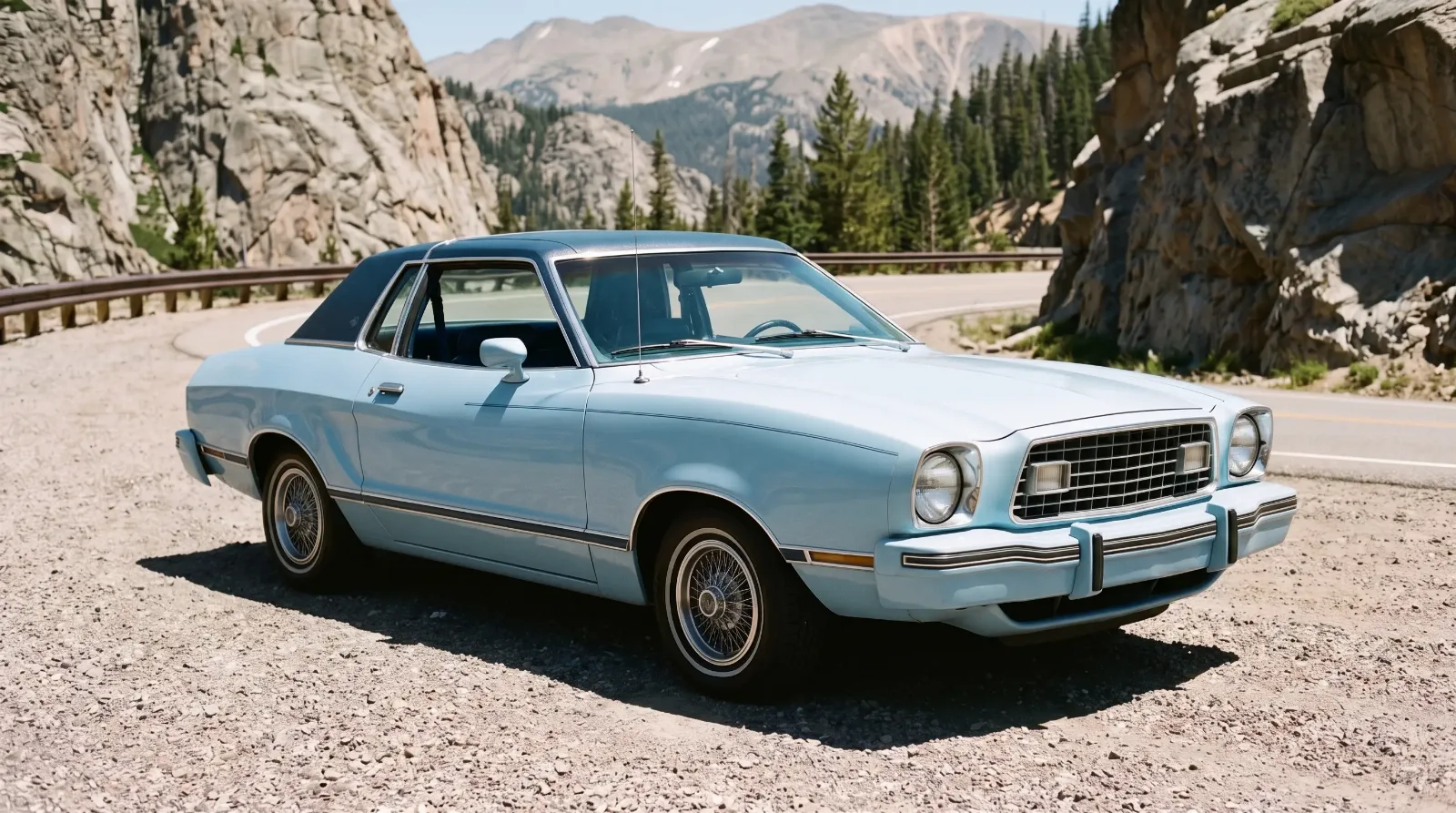
The first-year equipment list reads like a catalog of early-1970s comfort. Outside, the Ghia wore a vinyl roof, spoke-style wheel covers and remote-control door mirrors. Inside, there were deluxe color-keyed seat belts, the shag carpeting, wood-tone accents on the door panels, a digital clock and an item Ford listed as the Super Sound package. Seats came in a super-soft vinyl or in Westminster cloth, and the cloth cars are the ones that feel least like the vinyl-lined Fords most people picture from the decade.
Motor Trend's editors, quoted in Ford's own Car of the Year advertising, called the car "an outstanding concept of affordable luxury and prestige in a small package." Ford leaned hard on that phrase, and the Ghia was the version that made it believable. A base hardtop was a sensible small coupe. A Ghia was a small coupe that made you feel you had done well for yourself.
Year by year: opera windows, Silver Luxury and a Sports Group
The Ghia did not stand still. Each year Ford added a new way to dress it, and the packages say a lot about how the company read its buyers.
For 1975 came the opera windows and the Silver Luxury Group, which paired silver metallic paint and a silver half-vinyl roof with an all-cranberry velour interior. It was the most theatrical the Ghia ever got, and a well-preserved Silver Luxury car still stops people at shows, because nothing else from the period looks quite like it. That was also the year the 302 V8 came back to the Mustang II line, in two-barrel form and with an automatic only, so the luxury coupe now shared a showroom with a Mustang II that had eight cylinders again.
For 1976 there was a Ghia Luxury Group, and the price of moving up was modest: the Ghia option cost $334 over the base notchback that year. For 1977 Ford tried something different and offered a Ghia Sports Group in black or tan. The name alone is telling: a luxury coupe borrowing the word sports, at a time when the stripes and spoilers on the hatchbacks were getting all the attention. By 1978, the last year of the Mustang II, Ford also offered a coupe-only Fashion Accessory Package, though that was a separate notchback package rather than a Ghia item.
| Model year | Ghia production | Share of all Mustang II builds | Ghia highlight |
|---|---|---|---|
| 1974 | 89,477 | About 23% | Vinyl roof, shag carpet, wood-tone trim, digital clock, Westminster cloth |
| 1975 | 52,320 | About 28% | Opera windows; Silver Luxury Group |
| 1976 | 37,515 | About 20% | Ghia Luxury Group; Ghia option $334 over base notchback |
| 1977 | 29,510 | About 19% | Ghia Sports Group in black or tan |
| 1978 | 34,730 | About 18% | Final Mustang II year |
The numbers: why the Ghia mattered more than the Mach 1
Add up the five years and Ford built 243,552 Mustang II Ghias, a little over a fifth of the 1,107,718 Mustang IIs made from 1974 to 1978. That is the part of the story that gets lost. The Mach 1, the Cobra II and the King Cobra get the magazine covers and the poster spots, but the Ghia outsold the Mach 1 every single year. In 1974 it was 89,477 Ghias against 44,046 Mach 1s, roughly two to one. By 1977 the gap was more than four to one.
The notchback body as a whole outsold the three-door every year, too, which tells you who was really buying the Mustang II. For the sporty side of the range, the Cobra II stripes and later the T-tops, you can read about the hatchback and its roof options. But the buyers who kept the Mustang name alive through the oil crisis were mostly looking for comfort, economy and a car that did not feel cheap. The Ghia gave them that in one package.
"Every time I see a Ghia at a show, there is somebody standing next to it saying their mother had one, or their aunt, or they drove one to their first job. The Mach 1 is the car people remember wanting. The Ghia is the car people remember having."
Nora Beckett
Time has not been entirely kind to the survivors. Vinyl roofs can hold moisture against the steel beneath them, shag carpet does not forgive a leaking windshield seal, and the plush interiors that made these cars special are exactly what wore out first. A Ghia with its original Westminster cloth intact is a rarer thing than the production numbers suggest.
After 1978: the Ghia badge on the Fox
When the Mustang II gave way to the Fox-body Mustang for 1979, the Ghia name moved over with it, and this time it came on two bodies. Ford built 56,351 Ghia coupes and 36,384 Ghia hatchbacks for 1979, with the Ghia coupe priced up to $5,064. The luxury Mustang had become a fixture of the lineup.
It did not last much longer. The Ghia, along with the Cobra, ended after the 1981 model year, and the top Mustang trims that followed leaned toward performance rather than plush. In a sense the Ghia belonged to a particular moment, a few years when an American pony car could sell on velour, opera windows and a quiet ride, and a lot of people were glad that it did.
That shag carpet is still there in the best-kept cars, a little flattened by fifty years of shoes. Sit on the Westminster cloth, look at the wood-tone strip on the door, and you can understand why so many buyers in 1974 walked past the stripes and signed for this one.
Sources and notes
Related Reading
Have a
Ford Mustang
for Sale?
Reach thousands of serious classic car collectors across the US.
Sell It Here →
Selling a classic? Here's how: sell my classic car
Are You a Classic Car Dealer?
List your full inventory and connect with targeted classic car buyers.
Join as a Dealer →

About the author
Nora Beckett
Automotive features writer and photographer who tells the human stories behind the cars, from show fields to cross-country road trips.
Related Listings - Ford Mustang

Comments
Be the first to comment on this article.