
The Mustang II is the generation people skip when they tell the Mustang's history, and the records do not support skipping it. Ford built 1,107,718 of them across five model years, and the first of those years out-built every Mustang year from 1968 to the end of the century. It won Motor Trend's Car of the Year. It also arrived with no V8, rode on a platform derived from the Pinto, and spent the following decades as the family's punch line. Both halves of that record are accurate. What follows is the full account of the 1974 to 1978 car, where it fits in the classic Mustang story, and which of its many versions deserve a second look.
Car Features
11 min read
The Mustang II Story (1974–1978): The Small Pony That Kept the Name Alive
The full Mustang II story, 1974 to 1978: why Ford shrank the car, the no-V8 launch, Car of the Year, the 302's return and 1.1 million built.
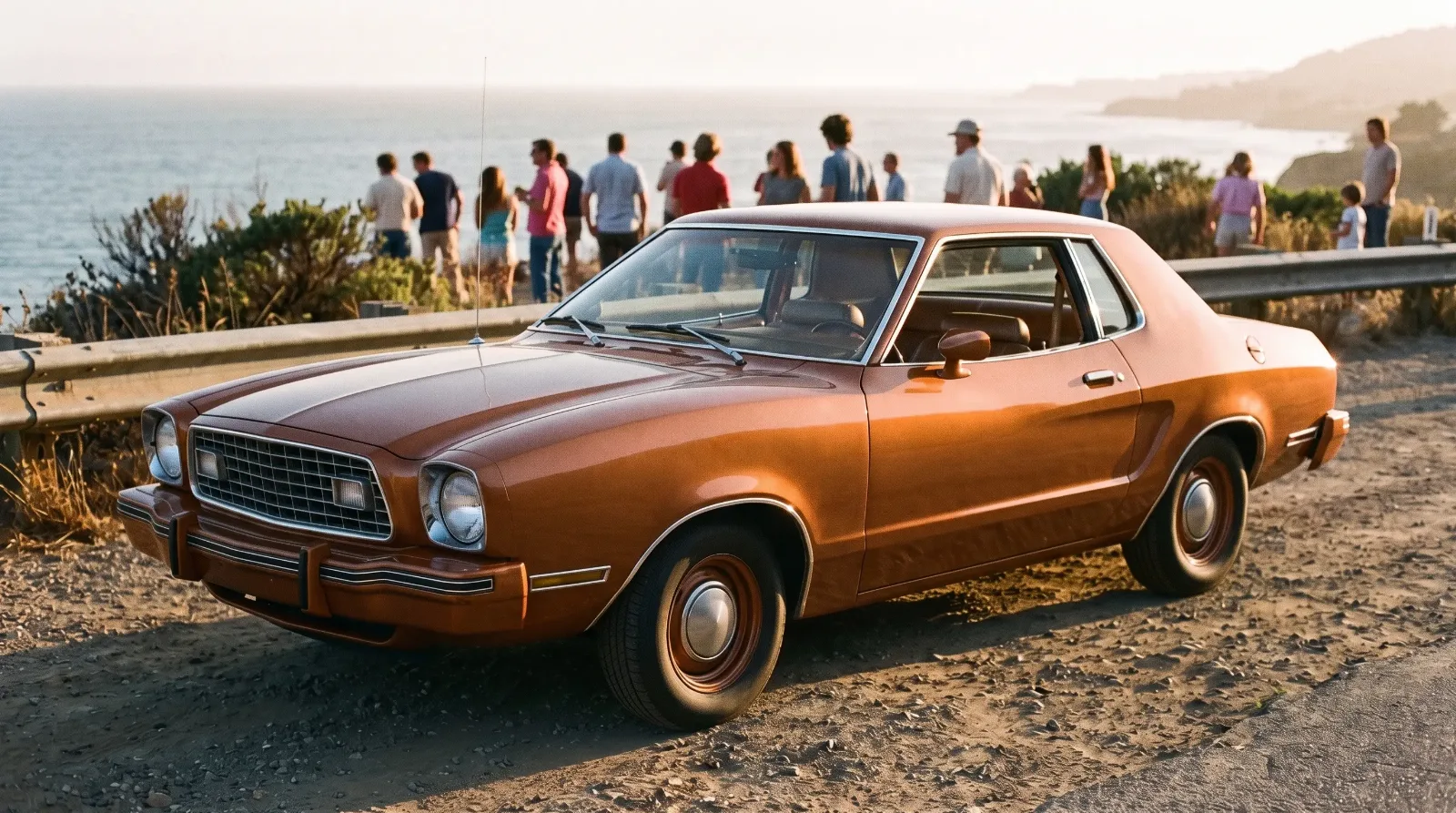
Why Ford shrank the Mustang
The usual explanation is the oil crisis. The dates say otherwise. Mustang production fell from 299,824 for 1969 to 190,727 for 1970, then 149,678 for 1971 and 125,093 for 1972. The car had grown with every redesign. A 1971 SportsRoof rode a 109-inch wheelbase, measured 189.5 inches long and weighed 3,560 pounds, against 2,556 pounds for the 1965 hardtop that started it all. The buyers who had wanted a small, affordable coupe in 1965 were no longer finding one in the showroom, and they left.
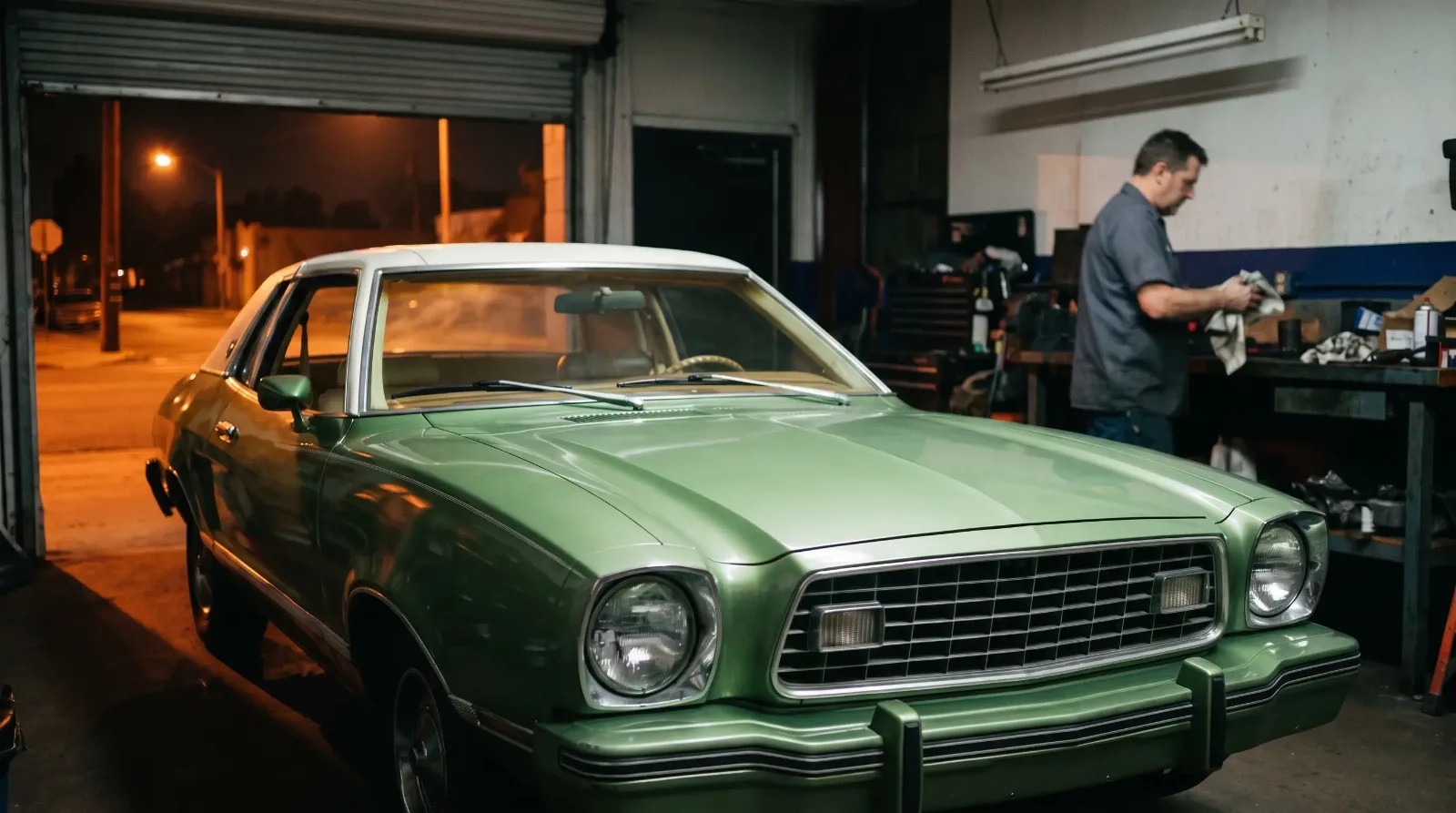
Lee Iacocca pushed for a smaller car at a management meeting in November 1969, two months after Henry Ford II fired Bunkie Knudsen, the executive whose program produced the big 1971 body. The directives were specific: a launch for the 1974 model year, and an upscale "little jewel" rather than a stripped economy car. Ford liked the phrase enough to put it in its own advertising later. Two platform programs competed for the job. "Ohio" was based on the Maverick, "Arizona" on the Pinto, and Arizona won in July 1971, with Stuart M. Frey as chief engineer. Ford's public relations staff proposed the Mustang II name in August 1972, and Henry Ford II approved it.
The body came out of a contest, as the original Mustang's had. Ford had acquired the Ghia design house in Turin in 1970, and in mid-1971 it asked Ghia for a fastback and a hardtop proposal. The Ghia hatchback set the sleeker theme and supplied the molded-in side scoop. Design chief Gene Bordinat then put four studio teams to work in August 1971. A fastback from the Lincoln-Mercury studio, drawn by Howard "Buck" Mook, won and became the 2+2 hatchback. In February 1972 Iacocca revived a Ghia-inspired notchback from Don DeLaRossa's Advanced Design studio, and Dick Nesbitt developed it into the production hardtop. Ghia shaped the direction. Dearborn drew the two bodies.
1974: a Mustang with no V8, and Car of the Year
Ford introduced the car to the public on September 21, 1973. Some histories give August 1973, which may reflect press previews. The new car rode a 96.2-inch wheelbase and measured 175.0 inches long and 70.2 inches wide. Against the 1973 Mustang it was about 19 inches shorter, about 4 inches narrower and 450 to 490 pounds lighter, the spread depending on which 1973 model you compare it with. There were two bodies, a 2-door notchback Ford called the Hardtop and a 3-door 2+2 hatchback, and four models built on them: the Hardtop, the 2+2, the luxury Ghia notchback and the Mach 1 hatchback. There was no convertible. U.S. cars came from Dearborn and San Jose, plant letters F and R in the VIN.
The engine list had two lines. The base engine was a 2.3-liter overhead-cam four built in Lima, Ohio, rated at 88 hp net. The option was a 2.8-liter Cologne V6 at 105 hp, standard in the Mach 1. For the first time since the car's introduction, a U.S. buyer could not order a V8 Mustang.
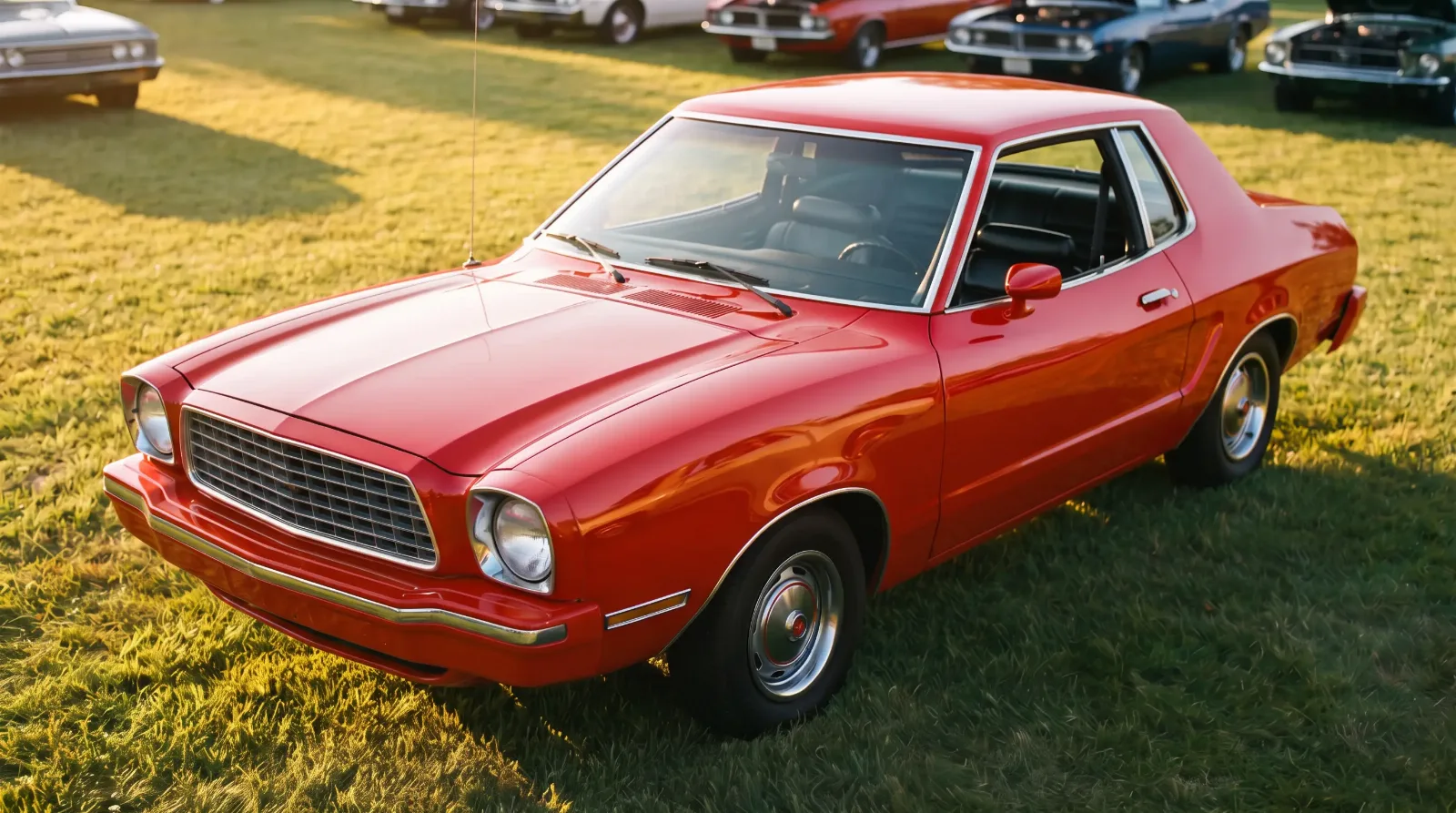
The question that follows every Mustang II is how much Pinto sits underneath. The honest answer is the platform architecture and the base four, and less than the reputation suggests. The Mustang II wheelbase was 2.2 inches longer than the Pinto's 94.0 inches. The front end was its own design: engineers Bob Negstad and Jim Kennedy developed a U-shaped front subframe, nicknamed the "toilet seat," that carried the suspension and the engine on isolated mounts. Rack-and-pinion steering was standard, with power assist available. Even the 2.3 four did not come down from the Pinto, since it debuted in both cars for 1974.
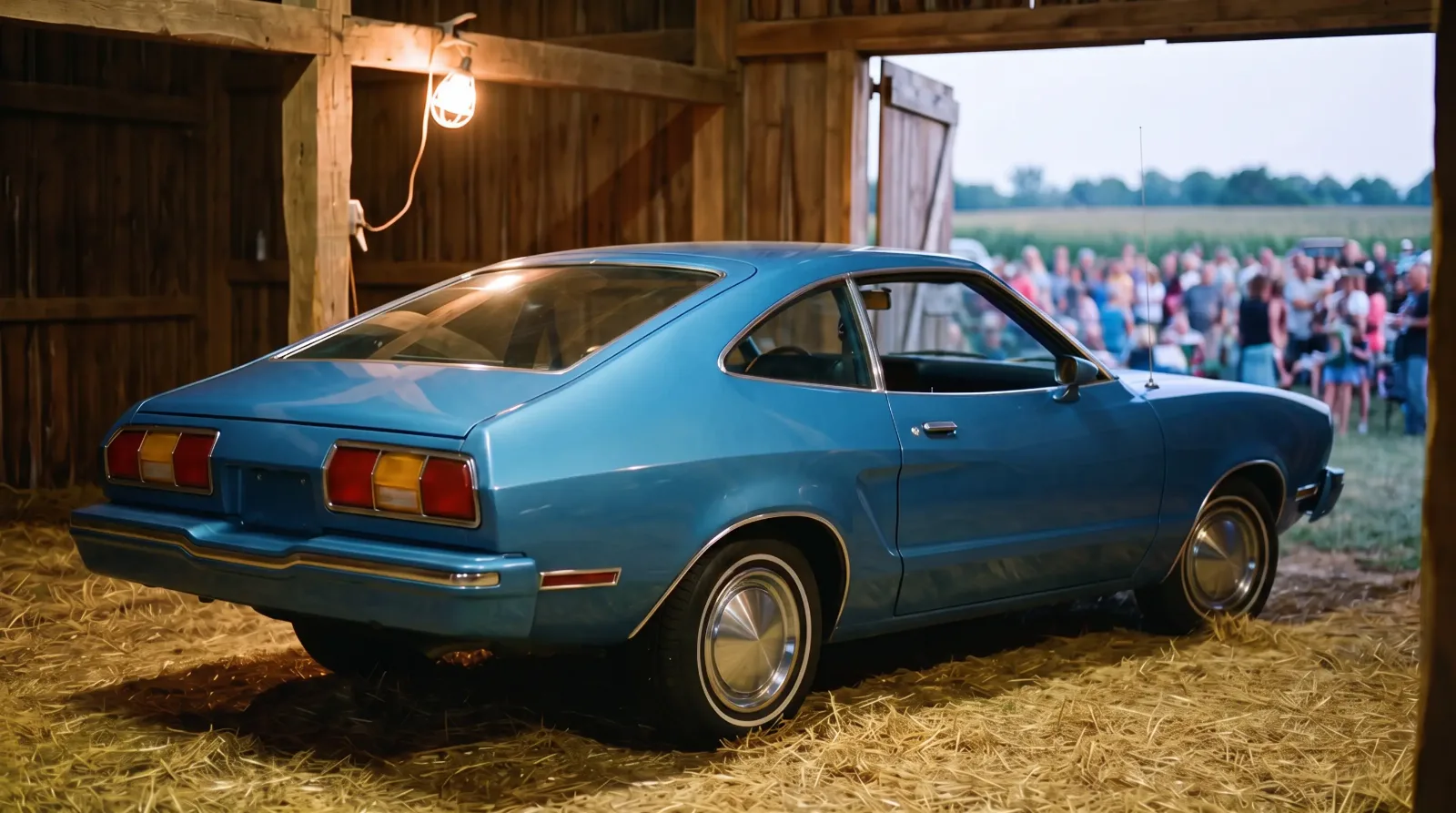
Motor Trend named the 1974 Mustang II its Car of the Year, and the quiet, refined ride that isolated subframe produced was a large part of the car's appeal. The next Mustang to win was the 1994 model. Then the calendar did Ford a favor. The Arab oil embargo began in October 1973, weeks after the launch, and a small Mustang with a four-cylinder engine suddenly looked like foresight rather than retreat. Ford built 385,993 Mustang IIs for 1974, close to three times the 134,867 Mustangs of 1973 and the best Mustang year since 1967.
The V8 returns: Mustang II engines from 1975 to 1978
For 1975 the 302 came back: the Windsor small-block, 4.9 liters but marketed as a 5.0, breathing through a two-barrel carburetor. Fitting it took more than a set of mounts. Ford reworked the front fenders, the engine bay and the header panel, and the grille opening became thinner on every model, four-cylinder hardtops included. That grille remains the quickest way to separate a 1974 nose from a later one. The V8 was automatic only that year, with the C4 behind it, and it required power steering and power brakes.
It also arrived in the first catalytic converter year, which cost the rest of the line. The four dropped to 83 hp and the V6 to 97 hp, and the V8 was rated at 122 hp. Some references print 140 hp for 1975 and a later Ford fact sheet says 130, but 122 is the figure the better sources support. Road & Track timed a 1975 V8 car at 10.5 seconds to 60 mph, with a top speed of 106 mph. Consumer Guide ranked it last in its Low-Priced Sport Car class.
Improvement came slowly. A Sports Performance Package paired the 302 with a four-speed manual for 1976. By 1978 the engine was rated at 139 hp at 3,600 rpm and 250 lb-ft at 1,600 rpm, fed by a Motorcraft 2150 two-barrel, although some 1978 tables list 134 hp. In these years the published ratings wander by a few horsepower from one reference to the next. I read that as sources copying different brochures, not as evidence of a stronger engine nobody has found.
"The Mustang II is usually judged against the 1969 cars, which is the wrong comparison. Judge it against its own showroom, its own emissions rules and its own sales ledger, and the record reads very differently. A car that nobody wanted does not sell 385,993 copies in its first year."
Tom Ramirez
Ghia, Mach 1, Cobra II and King Cobra
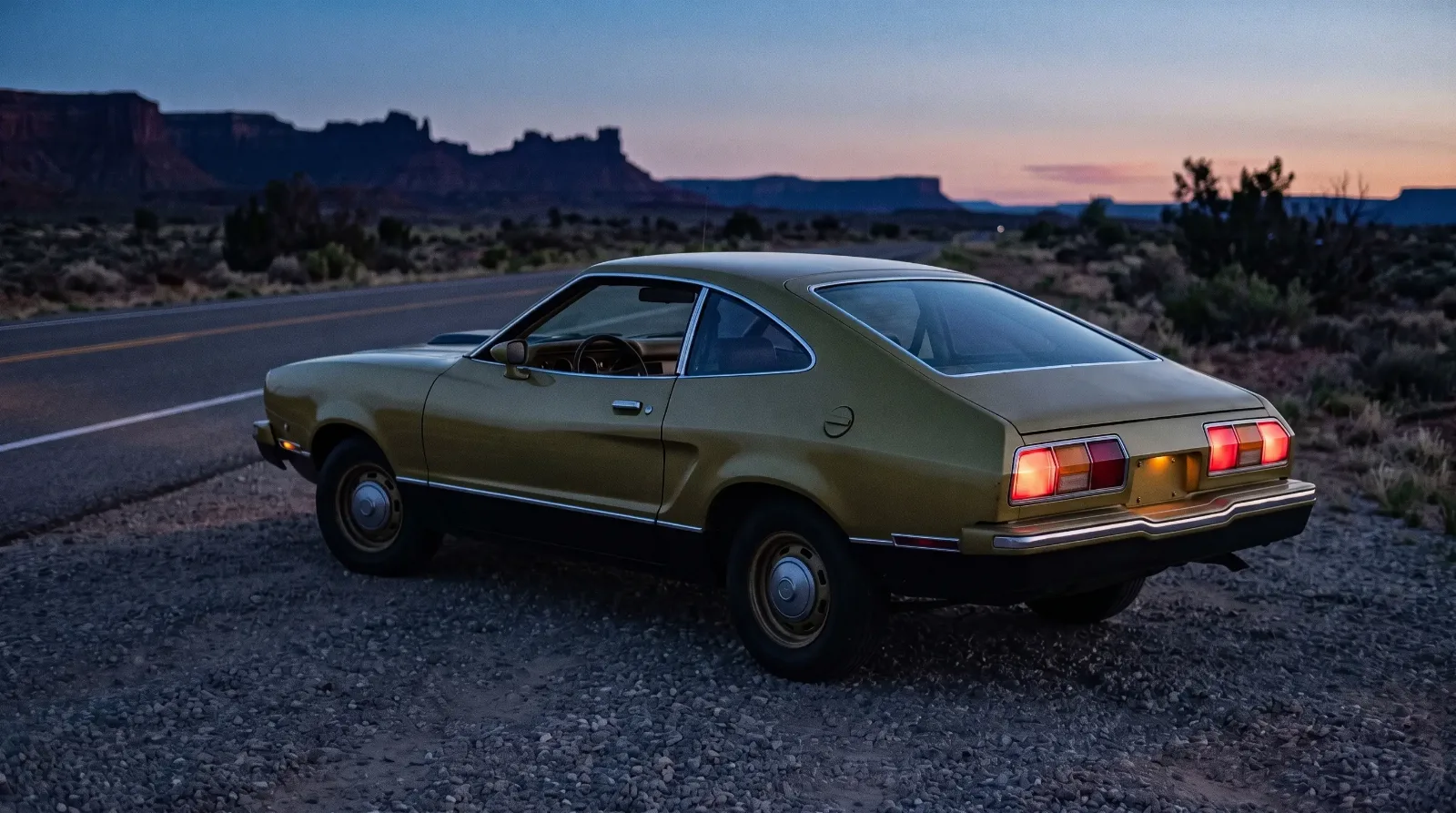
Ford ran the Mustang II as two bodies and four models, then multiplied them with option groups. The model that mattered most to the sales chart is the one enthusiasts mention least. The Ghia, the notchback with the vinyl roof, shag carpet, wood-tone door accents and digital clock, accounted for 89,477 cars in 1974 and 243,552 over five years. It gained opera windows for 1975, along with a Silver Luxury Group that paired silver paint and a silver half-vinyl roof with a cranberry interior. Iacocca had asked for a little jewel, and the Ghia is the version that took the brief literally.
The Mach 1 was a genuine model with its own VIN body code, 05, and for 1974 it sold 44,046 cars, more than the 35,440 Mach 1s Ford built for 1973 on the big car. Then it faded to 21,062, 9,232 and 6,719, before a last-year figure of 7,968. What took the spotlight was the Cobra II, an appearance package designed by Jim Wangers, whose company Motortown applied the parts in 1976 before Ford brought the work in-house for 1977. It added a black grille, a simulated hood scoop, front and rear spoilers, quarter-window louvers, stripes and cobra emblems. It came on the hatchback only, with any engine, and the package price climbed from $325 in 1976 to $677 by 1978. Its best-known role came on Charlie's Angels, which premiered on September 22, 1976.
The rest of the order form filled in around those cars. The 1976-only Stallion group blacked out the grille, moldings and lower body, and Ford sold the same treatment on the Pinto and the Maverick that year. The Rallye package supplied the hardware side: heavy-duty springs, adjustable shocks and a rear stabilizer bar. A T-top with twin removable tinted glass panels arrived partway through 1977, listed at $629 on the 2+2. And for 1978 came the King Cobra, a 302-only hatchback with a deep air dam, wheel-opening flares, a reverse-facing hood scoop reading "5.0L" and a cobra across the hood, at $1,277 for the package. Ford built 4,313 by the widely repeated count, although Old Cars Weekly gives 4,960.
Mustang II production numbers, year by year
The production record is where the Mustang II's reputation and its history part ways. These are model-year figures, and each year's body-style rows reconcile with the total.
| Model year | Total built | Ghia | Mach 1 | What changed |
|---|---|---|---|---|
| 1974 | 385,993 | 89,477 | 44,046 | Launch; 2.3 four and 2.8 V6 only; Car of the Year |
| 1975 | 188,575 | 52,320 | 21,062 | 302 V8 returns at 122 hp; catalysts; thinner grille |
| 1976 | 187,567 | 37,515 | 9,232 | Cobra II and Stallion; four-speed offered with the V8 |
| 1977 | 153,173 | 29,510 | 6,719 | T-top from mid-year; revised Cobra II graphics |
| 1978 | 192,410 | 34,730 | 7,968 | King Cobra; 302 rated at 139 hp; final year |
| Total | 1,107,718 | 243,552 | 89,027 | Five model years |
Two patterns stand out. The first year dwarfs the other four, and the notchback outsold the hatchback every single year. In 1974 the Hardtop and the Ghia together came to 267,148 cars against 118,845 hatchbacks. People remember the stripes. Most buyers drove home a plain coupe or a Ghia.
A few stray figures circulate. One widely read reference prints 296,041 for 1974 alongside 385,993, and the same page gives 199,199 for 1975 and 153,117 for 1977. Only the figures in the table add up from their body-style rows, which is why they are the ones used here. The 1978 Cobra II remains genuinely unsettled: the usual table says 8,009, while Old Cars Weekly reports 4,049. No Ford production document has surfaced to settle it.
How the Mustang II kept the name alive
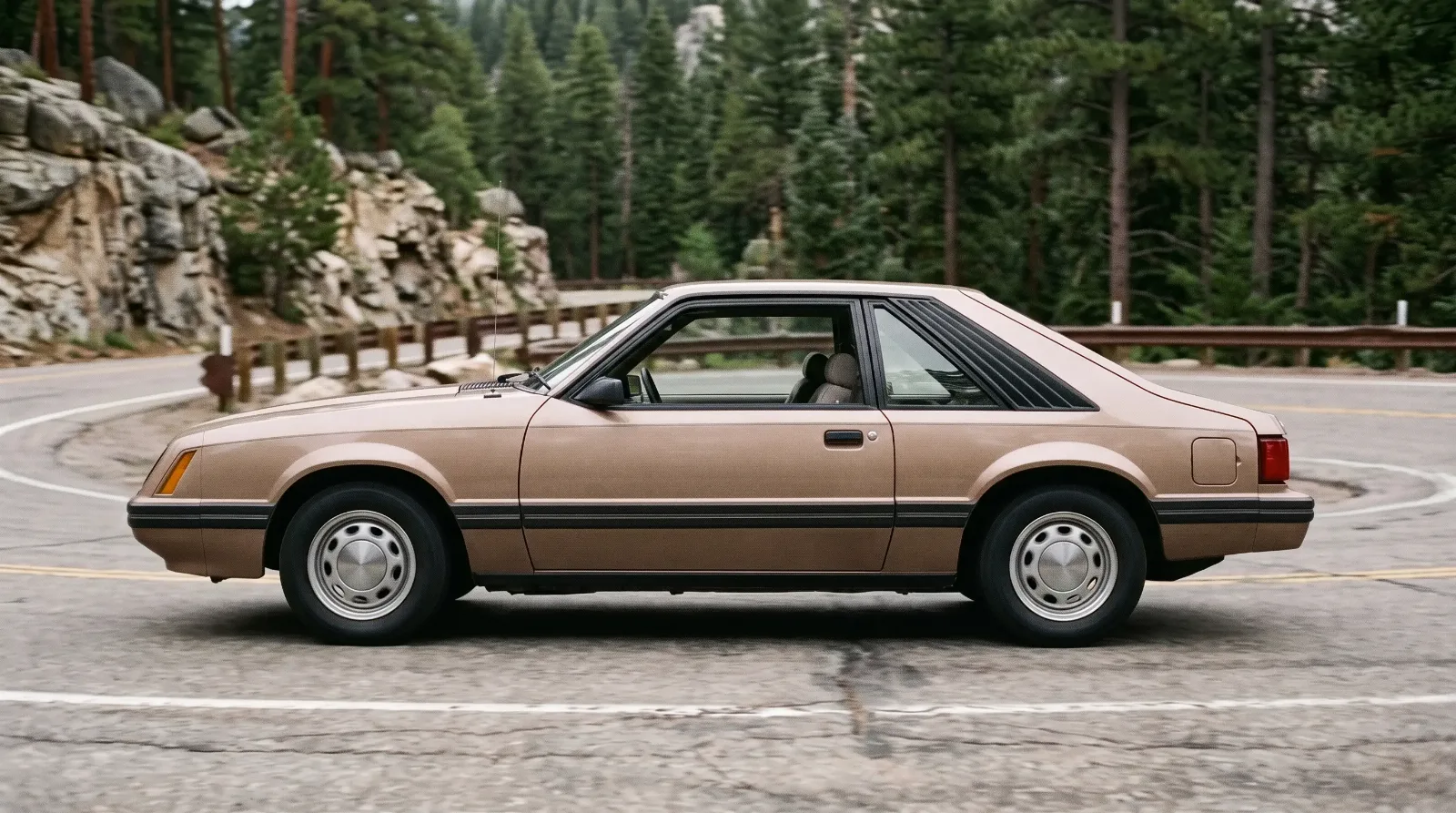
The Mustang II was never meant to be permanent. In October 1974, barely a year after the launch, Ford confirmed that a Fox-based car would replace it, and design work on that car began in July 1975. The last King Cobras were built in July 1978, the same month Lee Iacocca left Ford, and the Mach 1 name went with the generation. What carried forward was quieter: the 2.3 four went into the Fox Body that replaced it, was later turbocharged there, and stayed in the Mustang lineup until the 1994 car arrived.
The larger point is the one the sales ledger makes. Between 1974 and 1978, a period when a big, thirsty Mustang might simply have been dropped, Ford kept the name in showrooms and sold more than a million cars under it. The generation that enthusiasts call the low point is also the reason there was a 1979 Mustang to build on.
The car found a second life in an unexpected place. In 1974 hot rodder Chuck Lombardo adapted the Mustang II front suspension for street rods, and builders came to value it for a track width close to old Fords, rack-and-pinion steering and disc brakes. "Mustang II front end" became a parts-catalog term in its own right, and many donor cars were stripped for it, which helps explain why clean, unmodified survivors are scarcer than the production total suggests.
For collectors today, the interest concentrates in a few places: the Cobra II, the King Cobra, the Mach 1, intact Ghia interiors and the late T-top hatchbacks. The VIN settles some claims quickly. The body code reads 02 for the Hardtop, 03 for the hatchback, 04 for the Ghia and 05 for the Mach 1, and the engine letter reads Y for the 2.3, Z for the 2.8 and F for the 302. It cannot prove a Cobra II, which was built on the ordinary 03 hatchback, so original paperwork carries the weight there. King Cobras carry a buck tag marked "KC" at Dearborn or "KNG" at San Jose. Anyone browsing Mustang II for sale listings should start with those codes and ask for the window sticker before paying extra for stripes.
Sources and notes
- Wikipedia: Ford Mustang (second generation)
- MustangSpecs: 2nd generation Ford Mustang overview
- Mac's Motor City Garage: Preserving the breed, the 1974-78 Mustang II
- FordMuscle: Looking back, the 1974-78 Mustang goes back to basics
- Old Cars Weekly: Car of the Week, 1978 Ford Mustang Cobra II
- MustangSpecs: 1978 Mustang King Cobra
Related Reading
Article
The Classic Ford Mustang Story
Article
The First-Generation Mustang Story (1964½–1973)
Article
The Fox Body Mustang Story (1979–1993)
Article
Iacocca's "Little Jewel": Why Ford Shrank the Mustang
Article
The 1974 Mustang II Launch and Car of the Year
Article
How Much Pinto Is in a Mustang II?
External
/ford/mustang/second-generation

About the author
Tom Ramirez
Corvette researcher and historian based in Bowling Green, Kentucky. Two decades documenting Corvette production history from original factory records.
Related Listings - Ford Mustang




Comments
Be the first to comment on this article.