
The Mustang II Mach 1 is the car people point at when they want to prove the 1970s ruined everything. A Mach 1 with a V6? I get the reaction. But it skips over what Ford actually did with the badge from 1974 to 1978, and what buyers did with their money, because for one model year this little hatchback sold more Mach 1s than the big car it replaced.
Car Features
7 min read
The Mustang II Mach 1
The 1974 to 1978 Mach 1: hatchback only, V6 standard, 44,046 built in year one, then eclipsed by the Cobra II.
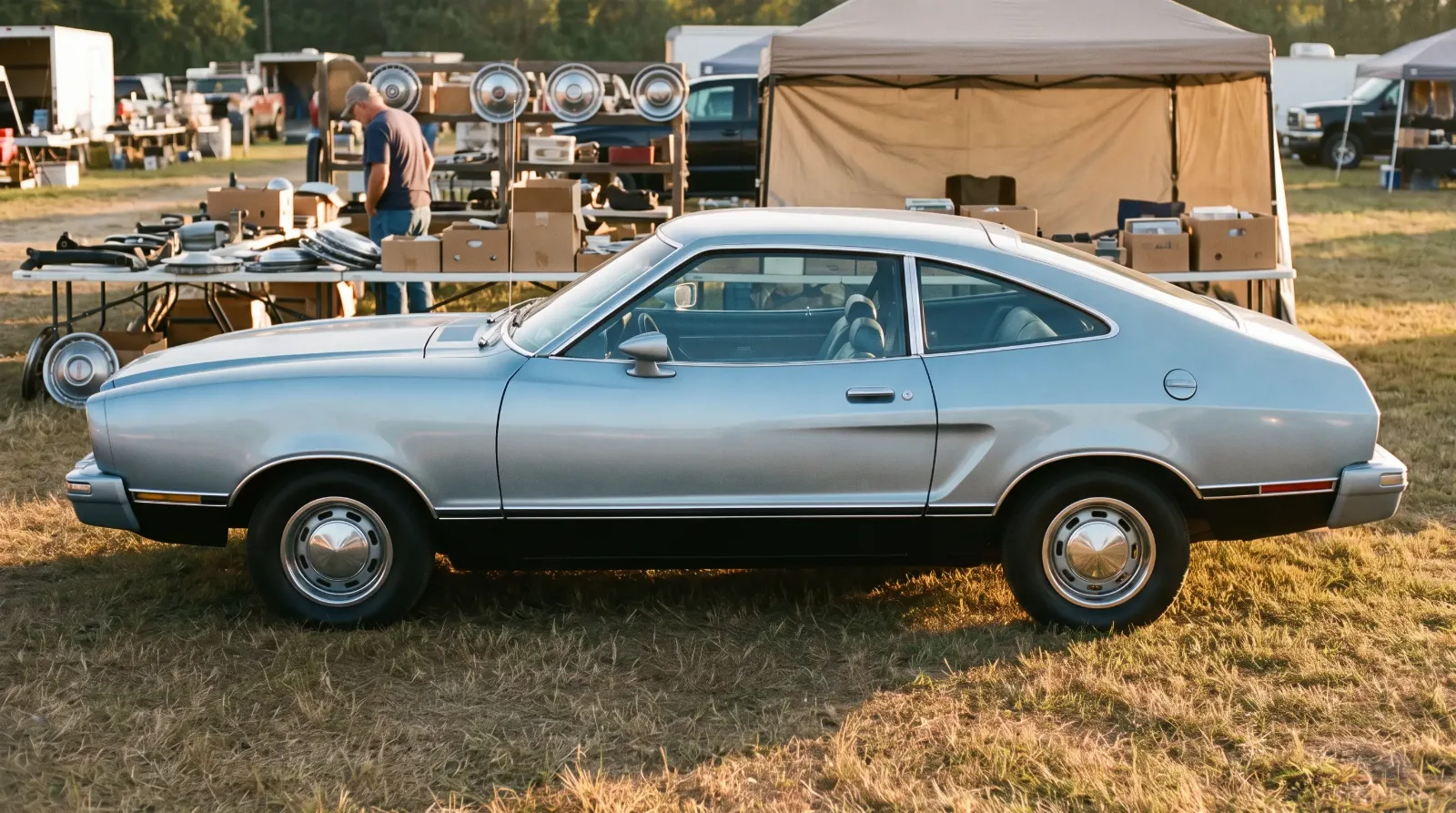
This is not the whole story of the Mustang II, from Iacocca's brief to the last car off the line. It is one model. What came on it, what was under the hood, how many Ford built, and why the name ran out of road after 1978.
What the Mustang II Mach 1 was in 1974
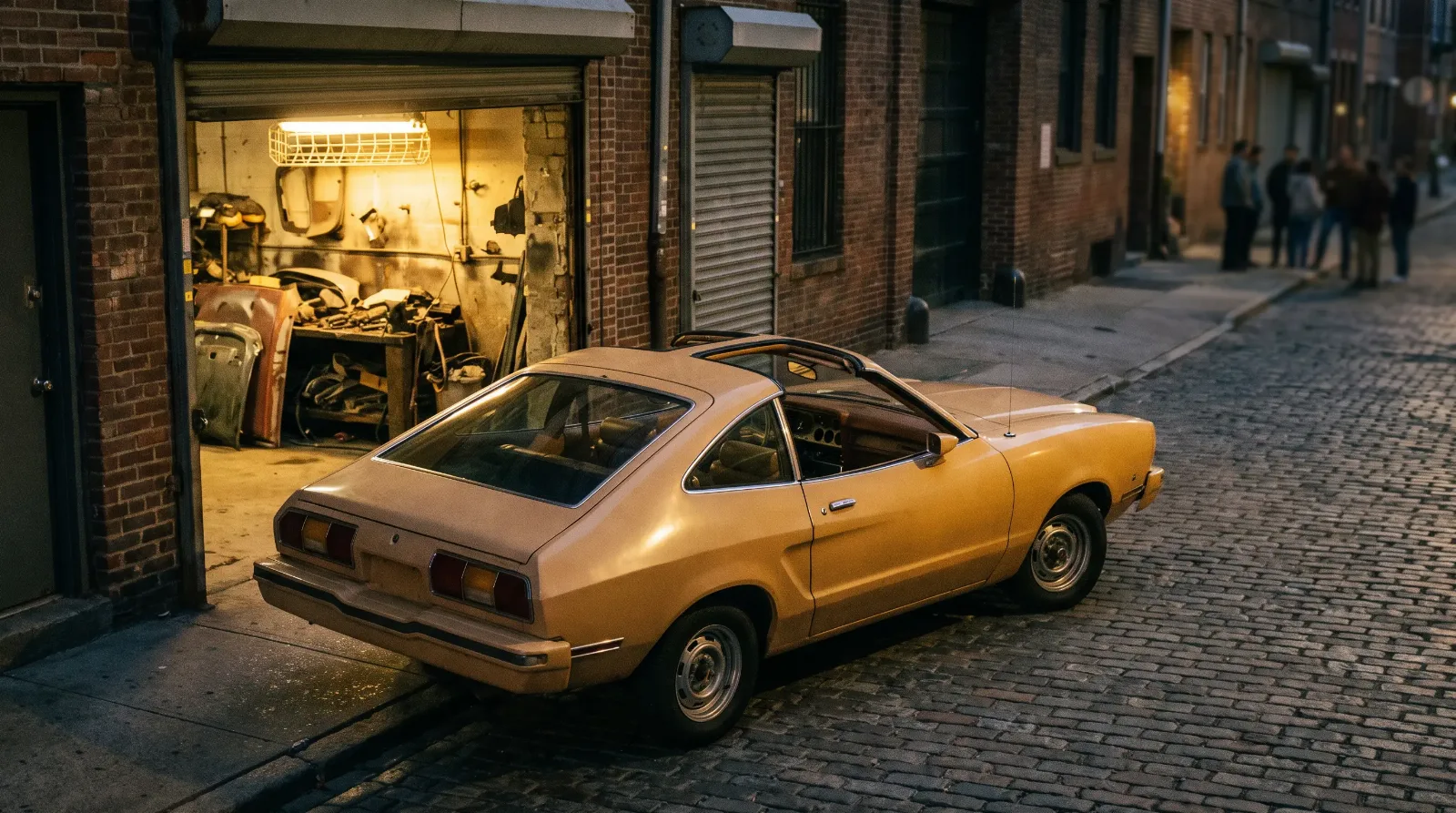
The 1974 Mustang II came four ways. There was the notchback hardtop, the 2+2 hatchback, the Ghia luxury model, and the Mach 1. The Ghia was the luxury notchback with the vinyl roof. The Mach 1 was the sporty one, and Ford built it only on the three-door hatchback body. If you wanted the Mustang with some attitude that year, this was the top of the ladder.
It was also a real model, not a sticker kit. Ford gave the Mach 1 its own VIN body code, 05, the same code the 1970 to 1973 Mach 1 cars carried. A plain 2+2 hatchback carried code 03. So when somebody tells you the Mustang II Mach 1 was just a decal package on a hatchback, the factory paperwork says otherwise.
The look was the selling point, and Ford spent the money where you could see it. Standard equipment on the 1974 car included a special paint treatment with the lower body and the rear deck blacked out, MACH 1 lettering on the lower bodyside, styled steel wheels with trim rings, and dual remote racing mirrors. On a car with a 96.2 inch wheelbase, that black lower body did a lot of work. It made the hatchback sit lower to the eye than it really did.
A Cologne V6 where the V8 used to be
Then you opened the hood. The standard engine in the 1974 Mach 1 was the 2.8 liter Cologne V6, 171 cubic inches, rated at 105 hp. The base cars ran the 2.3 liter Lima four at 88 hp. And that was the whole list. No V8 went into a U.S. Mustang for 1974, Mach 1 included. The top sporty Mustang had two engines to choose from and neither one had eight cylinders.
People like to set that 105 hp next to the 1969 Mach 1, which started with a 351 two-barrel rated at 250 hp. That is not a fair fight. The 1969 figure is a gross rating and the 1974 figure is net, and gross numbers ran a lot higher for the same hardware. The honest comparison is 1972, the year Ford switched to net ratings, when the 302 two-barrel was rated at 140 hp. Against that, the 1974 Mach 1 gave up 35 hp to the plain V8 of two years earlier. It was bad enough without exaggerating it.
What the V6 had going for it was manners. Two more cylinders than the four, a smoother idle, a bit more pull off the line in a car that weighed several hundred pounds less than the 1973 Mustang. Nobody ever called one fast, and nobody who bought one new expected it to be.
Why it outsold the 1973 Mach 1, then faded
Here is the number that surprises people. Ford built 44,046 Mustang II Mach 1s for 1974. For 1973, the last year of the big car, it built 35,440 Mach 1s. So the V6 hatchback outsold the V8 fastback it replaced by more than 8,600 cars. Buyers in 1974 were not shopping for a big V8 fastback. They wanted something smaller that still looked like it meant business, and the Mach 1 delivered the look.
It did not last. The 302 V8 came back to the Mustang option list for 1975, with an automatic only and a 122 hp rating in that first catalyst year, and it could be had in the Mach 1. Ford's own 1975 Mach 1 advertising showed the car with the optional 302. The V6 dropped to 97 hp the same year. Mach 1 output fell to 21,062, about half the 1974 total, but the whole Mustang II line fell by about the same share, so the Mach 1 held its slice for one more year.
| Model year | Mach 1 built | All Mustang II | Mach 1 share | What changed |
|---|---|---|---|---|
| 1974 | 44,046 | 385,993 | 11.4% | 2.8 V6 standard at 105 hp; no U.S. V8 |
| 1975 | 21,062 | 188,575 | 11.2% | 302 V8 returns at 122 hp, automatic only; V6 down to 97 hp |
| 1976 | 9,232 | 187,567 | 4.9% | Cobra II package arrives on the 2+2 |
| 1977 | 6,719 | 153,173 | 4.4% | Cobra II outsells the Mach 1; 302 rated at 139 hp |
| 1978 | 7,968 | 192,410 | 4.1% | Last Mach 1 year; King Cobra joins the line |
| Total | 89,027 | 1,107,718 | About 8% |
The real damage came in 1976. That year Ford added the Cobra II, a $325 appearance package for the 2+2 with a simulated hood scoop, spoilers, quarter-window louvers, stripes and cobra emblems, and you could put it on a car with any engine. The Mach 1 had been the loud Mustang. Now it was the quiet one. Mach 1 output fell to 9,232, under half of 1975, even though total Mustang II production barely moved. It was still the most expensive car in the line, with a 1976 base price of $4,209, and it now looked tame next to a hatchback wearing stripes and a hood scoop.
By 1977 the Cobra II outsold the Mach 1 almost two to one, 11,948 to 6,719. For 1978 the Mach 1 ticked up to 7,968 while Ford put its effort into the King Cobra, a 302-only car with a big snake decal on the hood, of which 4,313 were built. The Mach 1 was still in the brochure. It just was not the car Ford was shouting about anymore.
"The Mach 1 did not die because of the V6. It sold 44,000 cars with the V6. It died because Ford put a louder car next to it in 1976 and let the badge go quiet."
Mike Sullivan
Reading a Mustang II Mach 1 today
If you are looking at one at a show, start with the VIN. The body code should read 05. If it reads anything else, the car left the factory as a different model, whatever the paint says. Then look at the shape. A notchback with Mach 1 graphics is a costume, because Ford never built a Mustang II Mach 1 notchback.
Then check the engine against the year. A 1974 Mach 1 with a 302 did not leave the factory that way, because there was no U.S. V8 that year. A V6 Mach 1 from any year is correct, and an owner who kept the original 2.8 has not done anything wrong. That is the car Ford built and the car most buyers drove home. A 1975 V8 car should have the automatic and the power steering and brakes the 302 required that year.
The appearance parts are where these cars lose their identity. The blacked-out lower body gets painted over during a cheap respray. The racing mirrors get swapped for whatever was on the shelf. The styled steel wheels go to the scrapyard with the trim rings still on them. A Mach 1 that still has those pieces is telling its own story honestly.
Where the Mach 1 sits in the Mustang story
The Mustang II Mach 1 is the hinge between two eras of the name. The 1969 to 1973 cars were built around big V8s and big bodies, and if you want those, there is more on the Boss and Mach 1 cars of that period. The 1974 car kept the badge, the blacked-out paint and the attitude, and dropped everything else. For one year that was enough to beat the car it replaced.
When the Fox body arrived for 1979, the Mach 1 did not come along. Ford left the name on the shelf for a long time, and it did not return until the 2003 Mach 1, which brought back the shaker hood scoop. The Mustang II version has a smaller one, and I think it deserves a bigger one, if only because it kept the badge alive through the worst years for American performance. It is a small but real chapter in the long history of the Ford Mustang, and the people behind those 89,027 sales were not wrong about what they wanted.
Sources and notes
- MustangSpecs: 1974 Ford Mustang (body codes, Mach 1 equipment, production)
- Muscle Car Facts: 1974 Mustang (archived copy)
- Ford advertisement for the 1974 Mustang II Mach 1, Motor Trend, October 1973
- Ford advertisement for the 1975 Mustang II Mach 1, shown with the optional 302 V8
- MustangSpecs: 1977 Ford Mustang (Mach 1 and Cobra II production)
- Wikipedia: Ford Mustang (second generation)
Related Reading
Have a
Ford Mustang
for Sale?
Reach thousands of serious classic car collectors across the US.
Sell It Here →
Selling a classic? Here's how: sell my classic car
Are You a Classic Car Dealer?
List your full inventory and connect with targeted classic car buyers.
Join as a Dealer →

About the author
Mike Sullivan
Detroit-area muscle car enthusiast and restoration specialist with three decades of hands-on experience working on American iron.
Related Listings - Ford Mustang

Comments
Be the first to comment on this article.