
Picture a newsstand in the middle of April 1964. The racks hold the usual mix of world news, politics and the space race, and then, on two of the biggest weeklies in the country, a car man from Dearborn. The Mustang Time Newsweek cover week is one of the stranger moments in American publishing: a new Ford and the executive behind it on both national newsmagazines at the same time, in the same week the car went on sale. Plenty of cars have been reviewed. Very few have been the national story.
Car Features
8 min read
The Week the Mustang Made Time and Newsweek
In April 1964 Lee Iacocca and the new Mustang landed on Time and Newsweek covers the same week the car went on sale. How that week came together.
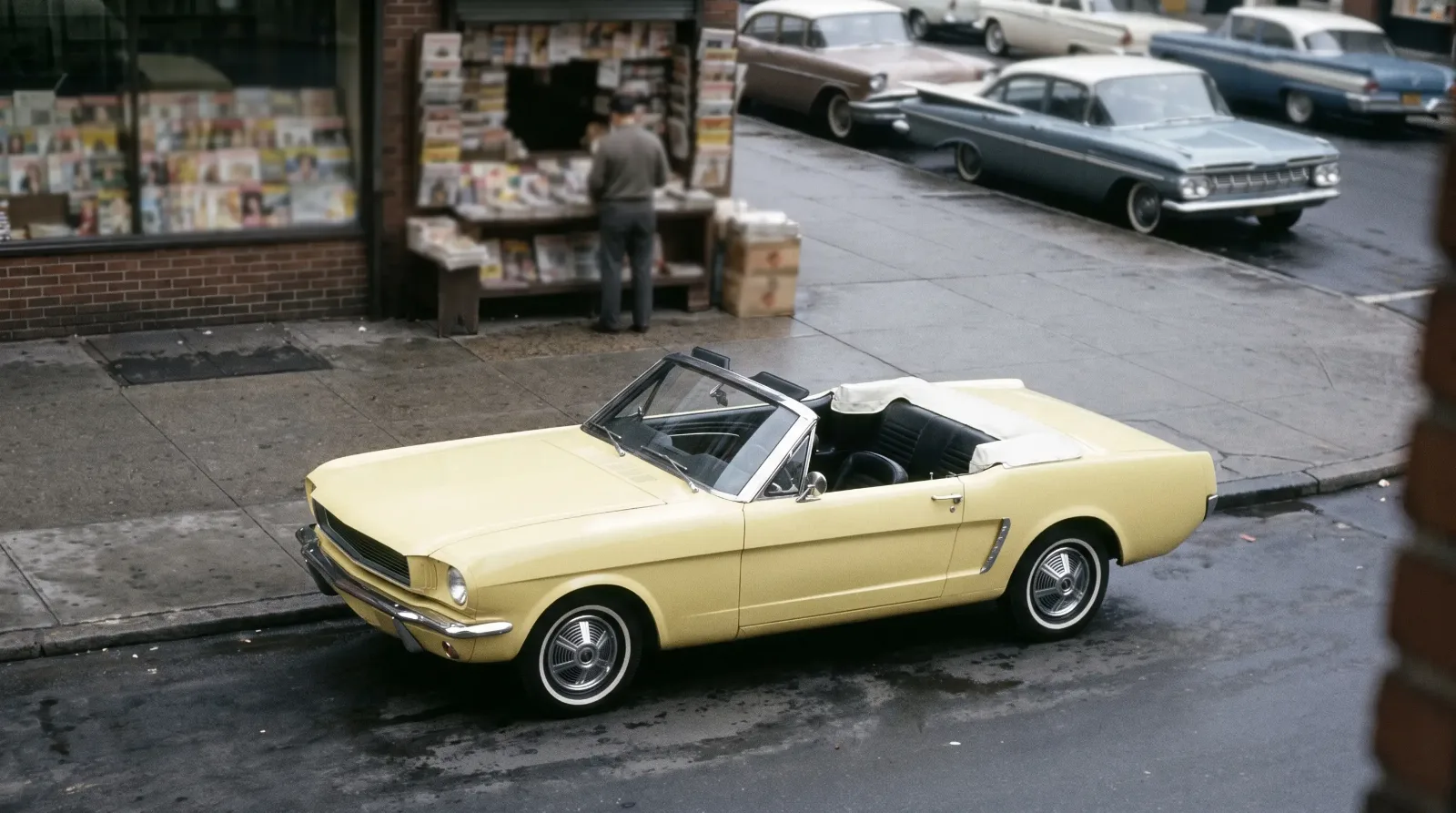
I have always thought this week tells you more about why the Mustang mattered than any spec sheet does. Horsepower explains a car to enthusiasts. A magazine cover explains it to everyone else.
What was on the covers
Start with what the record supports. Time put Lee Iacocca of Ford Motor Company on the cover of its April 17, 1964 issue, with cover art by the painter Bernard Safran. That date is not a coincidence. April 17 was the day the Mustang was introduced at the New York World's Fair in Flushing Meadows and went on sale in dealer showrooms across the country.
Newsweek ran its own cover on Iacocca and the Mustang at the same time, in its issue dated Monday, April 20, 1964, three days after the Time date. Ford's own history notes that this was reportedly the first time a retail product had appeared on the cover of either magazine. And the attention did not stop at the two newsweeklies. Life and BusinessWeek also covered the launch, which means the Mustang reached general readers, picture-magazine readers and the business crowd in roughly the same few days.
Notice who the covers were about. In both cases the face belonged to Iacocca, who was then vice-president and general manager of the Ford Division, a job he had held since late 1960. The car came along with the man. That framing, an executive and his product, is part of why the Mustang launch still reads like a business story as much as a car story.
Why a car executive made two newsweeklies
Covers like these do not happen by accident, and the Mustang's did not. Iacocca led the Fairlane Committee, the small planning group that shaped the 1964½ car, and its membership tells you how much weight Ford put on publicity from the very start. One account of the committee lists Walter Murphy, Ford's public relations manager, and Sid Olson, a writer, among its members alongside the product planners and the marketing people.
The design brief itself was built for headlines: four seats, a usable trunk, under 2,500 pounds, a base price under $2,500, and a public launch at the World's Fair in April 1964. Ford then advertised the hardtop at $2,368 with the 170 six. A number like that is exactly what an editor wants to put in a cover story, because every reader understands it instantly.
The rest of the launch week was planned with the same care. On the night of April 16, Ford bought prime time on all three television networks for one campaign, with ads on Hazel, Perry Mason and The Jimmy Dean Show seen by more than 29 million viewers, at a cost of roughly $500,000. The next morning, the Mustang appeared in some 2,600 newspapers. The magazine covers were the national layer on top of all that, and they gave the launch a seriousness that paid advertising alone could not buy. I am keeping the television and newspaper side short, since it has been told elsewhere. For how the whole launch grew into a national phenomenon, there is more on that here.
There is one more detail worth reading closely. Time's issue carried a painted cover dated the very day of the introduction. A commissioned painting is not something a magazine turns around overnight. My reading, and it is an inference rather than a documented fact, is that the editors had access to the story well before the public saw the car.
The Mustang Time Newsweek cover week, day by day
Laid out on a calendar, the week looks less like luck and more like a plan that went off on schedule.
| Date | What happened |
|---|---|
| March 9, 1964 | Regular Mustang production begins |
| April 16, 1964 | Launch ads run on all three TV networks, seen by more than 29 million viewers |
| April 17, 1964 | Public introduction at the New York World's Fair; cars in showrooms; Time cover on Iacocca dated this day; the Mustang appears in some 2,600 newspapers |
| April 17 to 19, 1964 | Over 22,000 orders and more than 4 million showroom visitors over the first weekend (Ford's figures) |
| April 20, 1964 | Newsweek cover on Iacocca and the Mustang |
| April 17, 1964 to April 16, 1965 | 418,812 Mustangs sold, a 12-month record |
The order of events matters. The covers did not follow the sales success; they arrived with it, in the same handful of days. Nobody at either magazine could have known yet that the first twelve months would end at 418,812 cars. They put Iacocca and the Mustang on the cover on the strength of the plan, the price and the man. The sales numbers proved them right afterward.
What the covers did for the car, and for the man
For the Mustang, the covers settled something before a single owner had put a thousand miles on one. This was not a niche sporty car for a few enthusiasts. It was presented to the whole country as news, and the country treated it that way. More than 4 million people walked into Ford showrooms that first weekend, and the orders followed the traffic.
For Iacocca, the week was a public introduction of a different kind. Inside Ford he was already the man who had driven the project. After April 1964, readers across the country knew his name and face. He moved up within Ford in January 1965, became president of Ford Motor Company on December 10, 1970, and was fired on July 13, 1978. His later career is its own long story, but the national recognition that came with it traces back in part to this week of covers.
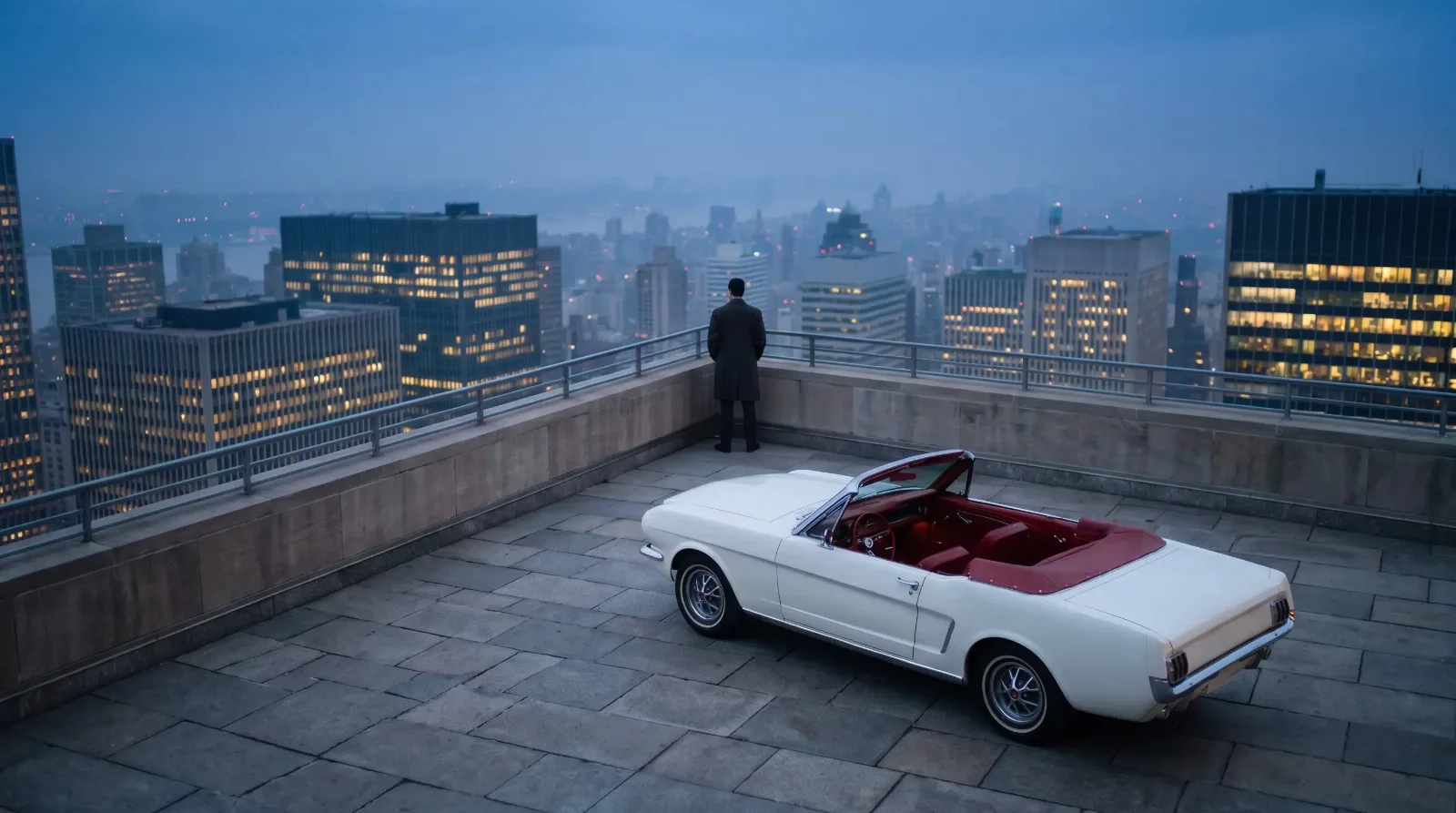
The car's own public life grew from the same seed. Soon enough, Mustangs were working in films and television, and the list of famous Mustangs on screen kept getting longer. Ford never lost its taste for putting the Mustang where people would talk about it, either. For the car's 50th anniversary in 2014, Ford engineers cut a Mustang convertible into sections and reassembled it on the 86th-floor observation deck of the Empire State Building, which is the same instinct as the 1964 launch, fifty years on.
Reading the covers today
When I look at the April 1964 covers now, what strikes me is how little they are about the machinery. There is no engine on the cover and no performance claim. The subject is a person and an idea: a good-looking car with a price a young buyer could actually reach. That is a cultural story, and it explains why the Mustang ended up in places no other Ford reached, from the newsstand to the movie screen.
"Most cars get famous after they prove themselves. The Mustang got famous the week it was born, and the covers are the proof. Ford sold the idea to the country before most people had seen the car in the metal."
Patrick Walsh
It is also worth being precise about what the covers were. They were a portrait of the man who launched the car, timed to the launch, on two national weeklies at once. They were not a verdict on how the car drove, and they did not invent the demand on their own. The television buy, the newspapers, the price and the product all did their share. The covers just told everyone, at the same moment, that this was the car to talk about.
If you want to see how that first week fits into everything that came after, from the 2+2 fastback to the big-block years, the full story of the classic Mustang gives the bigger picture. But if you want one week that explains why a Ford compact became an American icon, this is the one. Two magazines, one face, and a car that was news before it was anything else.
Sources and notes
- Time cover archive: Lee Iacocca, April 17, 1964 (cover credit Bernard Safran)
- Ford: Lee Iacocca and the Mustang on Time and Newsweek
- The Henry Ford: Mustang, the birth of an American icon
- EBSCO Research Starters: Ford introduces the Mustang
- Lehigh University Libraries: Iacocca at Ford
- Ford corporate history: the Mustang launch
Related Reading
Have a
Ford Mustang
for Sale?
Reach thousands of serious classic car collectors across the US.
Sell It Here →
Selling a classic? Here's how: compare the places to sell classic cars
Are You a Classic Car Dealer?
List your full inventory and connect with targeted classic car buyers.
Join as a Dealer →

About the author
Patrick Walsh
Automotive journalist covering classic car shows, events, and the enthusiast community across North America.
Related Listings - Ford Mustang




Comments
Be the first to comment on this article.