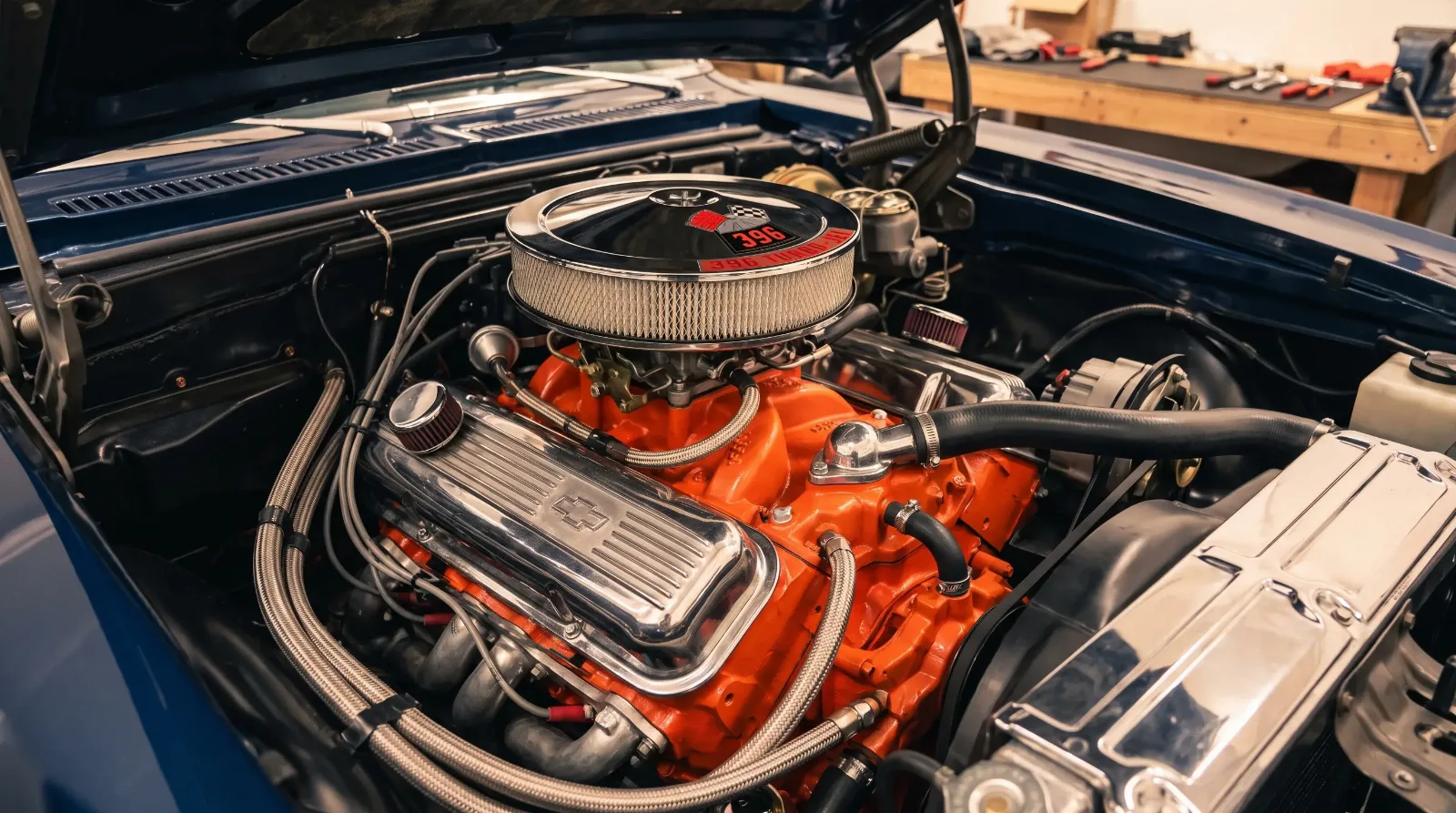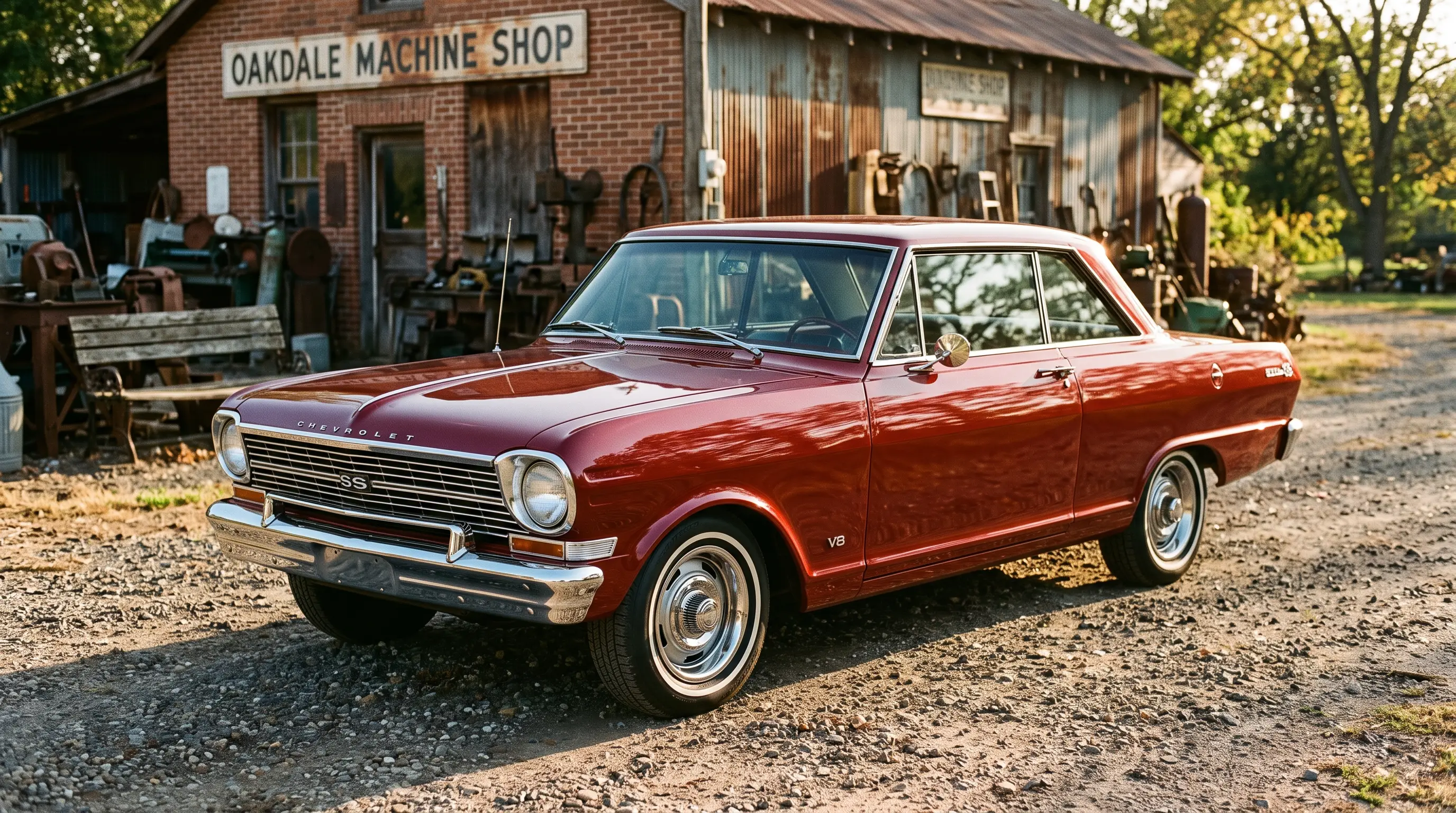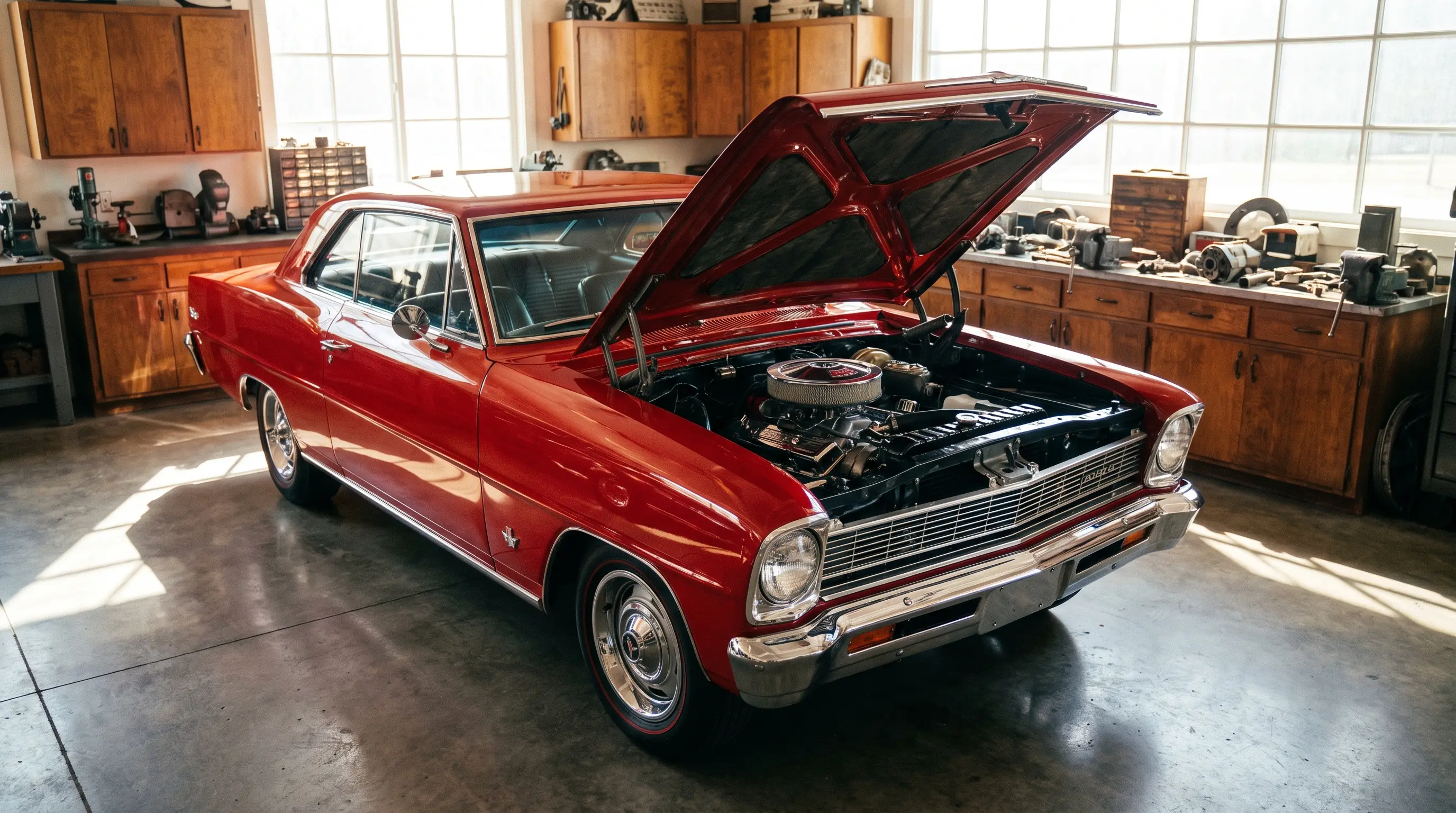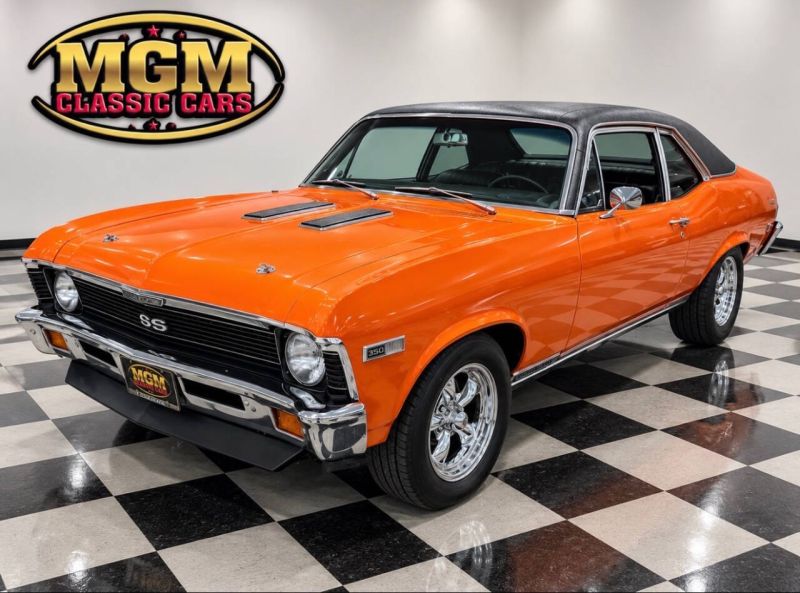
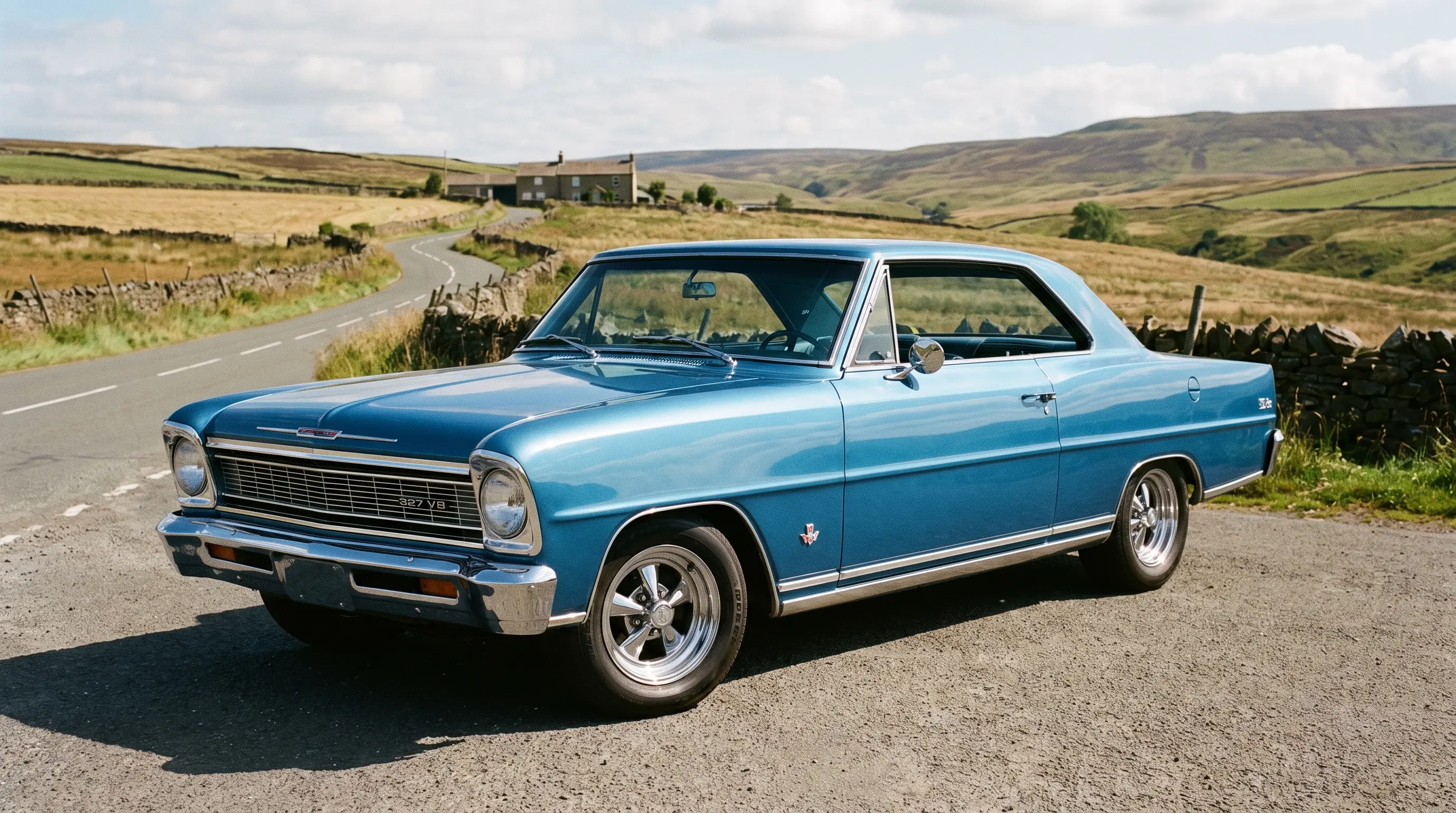
The 327 didn't need a marketing campaign to earn its spot in the Nova engine bay. It needed a dyno sheet, and the dyno sheet did the talking. Once Chevrolet moved its small-block lineup up from 283 cubic inches to 327, the Nova and its Chevy II predecessor got a mid-tier V8 option that closed the gap between economy motoring and genuine performance, and it did it with numbers that held up.
More cubic inches, more honest torque
The 327 shared the same basic small-block architecture as the 283 that came before it, just bored and stroked to a larger displacement. That is a simple engineering fact, and it matters because it means the 327 inherited a reliability record instead of starting from zero. Chevrolet had already sorted out the small-block's weak points across years of production by the time the 327 landed in the Chevy II/Nova application.
Output varied by carburetion and compression ratio, same as any small-block of the era. The 327 arrived under the L30 option code in 1965 at a documented 250 horsepower, and Chevrolet revised that same L30 designation to 275 horsepower for the 1966 and 1967 model years. Those are real, usable numbers in a compact car that weighed meaningfully less than the full-size Chevrolets the same engine family powered.
| Configuration | Approximate output | Notes |
|---|---|---|
| 327 L30 (1965) | 250 hp | Standard mid-tier small-block application at introduction |
| 327 L30 (1966-67) | 275 hp | Revised rating, higher compression, more aggressive cam |
| 283 (predecessor) | 195-220 hp | Displacement the 327 effectively replaced in this segment, 1964-68 |
What the numbers actually bought a buyer
Thirty to eighty additional horsepower over the 283, depending on which versions of each you're comparing, doesn't sound dramatic written down, but it changed how the car drove. A 327 Nova pulled harder through the midrange, which is where a street car actually spends its time, not at the top of the tach where magazine road tests liked to focus. That midrange torque is the real reason this engine holds a following today. It is not about a headline number. It is about how the car actually moves.
Reliability tracked the same pattern as the 283. This was a mature engine family by the time it reached this displacement, not a new design working out early problems in a customer's driveway. That maturity shows up in how many of these engines are still running today, decades past when a less-proven design would have been retired.
What separates a real 327 car from a swap
Identifying a genuine, factory-installed 327 in this platform comes down to the same discipline that applies to any small-block claim: engine casting numbers, date codes, and the original build documentation, not the seller's recollection of what came from the factory. The 327 was a widely used engine across Chevrolet's lineup for years, which is exactly why casual identification goes wrong so often. A correct casting number from the right date range tells a buyer far more than a confident verbal history does, and it is worth the extra half hour at a car show or a pre-purchase inspection to actually check it.
This matters more with the 327 than with some other small-blocks because the engine's long production run across multiple Chevrolet platforms means plenty of correct-looking 327s have been swapped between cars over five decades of ownership changes, engine rebuilds, and parts-bin repairs. None of that makes a swapped 327 a bad engine. It makes it a different car than a numbers-matching original, and the price should reflect which one a buyer is actually getting.
The engine that gets overshadowed by its own family
Talk to enough people about small-block Novas and the conversation drifts fast toward the L79, the high-output 327 variant that pushed well past the standard configurations covered here. That is a different engine with a different story, and it deserves its own accounting rather than getting folded into the base 327's numbers, covered separately in the next story in this set.
"People hear 327 and jump straight to the high-output stories. The base car made real numbers on its own. It didn't need to borrow somebody else's option code to be worth the conversation."
— Dan Reeves
For the full displacement lineage in this platform, the Nova engine story lays out how the 327 fit between the 283 that preceded it and the larger small-blocks that followed as Chevrolet kept expanding the family through the rest of the decade.
Buying a 327 Nova now
A documented, numbers-matching 327 Nova sits in a good spot in today's market: more presence than a 283 car, without the premium that a documented high-output variant commands. That makes it a reasonable entry point for a buyer who wants genuine small-block performance without chasing the rarest, most expensive configuration in the family. Anyone shopping the current field of classic Chevy Novas for sale should ask specifically which 327 configuration is under the hood, since the 1965 250-horsepower L30 and the revised 1966-67 275-horsepower L30 carry different values and the seller's memory is not always the most reliable source on which one it is.
Parts and rebuild support are as strong for the 327 as for any small-block Chevrolet ever built, which keeps ownership costs reasonable relative to rarer, less common engine families from the same era. A rebuild on a 327 rarely turns into a parts-sourcing project the way a rebuild on a less common engine can. That practical reality is worth weighing against the temptation to chase a higher-output variant purely for the badge value, especially for a buyer planning to actually drive the car rather than trailer it to shows.
The bottom line on this engine has not changed much since it left the factory: it made honest, usable power in a package light enough to make that power count, backed by a reliability record that has held up across five decades of ownership. That combination is worth more to most buyers than a bigger number on a spec sheet they will never actually feel from the driver's seat.