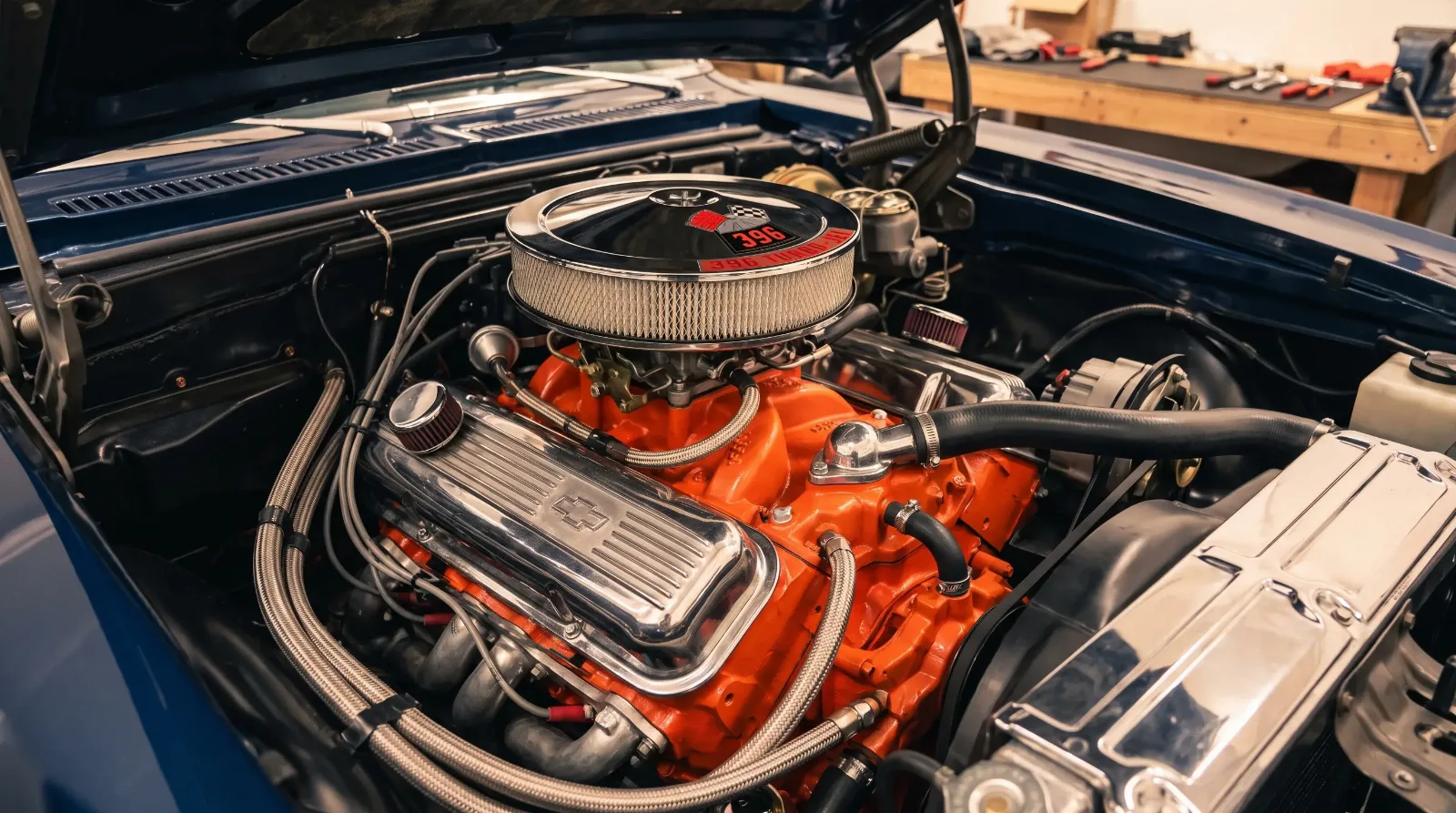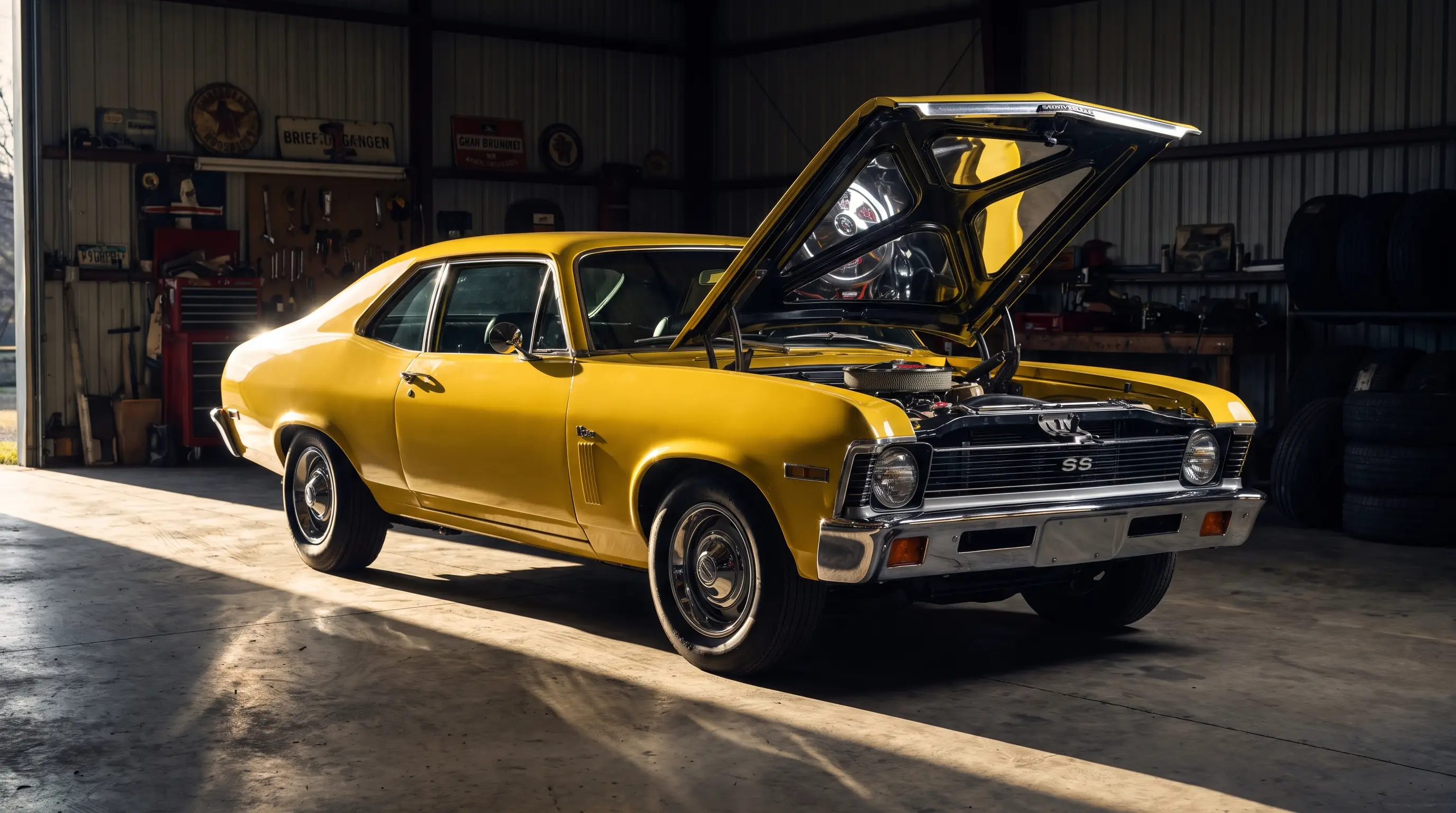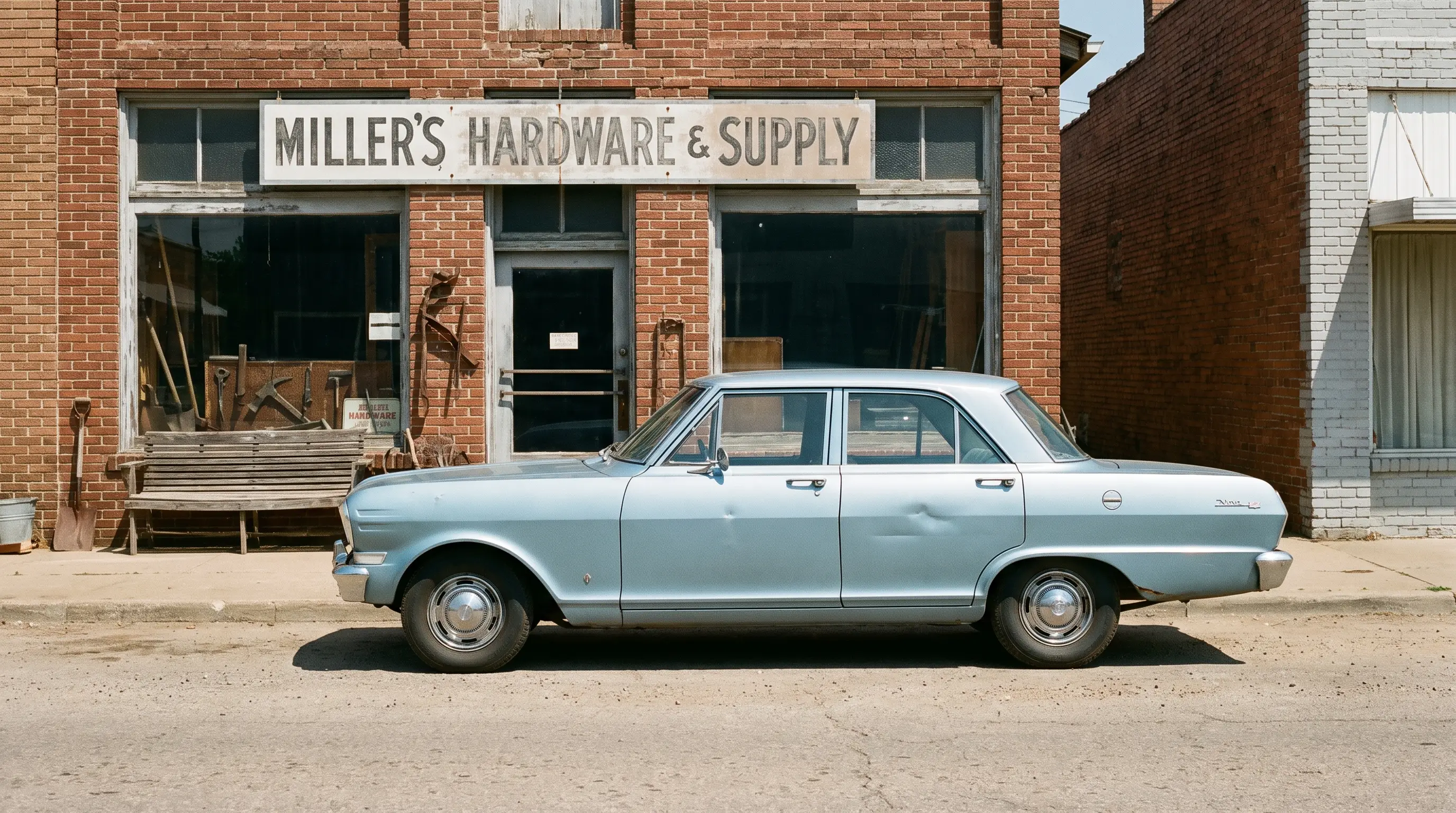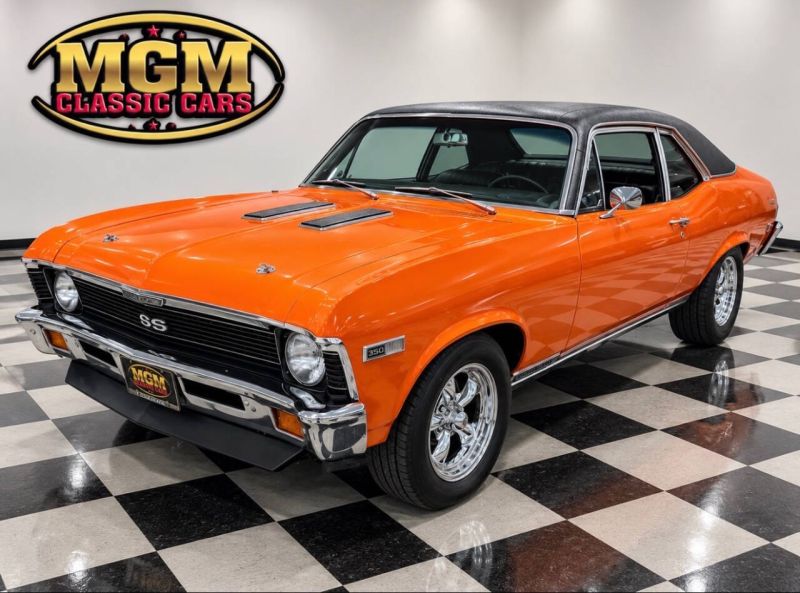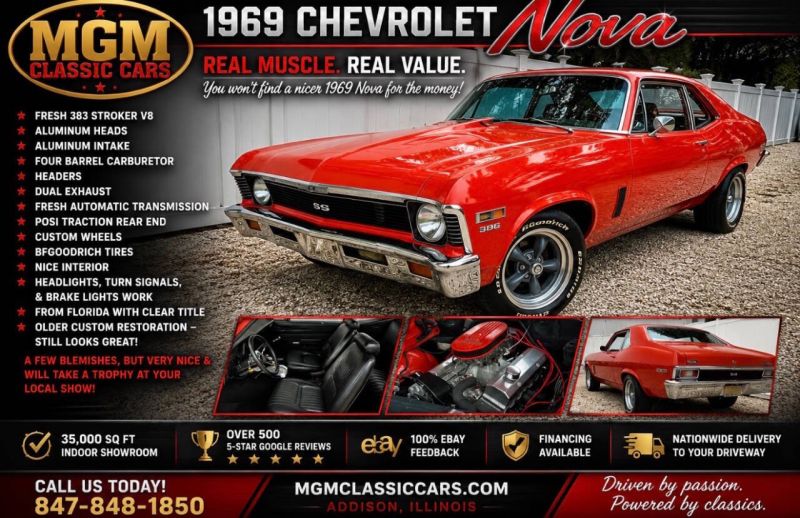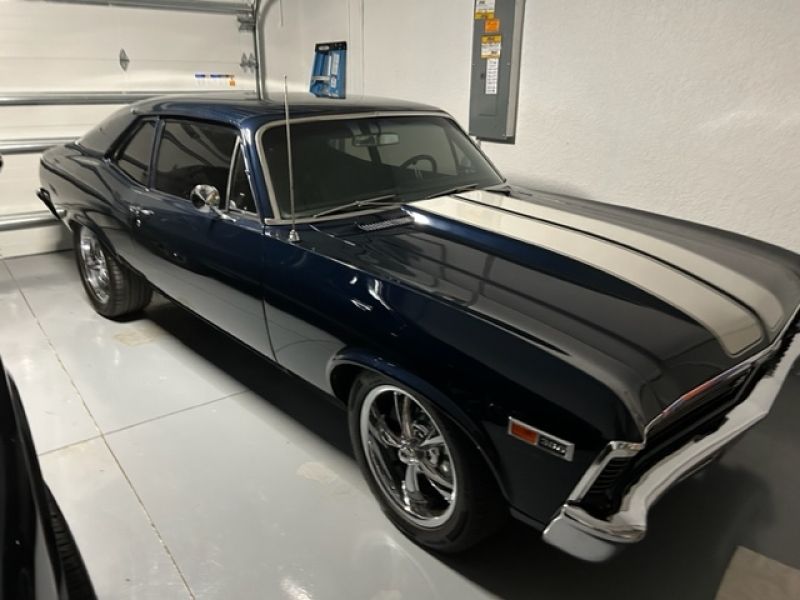
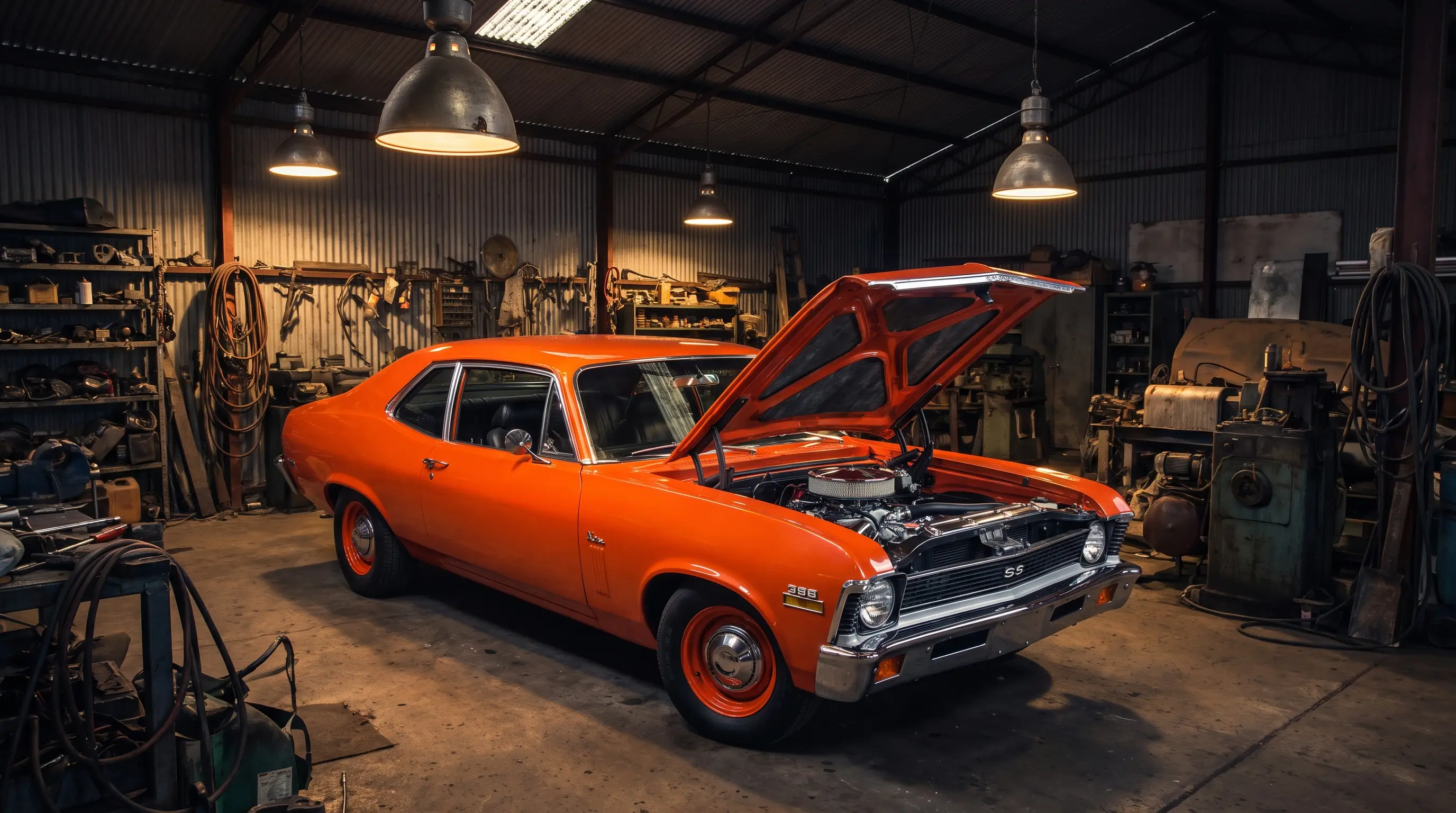
The Chevy 402 engine is the big block that Chevrolet built and then refused to name correctly. Starting in 1970, the Nova SS's big-block option grew from 396 cubic inches to 402, and the badge on the fender kept saying "396" anyway. That is not a typo in some old brochure. It is a real decision Chevrolet made because the 396 name had brand recognition and the marketing people did not want to give it up just because the engineers had changed the displacement underneath it.
Why the number on the badge is wrong on purpose
The engineering reason for the bore increase was straightforward. GM's own internal policy had capped its mid-size cars at 400 cubic inches, and lifting that cap for 1970 let Chevrolet enlarge the bore from 4.094 to 4.125 inches, a move that also slotted the engine into a friendlier emissions classification for engines over 400 cubic inches. The marketing reason for keeping the "396" badge is the more interesting story. Chevrolet had spent years building recognition around that number across the Chevelle, the Camaro, and the Nova, and a badge change to "402" risked confusing buyers who were shopping by name rather than by cubic inch. So the badge stayed at 396. The displacement did not.
This means anyone who sees a "396" emblem on a 1970 Nova SS is looking at a car that, mechanically, is running the 402. The two numbers describe the same physical engine in that specific window of production years, and neither one is lying to you exactly, they're just measuring different things: what Chevrolet called it and what it actually displaced.
None of this was a secret at the time. Automotive writers covering the changeover noted it in period road tests, and Chevrolet's own service literature specified 402 cubic inches for the block even while the sales brochures and the fender emblem kept the old number. It is only decades later, with fewer people who remember the original context, that the mismatch turns into genuine confusion at the point of sale.
| Year | Actual displacement | Badge reads |
|---|---|---|
| 1968-1969 | 396 cid | 396 |
| 1970 | 402 cid | 396 |
What changed besides the bore
Horsepower ratings on the 402 Nova did not actually drop when the bore grew. The L34 was still rated 350 gross horsepower and the L78 still 375, the same figures Chevrolet quoted for the 396 in 1968 and 1969. The extra displacement and the friendlier emissions classification came free, without costing the buyer anything on the window sticker. 1970 was also the last year Chevrolet offered a factory big-block in the Nova at all. The option was dropped after that model year, and starting in 1971 the 350 small-block was the largest engine a Nova SS buyer could order. Anyone assuming the 402 was a detuned, later-model 396 has the story backwards.
The bore increase likely added a little torque margin even with the horsepower ratings held flat on paper, which is a detail worth knowing if you are trying to date a "396" Nova by feel alone. The bigger point for buyers is simpler than a horsepower story: there is no mid-1970s big-block Nova to cross-shop against. The factory big-block window closed after 1970, so any Nova SS wearing a genuine "396" badge with a big-block under the hood dates to 1968, 1969, or 1970, full stop.
What to check before you trust the badge
Casting numbers on the block settle the argument fast. A 402 has different casting numbers than an actual 396, and any mechanic who works on big blocks from this era can read them in about a minute. Don't take the fender badge as proof of anything. Don't take a bill of sale that says "396" as proof either, because plenty of period paperwork just copied the badge without anyone checking the actual bore. Pull the numbers or have someone pull them for you before you pay a premium for a specific displacement.
Parts-wise, the 402 shares most of its internals with the earlier 396 big block, so rebuilds and machine work are not a problem. The confusion is entirely about naming and paperwork, not about the mechanical side of owning one. A machine shop that has bored a batch of these before can tell you within a few minutes of measuring whether a block started life at 396 or 402, which is worth the shop fee if a lot of money is riding on the answer.
The same holds true for anyone planning a rebuild rather than just buying a running car. Ordering pistons, gaskets, or a rebuild kit for the wrong displacement wastes money and time, so confirm the actual bore before you order anything, not after the parts show up and do not fit.
"A badge is marketing. A casting number is the truth. If somebody's selling you a '396' from 1971, get the block numbers before you get your wallet out."
— Dan Reeves
Where this fits in the Nova's engine lineup
The 402 closed out the big-block era for the Nova after the 1970 model year, as insurance costs and emissions rules kept squeezing big-displacement engines out of compact cars. Nova power explained lays out where this engine sits against the small blocks and the base six across the car's full production run. If you want the plain, low-drama end of the Nova's engine story, the next story in this set covers the six-cylinder that outsold every performance option combined, and our Classic Cars Arena feature on the model itself covers the car beyond just what was under the hood.