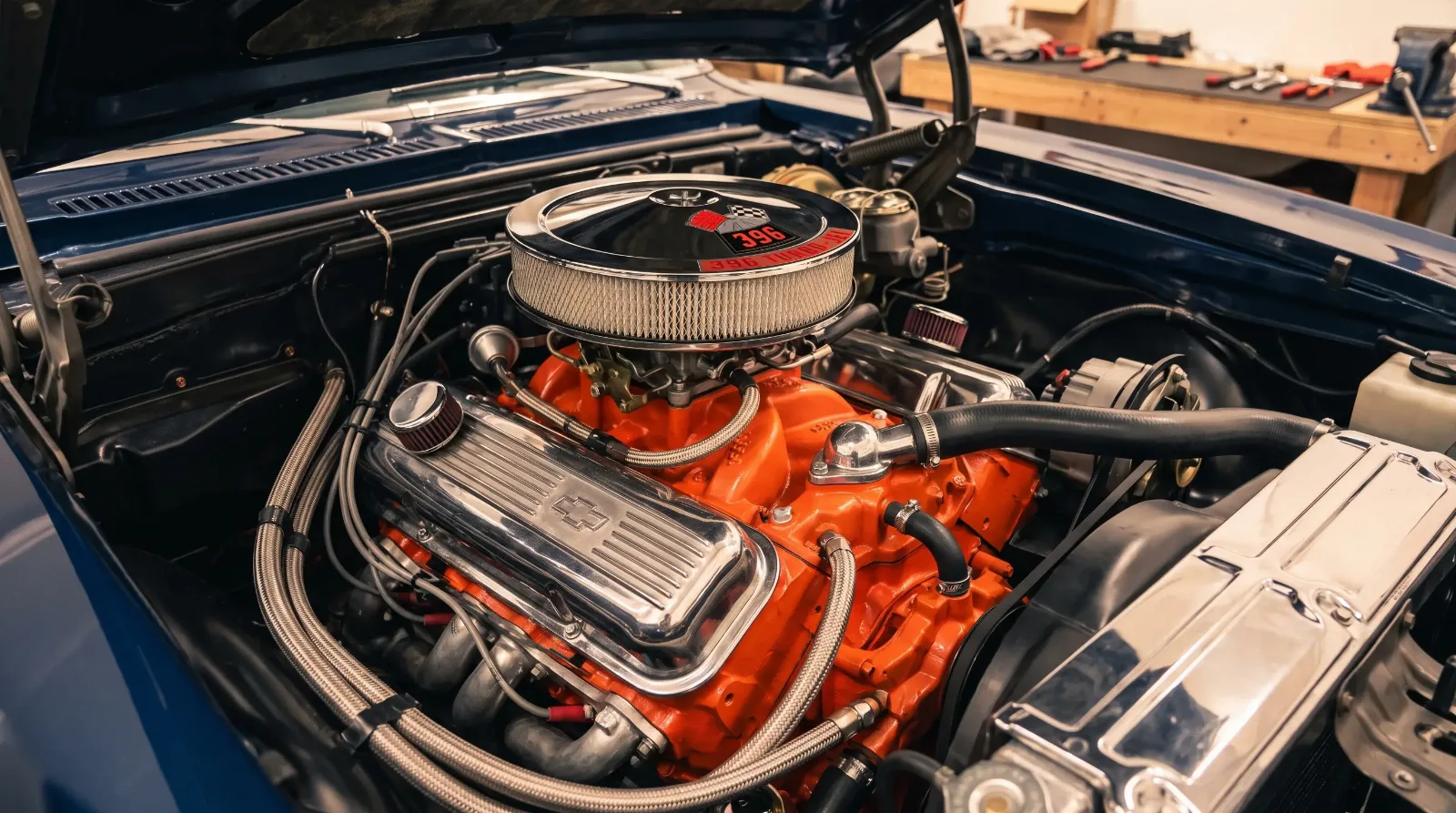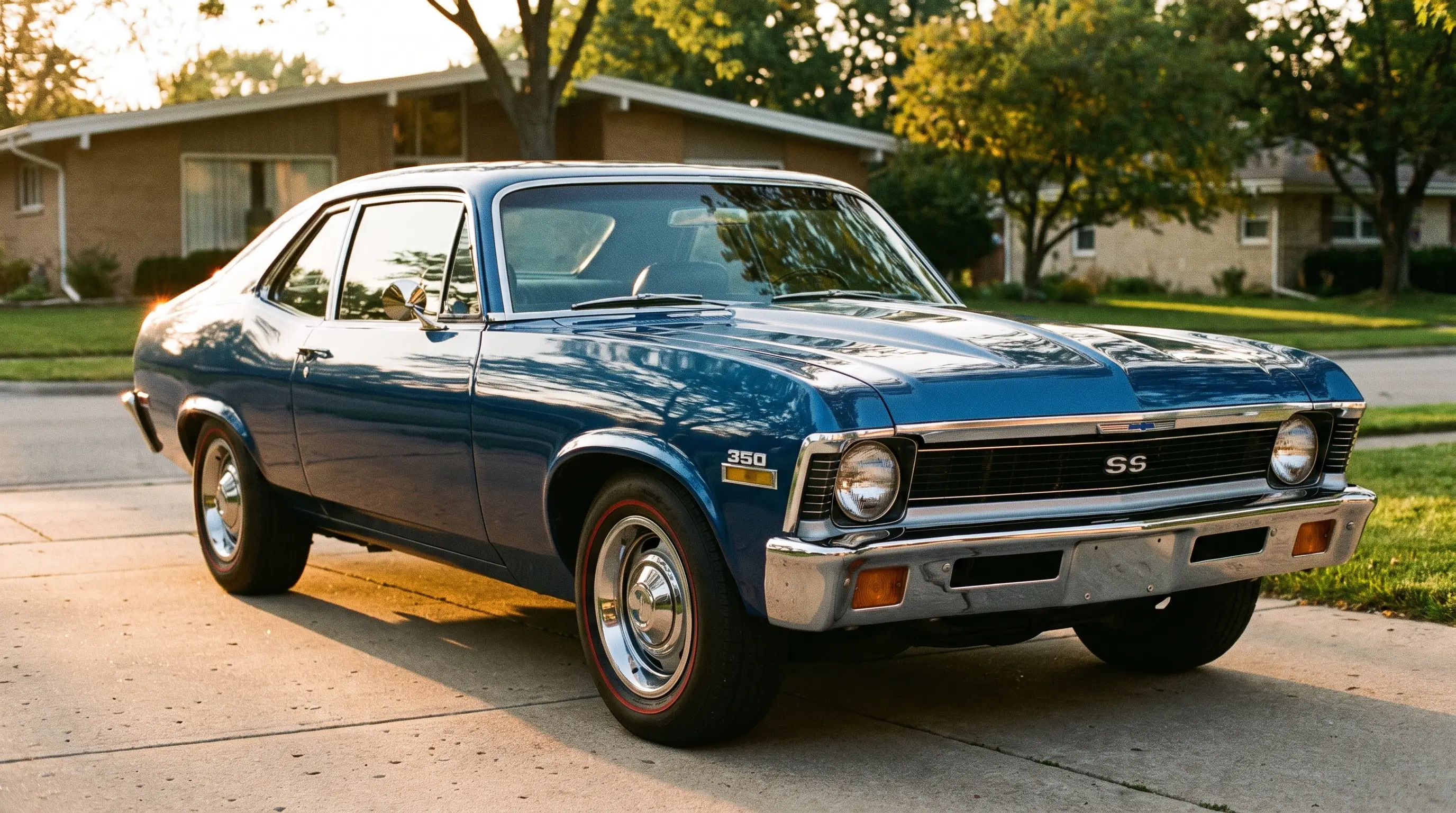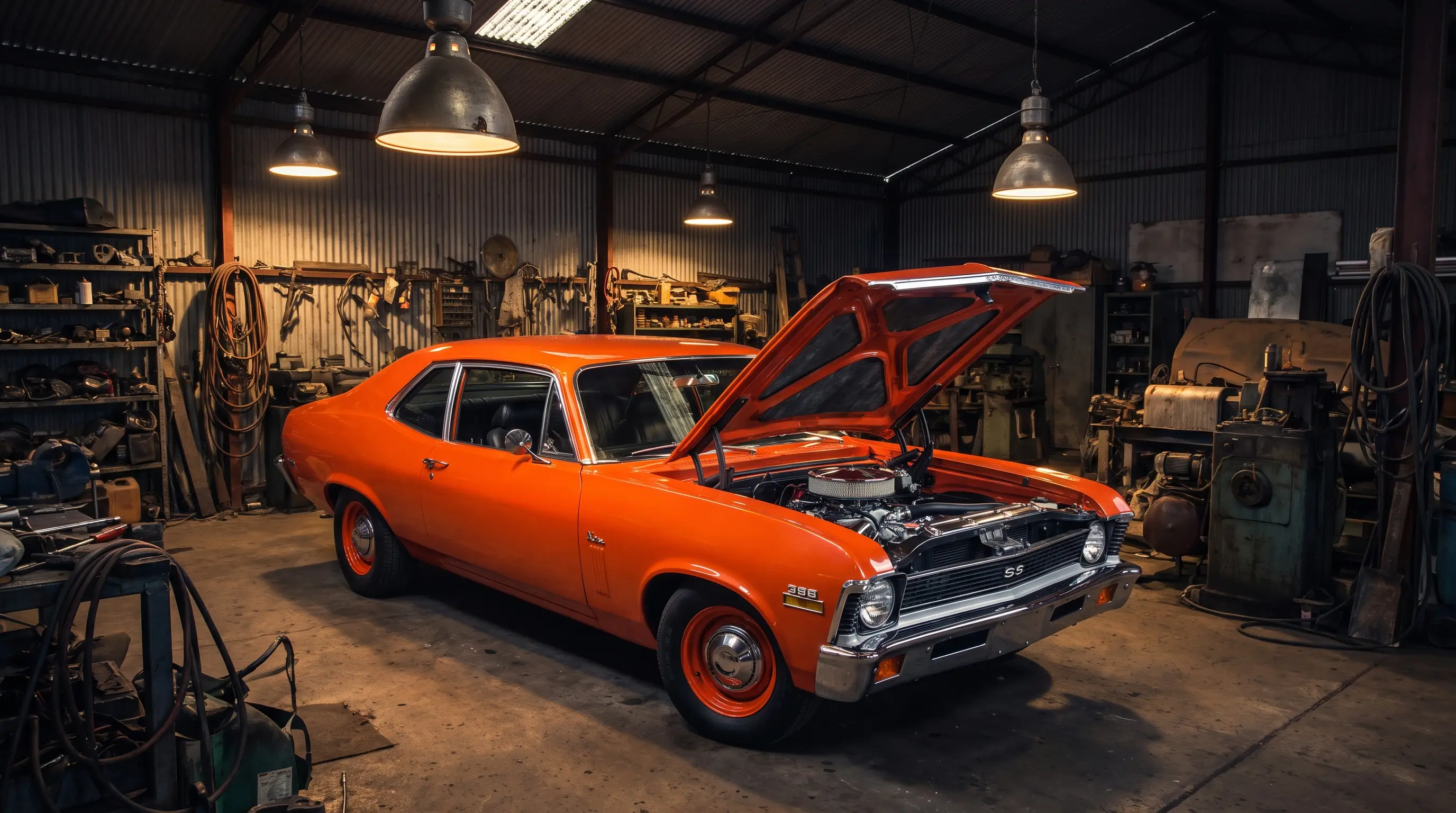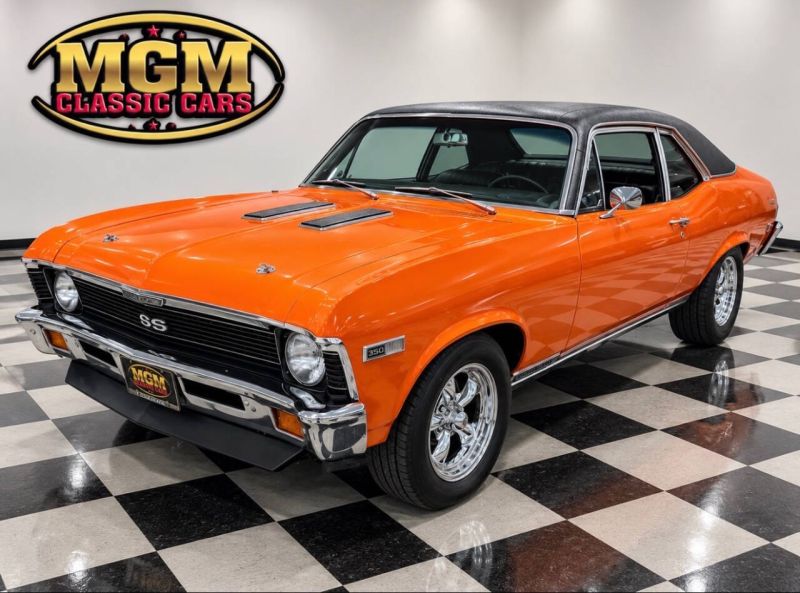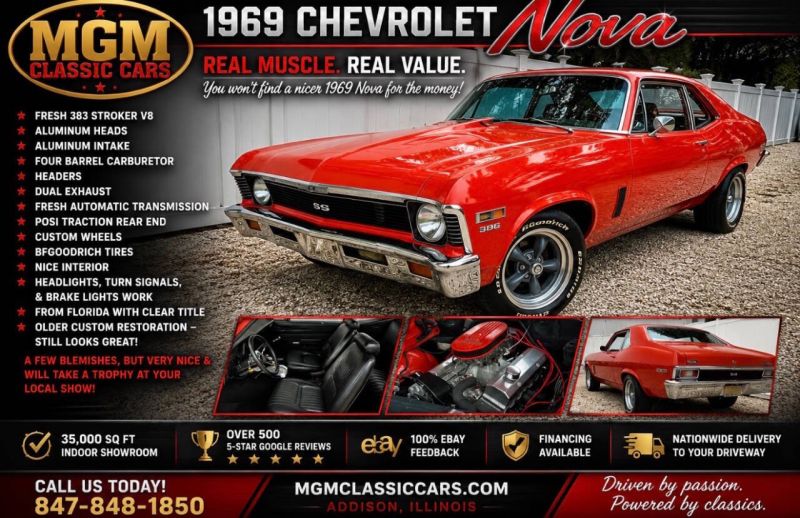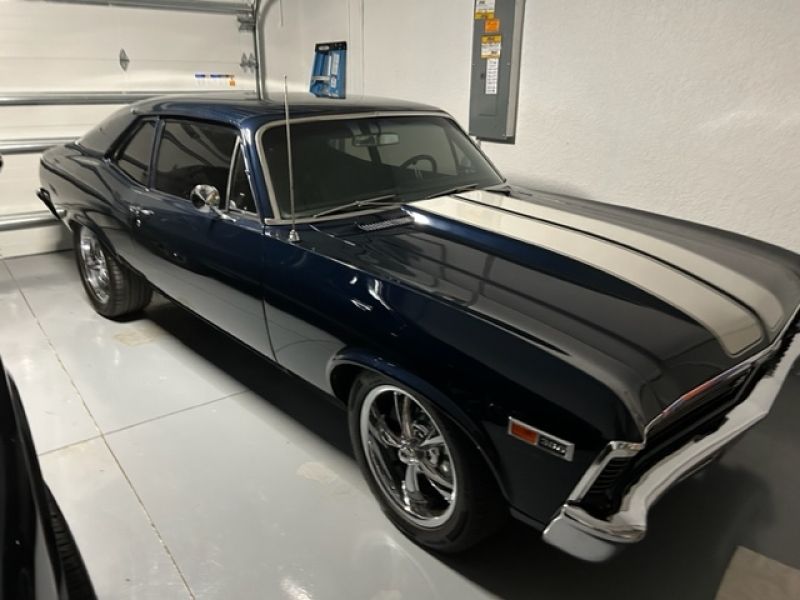
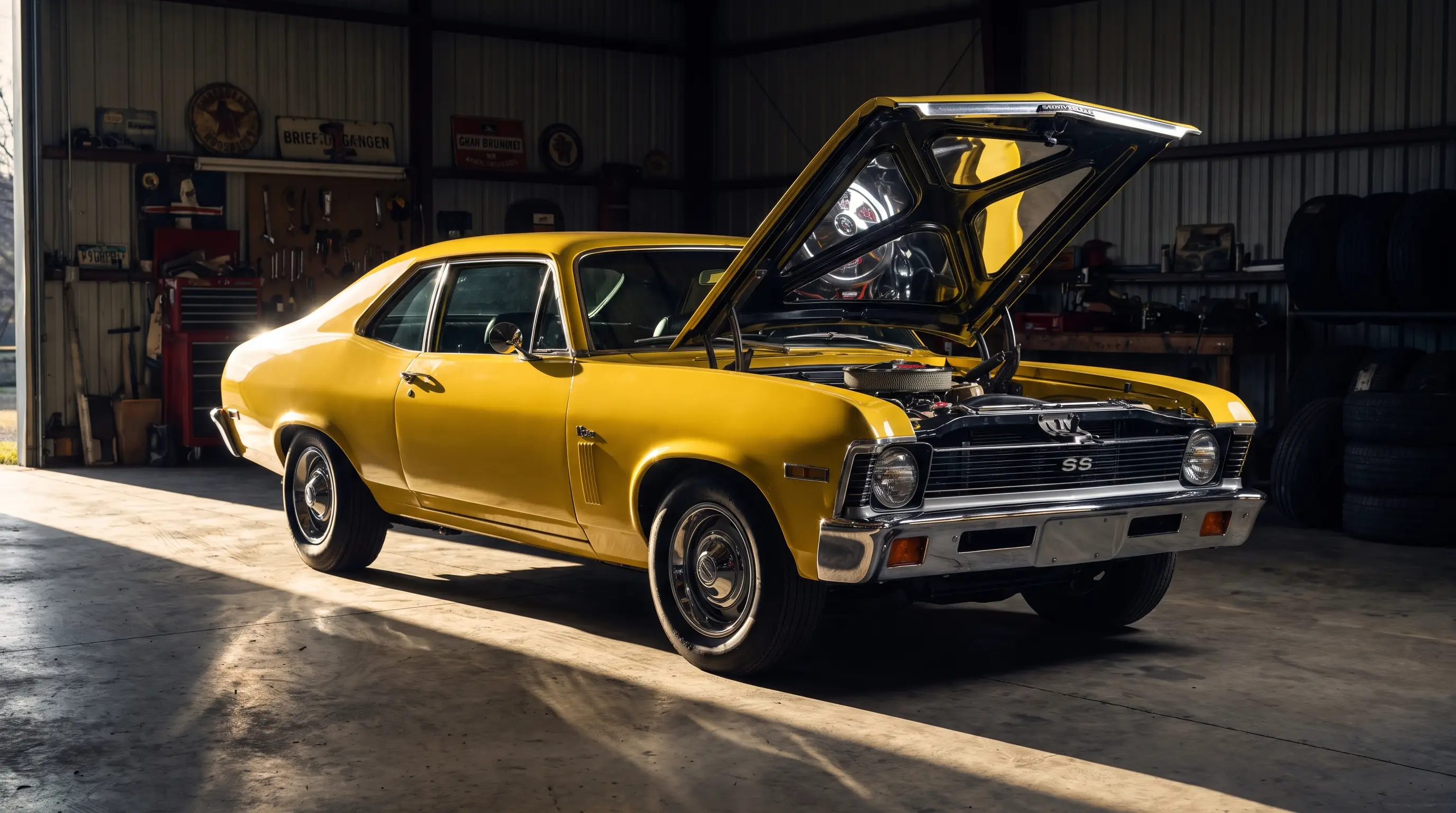
I've pulled apart enough of these to tell you the 396 Nova engine is the option most people talk about and the option almost nobody actually saw in person new. Chevrolet offered the 396 cubic inch big block in the Nova SS for 1968 and 1969, and it turned a compact that was supposed to be economical transportation into something that could genuinely embarrass a lot of the muscle cars parked next to it at a stoplight. It also barely sold, which is exactly why it matters now.
How a big block ended up in a compact
The Chevy II Nova was never engineered around a 396. It was engineered around a straight six and a small block. Chevrolet's engineers had to widen the front subframe and rework the engine mounts and cooling to get the big block to physically fit, and even then the fit was tight enough that some accessory combinations were limited depending on how the car was ordered. This was not a bolt-in job somebody figured out on a Friday afternoon. It took real engineering to make a car this size accept an engine this big without the front end falling apart the first time somebody launched it hard.
Two versions of the 396 showed up in the SS package across these two years. The L34 was the milder of the pair, running a hydraulic cam and rated at 350 gross horsepower. The L78 was the one people actually talk about at shows, a solid-lifter version rated at 375 gross horsepower, with the kind of cam timing that makes an engine sound angry sitting at idle in a parking lot. Both versions ran the same basic big-block architecture Chevrolet was using in the Chevelle and full-size cars, which is a big part of why the swap was even possible in the first place, the parts existed already, they just had never been asked to fit a Nova's engine bay before.
Why so few were built
Big-block Novas were never cheap options. The 396 package added real money to the sticker price, on top of a car that most buyers were shopping specifically because it was affordable. Add in insurance surcharges that were already climbing on anything with a big-block badge by 1968, and you get a production run that stayed small on purpose. The splits are documented, if narrow: 1968 broke down to 234 L34 cars against 667 L78 cars, and 1969 skewed even harder toward the solid-lifter engine, with 5,262 of the 7,209 SS 396 Novas built that year carrying the L78.
What that means for the market today is simple. Scarcity drives the price, and documentation drives whether you're actually buying a real one. I've seen more than one Nova with a 396 badge on the fender and a small block underneath it, because that swap is easy to do and hard to spot without pulling casting numbers. I've also seen genuine big-block cars sold cheap because the seller didn't know what they had, which is the flip side of the same coin. Knowing what to actually check protects you both ways.
| Spec | L34 396 | L78 396 |
|---|---|---|
| Camshaft | Hydraulic lifter | Solid lifter |
| Horsepower | 350 hp gross | 375 hp gross |
| Character | Streetable, tractable idle | Rougher idle, wants revs |
| Years offered in Nova SS | 1968-1969 | 1968-1969 |
What actually breaks and what to check
The front subframe modification is the first thing I'd check on any car claiming to be a factory big-block Nova. If the mounts and the crossmember don't match what a real 396 car left the factory with, you're not looking at a documented example no matter what the seller tells you. Second, check the cooling system. These cars ran a bigger radiator for a reason, and a big block crammed into a compact engine bay runs hot if anything in that system is undersized or clogged. Third, on an L78, listen to the idle before you buy. A rough, uneven idle at low rpm is normal on a solid-lifter cam. A knock that doesn't clear up as the engine warms is not normal, and it's not cheap to ignore.
Parts availability is fine on the 396 itself, the block and rotating assembly are shared with plenty of other GM applications from the same years. What gets expensive is anything specific to the Nova's big-block installation, the unique subframe pieces and brackets that Chevrolet only built for this one combination. If a car needs those pieces replaced, budget accordingly, because you're not sourcing them from a generic Chevelle parts bin.
Exhaust routing is another spot worth a look. The tight engine bay means headers on a big-block Nova sit close to the steering box and the frame rail, and a lazy installation from decades ago can leave clearance issues that show up as a rattle or, worse, a slow leak of exhaust heat onto something that shouldn't be getting that hot. A careful pre-purchase inspection catches this in ten minutes. Skipping it does not save you ten minutes, it just moves the cost to later.
"A 396 badge on a Nova fender doesn't prove anything. I want to see the subframe, I want to see the casting numbers, and then I'll believe it's a real one. Everything else is a nice story."
— Mike Sullivan
Buying one now
A documented L78 Nova SS from 1968 or 1969 sells for real money, well above what a comparable small-block Nova brings, and the gap has held up because genuine cars are rare and everybody knows it. The L34 is the more livable engine day to day and it sells for less, which makes it the better buy for someone who actually wants to drive the car instead of trailer it to shows. Nova power explained covers where these big-block options sit against the rest of the lineup Chevrolet offered in the same years, and if you want to see what came after the 396 designation, a related deep-dive covers the engine that replaced it on paper without most buyers noticing the swap.