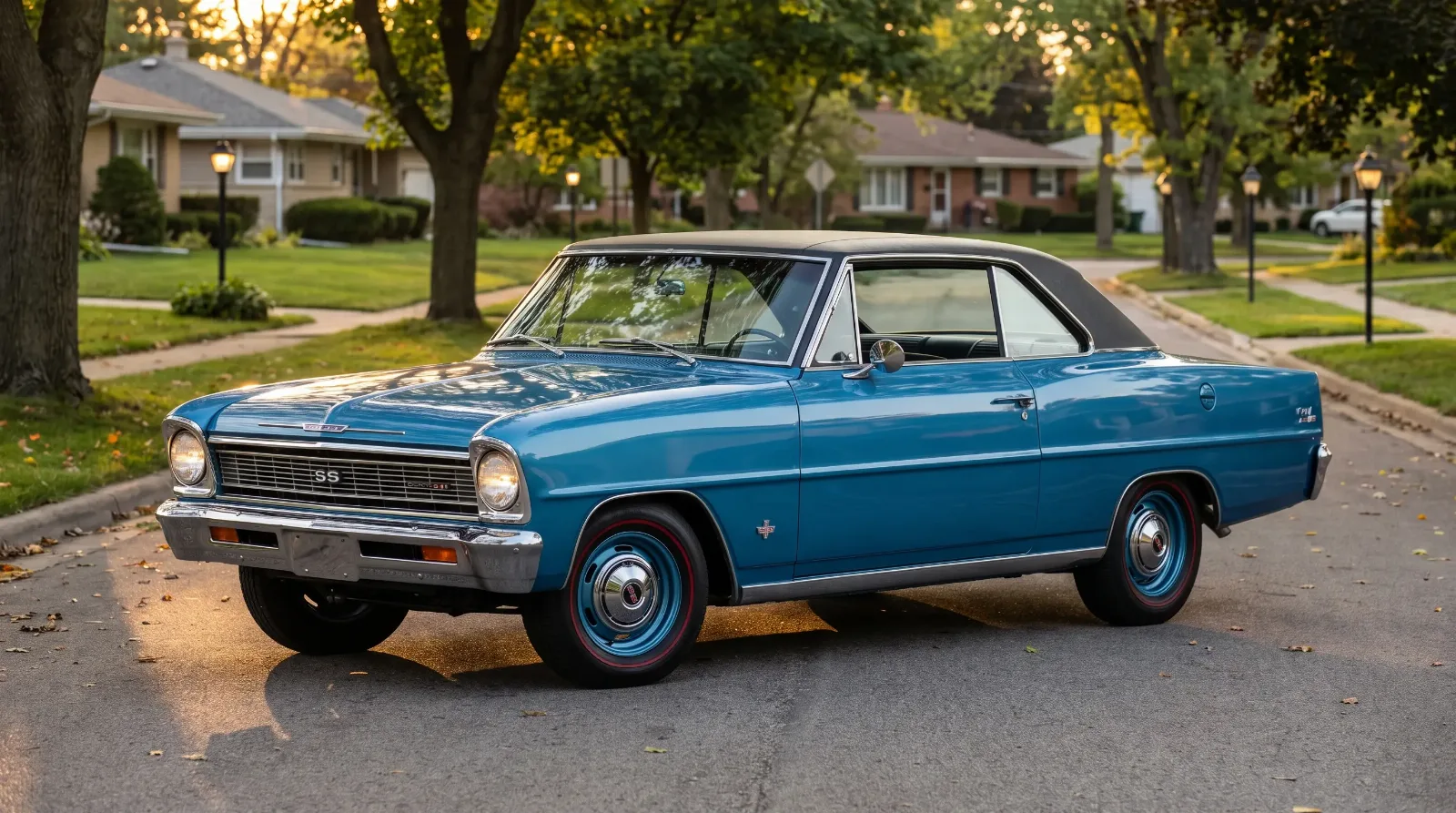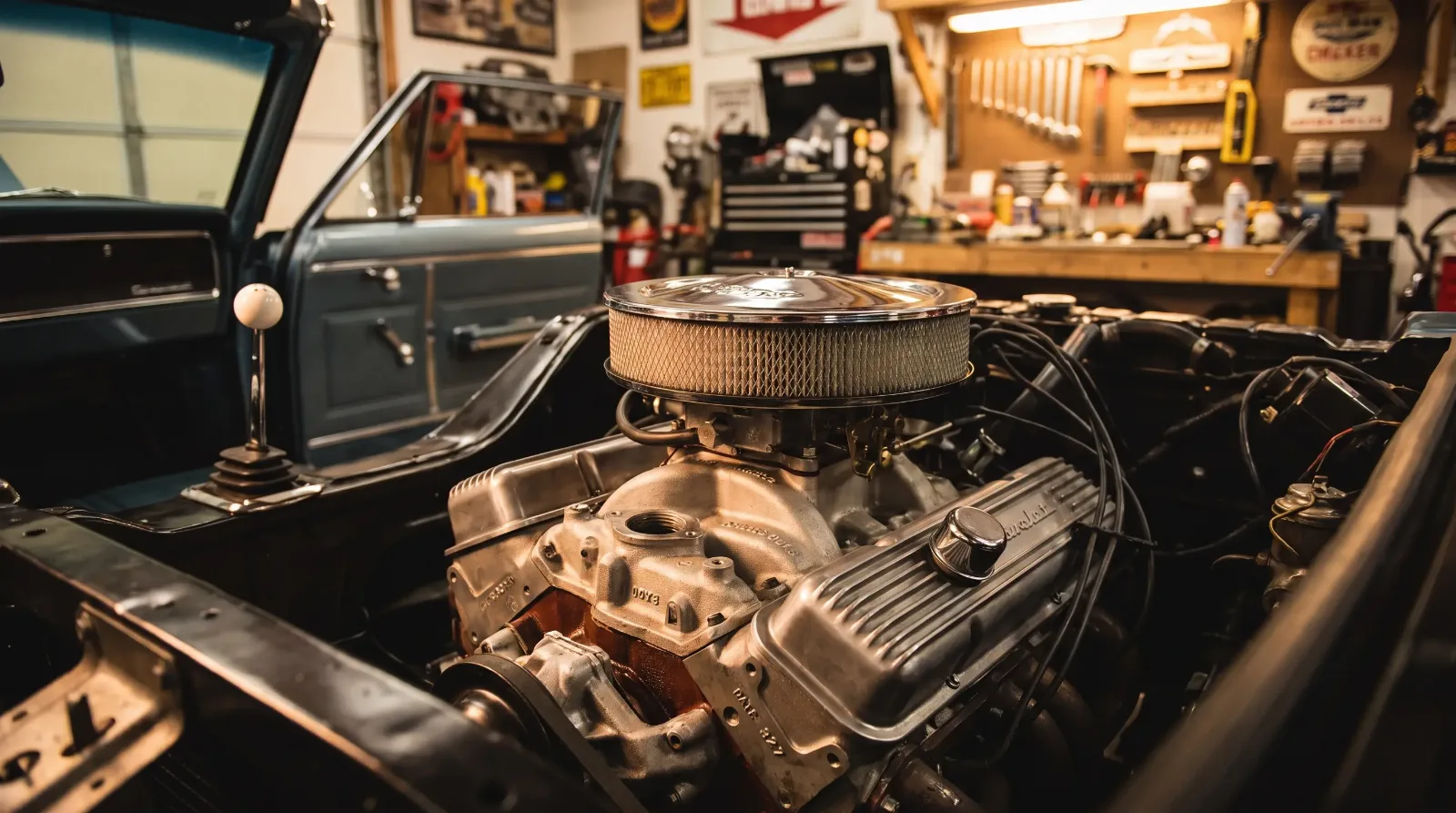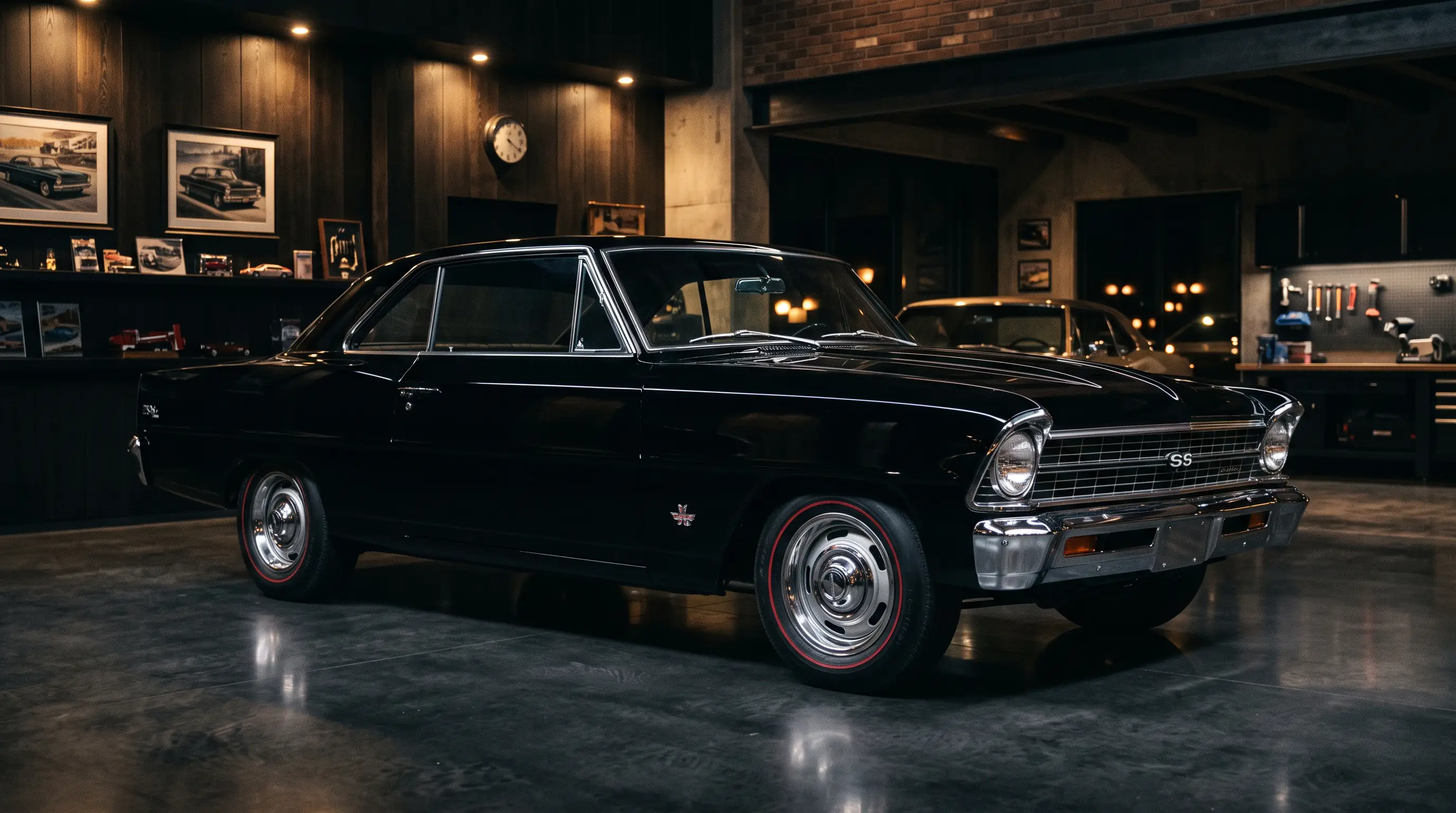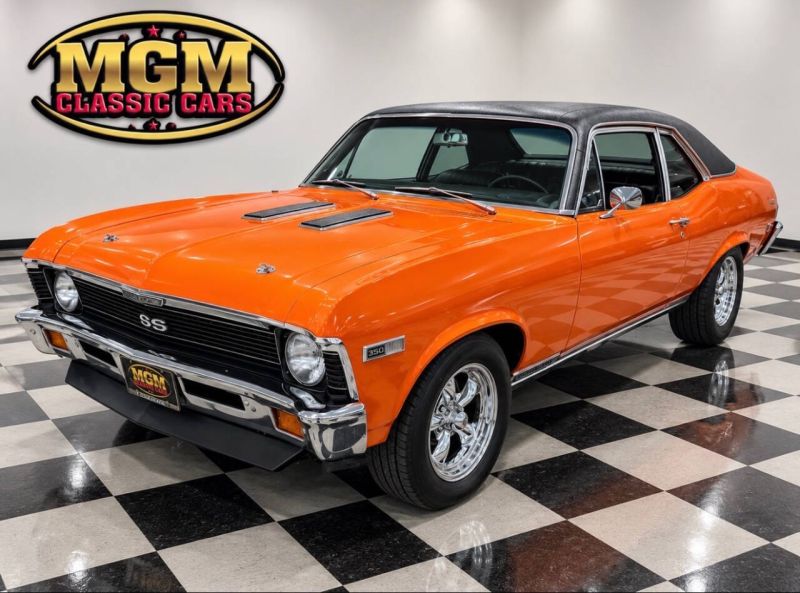
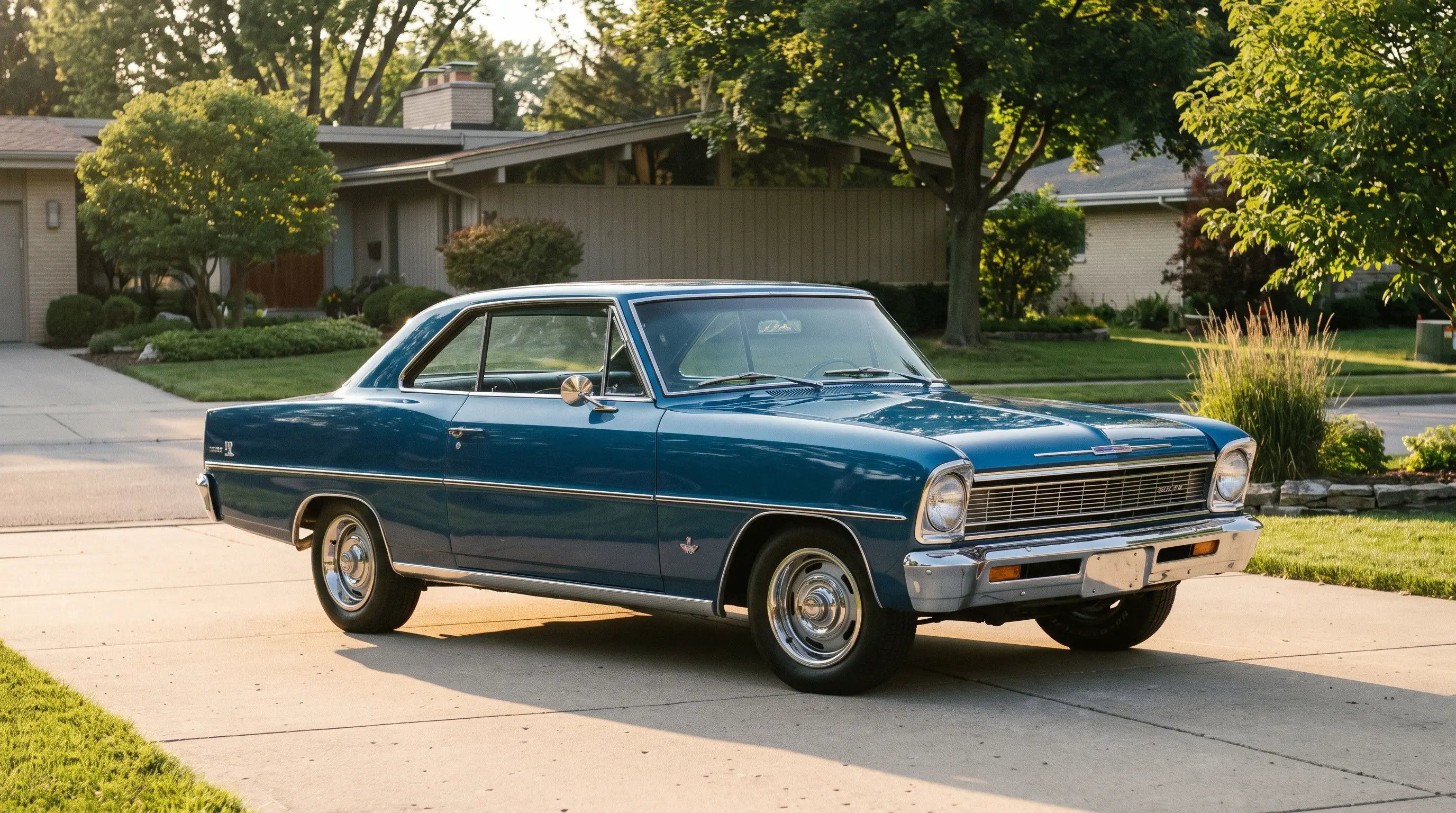
The 1966 and 1967 Chevy II Nova only had two model years to work with, which means the factory color story is short and, for once, actually knowable. Chevrolet restyled the compact for 1966 with a longer, more contemporary roofline and sold it through 1967 before the third generation arrived in 1968 with a completely different nose and grille. Two years is not much time for a paint department to experiment, but General Motors still ran its full Magic Mirror acrylic lacquer program across the line, and the nova gen2 colors buyers see at shows today trace back to a documented, if narrow, factory palette.
I work from build sheets and factory literature more than memory, and the Gen2 Nova rewards that approach. Because the run was so short, a given exterior color and interior trim combination shows up on comparatively few surviving cars, which is exactly why color has become part of how this generation gets judged today.
A two-year window, tightly documented
The 1966 Chevy II Nova and its 1967 running mate shared the same basic body shell, doors, and glass, but Chevrolet refreshed trim and paint offerings between the two years the way it did across the rest of the lineup. Chevrolet's color program in this era ran on a calendar tied to the fall introduction of each model year, with a released palette of exterior lacquer colors, a shorter list of vinyl top colors, and a set of approved interior trim combinations tied to body style and options level.
What makes the 1966-67 Nova useful to research is that it sits in a well-documented corner of Chevrolet's paperwork. Fisher Body cowl tags and the GM trim tag on the firewall or radiator support recorded the paint code and trim combination at the point of assembly, and that data has survived in reference books and registries well enough that a numbers-focused buyer can cross-check a car's claimed color against what the plant actually recorded.
The exterior palette, 1966 to 1967
The 1966 lineup carried a standard GM-wide slate of colors that included whites, blacks, and a rotating set of blues, greens, golds, and reds specific to that model year's chip chart. Some colors that appeared in 1966, Danube Blue, Willow Green, Artesian Turquoise, and Tropic Turquoise among them, were dropped for 1967 in favor of new shades like Nantucket Blue, Mountain Green, and Emerald Turquoise, while a handful of colors, Tuxedo Black, Ermine White, Marina Blue, and Madeira Maroon, carried over across both years, sometimes under a new underlying paint code. Cross-referencing exact color names and codes against factory literature matters here, because color names moved around between Chevrolet's full-size cars and the Chevy II line in ways that trip up even experienced researchers, and a chip chart from the wrong year or the wrong Chevrolet line will lead a buyer astray fast.
What is not in question is the mechanism. Each exterior lacquer color carried a two-digit paint code stamped on the trim tag, and that code is what a documentation-minded buyer checks first, before ever looking at the paint itself. A repaint in the correct code is a legitimate restoration choice. A repaint in a color that never appeared on the chart, no matter how good it looks, is a different car than the one that left the plant.
| Item | Where to find it | What it tells you |
|---|---|---|
| Exterior paint code | Fisher Body/trim tag, cowl area | Factory-applied lacquer color, cross-checked against the model year chip chart |
| Trim combination number | Same tag, adjacent field | Approved interior color and material for that build |
| Body style code | Same tag | Confirms two-door, four-door, hardtop, or convertible as built |
| Build date | Stamped separately near the tag | Narrows which mid-year running changes applied |
Interior trims and two-tone combinations
Interior color choice on the Gen2 Nova was tied to the exterior paint through Chevrolet's approved combination charts, so not every trim color was available with every body color. Vinyl bench seats were standard on lower trim levels, with cloth and vinyl combinations offered further up the range, and the SS-trimmed cars carried their own interior treatment that differentiated them from a standard Chevy II 100 or Nova-trim car on the same floor.
Vinyl roof colors, where ordered, were limited to a short list meant to coordinate with the body color rather than clash with it, which is part of why a correctly optioned two-tone car reads as deliberate rather than random. A buyer who finds a Gen2 Nova with a vinyl top color that does not appear on any approved combination chart for that exterior paint should treat it as a flag worth investigating, not necessarily a dealbreaker, but a detail that needs an explanation.
Reading the trim tag as a buyer
For anyone shopping a Gen2 Nova today, the trim tag is the starting point, not an afterthought. It tells you the factory paint code, the approved interior trim, and the body style as built, all in one place, and it does not care what the seller's listing says about the car's history. Cross-referencing that tag against a documented color and trim chart for the correct model year is the single fastest way to separate a well-restored car from one that has been quietly reinterpreted along the way.
This is also where a related deep-dive on what actually drives collector interest in this generation becomes useful, because color accuracy sits right alongside drivetrain originality as a factor buyers weigh when two otherwise similar cars are priced differently.
"I've had owners tell me their car is a rare color combination, and sometimes the tag backs them up, and sometimes it doesn't. Either way, the tag is what settles it, not the paint chip somebody matched by eye at a body shop forty years ago."
— Tom Ramirez
Why color still moves the market
Color alone does not make a Gen2 Nova valuable, but it is a real factor once two cars are otherwise comparable in drivetrain, documentation, and condition. A rare exterior and interior combination, correctly documented against the trim tag, adds a layer of desirability that a common white or black car with a common interior simply does not carry. That is true across most of this era's muscle-adjacent compacts, and it is especially visible on a short two-year run like this one, where the pool of surviving cars in any given combination is small to begin with.
For readers building out a fuller picture of the 1966-67 cars, our Nova retrospective walks through the broader history that this color story sits inside. Treat the palette as one more documentation trail, alongside the engine code and the build date, that either supports or contradicts what a seller claims a given Nova is.