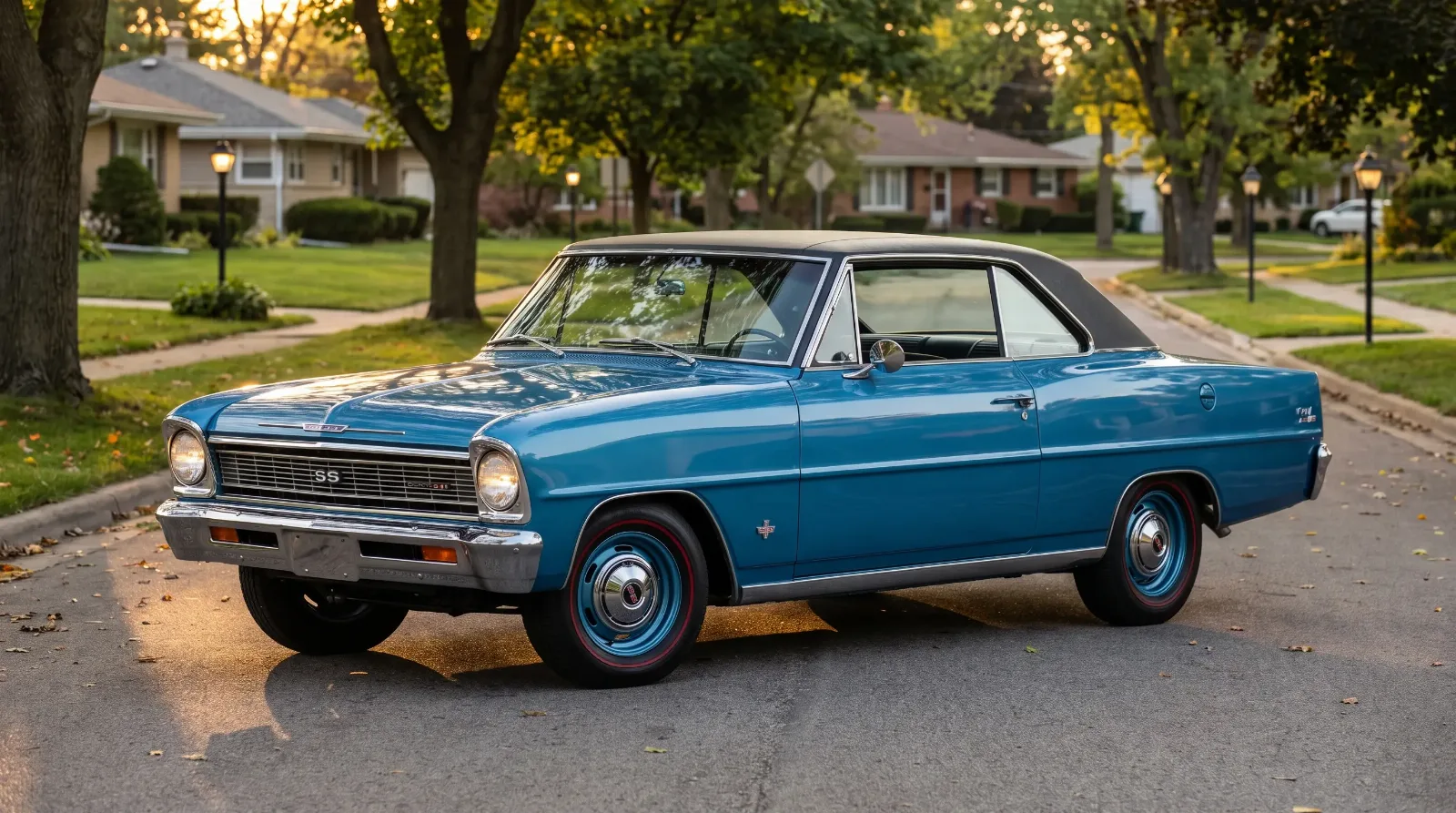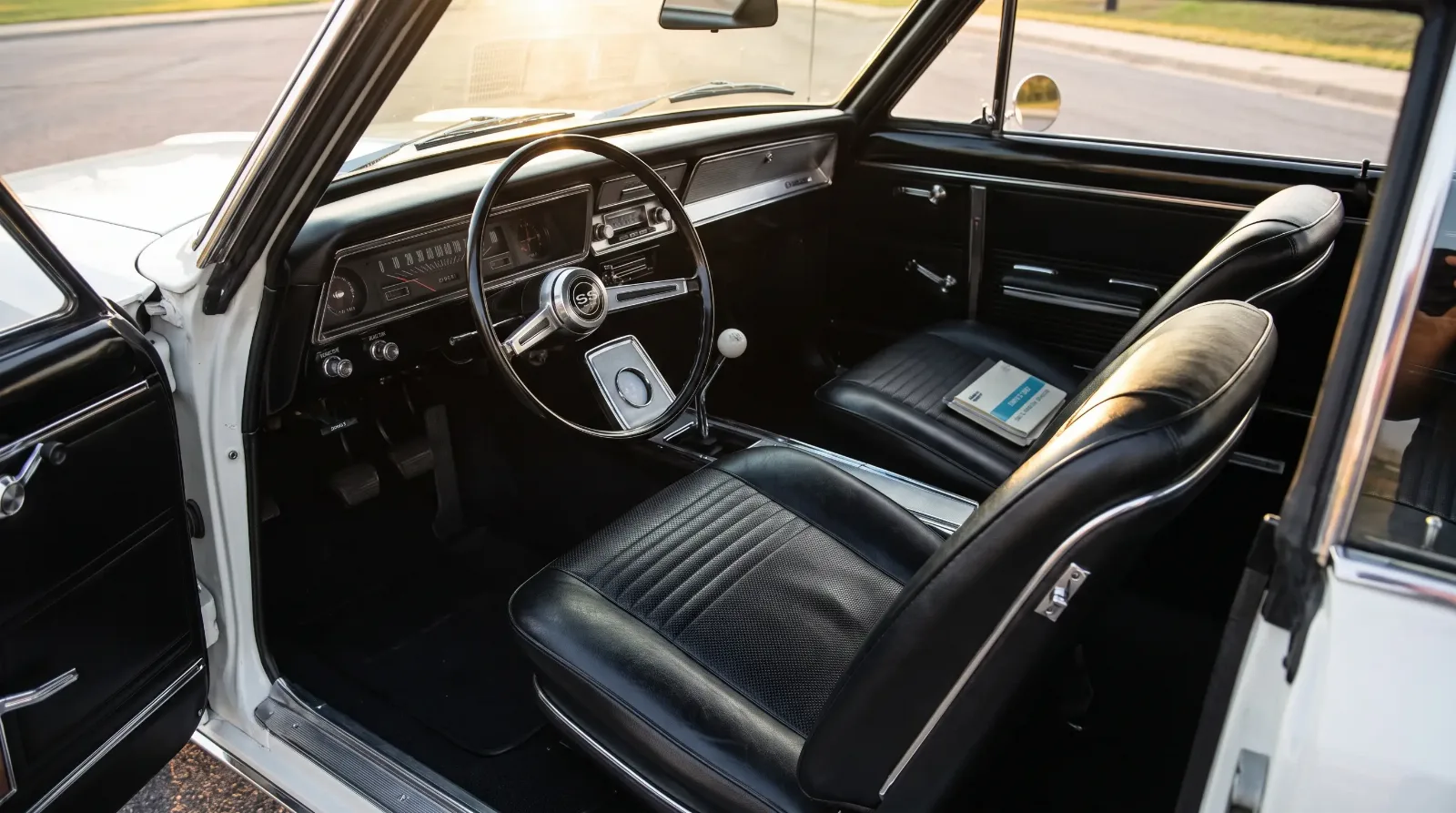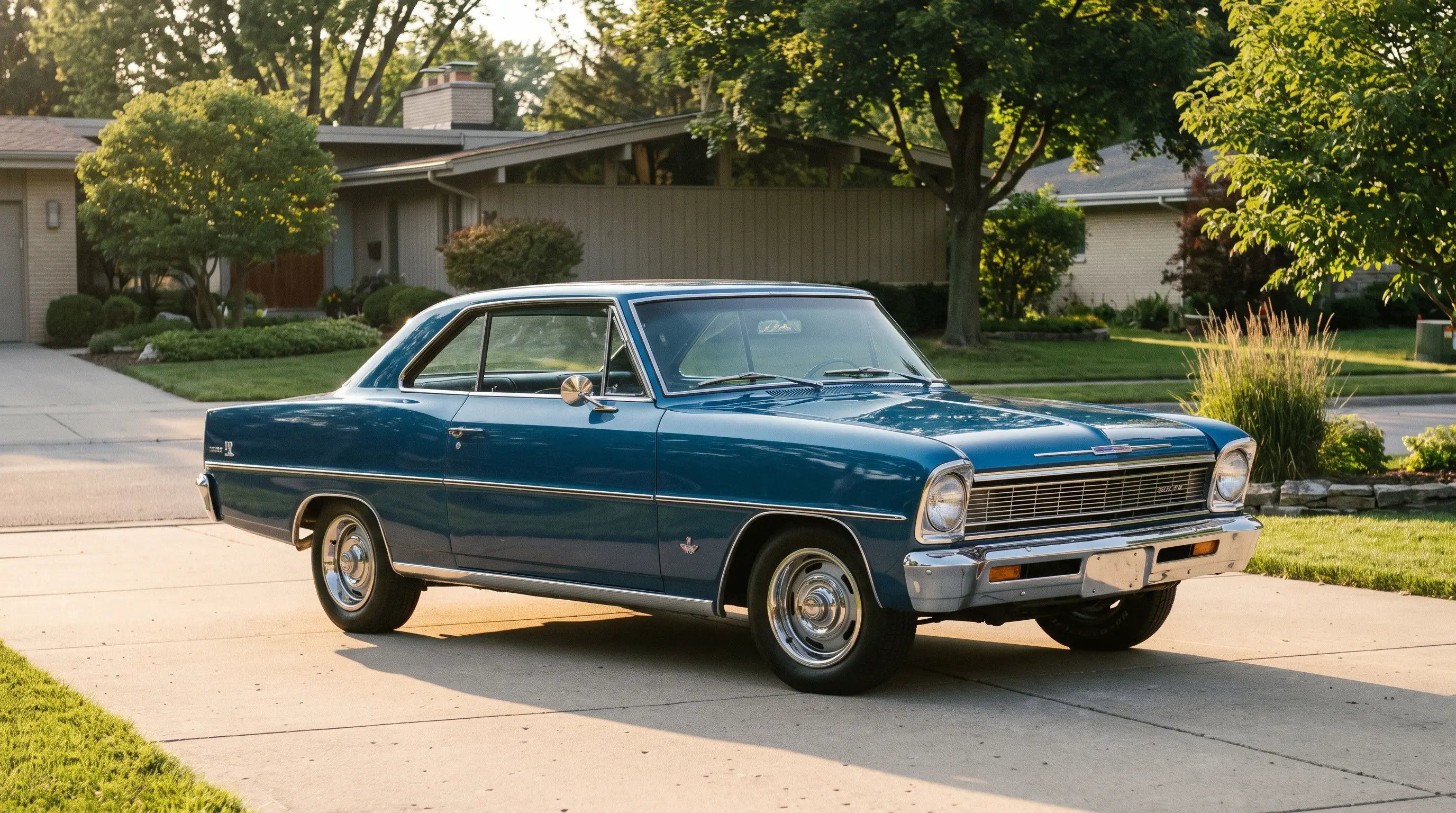
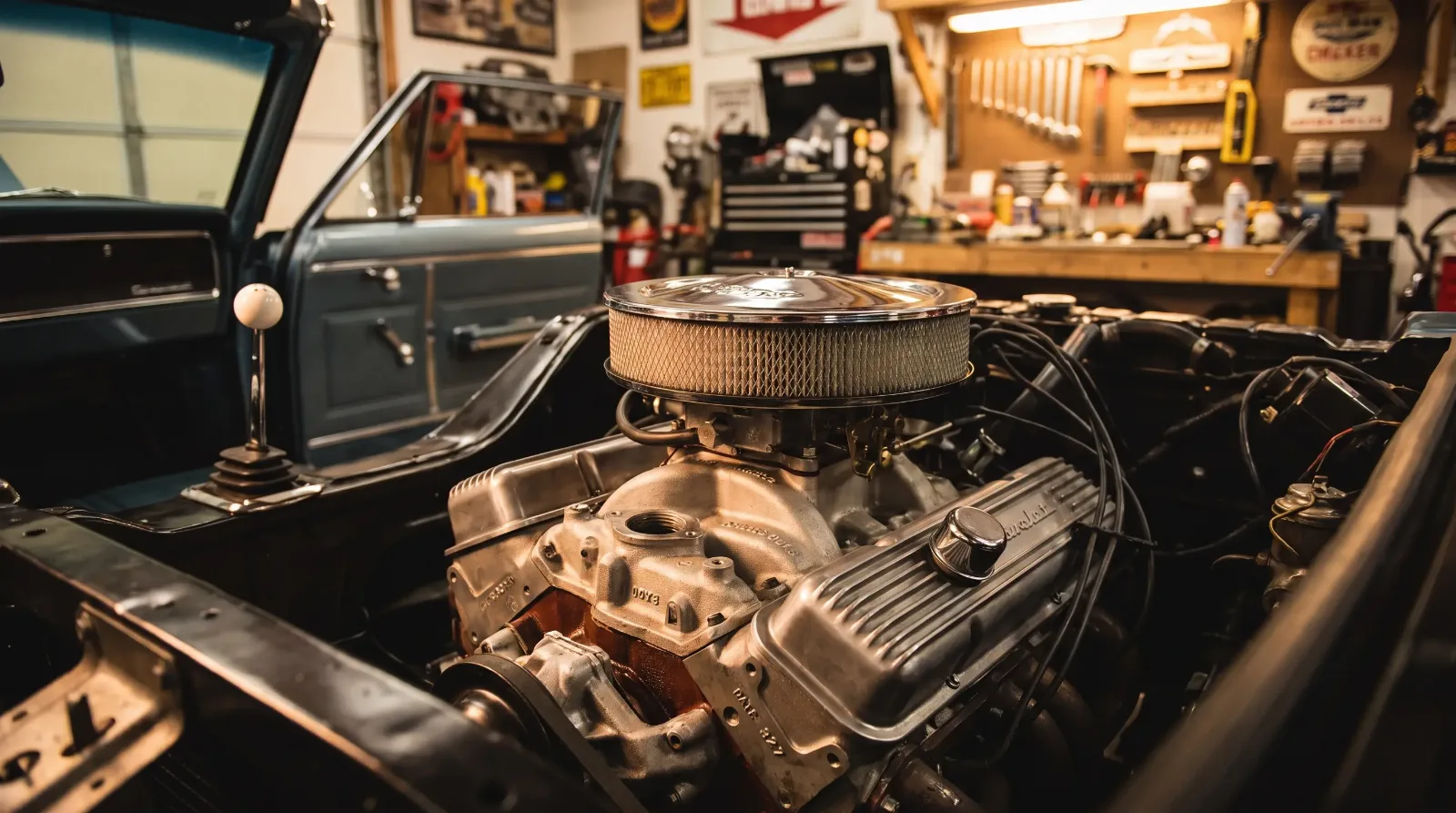
Order a 1966 Nova SS with the L79 327 and Chevrolet still made you choose how that power reached the road. The L79 was gone from the order sheet by 1967, replaced by the milder 275-horsepower L30, but the gearbox menu behind either engine stayed the same across both years of this short-lived second generation. The Nova gen2 transmission decision came down, in practice, to a two-speed Powerglide automatic or a four-speed manual, with a three-speed available further down the price list for buyers who wanted the V8 without paying for either extreme. It sounds like a simple menu. The paperwork behind it, and what each choice actually meant for how the car drove, is more layered than most casual histories let on.
The three-speed baseline
Every 1966-67 Nova, six-cylinder or V8, could be ordered with a column-shifted three-speed manual as the standard gearbox, sourced from Saginaw. It was unremarkable by design, built to be durable and cheap to service rather than quick, and it is the gearbox most 1966-67 Novas left the factory with, particularly the six-cylinder cars that made up the bulk of production. For a base six-cylinder commuter car, that pairing made complete sense. Paired with the L79, it was still perfectly functional, just not what most performance-minded buyers chose to check on the order form.
Powerglide: the easy, honest choice
The Powerglide two-speed automatic was Chevrolet's volume automatic transmission through this era, and it was available across the Nova line including behind the 327. It was never going to win a drag strip argument against a well-driven four-speed car, since two gears simply cannot hold an engine in its power band as effectively as four can, but it was smooth, reliable, and easy to service, which is exactly why so many buyers who wanted a comfortable performance car rather than a strip weapon chose it.
Some corners of Nova folklore treat the Powerglide as a compromise forced on buyers who could not handle a clutch. That is not a fair read of the historical record. Plenty of buyers who understood exactly what a four-speed offered still chose the Powerglide because they wanted the L79's power for effortless daily driving and highway passing, not for eighth-mile bragging rights. Chevrolet built that transmission to be a legitimate choice, not a consolation prize.
The Muncie four-speed and what it actually bought you
For buyers chasing the most direct connection between the L79 and the pavement, Chevrolet offered a four-speed manual, and the wide-ratio M20 Muncie unit paired with these small-block V8 Novas gave a meaningfully wider spread of usable gearing than the three-speed, letting the 327 stay closer to its power peak through more of the run. That mattered more on a lighter car like the Nova than it did in something heavier, since the smaller car could actually use the extra gear to translate horsepower into acceleration rather than just noise.
The four-speed was also the transmission most associated, rightly or wrongly, with the car's reputation as a serious performer rather than a dressed-up commuter. A four-speed Nova SS with the 327 was unmistakably a driver's car, in a way that even the same drivetrain with an automatic did not quite convey to onlookers at the time.
A close-ratio M21 Muncie was also available for 1966, paired with the L79 and a lower rear gear for buyers who wanted tighter spacing at higher rpm, but it was a genuine rarity even new. By 1967 it was effectively gone from the Nova order sheet, with only a small handful built that year against thousands of the wide-ratio M20. Buyers ordering the four-speed also needed the correct clutch linkage, pedal assembly, and driveshaft to match, which is another reason a later four-speed conversion rarely fools anyone who checks the underside of the car rather than just the shifter.
Rear axle and clutch pairings that came with the choice
Transmission choice did not exist in isolation. A buyer ordering the Muncie four-speed behind the L79 typically also specified a heavier-duty clutch and pressure plate than the Powerglide cars needed, along with a rear axle ratio chosen to complement the extra gear rather than duplicate what the automatic already covered. Chevrolet's order guide effectively steered buyers toward coherent combinations rather than letting every option mix freely with every other one.
That coherence is useful for anyone trying to verify a car today. A four-speed Nova with an axle ratio built for a Powerglide, or a clutch pedal assembly that does not match the transmission bolted behind it, is a strong sign that something has been swapped since the car left the factory floor.
| Transmission | Type | Typical Buyer Intent |
|---|---|---|
| Saginaw three-speed | Column-shift manual | Economy, base engines, cost-conscious V8 buyers |
| Powerglide | Two-speed automatic | Comfort and ease of use, including with the L79 |
| Muncie four-speed | Wide-ratio manual | Buyers prioritizing acceleration and driver engagement |
What the documentation says versus what gets claimed
I have pulled more than a few build sheets over the years where a car presented as an original four-speed car actually left the factory with a Powerglide, and the swap happened decades later by an owner chasing a more desirable specification. That is not automatically dishonest; plenty of these swaps were done openly and disclosed at resale. It becomes a problem only when a seller lets a buyer assume factory-original status without saying so.
"The transmission tunnel does not lie, but the story around it sometimes does. I always ask for the build sheet before I ask for an opinion."
— Tom Ramirez
Getting this right matters for anyone researching the gen2 chapter of Nova history, since transmission originality affects both value and how a given car should be judged against factory specifications. Readers digging into other originality questions from this same two-year window may also want a companion piece covering how exterior color and interior trim combinations were factory-paired, since the same documentation habits that settle a transmission argument settle a color argument too. The Nova gen2 transmission question rarely comes down to which gearbox was better. It comes down to which one is actually, provably, in the car.
Sources and notes
- Muncie 4-Speed: The Complete History (Chevy DIY)
- 1966-1967 Chevrolet Nova SS (2nd Gen) Guide and Specs (Moto Gallery)
- The Ultimate Chevy Sleeper: 1966 Nova SS with an L79 327 (Fuel Curve)
- Muncie 4-Speed Transmission (Wikipedia)
- Nova Rear Axle Codes (NovaResource)
- 1966 L79 Rear Axle Ratio Confirmation (CorvetteForum)