
The Nova SS icon status didn't happen overnight, and it didn't happen because Chevrolet marketed it that way at the time. For most of the 1960s the Nova SS was a secondary player behind the Camaro and the Chevelle in Chevrolet's own performance lineup. What changed its standing was decades of auction results, a shrinking supply of documented cars, and a market that eventually caught up to what the car actually was: a lightweight big-block platform that outran heavier muscle cars costing more money.
Car Features
6 min read
Why the Nova SS Became a Muscle Icon
The Nova SS wasn't built to be a legend. Auction data shows how a lightweight big-block platform and a shrinking documented supply turned it into one decades later.
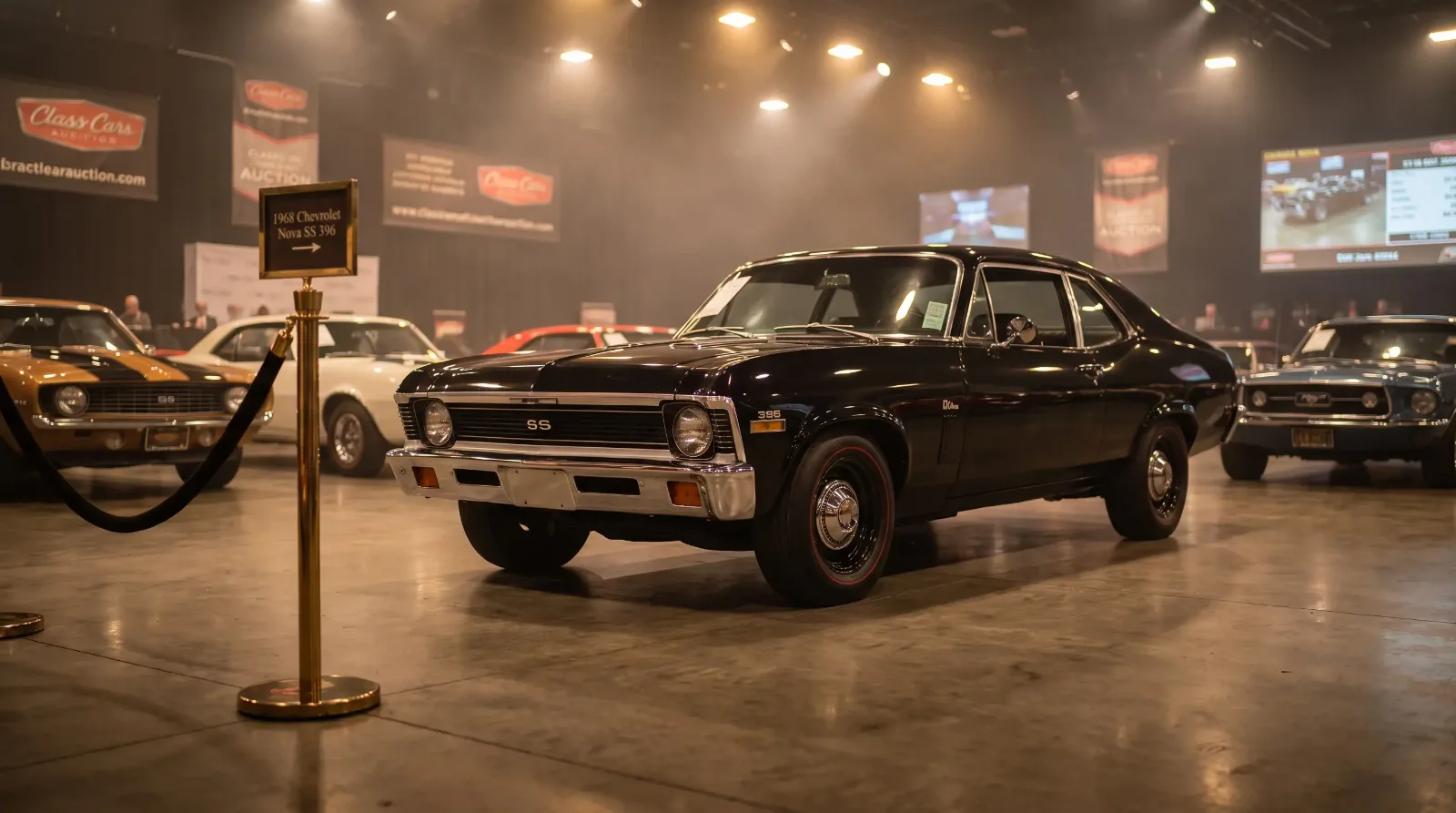
I track auction data across the muscle car segment for a living, and the Nova SS is one of the clearer examples of a car whose reputation grew after production ended rather than during it. That gap between period perception and current demand is worth understanding if you're trying to figure out where this car sits in the broader market.
A lightweight platform that punched above its price
The numbers explain a lot of this. A 1968-1970 Nova SS with the L78 396 weighed meaningfully less than a comparable Chevelle SS 396, while sharing much of the same drivetrain hardware. Less weight over the same power means better acceleration, and drag racers figured this out well before collectors did. Nova SS big-blocks were competitive on the strip against cars that cost considerably more when new, which built a reputation in racing circles long before the collector market noticed.
That racing pedigree matters for valuation today. Cars with a documented competition history, or even a credible regional racing reputation, tend to draw premiums over showroom-stock equivalents at auction, the same pattern you see with Camaros and Mustangs from the same era.
Supply dried up faster than demand
Big-block Novas were never built in Camaro or Chevelle numbers to begin with, and a meaningful share of the ones that existed were driven hard, raced, wrecked, or scrapped once they stopped being fashionable in the mid-1970s. By the time collector interest in muscle cars accelerated through the 1980s and 1990s, the surviving pool of documented, numbers-matching big-block Novas was already thin. Scarcity plus a growing buyer pool is a straightforward recipe for the price appreciation this segment has seen.
What's notable in the data is how uneven that appreciation has been. Documented L78 cars have posted steady gains at major auction houses over the past decade, while undocumented or re-engined cars have lagged well behind, sometimes trading for a third of what a verified example brings. That spread has widened, not narrowed, as buyers get more sophisticated about paperwork.
Regional supply matters too. The rust belt states that produced a large share of original Nova SS registrations also saw the highest attrition rates, since salt and road treatment took a heavier toll on unibody structures than the drier climates favored by later collector demand. A disproportionate share of surviving documented cars trace back to buyers in the Southwest or the South, which is part of why regional provenance shows up as a line item in serious auction catalog descriptions rather than an afterthought.
| Factor | Effect on icon status |
|---|---|
| Lightweight body, big-block power | Built a strip-racing reputation ahead of collector recognition |
| Lower original production than Chevelle/Camaro | Created scarcity once collector demand emerged |
| High attrition through the 1970s-80s | Shrank the surviving documented pool further |
| Documentation gap between verified and undocumented cars | Widening price spread at auction over the past decade |
The dealer-built cars changed the conversation entirely
Small-volume performance builds by independent dealers pushed the Nova's reputation further than the factory lineup alone would have. Cars built in genuinely tiny numbers, with documentation that goes beyond a standard cowl tag, created a mythology around the platform that outlasted the cars' original run by decades. That mythology is a real part of why the Nova SS carries the weight it does today. Collectors aren't just buying a fast Chevy; they're buying into a story about small shops beating Detroit's own performance divisions at their own game.
This is also where I'd caution buyers new to the segment. The reputation of these dealer-built cars has led to a predictable amount of fraud, cars with added badges and stories that don't hold up under real documentation review. If a seller can't produce a credible paper trail beyond the standard trim tag, treat any special-build claim as unverified until proven otherwise.
"The Nova SS didn't become a blue-chip muscle car because Chevrolet built it that way. It became one because the surviving documented examples got scarce at the exact moment collector demand for lightweight big-blocks took off. That's a market story as much as a car story."
David Mercer
Where the market sits now
Current data shows the Nova SS holding its value more consistently than several better-known muscle car nameplates from the same period, particularly at the documented big-block tier. Softer segments, small-block and appearance-package cars from the mid-1970s, haven't seen the same appreciation and likely won't, since they were never built to the same performance standard that defines the car's reputation. For buyers entering this market, that split matters more than the badge on the fender.
The broader lesson for anyone tracking muscle car values is that icon status is rarely assigned in the moment. It gets built retroactively, through decades of attrition, documentation habits, and whatever racing or dealer-built mythology attaches itself to a platform along the way. The Nova SS took longer to earn that status than the Camaro or the Chevelle, but the data now shows it holding ground just as firmly, and in the case of documented L78 cars, appreciating faster than either.
If you want the full picture of how the SS package evolved across its production run, including which specific years line up with which engines, the Nova SS story lays out that history in detail. And if you're trying to understand exactly why this platform holds the meaning it does among collectors today, rather than just where the prices sit, a related deep-dive covers that side of the story directly.
Sources and notes
Related Reading
Have a
Chevrolet Nova
for Sale?
Reach thousands of serious classic car collectors across the US.
Sell It Here →
Are You a Classic Car Dealer?
List your full inventory and connect with targeted classic car buyers.
Join as a Dealer →

About the author
David Mercer
Classic car market analyst with two decades of experience tracking collector car valuations, auction results, and investment trends.
Related Listings - Chevrolet Nova
Comments (1)
M
Mike Ferrano
1 month ago
Auction prices are aspirational. The private sale market is more realistic. The gap between the two is where smart buyers operate.