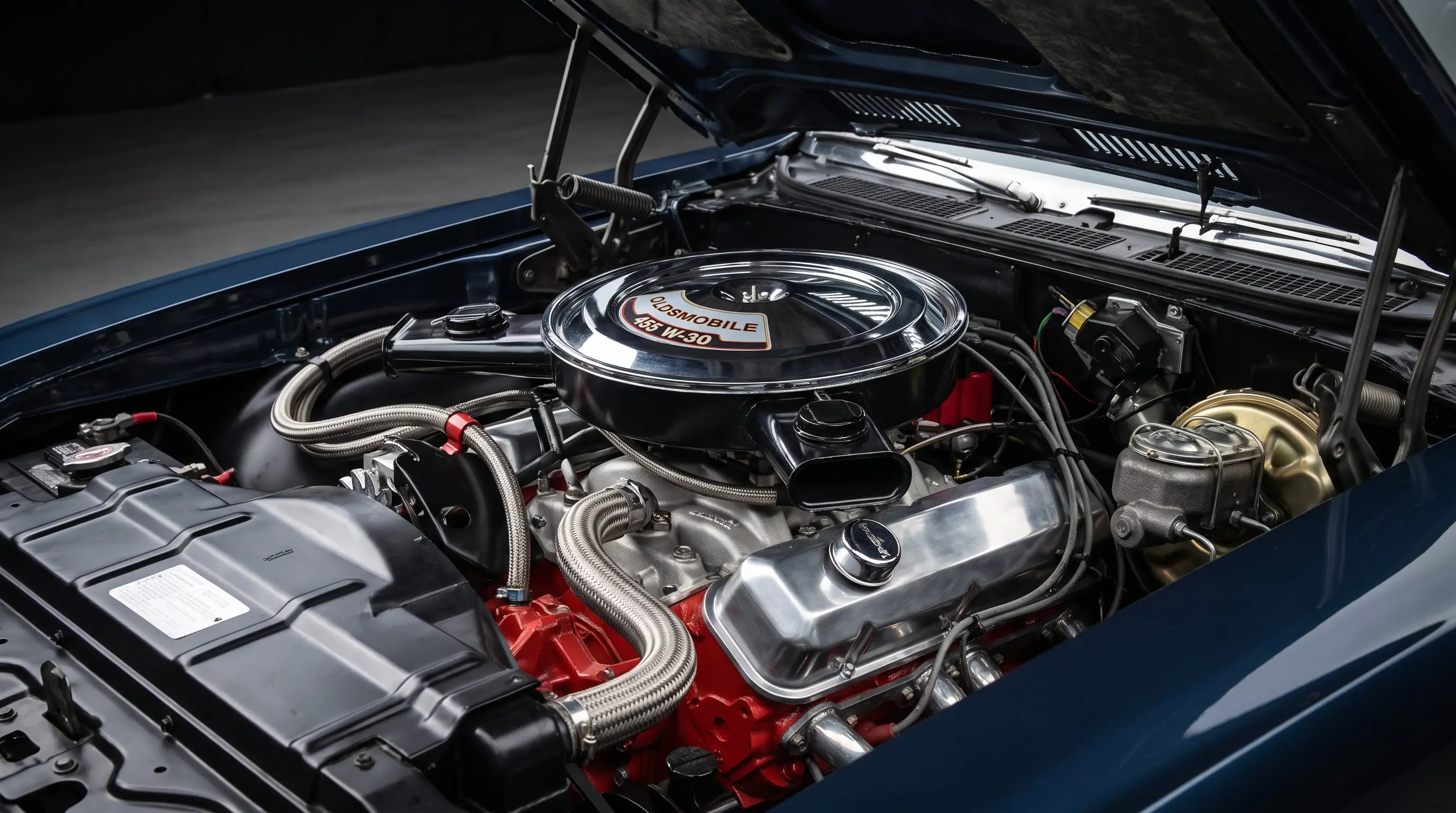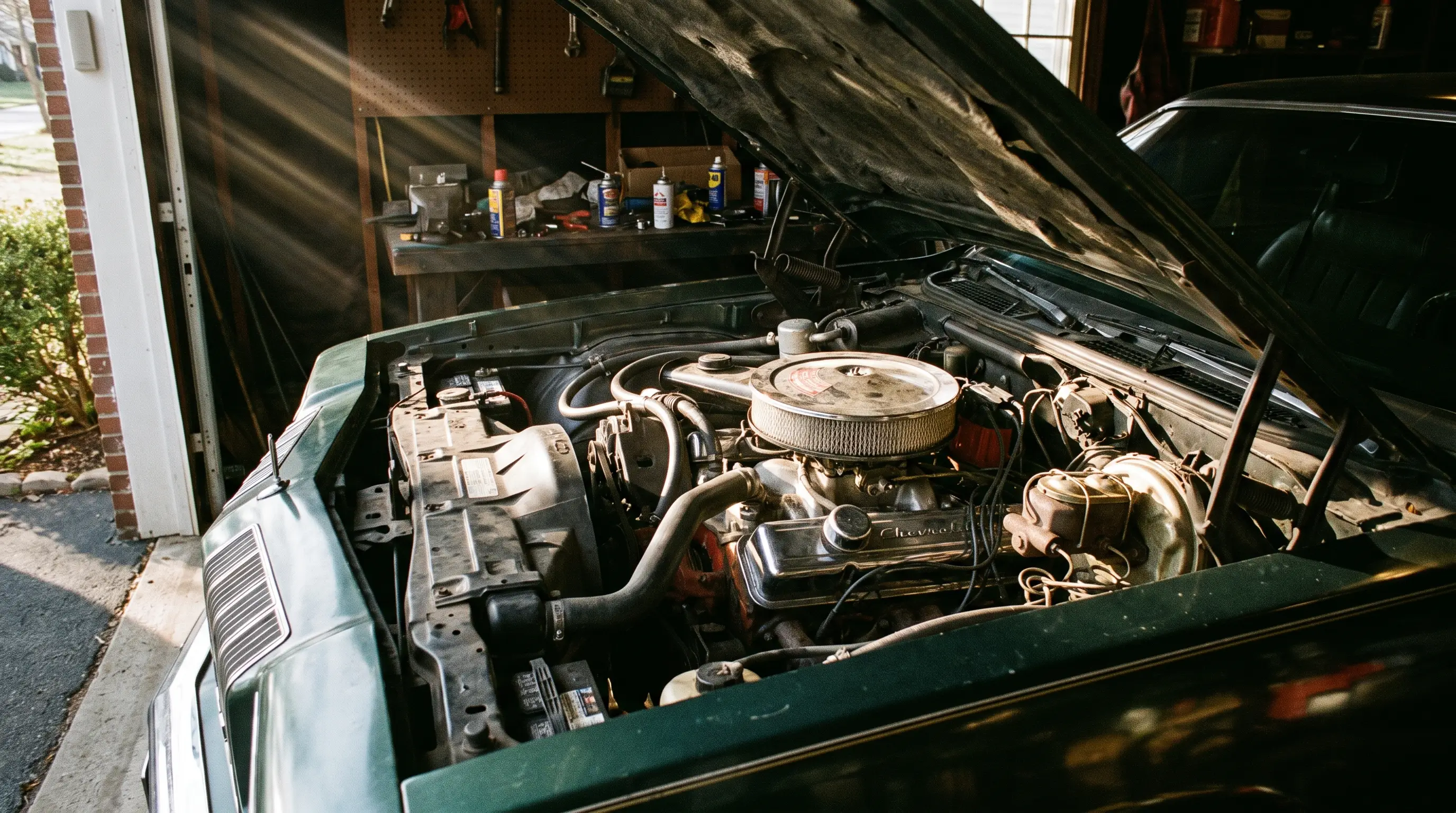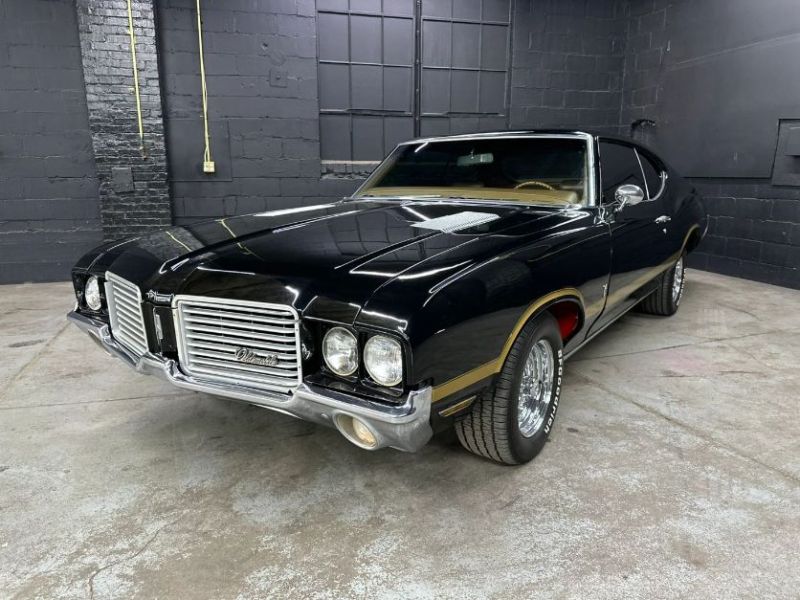
Everybody wants to know what's under the hood before they hand over money. On an Oldsmobile, that answer isn't on the air cleaner and it isn't on the valve covers. It's stamped in two or three specific spots on the block, and if you don't know where to look, you'll spend twenty minutes staring at the wrong surface. Here's how to actually identify an Oldsmobile engine, no guesswork.
Start at the block casting number
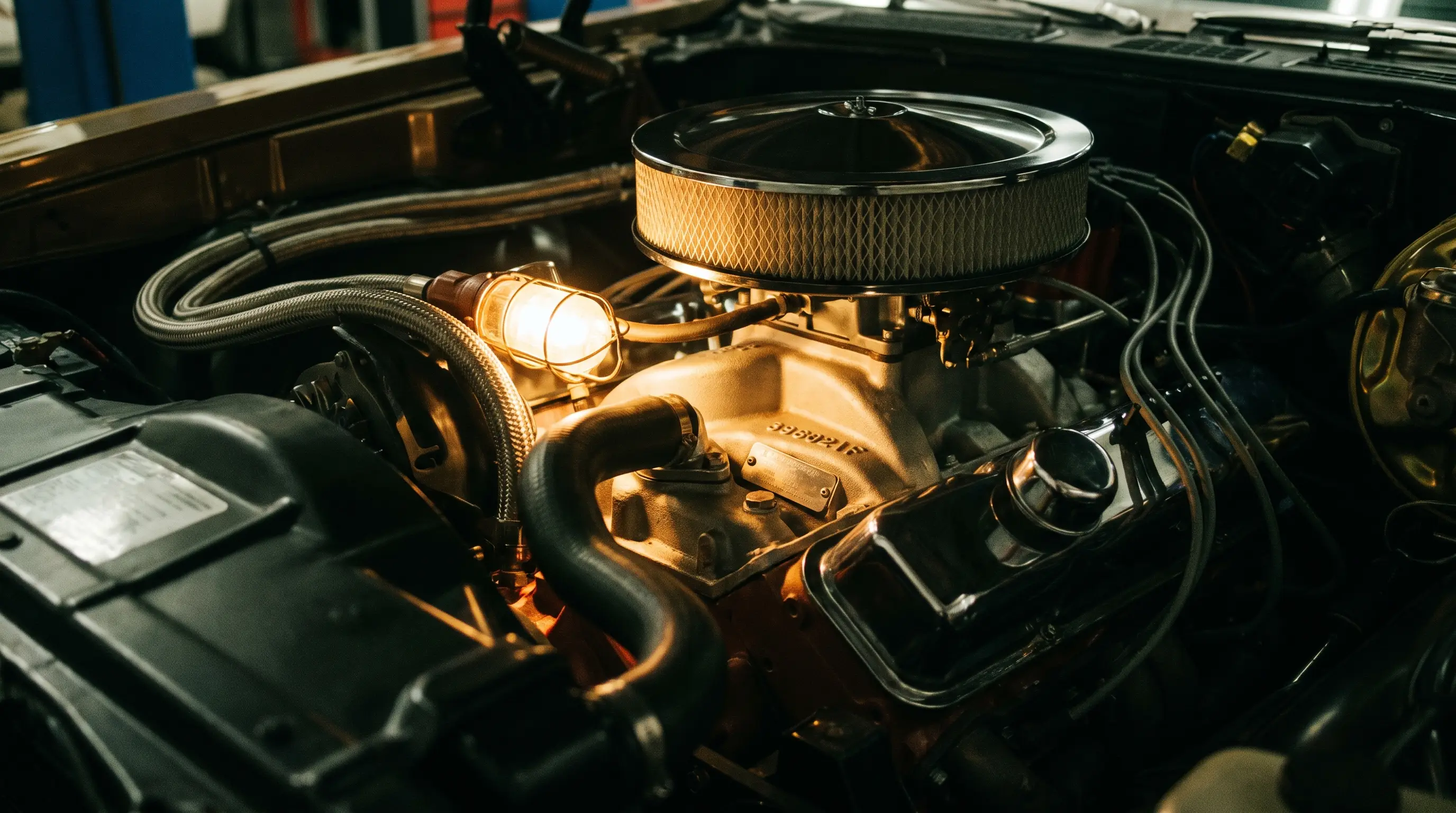
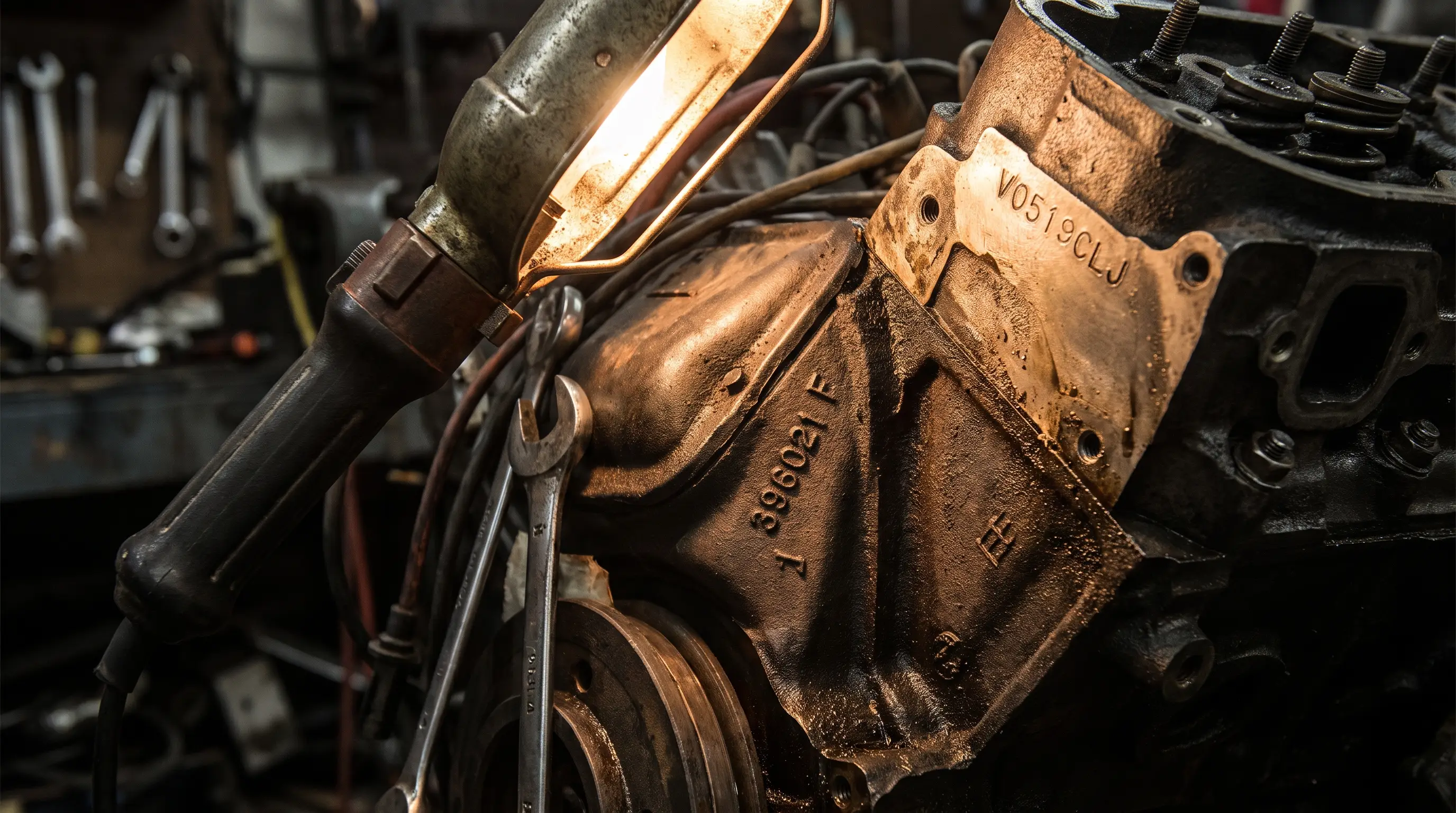
Every Oldsmobile block has a casting number on it, usually on the driver's side of the block, on the flat area behind the distributor or ahead of the cylinder head. That number tells you the block family, the displacement it was designed around, and roughly when it was cast. It does not tell you the exact build date or which car it left the factory in. Casting numbers get reused across model years, so a number by itself narrows things down, it doesn't nail them down.
For Oldsmobile small-blocks, you're looking at the 260, 307, 330, 350, and 403. The big-block family runs 400, 425, and 455. Each has its own casting family, and none of them share a casting number with a Chevrolet, Pontiac, or Buick engine of the same displacement, which is exactly why the 1977 engine mix-up was so easy to catch once someone actually looked at the block instead of the decal.
The casting number itself is usually six to seven digits, and it's worth writing down before you crawl out from under the car, because it's easy to misread a 3 as an 8 in a shop light. Cross-reference it against a printed casting number list before you make any claims about displacement or family. A lot of buyer disappointment traces back to someone reading a partial number off a dirty block and assuming it matched what the seller told them over the phone.
The engine ID pad tells the real story
The pad that actually matters is the engine identification pad, a machined flat surface stamped with a letter code sequence. On most Oldsmobile V8s from the mid-60s forward, that pad sits at the front of the block, right where the passenger side cylinder head meets the block deck, close to the timing cover. The stamp includes a plant code, a build date code, and a suffix that identifies the specific engine application, things like transmission type, accessory drive, and sometimes emissions equipment.
That suffix code is the part worth learning. It's usually two to four characters and it's specific to how that engine was configured when it left the plant. Two engines with the same displacement can carry different suffix codes because one went behind a manual transmission and the other went behind a Turbo Hydra-Matic. If you're trying to confirm an engine matches a build sheet, the suffix code is where that confirmation lives, not the displacement.
Cylinder heads and carb tags fill in the gaps
Casting numbers on the heads narrow down valve size and combustion chamber volume, both of which matter if you're trying to figure out what a particular 350 or 455 was actually rated for versus a generic spec sheet. Oldsmobile changed head castings more than once across the 1968 to 1980 run, usually tied to compression changes as emissions rules tightened.
If the car still has its original carburetor, the tag on the air horn or the float bowl gives you a Rochester or Quadrajet part number, which cross-references to a specific application, again tied to transmission and rear gear more than anything cosmetic. None of this is exciting work. It's just checking three or four stamped numbers against each other and seeing if the story holds together.
Distributors carry their own date code too, usually stamped on the housing near the vacuum advance, and while a distributor gets swapped more casually than a block or head, a wildly mismatched date code is still worth noting when you're building the full picture. Same goes for the water pump casting, which changed a few times as Oldsmobile revised cooling capacity on the bigger displacement engines. None of these secondary parts prove originality on their own, but a car where every stamped part lines up within a reasonable build window tells a more convincing story than one where nothing agrees.
| Location | What it tells you |
|---|---|
| Block casting number (behind head or near distributor) | Engine family and displacement, not build date |
| Engine ID pad (front of block, passenger side) | Plant code, build date, application suffix |
| Cylinder head casting number | Valve size, chamber volume, model year range |
| Carburetor tag | Specific calibration and application |
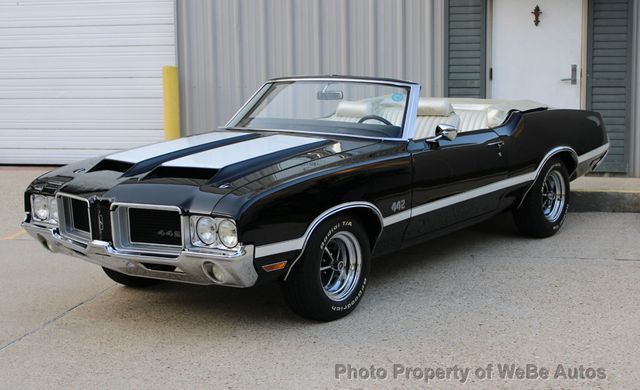
"A guy tells me his 442 is numbers matching because it's got a 350 in it. I tell him a 350 in a 442 isn't a claim, it's a starting point. Show me the stamp, then we'll talk."
— Dan Reeves
What none of this proves
Here's the blunt part. None of these codes prove an engine is original to a specific car unless you're also cross-referencing a build sheet, a Protect-O-Plate, or factory records that tie a VIN derivative to that engine. Casting numbers and ID pad stamps confirm what the engine is and roughly when and how it was built. They don't confirm it rode home in that car in 1971 and never left. That's a separate question, and it's a bigger one than most sellers want to admit.
If you're weighing whether an engine is actually original to the chassis in front of you, that's where the conversation shifts from casting numbers to VIN derivatives stamped on the block itself, which is another angle worth understanding before you pay a numbers-matching premium. And if you want the full rundown on what Oldsmobile put under these hoods generation by generation, that's covered in the Cutlass engines story.
Bottom line: learn where the stamps live, read them before you buy, and don't take anyone's word for what a casting number means when you can check it yourself in under five minutes with a flashlight and a mirror.