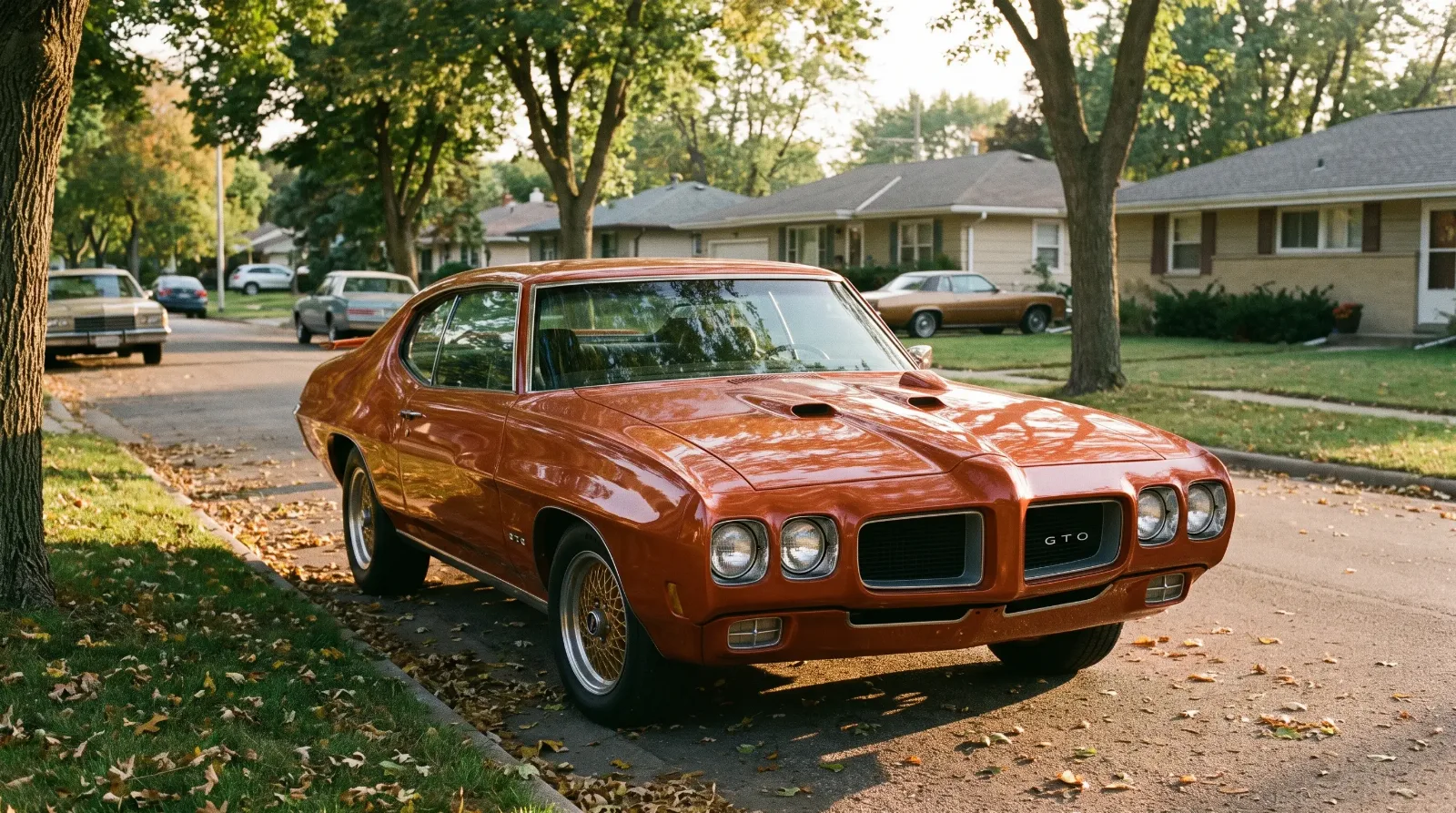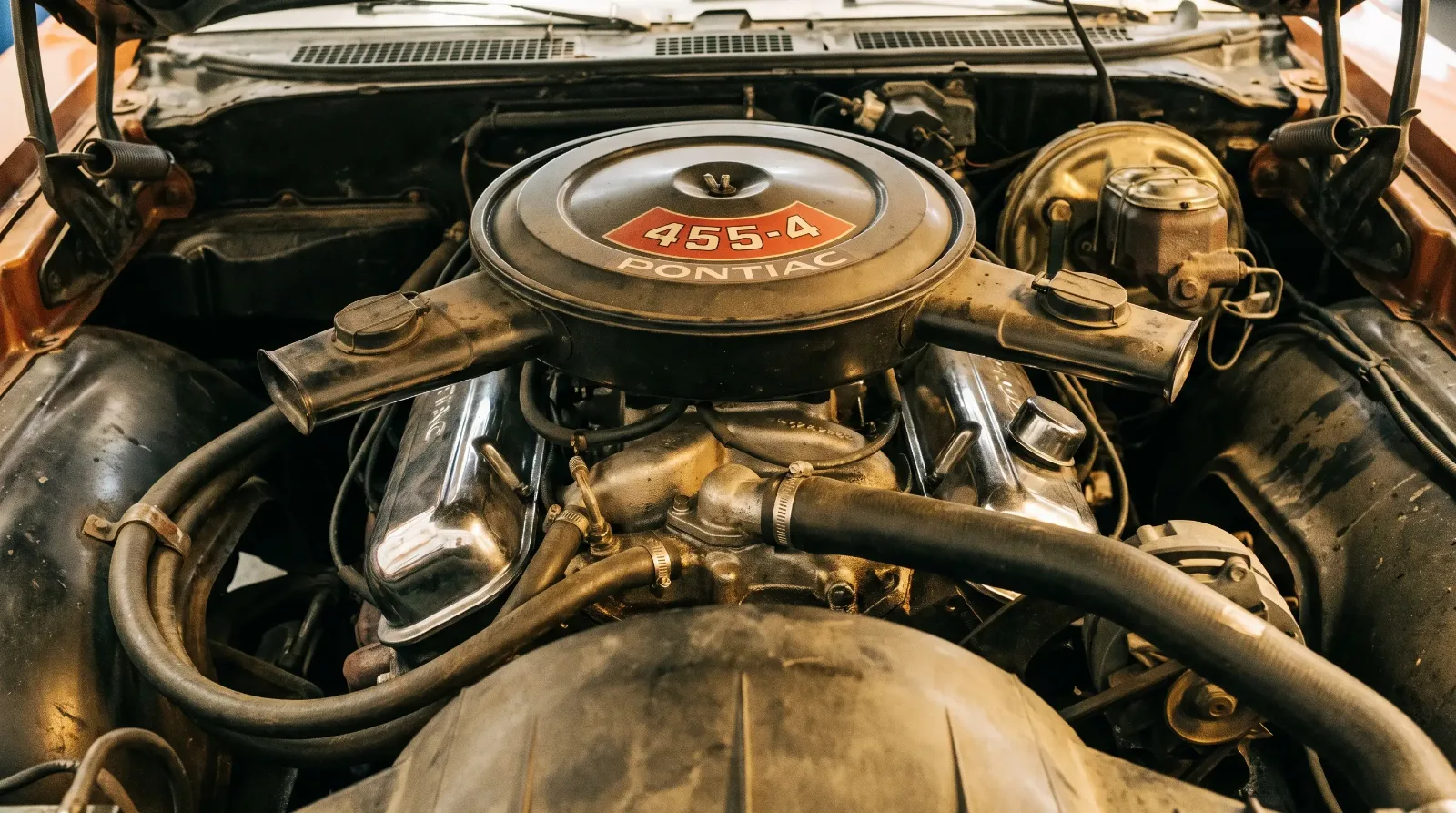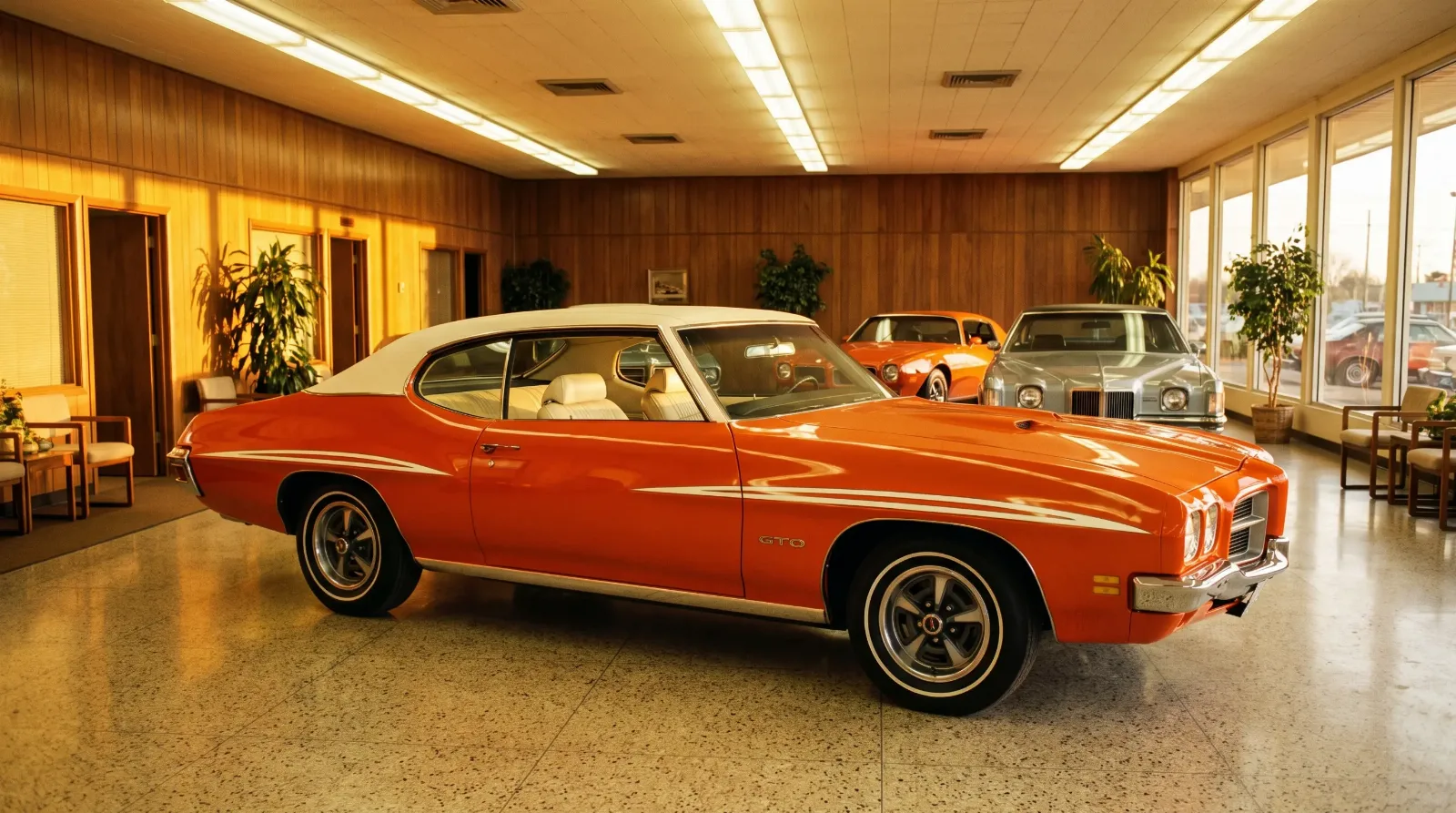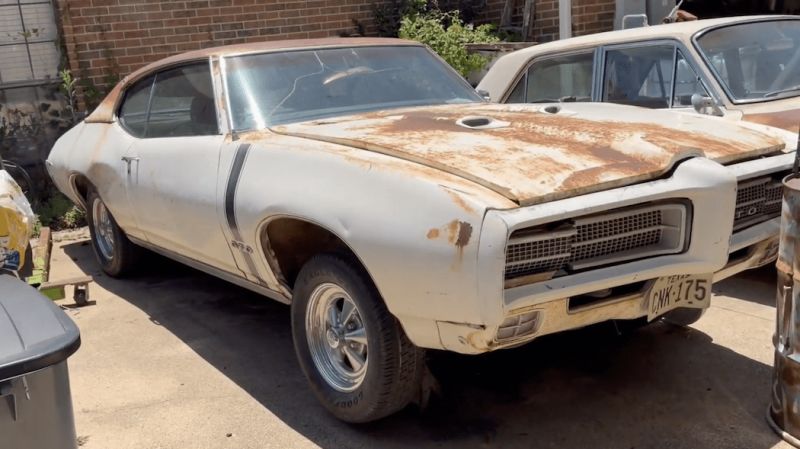
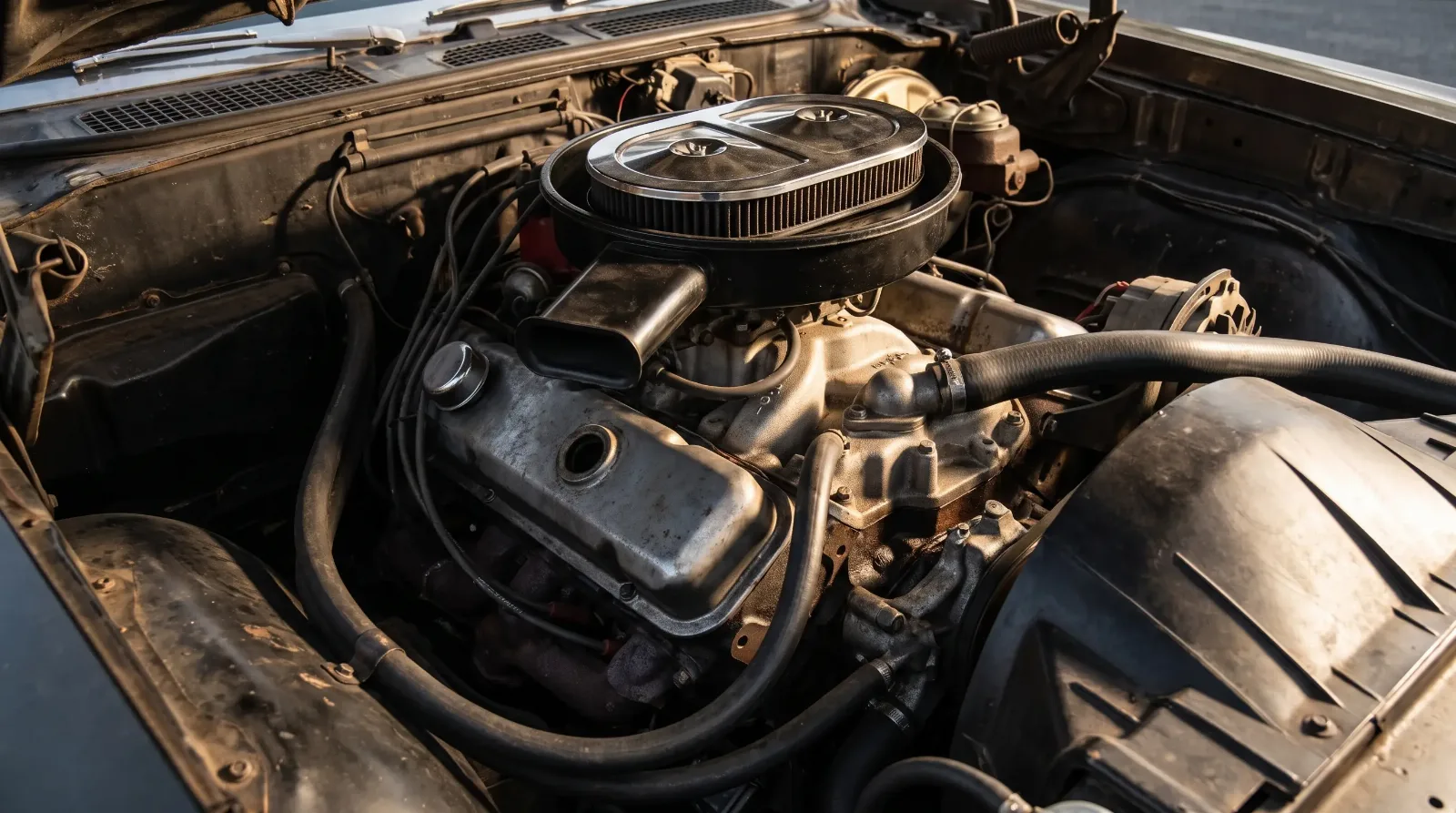
When Pontiac dropped the Ram Air 400 from the lineup, they needed something to carry the performance flag, and the answer was the 455 HO. I've built and tuned enough big-blocks from this era to tell you straight: this engine is the last real statement Pontiac made before the muscle car era got squeezed down to almost nothing by the mid-70s. It's not the highest-revving engine they ever built. It's not the lightest. But cubic inch for cubic inch, it's one of the most honest big-blocks Pontiac put a GTO badge on, and the numbers back that up better than most of the marketing copy from the period does.
What made the HO different from the standard 455
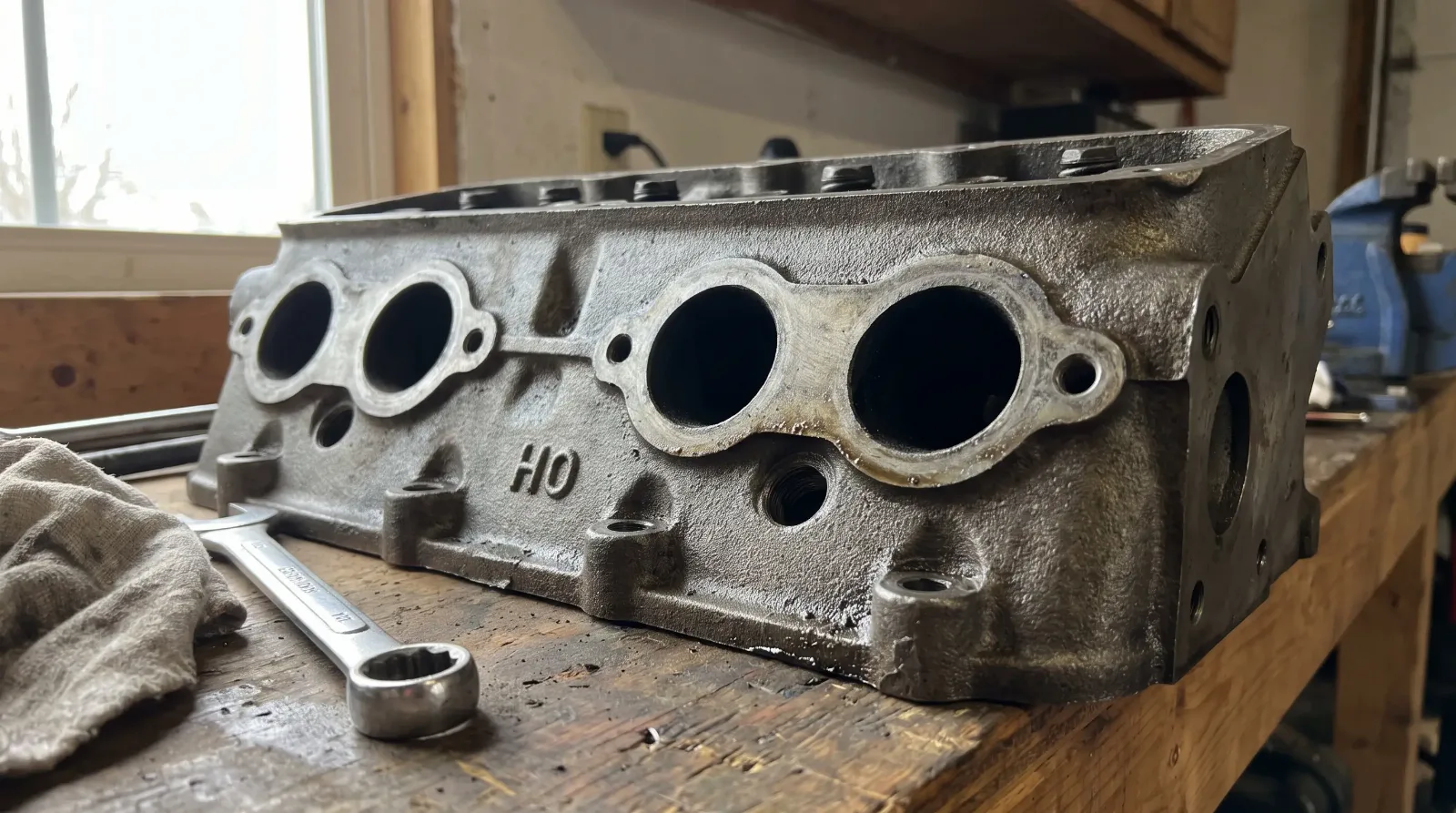
The standard 455 that arrived on the GTO option sheet in 1970 was built as a torque engine first, a smooth, heavy-hitting powerplant designed to move a big car off the line without much drama. The 455 HO, arriving as the top performance engine once the high-revving Ram Air 400 exited the lineup, was Pontiac's answer to the question of how to keep a genuine performance halo alive while compression ratios were dropping industry-wide. It got a hotter camshaft profile, better-flowing round-port cylinder heads shared in spirit with the earlier Ram Air engines, and internal upgrades aimed at letting the engine breathe and rev with more authority than the base 455 could manage.
Here's the number that matters: torque. For 1971 the 455 HO was rated 335 hp gross at 4,800 rpm and 480 lb-ft of torque at 3,600 rpm, one of the highest torque figures ever printed on a factory GTO spec sheet. For 1972, the same engine carried over largely unchanged mechanically but was rated 300 hp SAE net, a lower printed number that reflects the industry's switch from gross to net measurement that model year, not a real drop in output.
| Feature | Standard 455 | 455 HO |
|---|---|---|
| Cylinder heads | Standard casting | Round-port, improved flow |
| Camshaft | Milder, torque-focused profile | Hotter profile for higher-RPM output |
| Primary role | Low-end torque, everyday drivability | Top performance option once Ram Air 400 was gone |
Transmission and driveline pairing
An engine like this only works if the rest of the driveline is built to handle the torque it's putting out, and Pontiac paired the 455 HO with transmission and rear-end options chosen specifically to survive that kind of load. Buyers had both manual and automatic transmission choices depending on the exact model year and configuration, and I've found that the transmission pairing tells you almost as much about how a specific car was actually driven new as the engine choice does. A heavy-duty automatic behind a 455 HO points toward a buyer who wanted maximum torque with minimum shifting effort, comfortable stoplight dominance without needing to row through gears. A manual-equipped car points toward a buyer who wanted more direct control over how and when that torque got applied, useful both at the strip and for anyone who actually enjoyed the mechanical process of driving rather than just the result.
Rear-end gearing matters just as much here as the transmission choice. A numerically higher rear gear ratio sharpens off-the-line acceleration at the expense of highway cruising RPM, and I've seen 455 HO cars specced both ways depending on what the original buyer prioritized. Factory rear-end options on these cars ran from around 3.08 up through 3.55, with a 3.55 final drive paired to a 4-speed being the combination Motor Trend used to run 7.1 seconds 0-60 and a 15.4 at 92 mph quarter-mile in period testing. Verifying the rear-end ratio against factory documentation is worth doing before you form an opinion about how a specific car should perform, because two otherwise identical 455 HO cars with different rear gears will feel meaningfully different off the line.
Driving character and what it means for a buyer
An engine like this doesn't behave like the small-block screamers people associate with peak muscle car performance. It's a torque monster with a bigger appetite for revs than the standard 455, and that combination gives it a specific personality on the road. Off the line, you feel the torque hit immediately, harder than most engines from this era, and it keeps pulling well past where a lesser big-block would start to fall flat. If your idea of a good muscle car is one that wins a stoplight drag every single time without you having to work the gears hard, the 455 HO delivers that in a way few engines from any manufacturer in this period actually do.
The tradeoff is weight. This is a genuinely heavy engine up front, and that changes the car's handling balance in a way that matters if you're planning to actually drive it hard through corners rather than just straight lines. I always tell people evaluating a 455 HO car to drive it before they buy it, not just look at the spec sheet, because the character of this engine is something you feel in your body more than something you read in a brochure. Numbers on paper undersell how much this thing shoves you back in the seat from a stop.
🔧 Inspection Priorities
- Verify block and head casting numbers against 455 HO specifications. Standard 455 blocks have been dressed up with HO badging by sellers looking for a premium; check the actual casting numbers.
- Check for correct camshaft. A prior rebuild with a mismatched cam profile changes the engine's character and its authenticity as a numbers-matching HO.
- Inspect front frame and motor mounts. The added weight of this engine puts more stress on mounts and front structure than lighter engine options; look for cracking or excessive wear.
"The 455 HO doesn't need me to exaggerate anything about it. You put your foot into one of these and the torque tells the whole story before you've even shifted into second gear. That's the kind of engine that doesn't need a marketing department."
— Dan Reeves
This engine is really the performance centerpiece of the 1970-72 GTO once the earlier Ram Air engines had faded from the lineup, and it carried the GTO's performance reputation into its final chapter as a standalone model. To see how the car and the option sheet evolved in the year that followed, once the GTO had shifted to a much smaller role on the Le Mans lineup, read on.