
335 horsepower, gross. That's the number Pontiac put on paper for the 1971 Pontiac 455 HO, and it's the number that started forty years of arguments. The Trans Am and Formula buyers who ordered it weren't buying a big block for bragging rights at a stoplight. They were buying torque, and the 455 HO delivered more of it than anything else in Pontiac's lineup that year.
Car Features
6 min read
The 455 HO
Pontiac's 1971-1972 455 HO traded flash for torque, and a single ratings change in 1972 still confuses buyers who don't know the difference between gross and net horsepower.
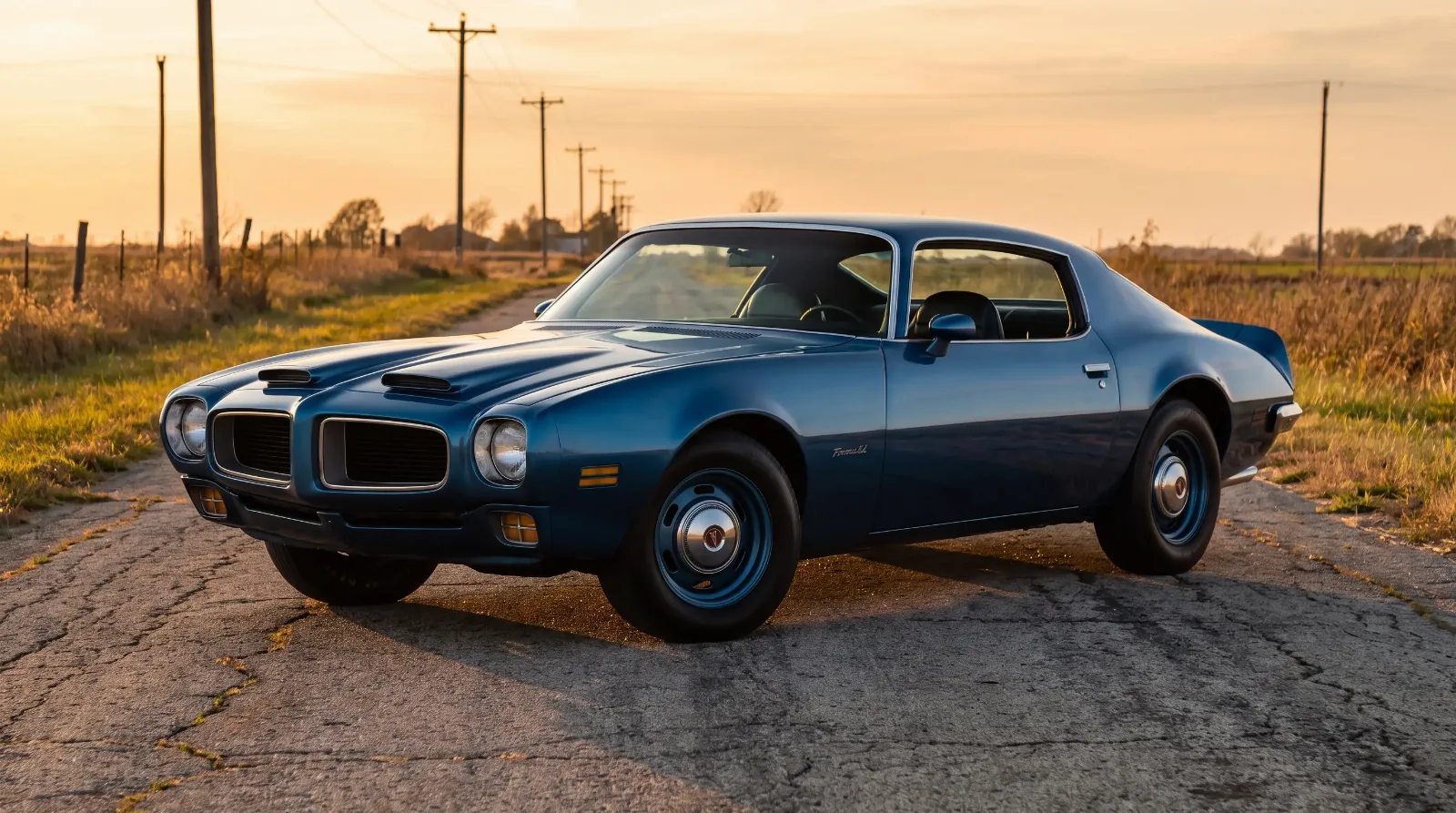
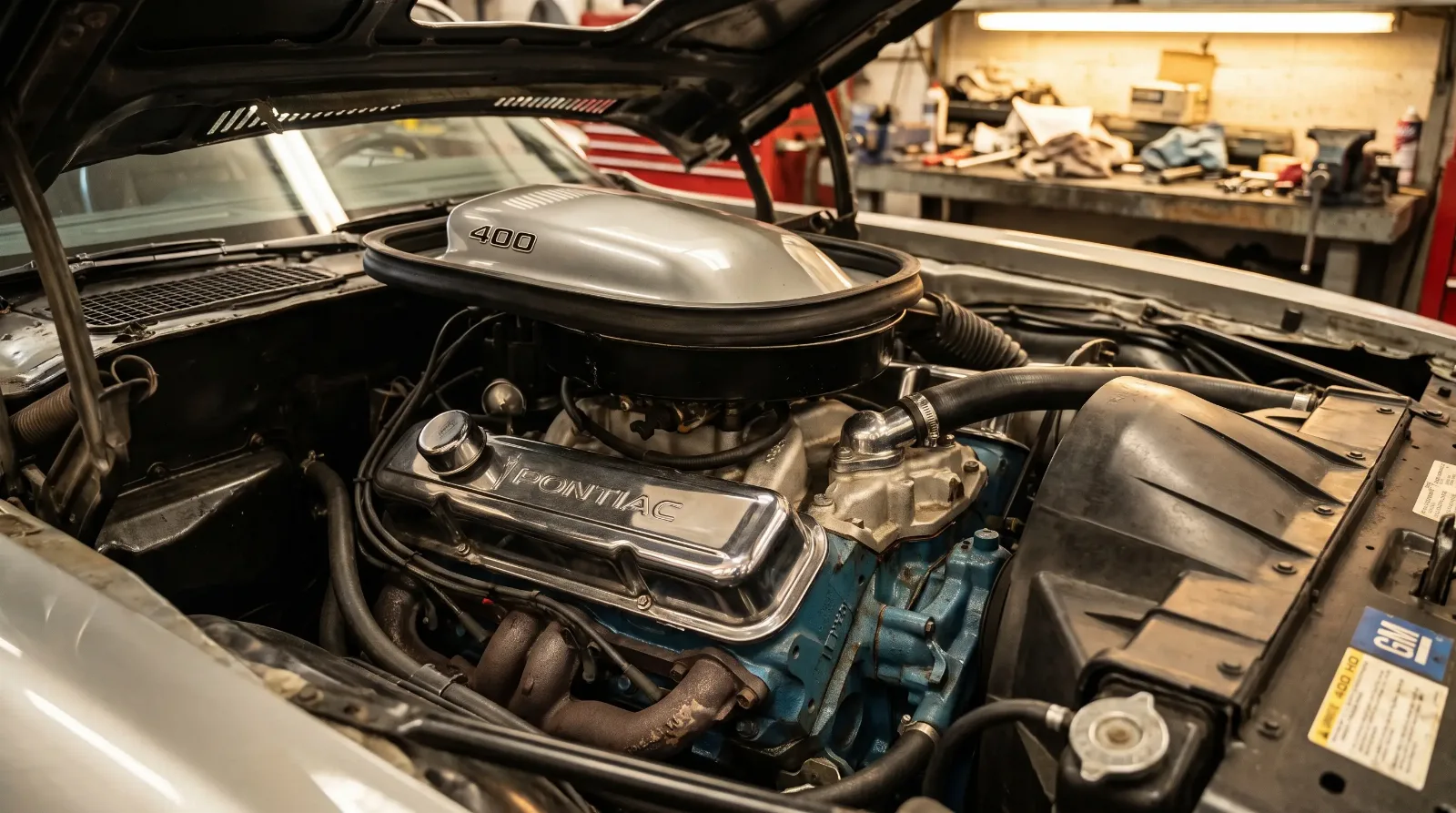
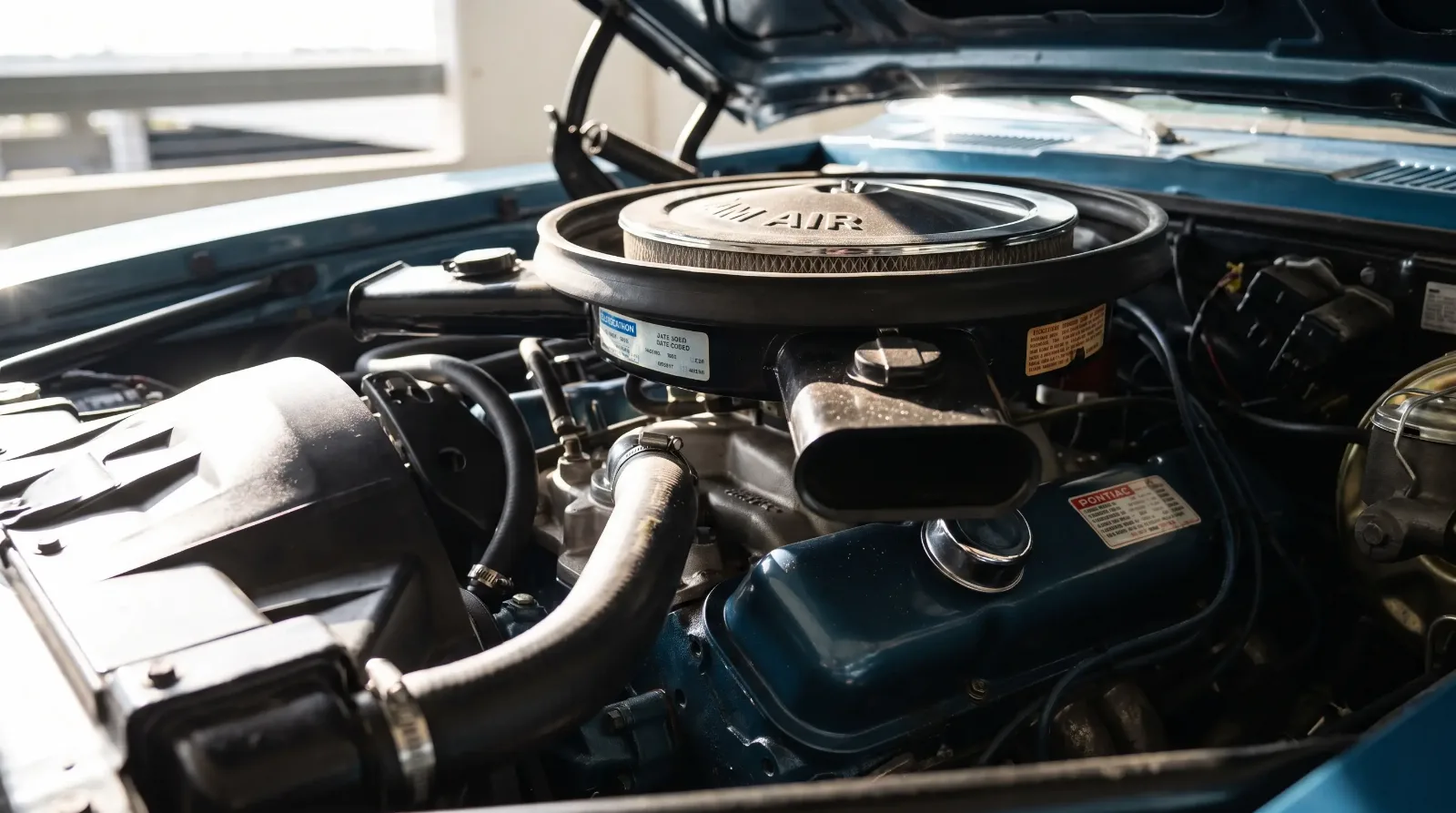
HO stood for High Output, and Pontiac used the badge loosely across several eras. But the 1971-1972 455 HO was a specific engine with specific parts, not a marketing sticker slapped on a stock long block. It shared its 4.15-inch bore and 4.21-inch stroke with the base 455, and it shared the block casting too. What it didn't share was the top end, and that's where the real engine lived.
What separated the HO from the base 455
The base 1971 455 ran 8.2:1 compression and a mild hydraulic cam, rated at 325 hp gross. The HO bumped compression to 8.4:1, not a huge jump on paper, but it paired that with round-port cylinder heads carrying larger valves, a hotter hydraulic cam, and a better-flowing exhaust manifold setup. None of those changes look dramatic in isolation. Stacked together, they were worth 10 more horsepower and, more importantly, a wider, stronger torque band that the base engine couldn't touch.
Torque was the real story. The 1971 455 HO produced 480 lb-ft gross at a lazy 3200 rpm, numbers that made the engine feel unstoppable off the line even though the horsepower figure wasn't headline-grabbing next to earlier muscle-car peaks. This was a low-compression, emissions-era engine built to make its case in the midrange, not at 6000 rpm.
1971 versus 1972: the number that lied
Here's where people get tripped up. In 1972, the 455 HO's rating dropped to around 300 hp. That looks like a 35-horsepower loss on paper, and casual shoppers read it as a detuned engine. It wasn't. The 1972 model year is when the entire industry switched from SAE gross ratings, measured on a dyno with no accessories and open headers, to SAE net ratings, measured with the full accessory drive, exhaust system, and air cleaner installed like the car actually left the factory. The hardware barely changed. The measuring stick did.
That single accounting shift confuses buyers researching a pontiac 455 ho today more than any actual mechanical difference between the two model years. If you're comparing a 1971 car to a 1972 car on horsepower alone, you're comparing two different rulers, not two different engines.
"People see 335 and 300 on paper and think Pontiac gutted the engine in one year. They didn't touch the cam. They just started telling the truth about what the accessories were costing you."
Dan Reeves
Where you'd actually find one
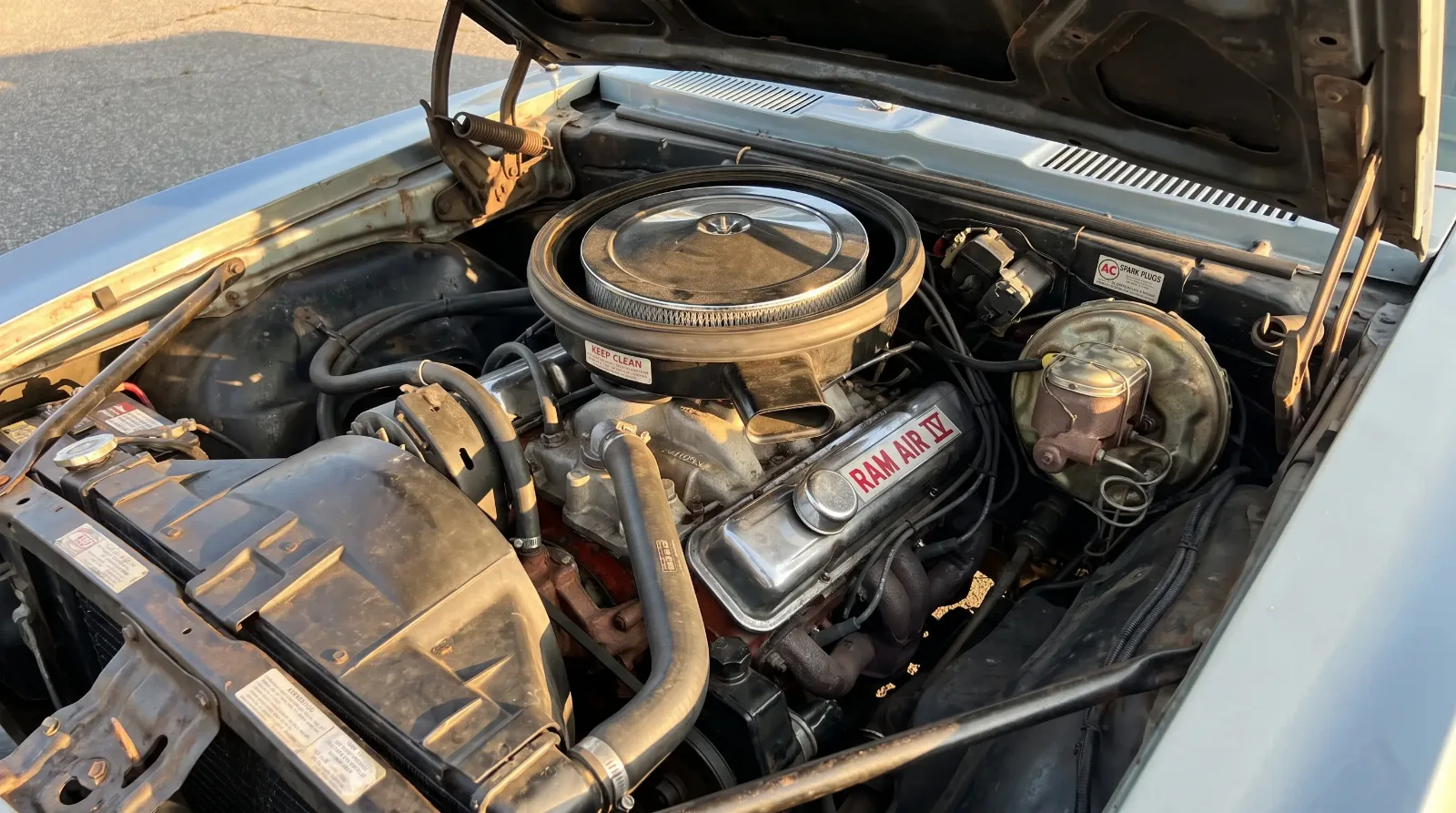
The 455 HO wasn't a Firebird-exclusive engine, but it was a meaningful option inside the engine chapter of the Firebird's story. It showed up in the Trans Am and Formula as the top non-Ram-Air choice, and it also found its way into GTOs and full-size Pontiacs looking for effortless highway torque. Inside the Firebird lineup specifically, it sat below the Ram Air setups in outright reputation but often matched them in real-world drivability, since the Ram Air induction hardware mattered more at higher rpm than most street drivers ever used.
| Spec | 1971 455 HO | 1972 455 HO |
|---|---|---|
| Displacement | 455 cu in (7.5L) | 455 cu in (7.5L) |
| Bore x stroke | 4.15 x 4.21 in | 4.15 x 4.21 in |
| Compression | 8.4:1 | 8.4:1 |
| Horsepower rating | 335 hp (gross) at 4,800 rpm | 300 hp (net) at 4,000 rpm |
| Torque rating | 480 lb-ft (gross) at 3,200 rpm | 415 lb-ft (net) at 3,200 rpm |
Why the HO still matters to buyers today
A running, numbers-matching 455 HO isn't rare in the way a Ram Air IV is rare, and that's exactly its appeal. Parts are easier to source, rebuilds are more straightforward, and the engine tolerates a modern driver's habits better than the high-strung induction packages that get all the magazine covers. If you want a car that pulls hard from 2000 rpm without needing a rebuild every third summer, this is the block to look for.
Anyone cross-shopping a 455 HO car against a Ram Air car should read a related deep-dive before deciding, because the two engines solve different problems. The HO wins on torque and tractability. Ram Air wins on top-end breathing and bragging rights. Neither wins on both, and anyone who tells you otherwise is selling something.
What to check before you buy one
A lot of cars advertised as 455 HO cars aren't. The base 455 and the HO share so many external dimensions and the same block casting family that a seller with a loose relationship with the truth can pass off a standard 455 as the high-output version without much effort. Pull the block casting number and the head casting number before you believe a window sticker claim. The round-port heads are the single easiest visual tell, since the base 455's oval-port castings look different at a glance once you know what to look for.
Documentation matters more here than on some other Pontiac engines because the parts overlap is so heavy. A build sheet, a Pontiac Historical Services report, or period paperwork showing the HO option code is worth more than a seller's word. None of that documentation changes how the engine drives, but it changes what the car is worth, and it changes how confident you can be that the numbers stamped somewhere under the hood match the numbers on the title.
Rebuild costs run close to a base 455 rebuild, since the block and rotating assembly are shared. The heads are the expensive part to source correctly if you want the car to stay numbers-correct, because round-port HO castings command a real premium over the oval-port heads that came off a base engine. Budget for that before you commit to a project car sold as a 455 HO with heads that turn out to be the wrong casting.
Buy the HO for what it is: a heavy-breathing torque engine built for an emissions-tightening era, doing more with a compression ratio in the low 8s than most people expect. That's the whole story, and it's a good one.
Sources and notes
Related Reading
Have a
Pontiac Firebird
for Sale?
Reach thousands of serious classic car collectors across the US.
Sell It Here →
Are You a Classic Car Dealer?
List your full inventory and connect with targeted classic car buyers.
Join as a Dealer →

About the author
Dan Reeves
Performance engine builder from North Carolina's motorsports corridor, focused on swaps, forced induction and making real, repeatable power.
Related Listings - Pontiac Firebird




Comments
Be the first to comment on this article.