
Four different engines wore the Ram Air name between 1967 and 1970, and they were not four versions of the same idea. Anyone researching pontiac ram air explained content expecting one clean upgrade path is going to be disappointed, because Pontiac changed the recipe almost every year, and the differences between a Ram Air III and a Ram Air IV are bigger than most casual shoppers assume.
Car Features
6 min read
Ram Air I Through IV Explained
Pontiac's Ram Air badge covered four genuinely different engines between 1967 and 1970, and the gap between a Ram Air III and a Ram Air IV is bigger than the horsepower rating suggests.
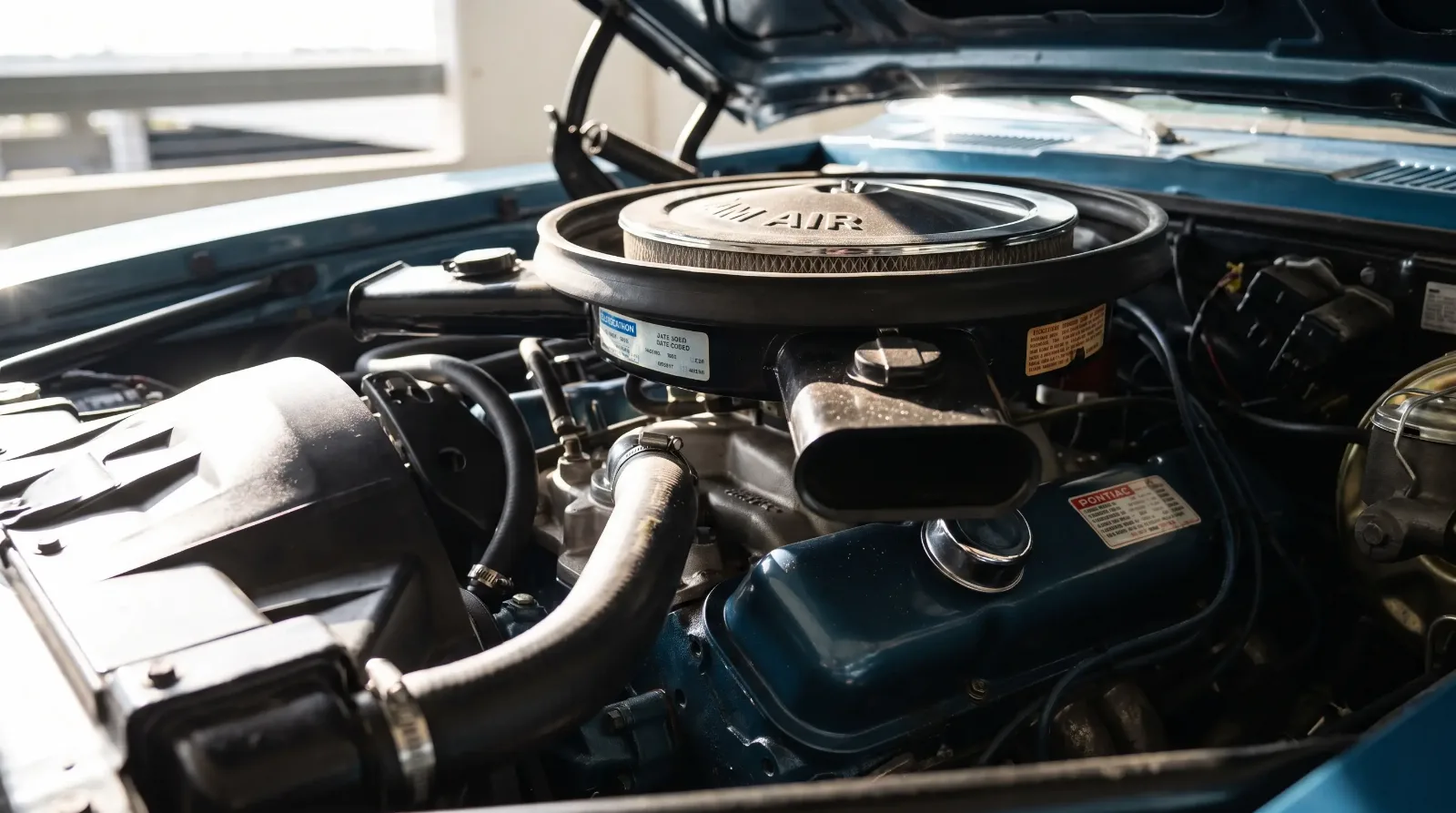
The starting point was simple. A functional hood scoop feeding cooler, denser outside air straight to the carburetor instead of hot air off the engine bay. That's the whole concept. Everything else, the heads, the cam, the pistons, is where Pontiac actually made or lost horsepower.
Ram Air I: the idea, 1967
Ram Air I arrived in 1967 on the GTO as an option package built around functional hood ducting rather than a fundamentally different engine. It used a stronger cam and different valve springs than the base 400, rated at 360 hp gross, the same number as Pontiac's existing high-output 400. The real change was the air path. Cold, dense air at speed genuinely helped, but Ram Air I was more proof of concept than dominant engine, and few were built.
Ram Air II: round ports show up, 1968
1968 brought Ram Air II, and this is where the heads start to matter. Pontiac fitted round exhaust port heads with bigger valves, a hotter cam, and forged pistons instead of cast. Output climbed to 366 hp gross on paper, though real-world dyno numbers were often higher, since Pontiac was known to underrate its high-performance engines that year to keep insurance underwriters calm. Production numbers were small and survival rates lower still, so a documented Ram Air II is a serious find today.
Ram Air III and IV: the split that defines 1969-1970
By 1969 and into 1970, Pontiac ran two Ram Air tiers side by side, and this is the split that actually matters for anyone shopping a Firebird Trans Am or a GTO Judge from those years. In the Trans Am, Ram Air III used cast pistons, a milder hydraulic cam, and a cast intake, rated 335 hp gross (the GTO Judge version of the same engine carried a higher 366 hp gross rating on its own dyno sheet). It was the volume engine, common enough that parts and knowledge are both easy to find now.
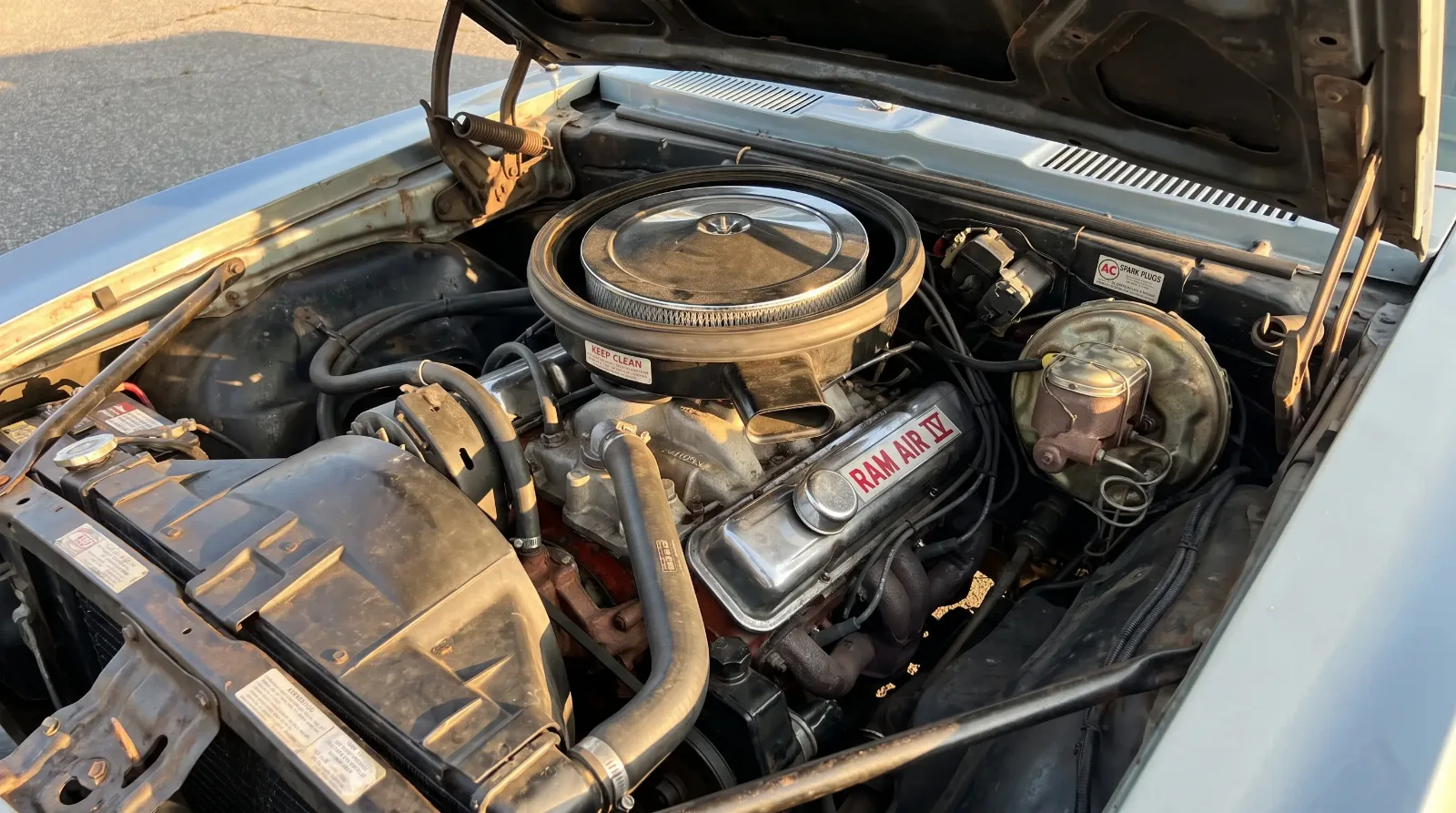
Ram Air IV was the serious one. Forged pistons, a solid-lifter cam, round-port heads with larger valves than even the Ram Air II, and an aluminum intake manifold. In the Trans Am, Pontiac rated it at 345 hp gross (370 hp gross in the GTO Judge), a modest 10-horsepower bump over the III on paper that undersold the actual gap between the two engines in how they built and held rpm. The IV was never a high-volume option. It cost real money, it demanded more maintenance with its solid lifters, and most buyers who wanted a fast Firebird without babysitting a valvetrain chose the III instead.
"Ten horsepower on the window sticker between a III and a IV. That number tells you nothing. One's got cast pistons and a hydraulic cam you forget about. The other wants a valve lash check before every track day."
Dan Reeves
What Ram Air meant by 1971 and after
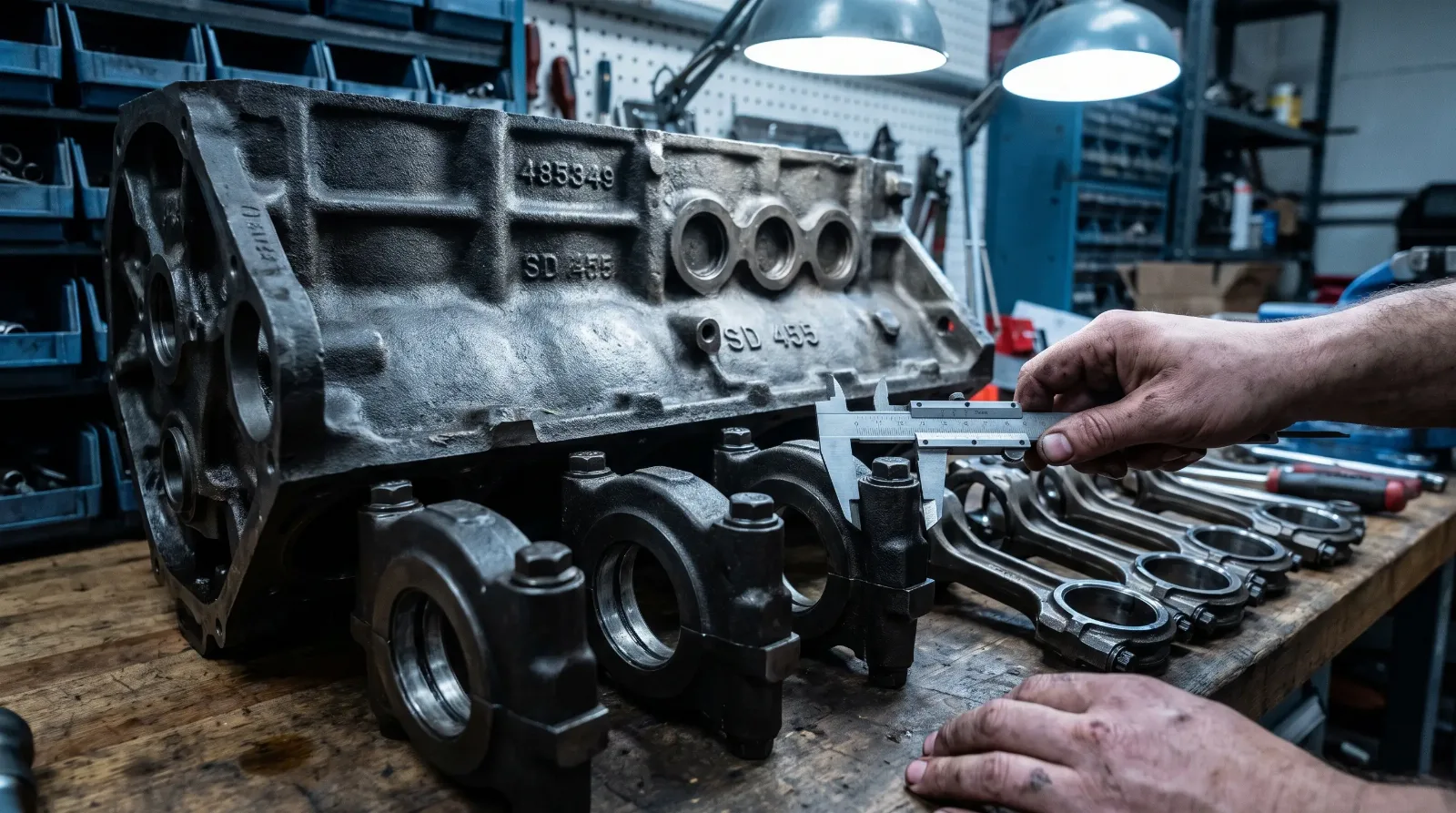
The Ram Air badge kept appearing into the early 1970s, but its meaning drifted. As emissions rules tightened and compression ratios fell across the board, the functional distinction between Ram Air-equipped cars and their non-Ram-Air siblings narrowed. By 1971 and 1972, a lot of what Pontiac sold as Ram Air was closer to a hood graphics and induction package layered onto engines like the 455 covered in a companion piece on this site, rather than the wholesale internal changes that separated a III from a IV two years earlier. The name stayed. The teeth behind it got duller.
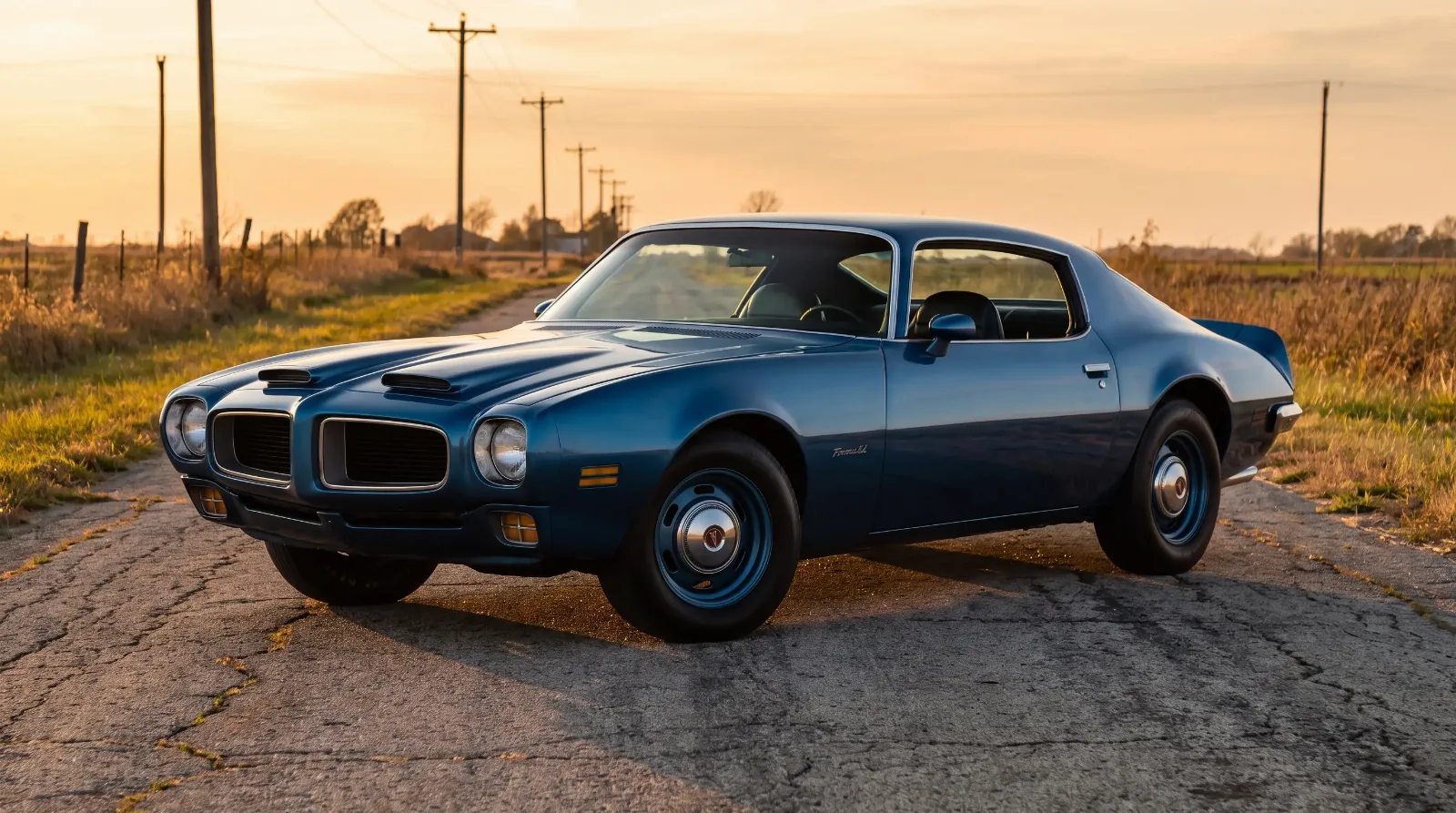
None of this is a knock on the later cars. It's just honest accounting, and honest accounting is the only way to understand where a specific Ram Air engine sits inside the Pontiac engine story. If you're chasing a Ram Air IV, know you're chasing a low-production, high-maintenance engine that rewards a buyer who actually wants to work on it. If a III shows up on a clean Formula or Trans Am, you're getting most of the performance with a fraction of the ownership headache. Both are legitimate. Only one of them is rare enough to change the price of the whole car.
Reading the hood and the fender, not just the spec sheet
Before anyone pulls a valve cover, the hood scoop itself tells part of the story. Functional Ram Air hoods used actual ducting down to the air cleaner, not a decorative bump stamped into sheet metal. A car wearing Ram Air badging with a non-functional scoop, or a scoop that's been disconnected from the air cleaner at some point in its life, is worth a closer look before you assume the engine underneath matches the graphics on top. Reproduction decals and hood kits have been available for decades, and a seller doesn't need to lie outright to end up with a car that looks more special than it is.
Production numbers reinforce why documentation matters so much here. Ram Air I and Ram Air II were built in genuinely small quantities (Ram Air II production across GTO and Firebird totaled only around 246 cars in 1968), and Ram Air IV production stayed low through both 1969 and 1970, with roughly 55 Trans Ams built with the Ram Air IV in 1969 and around 88 in 1970, while Ram Air III accounted for the bulk of Ram Air-optioned cars in those same years. A seller quoting a specific production number for a Ram Air IV car should be able to back it up with a Pontiac Historical Services request or comparable documentation, not just a figure repeated from a forum post.
Laid out together, the pattern across Ram Air I through IV is consistent even as the specific parts changed year to year: heads and valve size moved first, pistons and cam moved next, and the intake manifold was usually the last piece to change on the top-tier engine of a given year. Anyone trying to identify which Ram Air variant sits under a hood should work through those three areas in order, since a mismatched combination, round-port heads paired with a hydraulic cam and cast pistons, for instance, is a strong sign of parts swapped in later rather than a factory-correct engine.
Sources and notes
- Hagerty: Sorting through Pontiac's Ram Air engine production
- Hagerty: Pontiac Ram Air GTOs through the years
- HotCars: The Difference Between the Pontiac Ram Air III and IV V8 Engines
- Wikipedia: Pontiac V8 engine
- Hagerty: Rare Ram Air IV four-speed first-gen Firebird
- First Gen Firebird: Ram Air II round port cylinder heads reference
Related Reading
Have a
Pontiac Firebird
for Sale?
Reach thousands of serious classic car collectors across the US.
Sell It Here →
Are You a Classic Car Dealer?
List your full inventory and connect with targeted classic car buyers.
Join as a Dealer →

About the author
Dan Reeves
Performance engine builder from North Carolina's motorsports corridor, focused on swaps, forced induction and making real, repeatable power.
Related Listings - Pontiac Firebird





Comments
Be the first to comment on this article.