
Here's the number that matters with a Pontiac 455: torque, not horsepower. The 455 never needed to rev to make an impression. It made its case at 2,500 rpm, which is exactly where a street car spends most of its life. That's the whole pontiac 455 torque story in one sentence, and everything else is detail.
Car Features
6 min read
The 455 Torque Monster
Pontiac's 455 built its reputation on torque, not horsepower. Here's why the numbers looked the way they did and what they mean behind the wheel.
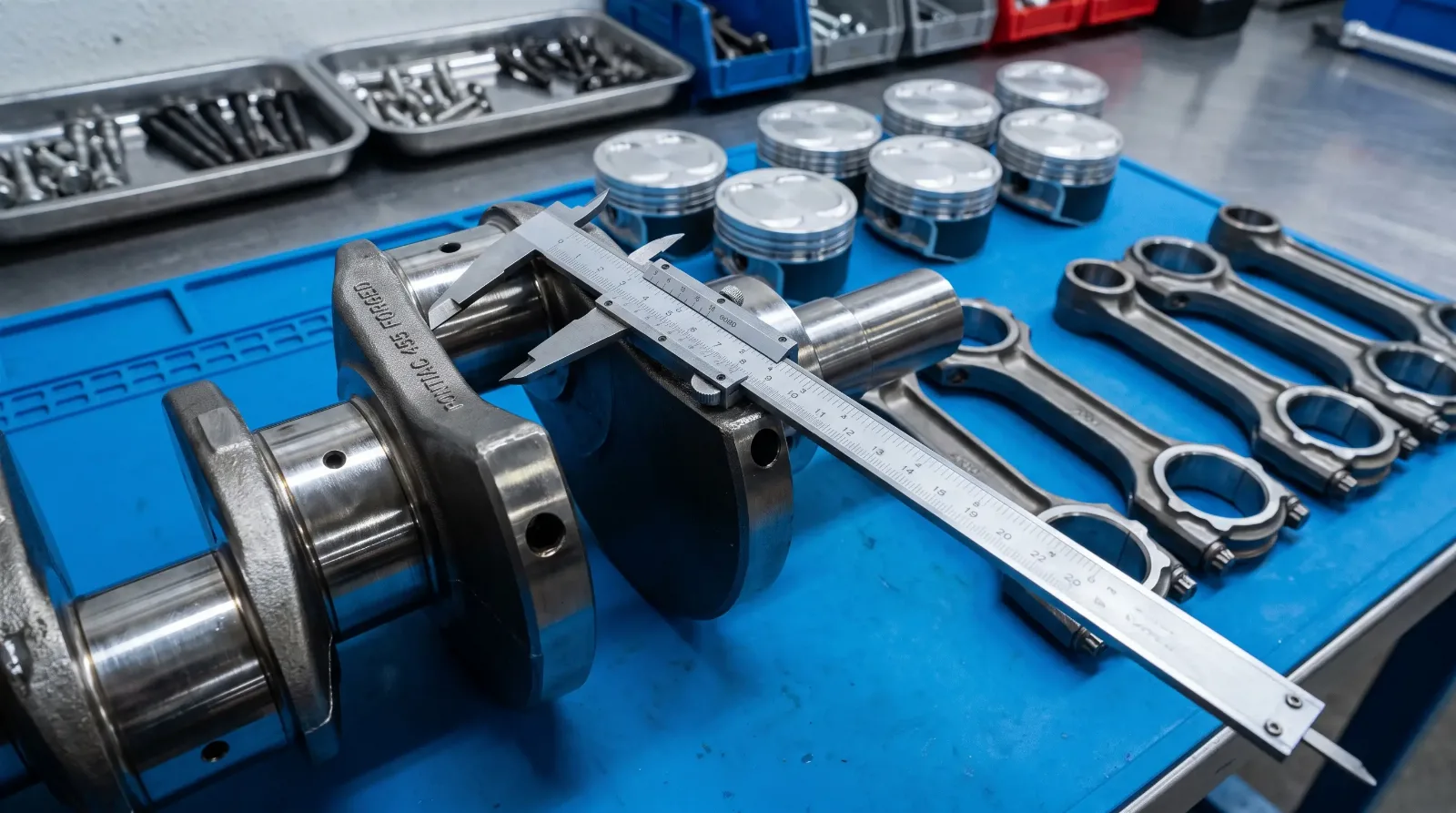
Pontiac introduced the 455 for the 1970 model year, and it landed in Firebirds, GTOs, Grand Prix, and full-size cars right as the muscle car era was hitting its ceiling. The engine displaced 455 cubic inches from a 4.15 inch bore and a 4.21 inch stroke, the longest stroke in Pontiac's V8 lineup. Long stroke means more leverage on the crank at low rpm, and that's where the torque numbers come from. This isn't complicated physics. It's just an engine built around a different priority than a small-block built to scream at 6,500.
The number, and where it actually came from
The 1970 GTO 455 HO was rated at 360 gross horsepower at 4,600 rpm and 500 lb-ft of torque at 3,100 rpm, numbers that made it the highest-torque engine in Pontiac's regular production lineup that year. The base 455 in lower-compression trim made less, closer to 320-370 gross horsepower depending on year and application, but torque stayed high across the board because the displacement and stroke did the work regardless of compression ratio or cam timing. That's the part people miss when they compare Pontiac's numbers to a smaller-displacement engine with a hotter cam. Cubic inches and stroke length buy you torque cheaply. A hot cam buys you a peak number at high rpm and gives some of that low-end torque back to get it.
Net horsepower ratings arrived in 1972 across the industry, and Pontiac's 455 numbers dropped on paper the way every manufacturer's did, from gross to net measurement, not because the engines got weaker overnight. The 1973-74 455 in the Firebird and Trans Am, for example, carried lower numbers on the window sticker than a 1970 engine that was mechanically similar, purely because of the measurement standard and the compression drops mandated by unleaded fuel requirements.
| Year / trim | Displacement | Compression | Notes |
|---|---|---|---|
| 1970 455 HO | 455 ci | 10.75:1 | Highest-torque Pontiac engine that year |
| 1971 455 HO | 455 ci | 8.4:1 | Compression cut for lower octane fuel |
| 1972 455 HO | 455 ci | 8.4:1 | First year of net (SAE) ratings |
| 1973-74 455 | 455 ci | around 8.0:1 to 8.4:1 | Emissions-era tuning, lower peak output |
Why the stroke matters more than the bore
A longer stroke moves the piston further per revolution, which increases the mechanical leverage the connecting rod applies to the crankshaft. That's torque, full stop. It's also why the 455 doesn't want to rev like a smaller Pontiac V8. Piston speed climbs faster with a long stroke, and there's a point past which you're fighting the engine's own architecture instead of working with it. Pontiac engineers weren't trying to build a screamer. They were building an engine that moved a heavy car off the line and pulled through the midrange without downshifting, which is exactly what a 455-powered Grand Prix or Firebird needed to do.
If you want the full family tree on how the 455 relates to the 400 and the smaller Pontiac V8s, the Pontiac engine story lays out the shared architecture across the whole lineup, bore and stroke combinations included.
What that torque actually feels like on the street
Numbers on paper are one thing. What a 455 does at a stoplight is another. The torque curve is flat and available low, so the car doesn't need 3,000 rpm and a clutch dump to move. Drivers who came up on smaller-displacement engines with peaky cams sometimes underestimate a 455 because it doesn't sound as aggressive at idle. It doesn't need to. The number that matters shows up the moment you touch the throttle, not at redline.
Buying and building around the torque
If you're shopping for a Firebird or Trans Am with a 455 under the hood, the torque figure should shape your expectations more than the horsepower rating on the build sheet. A stock 455 HO with the original cam and exhaust will pull a heavy car with authority in a way a smaller engine with a bigger cam sometimes can't replicate below 3,000 rpm, even with a higher peak number on paper. That's not an opinion, it's how torque curves work.
Gearing matters here too. A 455 backed by a numerically low rear gear, something in the 2.56 or 2.73 range that Pontiac sometimes fitted to full-size cars, trades off some of that low-rpm punch for relaxed highway cruising. Firebirds and GTOs typically got a shorter gear, closer to 3.23 or 3.42, which puts the torque peak right where a driver actually uses the throttle in daily traffic. If you're evaluating a 455 car and the rear gear doesn't match what the original torque curve was built around, the car will feel softer off the line than the engine's reputation suggests, and that's a gearing problem, not an engine problem.
The engine's reputation has held up because the number was real, not inflated by a marketing department. Pontiac tried to push past even the 455's numbers with an engine that almost replaced it entirely, so keep reading the series to see how far that program actually got.
"Everybody wants to talk horsepower. The 455's whole reputation is built on the other number. Five hundred pound-feet at low rpm moves a car in a way that a peaky small-block with more horsepower on paper just cannot match off the line. That's not opinion. That's the dyno sheet."
Dan Reeves
Look up the torque figure before you look up the horsepower figure on any 455-powered car you're considering. It tells you more about how the car actually drives, and it's the reason this engine earned its reputation in the first place. For the bigger picture on the model that carried this engine, our Firebird retrospective covers the years and trims where the 455 showed up under the hood.
Sources and notes
Related Reading
Have a
Pontiac Firebird
for Sale?
Reach thousands of serious classic car collectors across the US.
Sell It Here →
Are You a Classic Car Dealer?
List your full inventory and connect with targeted classic car buyers.
Join as a Dealer →

About the author
Dan Reeves
Performance engine builder from North Carolina's motorsports corridor, focused on swaps, forced induction and making real, repeatable power.
Related Listings - Pontiac Firebird




Comments
Be the first to comment on this article.