
Most engine stories end with production numbers. This one ends with a parts counter. The pontiac ram air v program built real engines, tested them in real cars, and then Pontiac never put them on a retail order sheet. That's the short version. The longer version is more interesting, and it explains why Ram Air V engines and heads still turn up in barn finds and swap meets decades later.
Car Features
6 min read
Ram Air V: The Engine That Never Shipped
Pontiac's Ram Air V program built real engines and tested them in real cars, then never put one on a retail order sheet. Here's what happened.
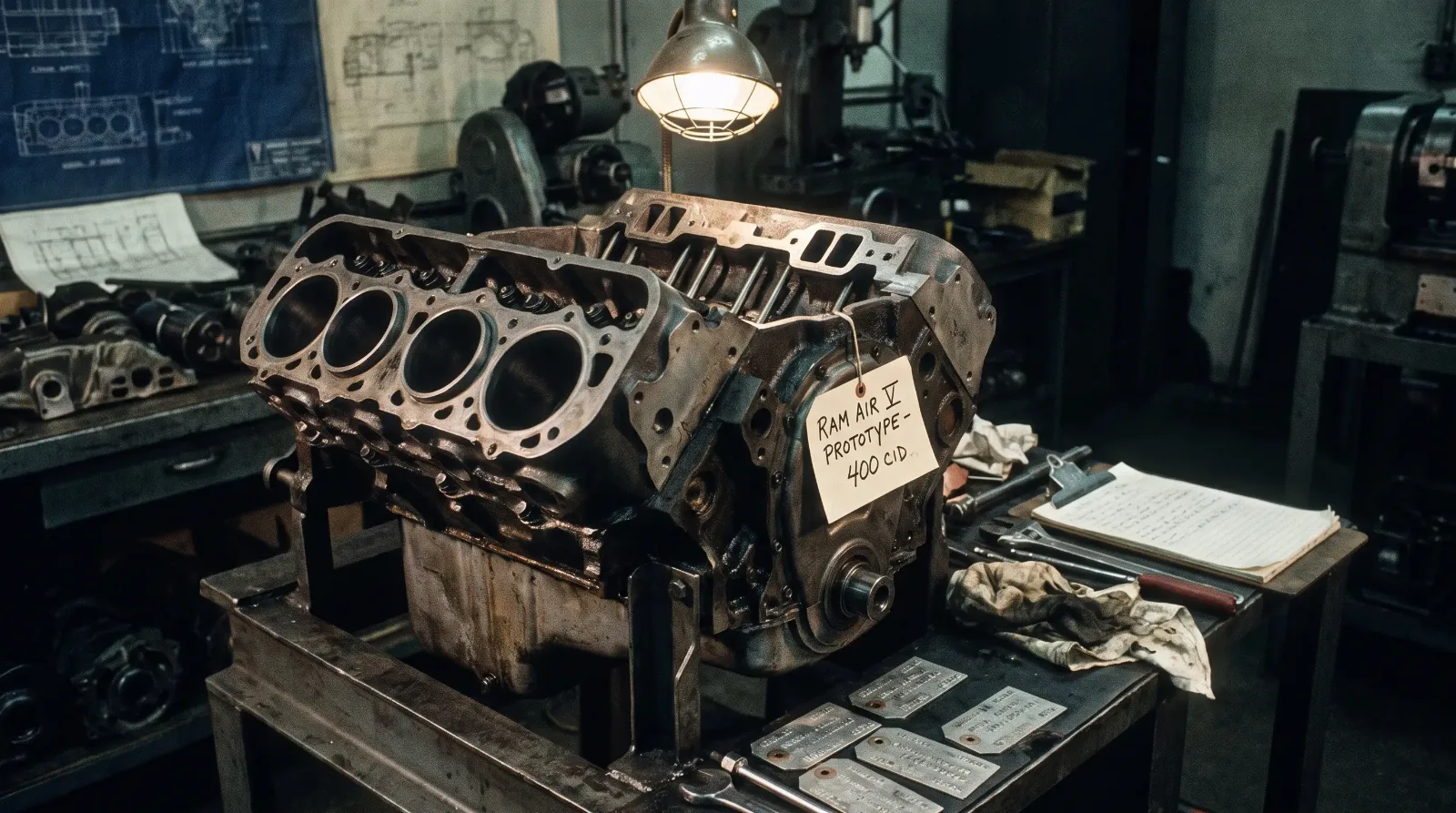
What Ram Air V actually was
Ram Air V wasn't one engine, it was a program covering two displacements: a 400 cubic inch version and a 455 cubic inch version, both built around a new cylinder head design that departed from anything Pontiac had used in a production car. The heads used round exhaust ports and a tunnel-port style intake arrangement designed to move more air than the Ram Air IV heads that were already in production Trans Ams and GTOs. Pontiac built these engines and heads in low numbers between roughly 1969 and 1971, tested them in prototype Firebirds and GTOs, and reportedly planned to rate the 400 cubic inch version at around 375 hp, well above the production Ram Air IV, even though dyno results on some test engines ran considerably higher than that planned advertised figure.
None of it reached a dealership. Insurance surcharges on high-output engines were already squeezing muscle car sales by 1970, emissions regulations were tightening year over year, and General Motors corporate policy was pulling back from advertised horsepower races across every division. Ram Air V got caught in that shift before it ever got a production order number.
Where the parts actually went
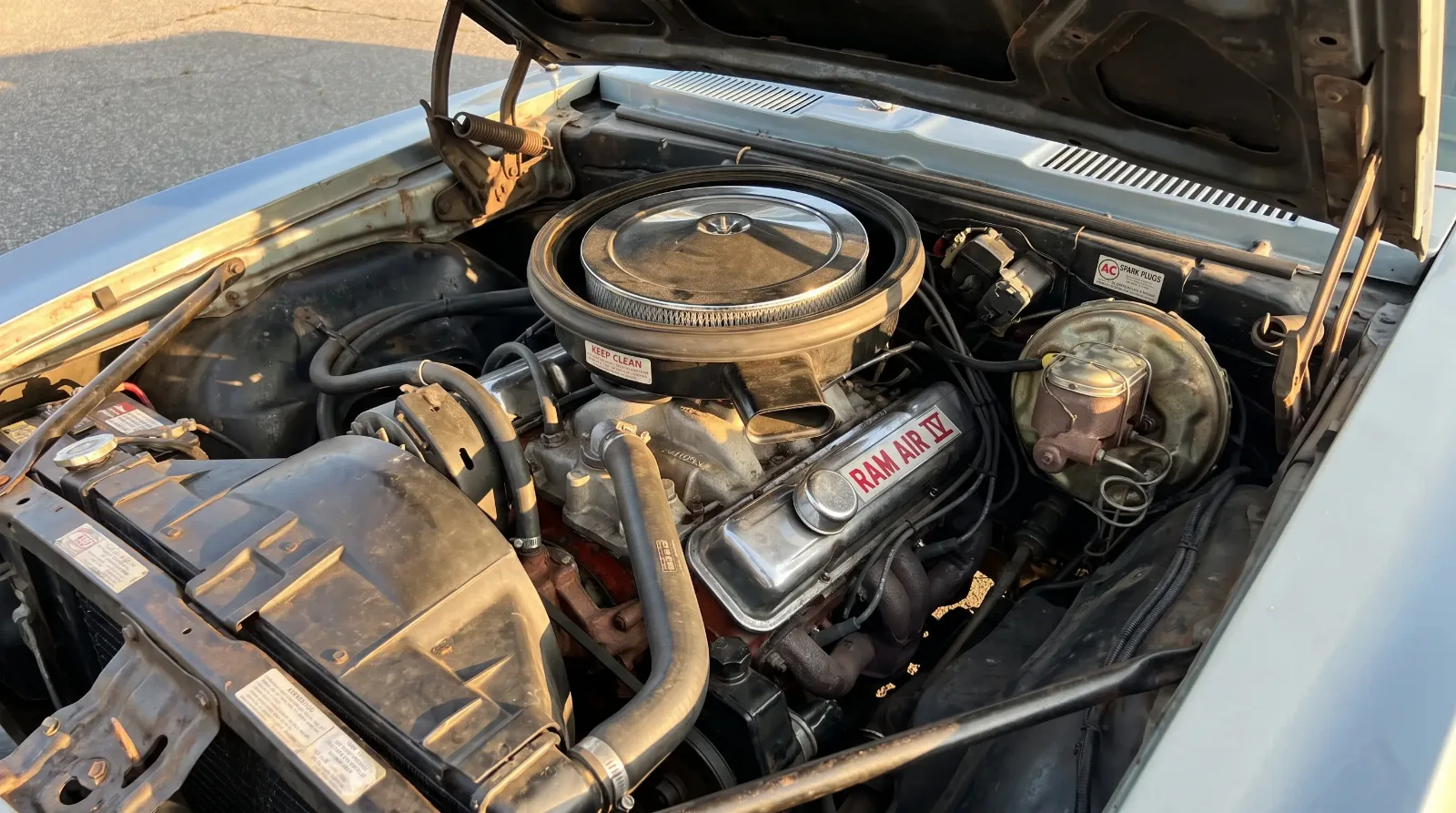
The engines and heads that did exist mostly went out through Pontiac's parts and racing channels rather than under a hood on a showroom floor. Drag racers and SCCA Trans-Am competitors picked up Ram Air V components because the heads flowed better than anything else Pontiac offered, and a handful of factory-connected racing programs used them in period competition. That's the reason surviving Ram Air V parts show up disconnected from any single production car history. Most of them were never installed in a car that left the factory with that engine under the hood. They were built for a program, then sold as parts once the program ended.
For the full picture of how the 400 and 455 fit around this program, the 400 and 455 engines piece on this site covers the production side of Pontiac's V8 lineup that Ram Air V was meant to eventually replace or sit above.
Why it never shipped
Three things killed Ram Air V before it reached production: cost, timing, and regulation. The heads were expensive to produce in the volumes a production run would need. The program's development window overlapped with the exact years insurance companies started pricing high-output engines out of reach for a lot of buyers, which shrank the market GM's own bean counters expected. And emissions certification for a new high-output engine design in 1971 was a different and harder process than it had been even two years earlier. Any one of those might not have killed the program alone. Together, they did.
| Detail | Ram Air V | Production Ram Air IV |
|---|---|---|
| Status | Prototype / limited parts run | Full production |
| Displacements | 400 ci and 455 ci versions | 400 ci |
| Head design | Round-port, tunnel-port style | Round-port D-port variant |
| Availability | Racing and parts-counter only | Ordered on GTO and Trans Am |
| Program end | Wound down around 1970-1971 | Ended with GTO/Trans Am 400 phase-out |
What that means for buyers and collectors today
If someone tells you their car left the factory with a Ram Air V engine, ask for documentation, because the honest answer for the overwhelming majority of cars is that it didn't happen at the factory level. What does turn up, legitimately, are original Ram Air V heads and blocks that made their way into cars later through racing history or aftermarket builds. That history has real value to the right collector, but it's a different kind of value than a numbers-matching factory-original car, and the two shouldn't be priced or represented the same way.
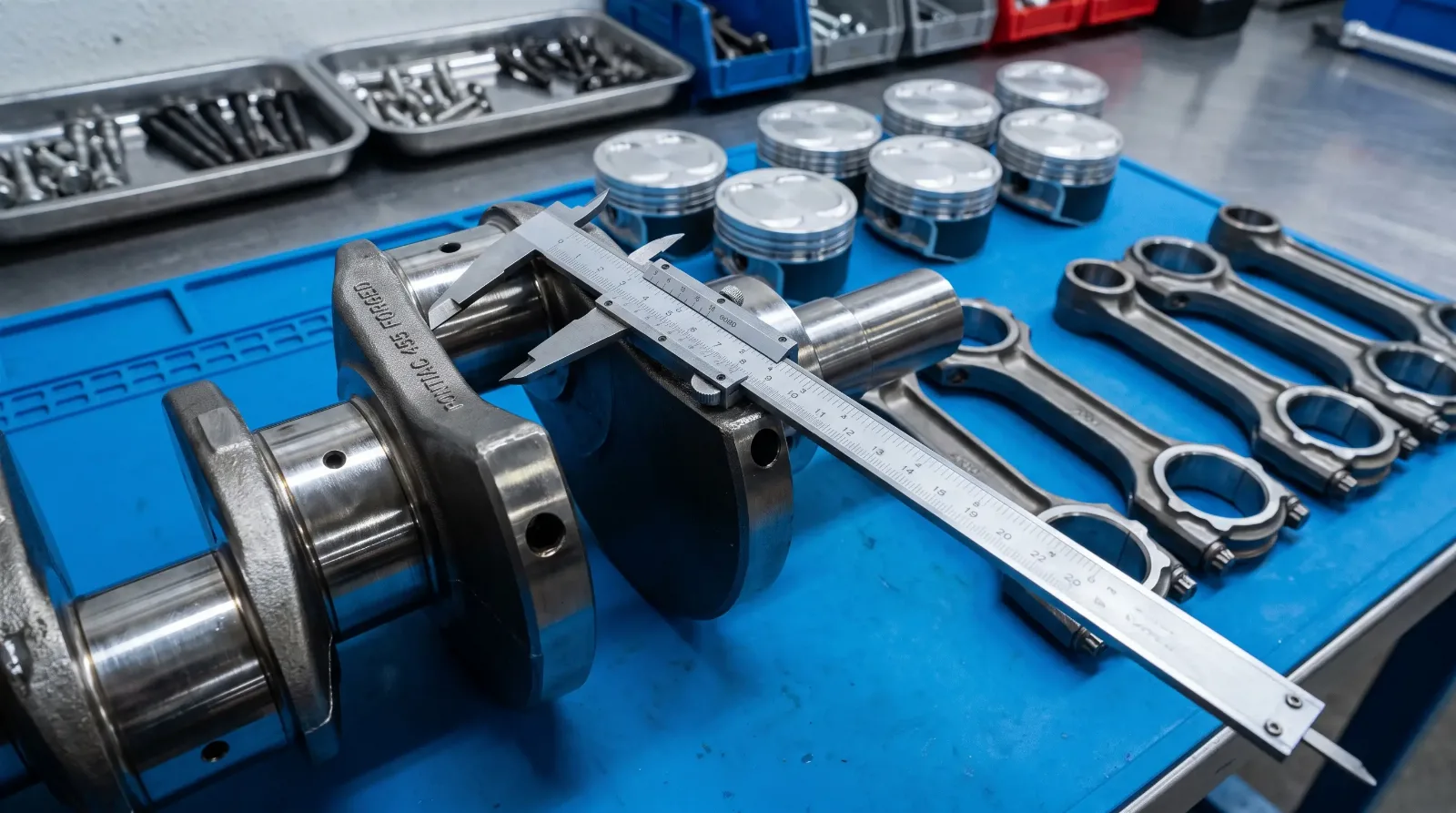
Authenticating a claimed Ram Air V component means checking casting numbers against known references, tracing ownership history as far back as it goes, and being honest about the gap between "this part is genuine" and "this car came from the factory this way." Those are two different claims, and conflating them is how inflated asking prices happen. A seller who can produce casting documentation and an honest chain of ownership for a set of Ram Air V heads has something real to sell. A seller who can't should be treated the same as any other unverified claim, regardless of how good the story sounds.
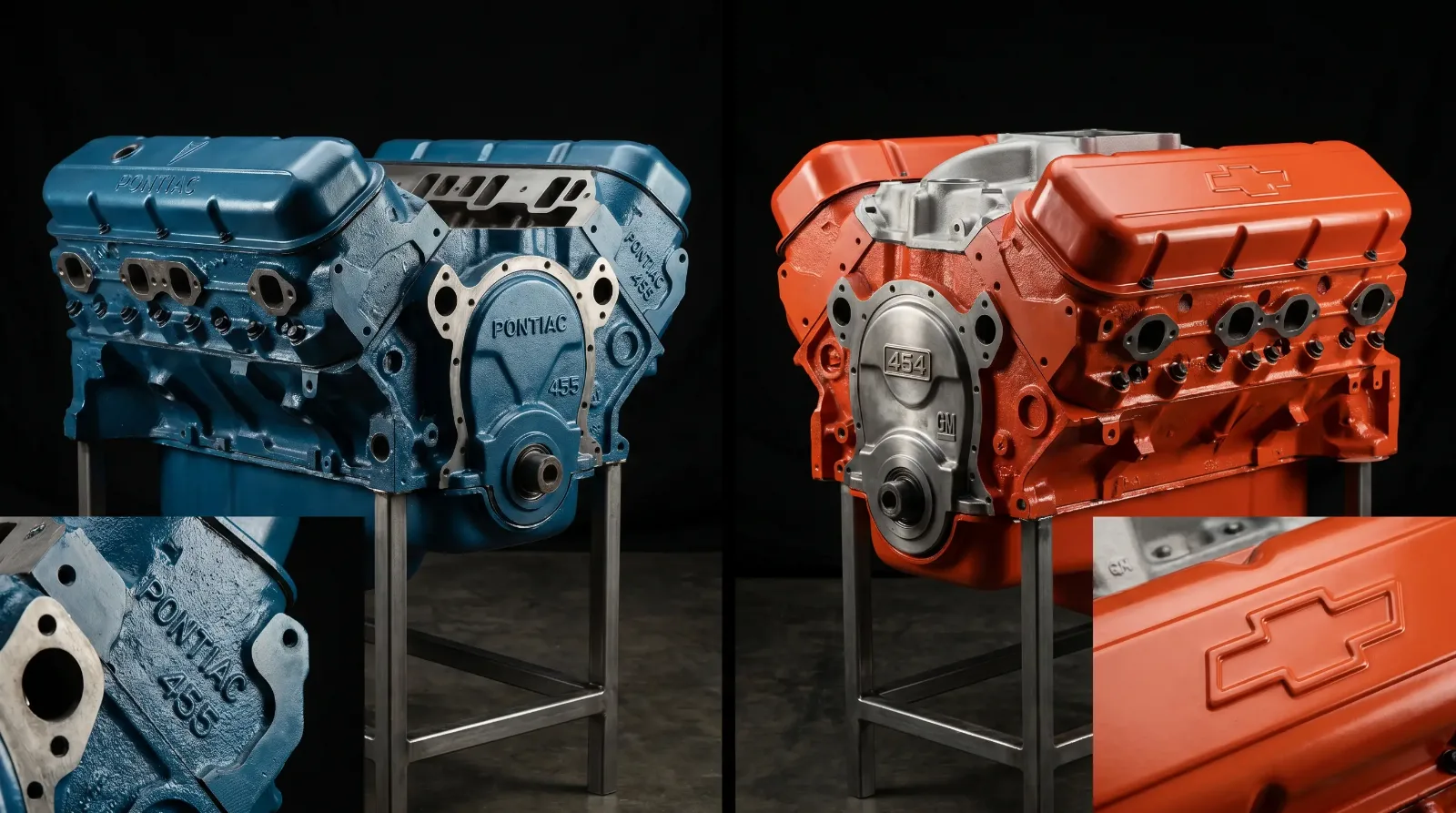
The Ram Air V program is a genuine part of Pontiac's engineering history even though it never reached a showroom. It shows how close the company came to pushing its round-port head technology even further before the muscle car era's economics changed underneath it. Pontiac's engines stacked up against the competition during this same stretch of years in ways that help explain Ram Air V's cancellation, and a companion piece covers that comparison in more depth.
"People want to believe their car is the exception. Ninety-nine times out of a hundred, a car with a Ram Air V story attached needs paperwork, not a good feeling. The engines that actually existed are documented. Find the documentation or price the car like what it is."
Dan Reeves
The lesson from Ram Air V isn't really about horsepower. It's about how close a production decision can come to happening and still not happen, for reasons that had nothing to do with whether the engineering worked.
Sources and notes
- Hagerty: Pontiac's Ram Air V Trans Am that never was
- Mac's Motor City Garage: Pontiac's Tunnel-Port Powerhouse, the Ram Air V
- Hagerty: Sorting through Pontiac's Ram Air engine production
- SlashGear: What Happened to Pontiac's Legendary Ram Air V Engine
- HotCars: Pontiac's Last Ram Air Engine That Never Made It to Production
- PontiacV8.com: Ram Air V Camshaft Reference
Related Reading
Have a
Pontiac Firebird
for Sale?
Reach thousands of serious classic car collectors across the US.
Sell It Here →
Are You a Classic Car Dealer?
List your full inventory and connect with targeted classic car buyers.
Join as a Dealer →

About the author
Dan Reeves
Performance engine builder from North Carolina's motorsports corridor, focused on swaps, forced induction and making real, repeatable power.
Related Listings - Pontiac Firebird


Comments
Be the first to comment on this article.