
Walk a 1966 Pontiac dealer lot in your mind and you will find two very different LeMans-based cars parked a few spaces apart. One wears GTO badges, a 389, and a hood scoop. The other is a six-cylinder Tempest or LeMans with a small emblem reading "Sprint" and an engine under the hood that, on paper, has no business sharing a lot with a muscle car. That engine was Pontiac's overhead-cam six, and its story runs parallel to the Coke-bottle GTO years without ever quite intersecting them.
Car Features
8 min read
1966 GTO and the Overhead-Cam Sprint Six Sibling
Pontiac's belt-driven overhead-cam six shared showroom space and sheet metal with the GTO in 1966-67, but the two never shared an engine bay.
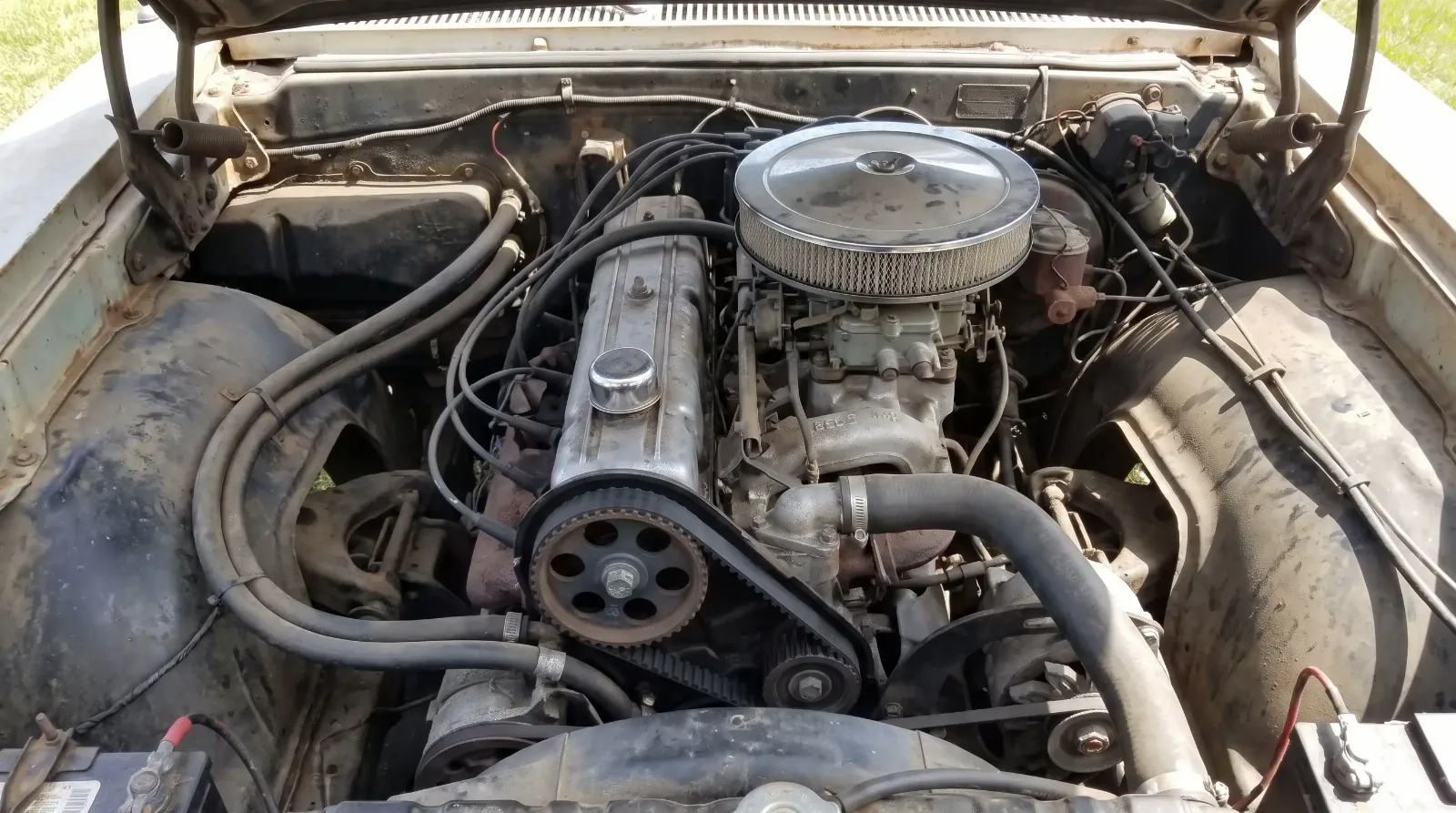
An unusual engine for an unusual year
Pontiac introduced the overhead-cam six for the 1966 model year, the same year the GTO became its own model line rather than a Tempest option package. Most domestic sixes of the era were flathead or pushrod designs built for economy, not enthusiasm. Pontiac's engineering staff took the existing 230-cubic-inch inline six block and topped it with a single overhead camshaft, driven by a fiberglass-reinforced timing belt rather than a chain or gears. That belt-drive detail alone made it a genuine oddity in an American engine bay in 1966, years before overhead-cam engines and belt drives became common outside of European imports.
The base version of the engine made a modest 165 horsepower with a one-barrel carburetor, but the performance version, sold under the Sprint name with a four-barrel carburetor and a hotter cam profile, was rated at 207 gross horsepower. That is a serious number for a six-cylinder engine from this period, close enough to some contemporary small-block V8 outputs that Pontiac marketed the Sprint six as a genuine performance option, not a penalty box for buyers who could not afford a V8.
The engineering brief behind the OHC six traced back to Pontiac's push, under chief engineer John DeLorean and his staff, to build a reputation for cleverness rather than just cubic inches. Pontiac had already stunned the industry with the original GTO package in 1964. The overhead-cam six was a different kind of statement aimed at the same audience of car-literate buyers, an argument that Pontiac engineers could match anything coming out of Europe on technical merit, not just brute displacement. Development work on the cylinder head and camshaft drive ran through the early 1960s, and Pontiac made a point of publicizing the belt-drive system in enthusiast magazines of the day, something no other Detroit division was doing with a mainstream six.
The Sprint package itself was more than a carburetor swap. Along with the four-barrel Rochester Quadrajet and the hotter cam, Sprint-optioned cars typically carried a dual-exhaust system, a firmer suspension tune, and quicker-ratio steering, effectively a light performance package built around a six-cylinder heart. Pontiac dealers could order the Sprint six in the Tempest, the LeMans, and even, briefly, the full-size Catalina, which meant the engine had a wider factory reach than the GTO ever did even as it sold in a fraction of the volume.
Why it never touched the GTO
It is worth being precise here, because this is a point often garbled in casual GTO histories: the overhead-cam six was never offered in the GTO, at any point in its production. The GTO's entire identity, from the 1964 option package through the end of the run, was built on V8 displacement. Pontiac's marketing leaned hard into that image, and putting a six-cylinder engine under a GTO hood, however clever the engineering, would have undercut the car's reason for existing.
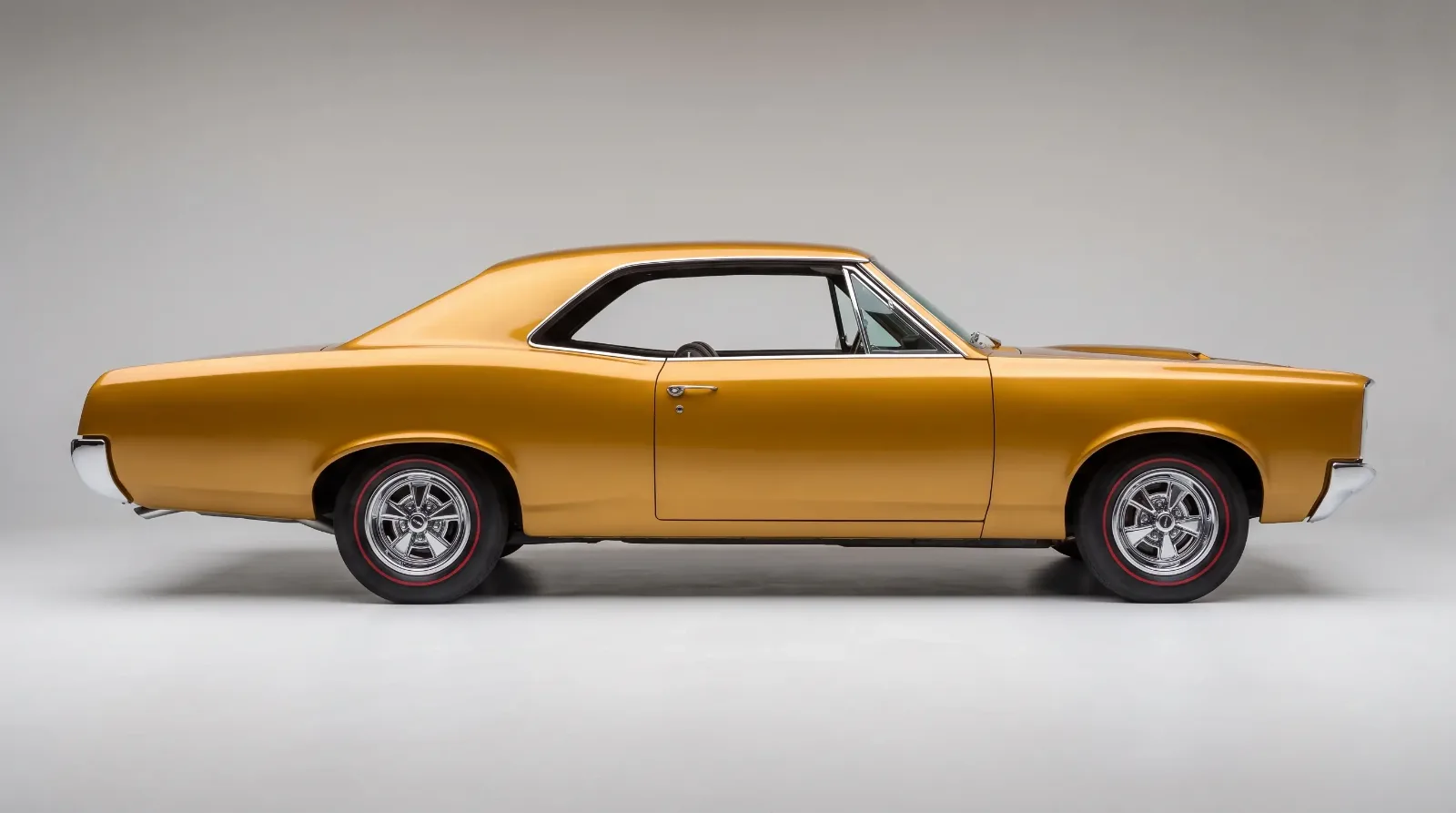
Instead, the OHC six lived in the Tempest and LeMans lines the GTO had grown out of. That is the real connection here. During the Coke-bottle body years of 1966 and 1967, the standard Tempest, the LeMans, and the GTO all shared the same basic body structure and much of the same sheet metal below the beltline. A buyer cross-shopping a well-equipped Sprint-six LeMans against a base GTO was, in a very real sense, comparing two versions of the same car separated mainly by what sat between the front fenders.
| Spec | Pontiac OHC Six (Sprint) | 1966-67 GTO 389 |
|---|---|---|
| Displacement | 230 cu in | 389 cu in |
| Valvetrain | Single overhead cam, belt drive | Pushrod, hydraulic lifters |
| Carburetion | 1-bbl or 4-bbl (Sprint) | 4-bbl standard, Tri-Power optional through 1966 |
| Approx. horsepower | 165 hp base / 207 hp (Sprint 4-bbl) | 335 hp standard |
| Primary application | Tempest, LeMans | GTO exclusively |
An engineering flex, not a sales phenomenon
Pontiac's chief engineer at the time wanted the division to be known for technical daring as much as raw cubic inches, and the OHC six fit that goal. It let Pontiac claim genuine engineering leadership in a segment nobody else was pushing. But six-cylinder performance was a hard sell to a muscle car buying public that measured status in cubic inches and quarter-mile times, and the OHC six never approached GTO-level volume. Production numbers for the Sprint-equipped cars remain a niche footnote next to the hundreds of thousands of small-block and big-block V8 Pontiacs built in the same years.
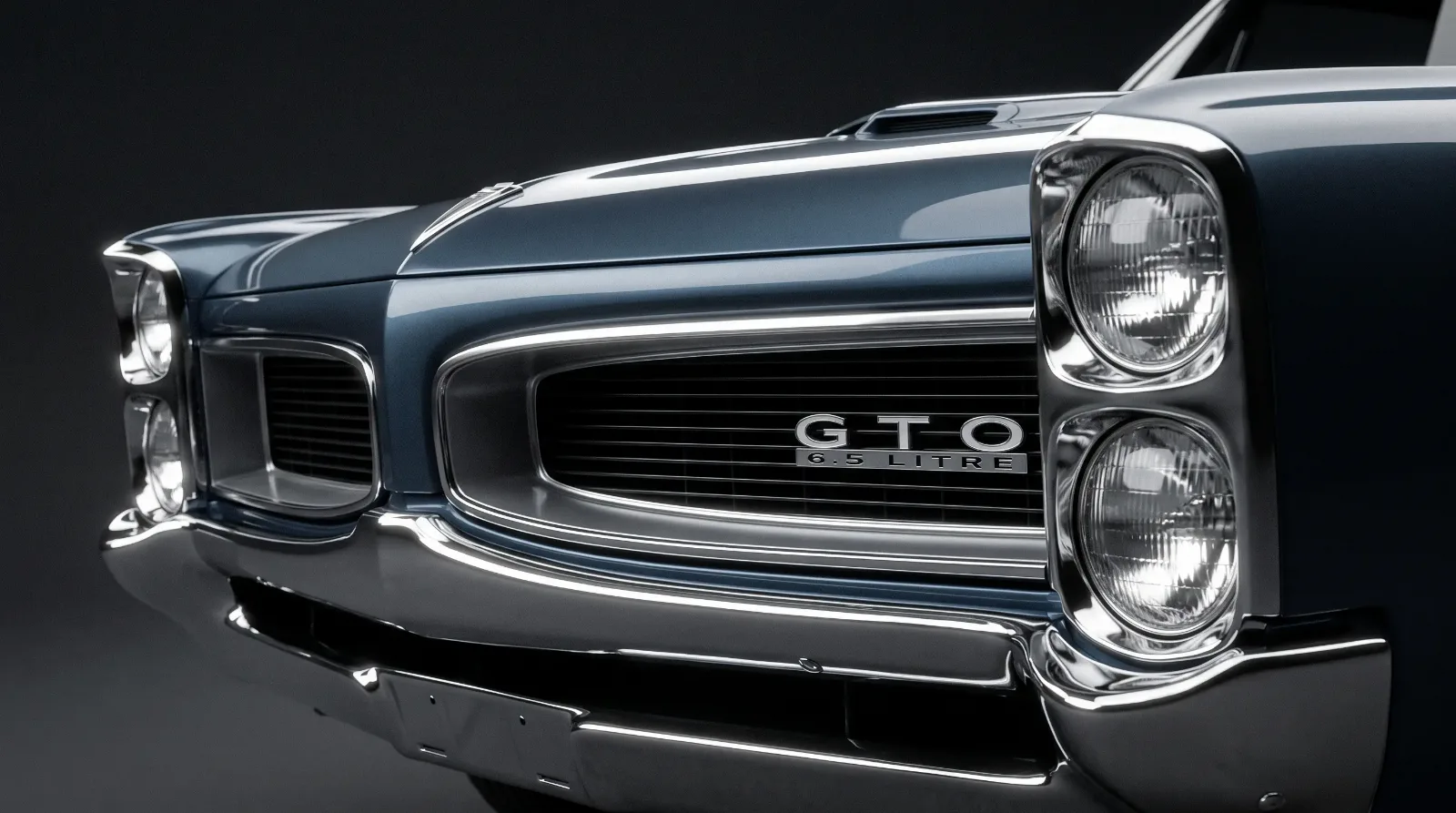
Where the two cars do connect is body and trim. Every grille, bumper, and taillight change that swept through the 1966 and 1967 Tempest, LeMans, and GTO lineup touched the Sprint six cars just as it touched the GTO. If you want to see exactly how those front-end details evolved year to year across the whole family, read on.
"People assume every interesting Pontiac engine from this era ended up under a GTO hood at some point. The OHC six is proof that is not true. It was its own thing, built for a buyer who wanted something clever, not something loud."
Tom Ramirez
What a Sprint six car is worth today
Surviving Sprint-six Tempests and LeMans coupes are genuinely uncommon, more so than most GTOs from the same years, simply because far fewer were built and fewer still were kept once the novelty wore off. They occupy a strange collector niche: too unusual to be a mainstream muscle car purchase, too technically interesting to ignore if you care about Pontiac engineering history. Values trail well behind comparable GTOs, but documented, numbers-matching Sprint six cars with the four-barrel setup do draw attention from collectors who specifically want the engineering story rather than the horsepower story.
Reading the two cars side by side
Understanding the OHC six does not change how you understand the GTO, but it sharpens the picture of what Pontiac was doing across its whole lineup in 1966 and 1967. The GTO was the performance flagship built on volume and image. The Sprint six was a parallel experiment in the same body, aimed at a buyer who wanted something different rather than something faster. Both were shaped by the same body redesign, and both are worth knowing if you want the full picture of Pontiac's mid-60s lineup rather than just the GTO chapter of it.
There is also a broader lesson in how Pontiac managed its lineup during this period. Rather than treating the Tempest and LeMans as leftover economy cars once the GTO existed, the division kept investing engineering effort across the whole range, chasing a reputation for cleverness with the six while chasing raw performance with the V8. Few buyers cross-shopped the two directly, but the fact that both options sat on the same order form says something about how confident Pontiac was in its own engineering department during these years. That confidence would not last past the end of the decade, as emissions rules and insurance surcharges reshaped what any division could build, but in 1966 and 1967 Pontiac was willing to bet on daring in more than one direction at once.
Sources and notes
Related Reading
Have a
Pontiac GTO
for Sale?
Reach thousands of serious classic car collectors across the US.
Sell It Here →
Are You a Classic Car Dealer?
List your full inventory and connect with targeted classic car buyers.
Join as a Dealer →

About the author
Tom Ramirez
Corvette researcher and historian based in Bowling Green, Kentucky. Two decades documenting Corvette production history from original factory records.
Related Listings - Pontiac GTO

Comments (1)
R
Ray Staubach
1 month ago
The cooling system note is accurate. Gets overlooked because these cars run fine at idle. Not fine on a highway in July.