
If you want a fast way to date a GTO from across a parking lot, learn the grilles. Between 1964 and 1967 Pontiac reworked the GTO's face every single year, sometimes subtly, sometimes completely, and those changes track the car's evolution from Tempest option package to full-fledged model more clearly than almost any other detail on the car.
Car Features
6 min read
Every GTO Grille from 1964 to 1967, Decoded
A year-by-year breakdown of how the GTO's grille and front-end identity evolved from a borrowed Tempest face into something entirely its own.
1964: split grille, split identity
The first GTO, still a LeMans option code in 1964, wore a version of the split vertical-themed grille shared broadly with the rest of the Tempest and LeMans line, with GTO-specific trim and badging to set it apart. There was no dramatic styling break yet, because there was no separate GTO body to style. The grille told you this was a Tempest first and a performance car second, at least from the factory's point of view, even if the engine bay said otherwise.
Documentation from Pontiac's design studio at the time shows the GTO's 1964 front-end treatment was largely a trim exercise rather than a tooling investment. The division wasn't yet certain the GTO package would sell well enough to justify unique stampings, so the grille opening itself, the shell that held it, and the surrounding sheet metal were all Tempest and LeMans carryover. What differentiated a GTO grille from a standard LeMans grille that year came down to the insert pattern and the badge placement, details a period buyer would have noticed immediately but that require close comparison for a modern eye.
1965: stacked headlights arrive
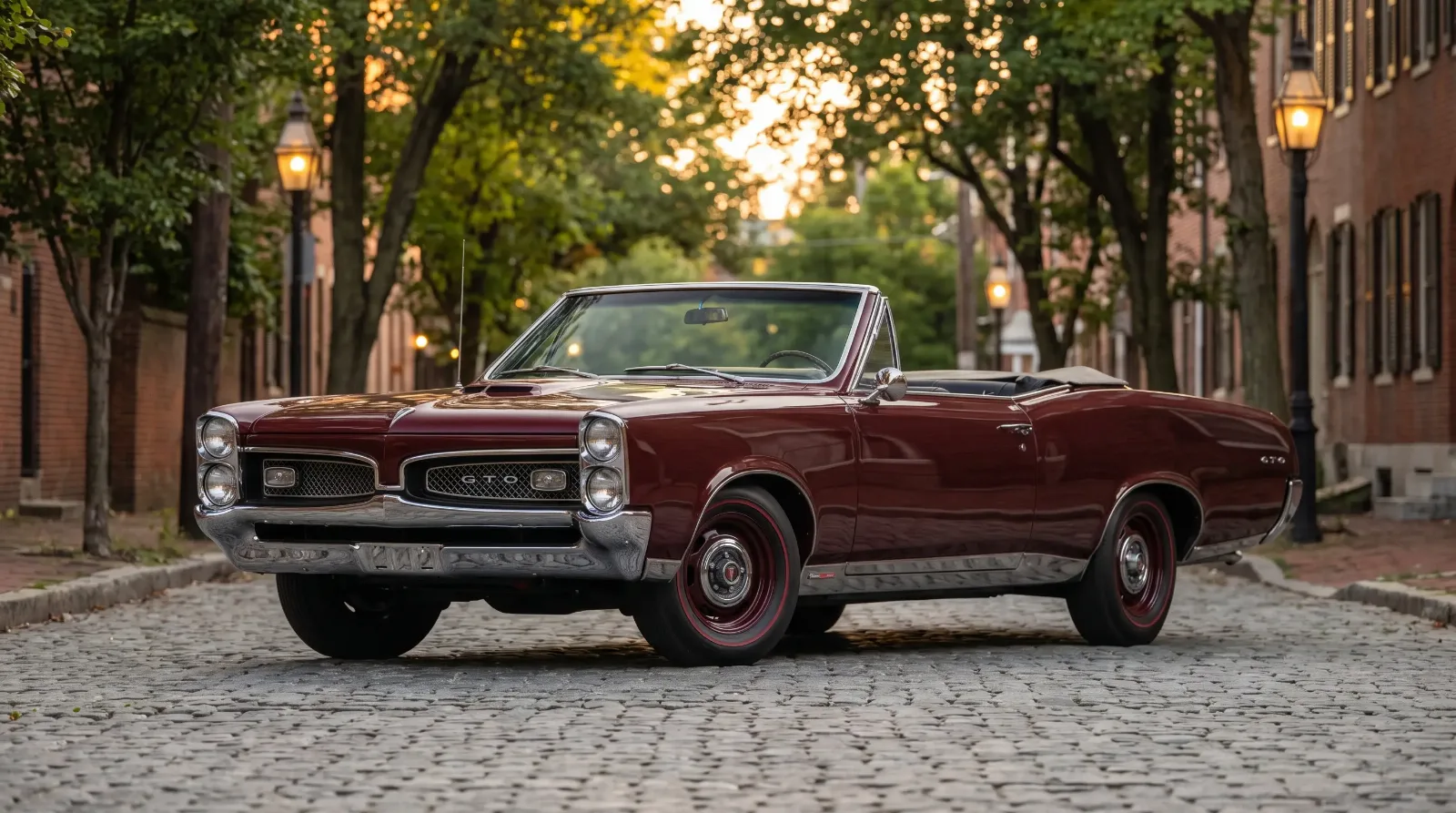
The 1965 restyle brought the vertically stacked headlight arrangement that most people now picture when they think of an early GTO, paired with a wider, more aggressive grille opening split into twin sections. This was the year the GTO's face started to separate visually from the standard Tempest, even though the two still shared a body shell. The stacked lights became such a strong identity marker for the division that Pontiac carried the theme into other models in the years that followed.
The stacked-headlight decision wasn't purely aesthetic. Pontiac's stylists were working within a fixed body shell inherited from the Tempest program, and stacking the headlights vertically let the design team widen the grille opening without changing the fundamental proportions of the front fenders. It's a clever bit of packaging discipline dressed up as pure style, and it's worth remembering when you hear the 1965 face described purely in terms of aggression. Some of that aggression was solving an engineering constraint, not just chasing a look.
1966: an all-new face for an all-new body
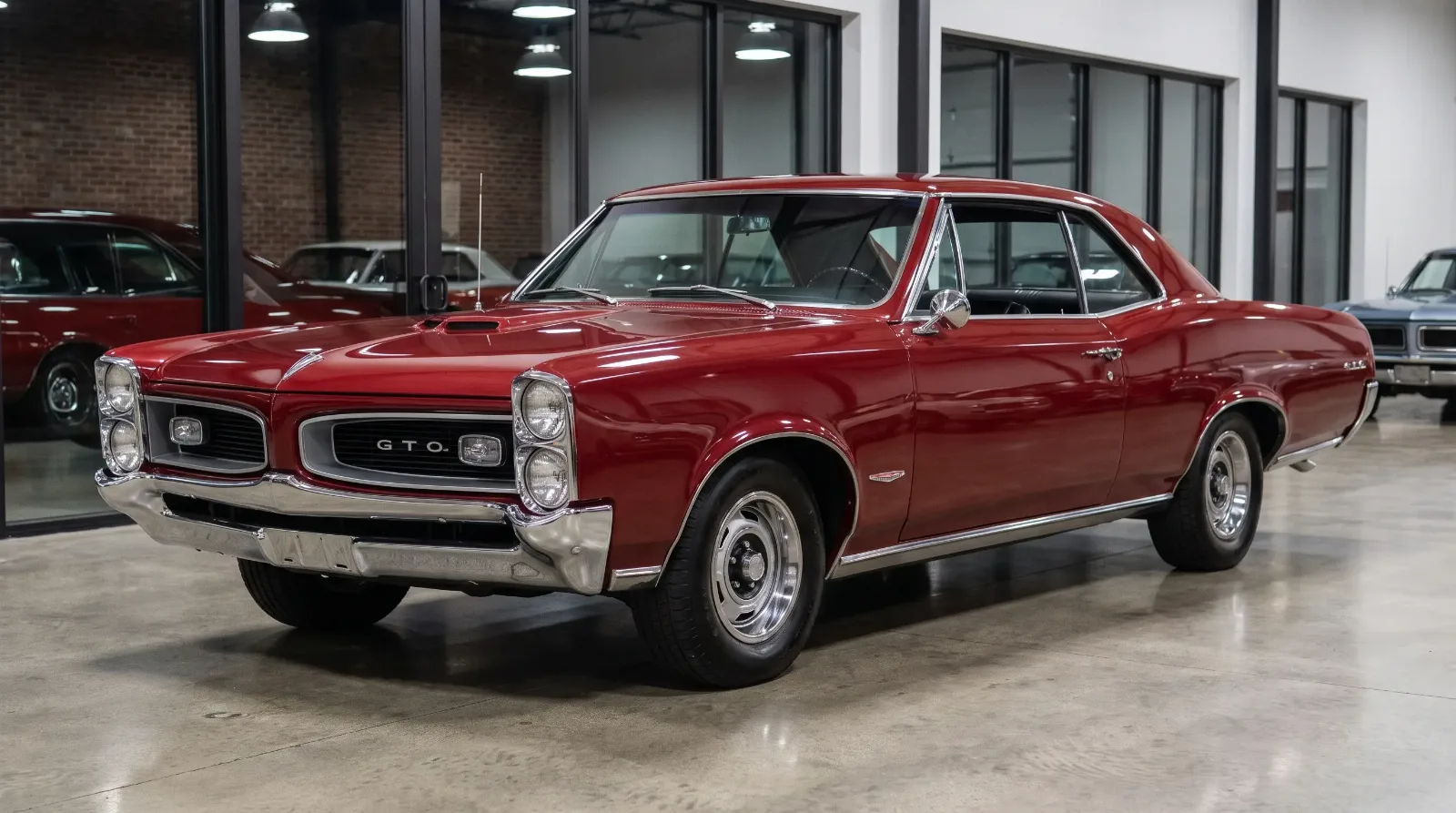
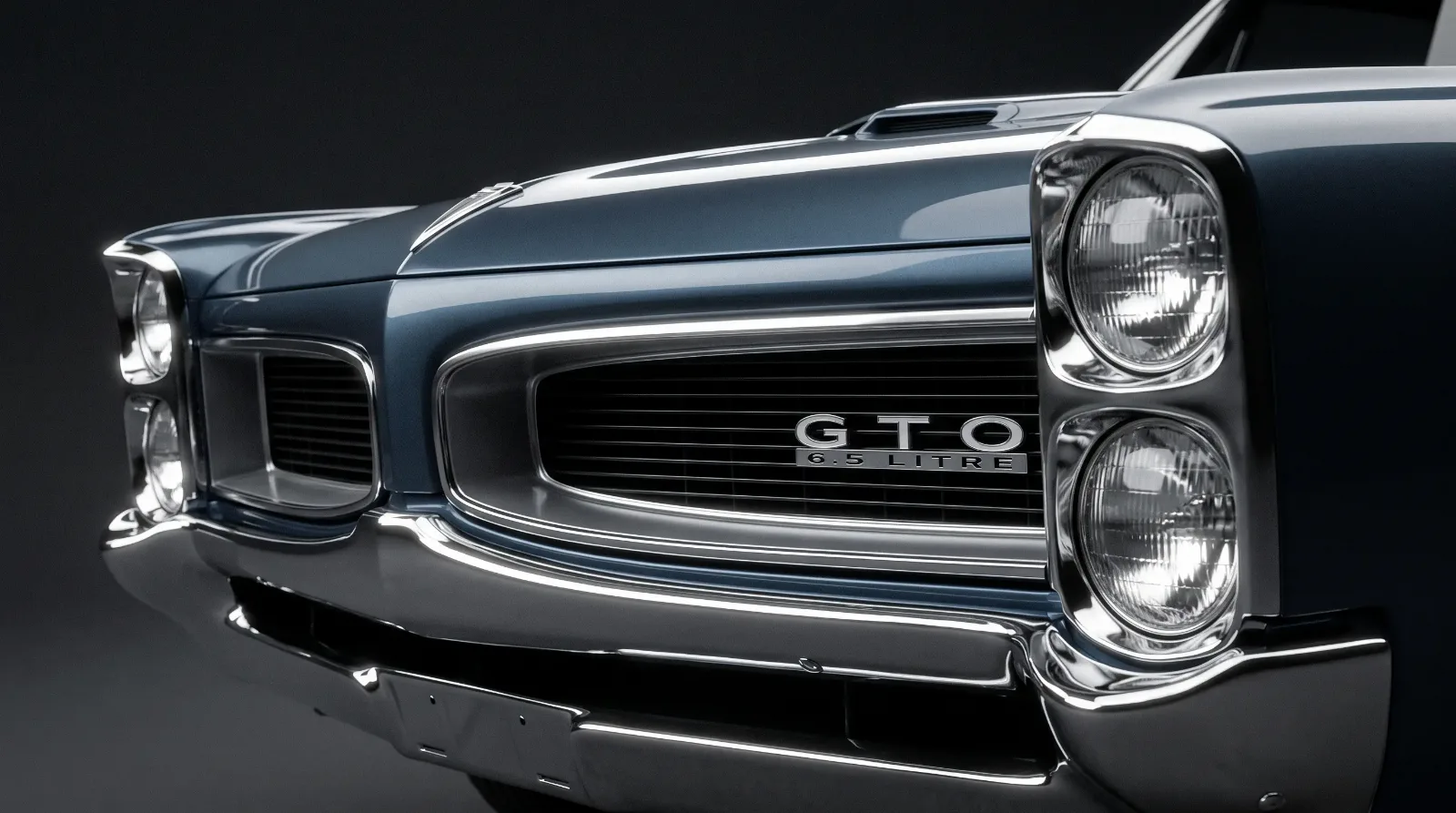
Everything changed for 1966. The GTO left the option-package structure behind and became its own model, riding on Pontiac's new Coke-bottle-shaped body with its pinched waist and flared fenders. The grille followed suit: a horizontal split design, still twin openings but now wider and lower, integrated into a nose that curved and flared in ways the boxier 1964-65 cars never attempted. This is the grille most associated with the phrase the 1966-67 GTO, and it is the year the car's face finally matched the ambition of its mechanicals.
| Year | Grille layout | Headlights | Body context |
|---|---|---|---|
| 1964 | Split vertical theme, shared with LeMans | Single, horizontal | LeMans-based option package |
| 1965 | Twin split, more aggressive opening | Stacked, vertical pairs | Facelifted Tempest/LeMans body |
| 1966 | Wide horizontal twin split | Stacked, vertical pairs | All-new Coke-bottle body, GTO now a standalone model |
| 1967 | Revised twin split, finer detailing | Stacked, vertical pairs | Carryover Coke-bottle body, federal safety updates |
1967: refinement, not revolution
The 1967 GTO kept the same basic Coke-bottle body as 1966, and the grille changes that year were evolutionary rather than a clean-sheet redesign. Pontiac refined the texture and detailing of the twin openings and adjusted trim to meet new federal safety requirements that were starting to shape Detroit styling decisions across the board. It is a subtler year for grille-spotters, one where you are looking at proportion and finish more than layout, but the differences are consistent enough that a trained eye can tell a 1966 from a 1967 at a glance, particularly when you factor in the year's other notable change, the debut of a genuine GTO convertible body style that widened the car's appeal well beyond the hardtop and coupe buyer. That story deserves its own telling, and it picks up right where the grille story leaves off, so read on.
How to spot a mismatched grille on a restored car
Because these four grilles look similar from a distance but are not interchangeable, restoration shortcuts show up more often than owners expect. A 1966 grille shell will not correctly fit a 1967 nose opening without modification, and vice versa, because the surrounding sheet metal changed subtly even within the shared Coke-bottle body run. The tell is usually in the fit at the corners, where the grille meets the fender, or in fastener holes that don't quite line up with factory positions. A grille that's been forced to fit a year it wasn't built for often shows extra holes, filler, or slightly proud trim where a correct piece would sit flush.
The badging is another giveaway. GTO emblems and trim script changed placement and design detail across these four years in ways that are documented in factory parts catalogs, and a badge from the wrong model year sitting on an otherwise correct grille is one of the more common small inconsistencies turned up during a careful pre-purchase inspection. It rarely means the car is a fraud, more often it means a prior owner used what was available rather than what was correct, but it's worth flagging before you finalize a purchase price.
Why grille details matter to buyers today
Grille and headlight bezels are also among the more commonly reproduced GTO trim pieces, which means a car's grille condition and originality can be a real factor in valuation and authenticity checks. Mismatched trim, incorrect bezels for the model year, or a grille sourced from the wrong year are common issues on cars that have been through multiple repairs or partial restorations. Anyone shopping a 1964-67 GTO should cross-check grille details against build documentation rather than trusting a photo alone.
"You can learn more about a GTO's honesty from its grille fitment than from almost anything else on the front clip. Panel gaps and trim alignment do not lie the way a fresh paint job can."
Tom Ramirez
The bigger picture
Four years, four distinct faces, and a car that went from borrowed Tempest styling to a fully realized identity of its own. The grille evolution is a compact version of the GTO's larger story in this period, a car maturing quickly from a clever option package into one of the defining muscle cars of the decade. For the full arc of that transformation, from the 1964 option package through the car's later years, the full GTO story covers the ground this piece only sketches.
Sources and notes
Related Reading
Have a
Pontiac GTO
for Sale?
Reach thousands of serious classic car collectors across the US.
Sell It Here →
Are You a Classic Car Dealer?
List your full inventory and connect with targeted classic car buyers.
Join as a Dealer →

About the author
Tom Ramirez
Corvette researcher and historian based in Bowling Green, Kentucky. Two decades documenting Corvette production history from original factory records.
Related Listings - Pontiac GTO
Comments
Be the first to comment on this article.