
The Porsche 356 Speedster history begins not with an engineer's idea but with an importer's demand. Max Hoffman, the man responsible for bringing Porsche, Mercedes, and several other European marques to American showrooms in the 1950s, told the factory bluntly that he could not sell enough 356 coupes and cabriolets at their existing price point. He wanted something cheaper, simpler, and more overtly sporting, a car that could compete against the MGs and Triumphs already establishing themselves with American weekend racers. Porsche's answer, introduced for the 1954 model year, was the Speedster.
Car Features
6 min read
The 356 Speedster: The Stripped-Down Legend
Built at Max Hoffman's insistence to hit a lower US price point, the 356 Speedster stripped away comfort for weight and cost, and became a club-racing favorite in the process.
A cheaper car built by removing things
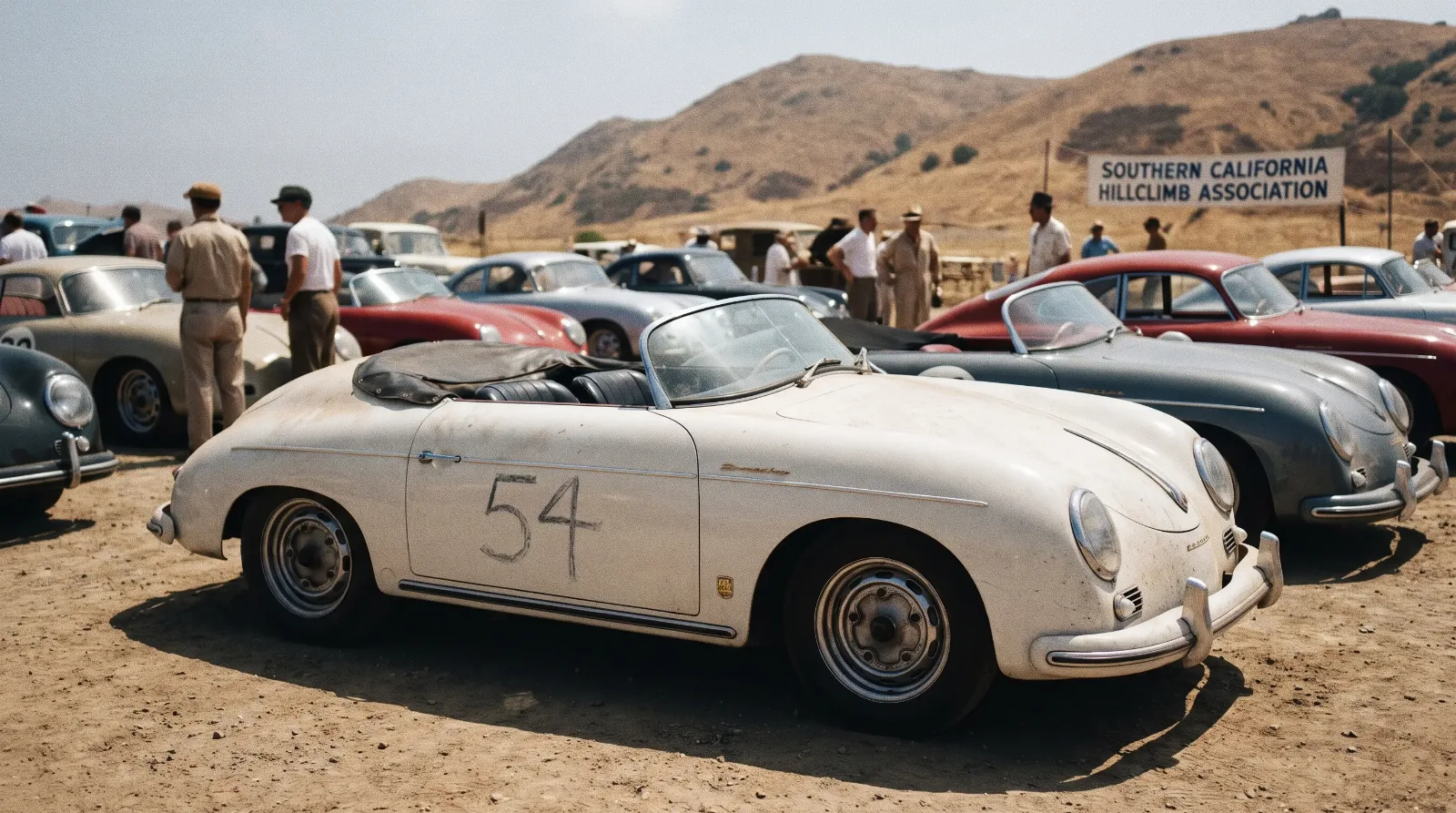
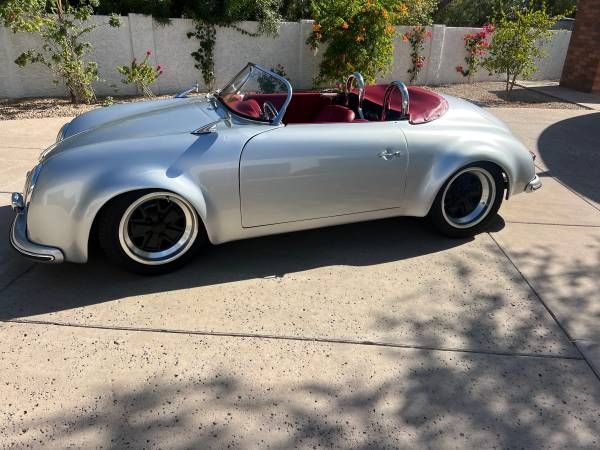
Where most manufacturers add features to justify a new model, Porsche largely built the Speedster by subtracting them. The cabriolet's roll-up windows were replaced with removable side curtains. The windshield was cut noticeably lower than on the standard cabriolet, a change that improved the car's stance and reduced wind resistance but also reduced weather protection to something closer to a dedicated race car than a road-going convertible. The folding top was a minimal affair, intentionally basic, meant to be stowed rather than lived under.
Bucket seats replaced the more upright chairs of the standard cars, set lower in the body to match the reduced windshield height. None of these changes were about adding sportiness for its own sake. Every one of them reduced material, reduced labor, or both, which is precisely how Porsche hit the lower price point Hoffman had asked for while keeping the mechanical package essentially identical to the contemporary 356 coupe underneath.
Why the price mattered as much as the styling
Hoffman's original request centered on a target price under three thousand dollars, a figure meant to put the Speedster within reach of the same buyers considering a British roadster. Porsche came close enough to that target that the Speedster genuinely competed on price as well as capability, and American amateur racing scenes on both coasts absorbed the car quickly. Its low weight and stripped-down cabin made it a natural for club racing and hillclimbs, environments where the very features that made it uncomfortable as daily transportation, minimal weather sealing, hard seats, and a top nobody wanted to use in earnest, simply did not matter.
Production numbers and why survival rates vary so much
The Speedster ran from 1954 through 1958, built in relatively small numbers compared to the coupe body style that made up the bulk of 356 production across those years. Total Speedster production across 1954 through 1958 is generally cited at around 4,150 cars, a number small enough that genuine, unmodified survivors carry a real premium over coupes and cabriolets from the same period. Many Speedsters spent their working lives being raced rather than preserved, which means a documented, numbers-matching example today is judged as much by what it avoided over six decades as by what it originally left the factory with.
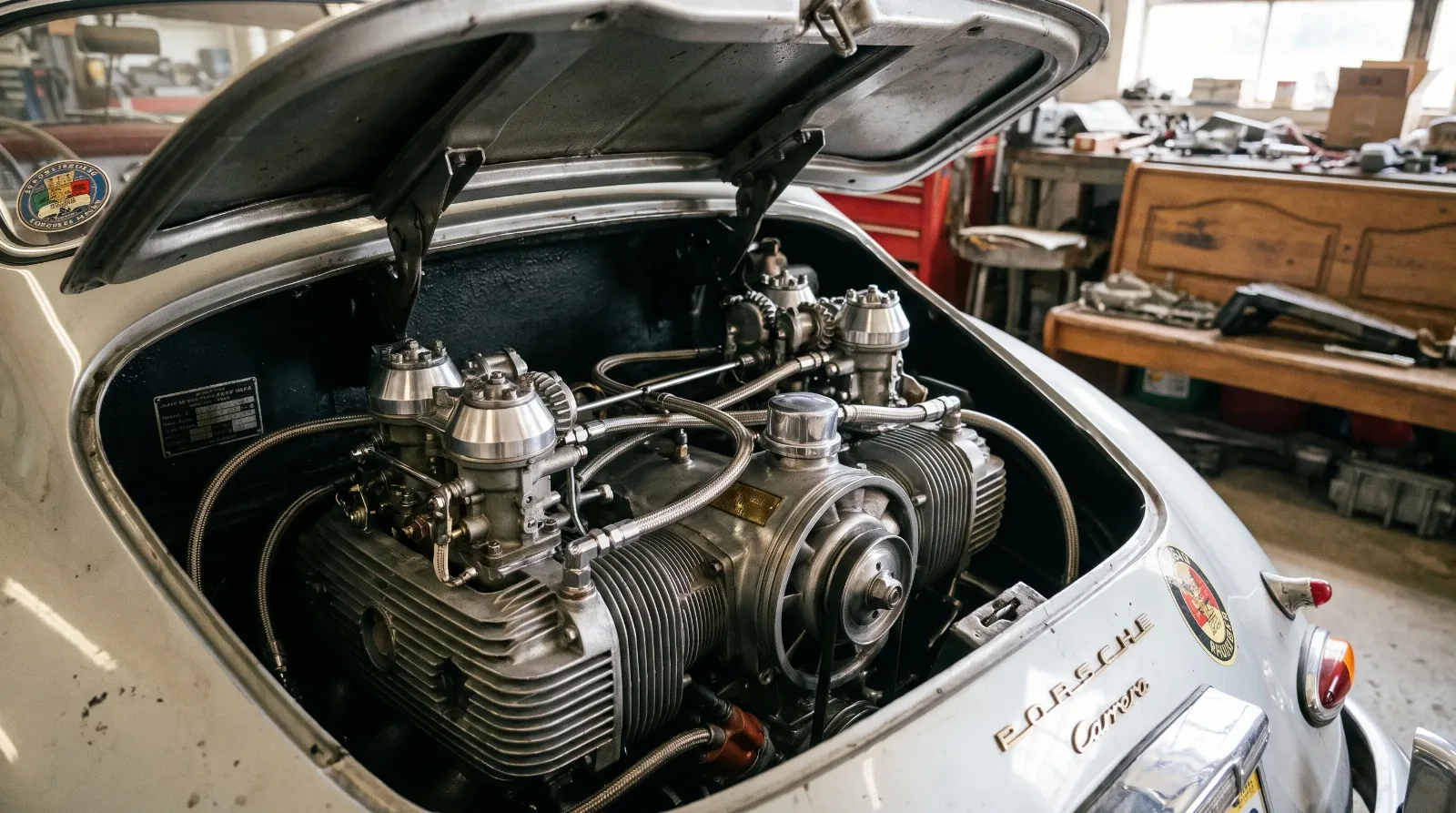
Engine specification tracked the standard 356 range of the period, from the 1500 through the later 1600, with the same Carrera four-cam option theoretically available to Speedster buyers willing to pay for it, though very few did given the model's role as an entry point rather than a halo car.
| Detail | Speedster specification |
|---|---|
| Production years | 1954 to 1958 |
| Windshield | Low-cut, shorter than standard cabriolet |
| Side windows | Removable side curtains, no roll-up glass |
| Seating | Low-set bucket seats |
| Original market intent | Entry-level price point for the US market |
| Successor model | Convertible D, from 1959 |
A car shaped by California weekend racing
The Speedster's reception on the American West Coast was disproportionate to the numbers Porsche actually sold there. Southern California's amateur racing scene, built around dry-lake events, hillclimbs, and improvised road circuits, took to the Speedster's stripped weight and low center of gravity in a way that the factory could not have fully anticipated when it designed the car purely to hit Hoffman's price target. Local dealers and sports car clubs became informal proving grounds, and word of the car's on-track manners traveled faster through that network than any advertising Porsche was running at the time.
That regional enthusiasm has outlasted the car's original production run by decades. Speedster owners' clubs and concours classes dedicated specifically to the model still trace much of their identity back to that early West Coast racing culture, and restorers working on genuine cars today often find period competition history, roll bars added and removed, scrutineering stickers, half-scraped-off number decals, still legible under later paint. A Speedster with that kind of documented racing past is treated differently from one with a clean, unraced history, not necessarily worth more, but understood as a different kind of object entirely.
Why Porsche replaced it with something more livable
By 1959 Porsche had already moved on, replacing the Speedster with the Convertible D, a car built by Drauz that restored a taller windshield and proper roll-up windows while keeping much of the open-top character buyers had responded to. The change reflected a simple market reality: American buyers wanted a genuine sports car, but the Speedster's most spartan features, the low screen and side curtains especially, were proving to be more of a barrier to daily use than most owners were willing to tolerate once the novelty wore off.
"The Speedster only makes sense once you understand it was never meant to be comfortable. Every corner Porsche cut to hit Hoffman's price target is the same corner that made the car brilliant on a race track and miserable in the rain, and you cannot separate those two facts from each other."
Sarah Whitfield
That short production run is exactly why the Speedster still occupies such a specific place in 356 history today. It was a compromise built to a price, sold to buyers who wanted something closer to a race car than a cruiser, and quietly discontinued once Porsche found a version of the same idea that people could actually live with day to day. The story of how the model line got to this point at all starts well before Hoffman ever made his request. For that background, the first Porsche covers the earlier chapters this car builds on, and from there the line continues into an engine that took the Speedster's competition instincts considerably further. The next story in this set picks up exactly that thread.
Sources and notes
Related Reading
Have a
Porsche
for Sale?
Reach thousands of serious classic car collectors across the US.
Sell It Here →
Are You a Classic Car Dealer?
List your full inventory and connect with targeted classic car buyers.
Join as a Dealer →
#Max Hoffman
#classic porsche
#porsche 356
#Porsche history
#Porsche 356 Speedster
#Porsche convertible

About the author
Sarah Whitfield
Third-generation classic car collector specializing in pre-war American and European coachbuilt automobiles. Researcher and concours enthusiast.
Related Listings - Porsche
Comments
Be the first to comment on this article.