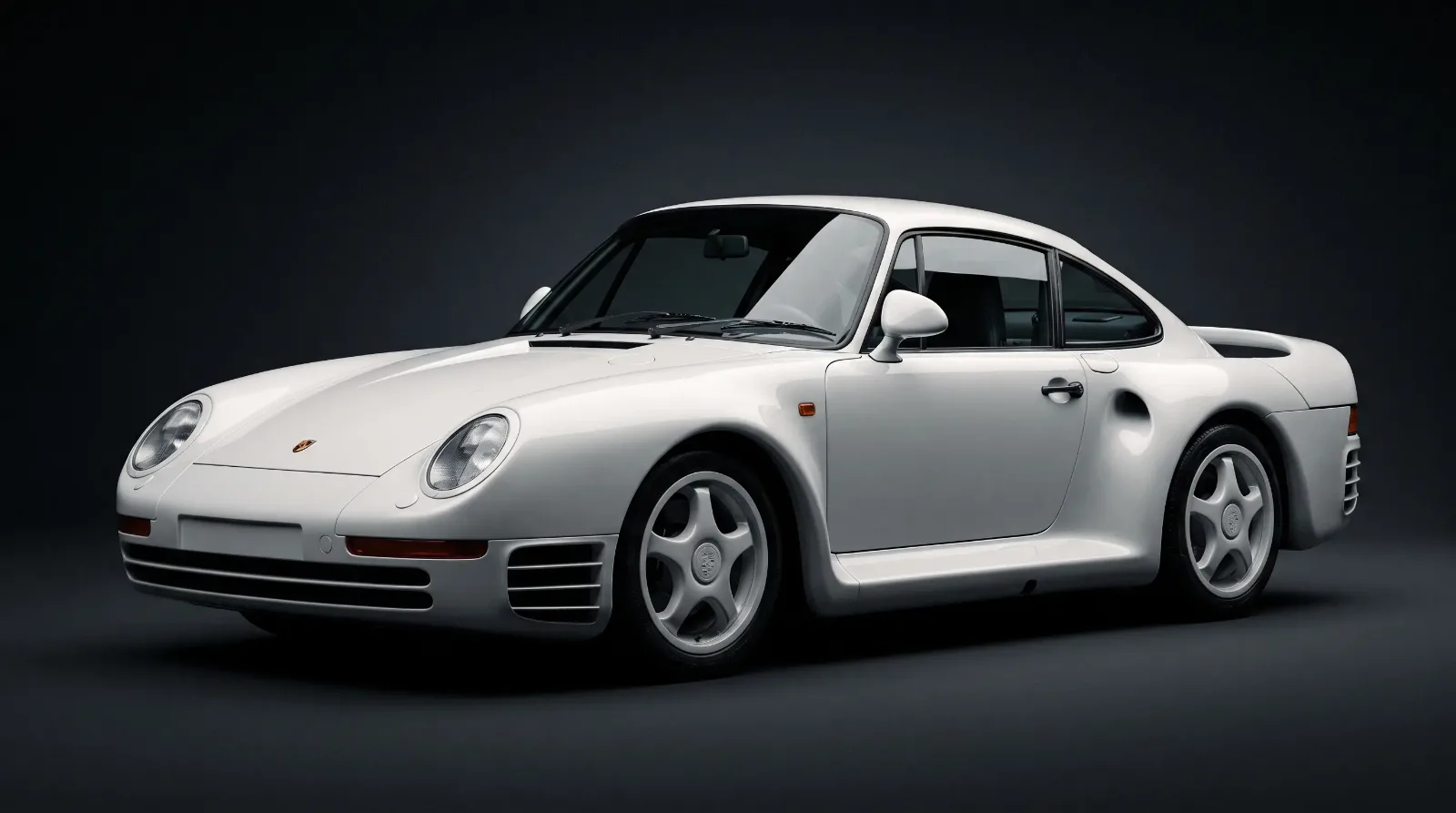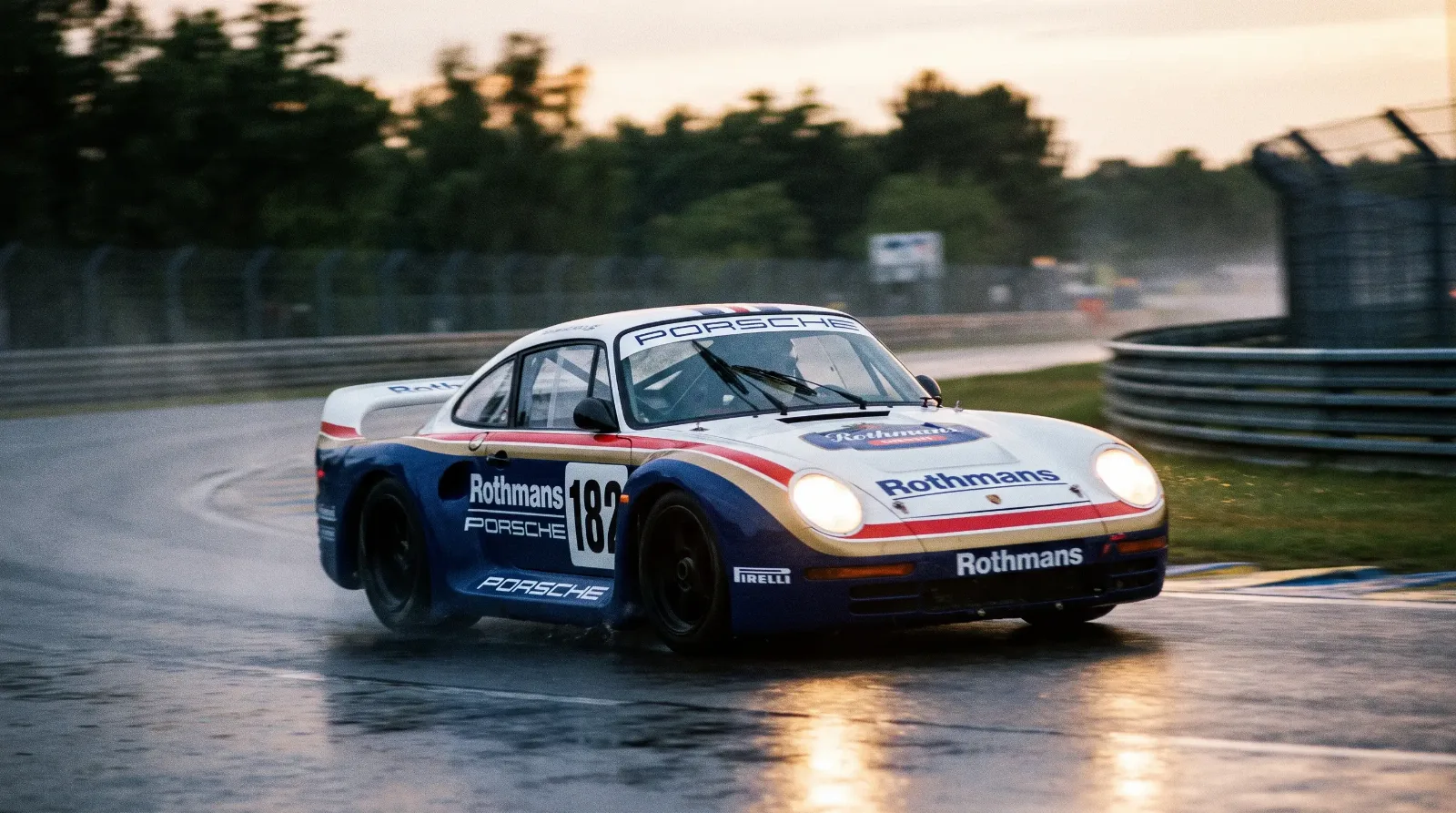

The Porsche 911 GT1 Strassenversion exists because of a loophole, and loopholes make for interesting cars. In the mid-1990s, GT1-class racing rules required manufacturers to build at least one road-going example of their race car to qualify it as a production-derived GT car rather than a pure prototype. Porsche took that requirement and turned it into one of the strangest, most desirable machines it has ever sold to the public. This is the market case for it, not the fairy tale.
What the rulebook actually forced Porsche to build
The FIA's GT1 regulations in 1996 were loose enough to invite creative reading. A manufacturer needed a homologated road car, but the definition of "road car" left room. Porsche built the 911 GT1 race car first, a mid-engine prototype wearing 911 badging and a front clip borrowed from the 993 with headlights that previewed the still-unreleased 996. Only after the race car existed did Porsche reverse-engineer a street-legal version to satisfy the letter of the rule.
The result was sold in two distinct runs. The 1996 GT1 Strassenversion used the 993-style nose. The 1997 update carried the 996-style front end that would not reach showrooms on the regular 911 for another year, meaning buyers of Porsche's cheapest new sports car in 1998 were, in a strange sense, looking at a face the ultra-rich had already paid for.
Competitors read the same rulebook differently. McLaren's F1 GTR program leaned on a car that had already been sold in genuine road-going numbers before racing began, while Porsche went the other direction entirely, building the racer first and treating the road car as an afterthought required to keep the racer legal. Both approaches satisfied the same sanctioning body in the same season, which tells you how much interpretive room GT1 rules actually left on the table by the mid-1990s.
Powertrain and numbers that matter to a buyer
Under the rear glass sits a 3.2-liter twin-turbocharged flat-six derived from the 962 racing program, not the naturally aspirated architecture of the standard 911. Output on the street car is quoted around 536 to 544 horsepower, routed through a five-speed manual to the rear wheels only. Zero to 60 mph comes in around 3.6 to 3.9 seconds depending on the test, with a claimed top speed near 190 mph. Weight was kept close to 1,150 kilograms thanks to a carbon-fiber and Kevlar composite body over a steel and aluminum structure, a level of lightweighting Porsche would not offer another customer again until the Carrera GT.
None of that is exotic by 2026 hypercar standards. What is exotic is that this powertrain and construction came from a company that was, at the same moment, selling the comparatively ordinary 993 Turbo to the rest of its customer base.
Servicing costs follow the same logic as the parts problem. A turbo rebuild on this engine is not a bolt-in exchange the way it would be on a standard 911 Turbo, since the internals and turbo mapping are specific to a low-volume homologation build. Owners budget accordingly, and any pre-purchase inspection needs to be done by a shop that has actually opened one of these engines before, not a generalist Porsche specialist working from a service manual for a different car entirely.
| Spec | 911 GT1 Strassenversion |
|---|---|
| Engine | 3.2L twin-turbo flat-six |
| Power | approx. 536-544 hp |
| Transmission | 5-speed manual, RWD |
| Body | Carbon fiber / Kevlar composite |
| Units built (street) | approx. 20-25 |
| Years produced | 1996-1997 |
What it actually sells for and why the range is wide
Public sale data on the 911 GT1 Strassenversion is thin because so few change hands, and that thinness itself is the first thing a buyer needs to understand. When one has surfaced at auction over the past decade, hammer prices have landed anywhere from the low seven figures to more than $8 million, with condition, ownership history, and originality of the powertrain doing most of the work in that spread. A car with a documented, unmolested engine and clear provenance back to first delivery commands a real premium over one that has been serviced with non-original parts or has an unclear ownership chain.
That spread matters more here than on almost any other classic Porsche, because the population is so small that there is no liquid comp set. Three transactions a year does not make a market curve, it makes three data points, and treating them as a curve is how buyers overpay.
Compare that to a more liquid market like air-cooled 911 Turbos, where dozens of sales a year let a buyer triangulate a fair number within a narrow band. The GT1 Strassenversion offers no such comfort. A buyer working this market needs to accept that the "right" price is set new each time a car surfaces, informed by the last sale but not dictated by it, and that patience matters as much as capital.
"With a car this rare, the auction result tells you what one buyer paid one seller on one day. It does not tell you what the next one is worth, and anyone pricing off a single headline number is guessing."
— David Mercer
The buy case, plainly stated
If you can find one and clear the diligence, the 911 GT1 Strassenversion is a buy, with conditions. First, engine documentation is non-negotiable. This is a race-derived twin-turbo unit, not a service-network part, and a rebuild by anyone outside a handful of specialists erodes both value and confidence. Second, treat the car as an appreciating rarity rather than a driver. Mileage accumulation on a car this scarce measurably narrows the buyer pool at resale, since collectors at this level pay for originality first and usability a distant second.
This car sits directly downstream of Porsche's homologation specials, the same regulatory logic that produced the 959 a decade earlier, just applied to a different racing class and a different decade of Porsche engineering. The pattern is consistent: build the fastest thing the rules allow, then build the smallest possible number of road cars to make it legal. For a fuller look at where that logic went next, see the next story in this set.
The risk case is straightforward too. Parts supply is essentially zero outside cars broken for spares, which almost never happens at this price point. Any mechanical issue becomes a fabrication project, not a parts-counter fix. Buyers without access to a shop that has already worked on a 962-derived turbo six should budget for that reality before they budget for the purchase price.
Insurance is its own diligence item. Standard classic-car policies rarely have a template for a car with this production number and this powertrain, so an agreed-value policy with a specialist underwriter familiar with homologation exotics is close to mandatory. Skipping that step to save on premium is a false economy on a car where a total loss claim could otherwise turn into a protracted valuation dispute.
Where this leaves a serious collector today
The 911 GT1 Strassenversion is not a car for someone building a first collection. It rewards buyers who already understand what they are looking at, who have a relationship with a shop capable of servicing it, and who are buying for the story and the rarity rather than the driving experience. Judged against that bar, it holds up. Judged against any other metric, spreadsheet return, ease of ownership, parts availability, it does not, and it was never built to.
Sources and notes
- Wikipedia: Porsche 911 GT1
- Porsche Club of America: GT1 Strassenversion, Road to Track and Back
- Stuttcars: Porsche 911 GT1 Strassenversion (1997) specifications and performance
- RM Sotheby's: 1998 Porsche 911 GT1 Strassenversion auction lot
- Goodwood: Porsche 911 GT1 Amelia Island auction result
- Gooding & Company: 1998 Porsche 911 GT1 Strassenversion