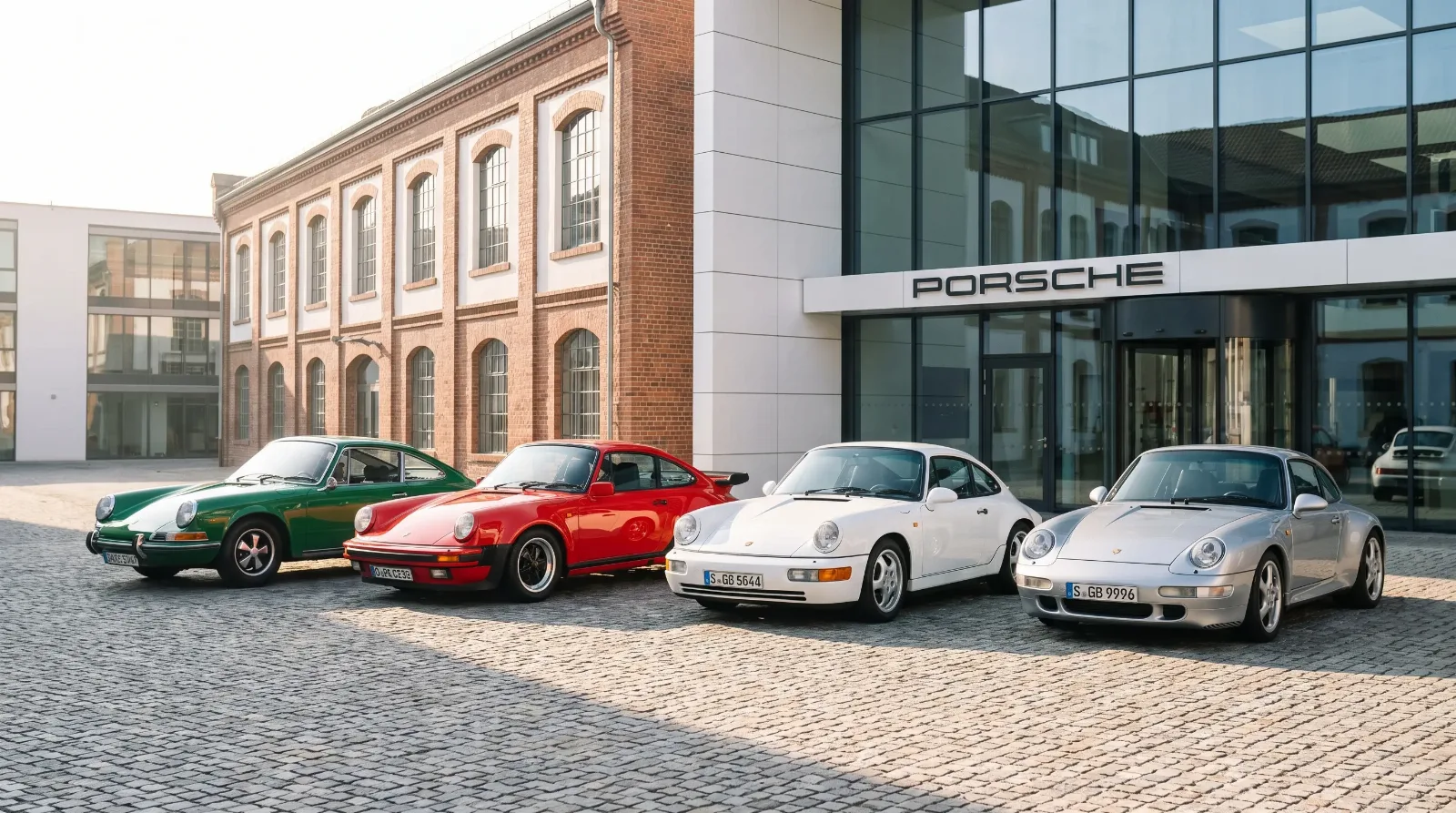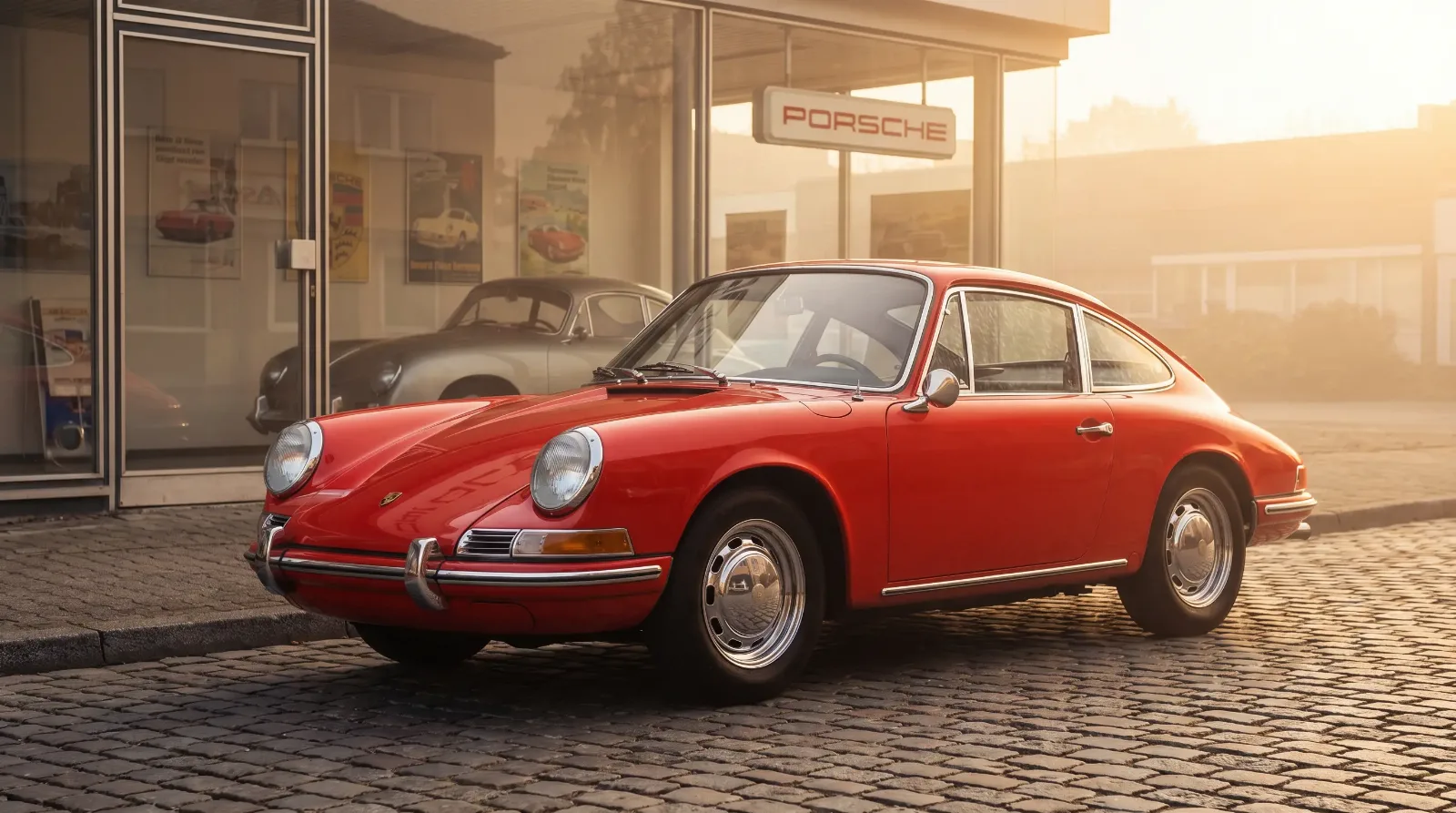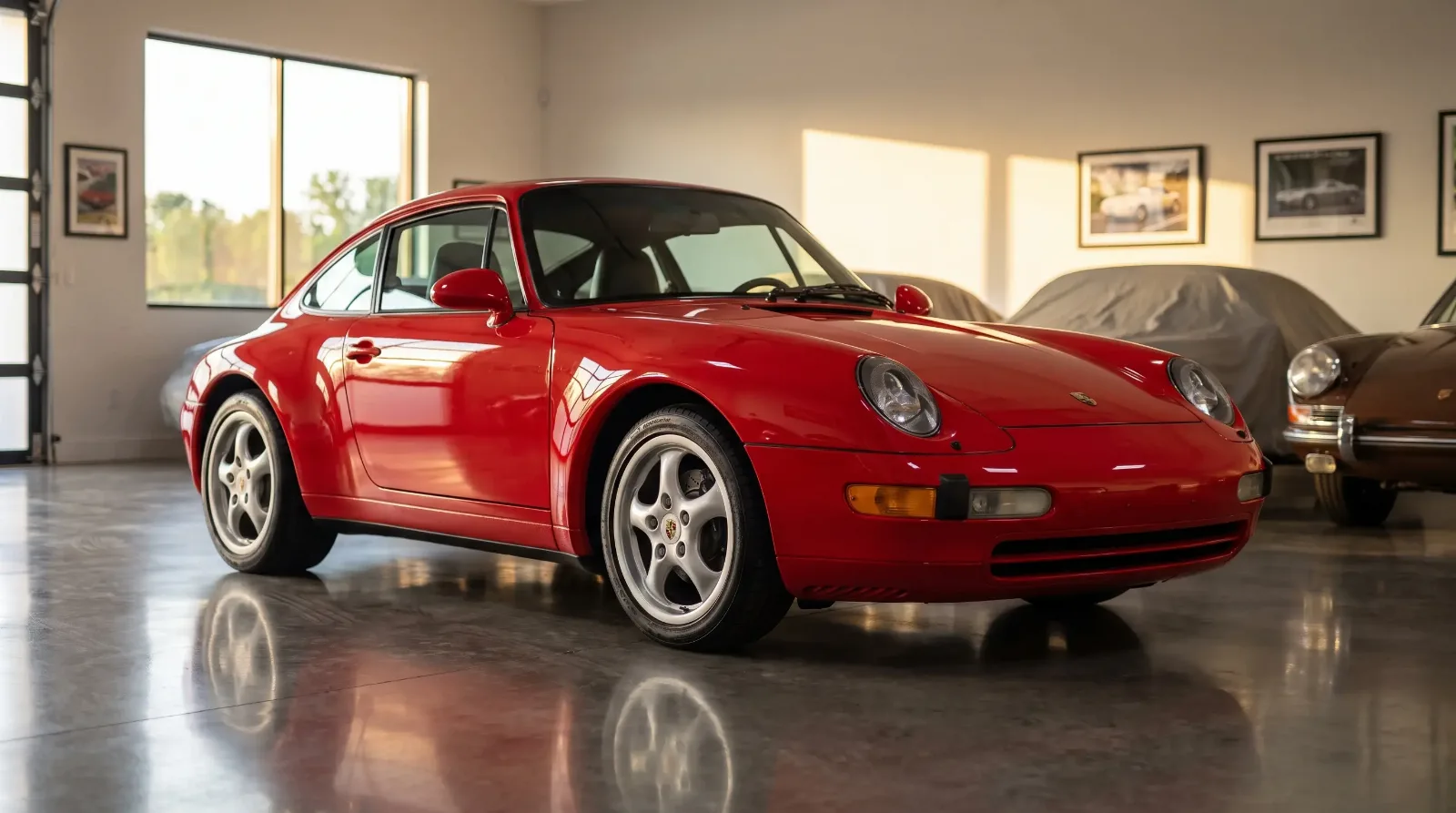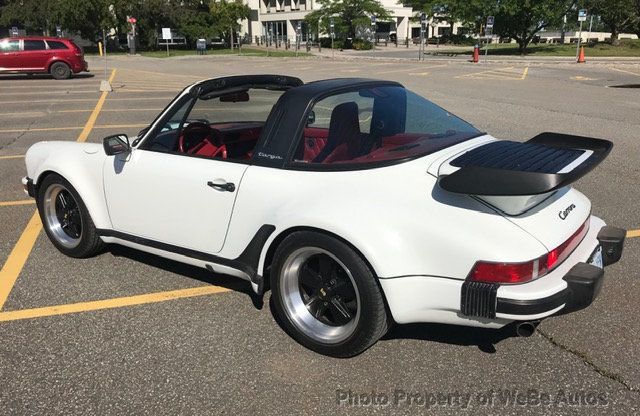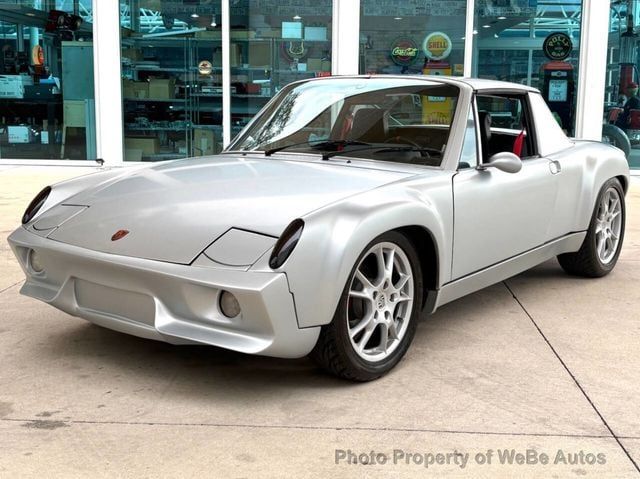
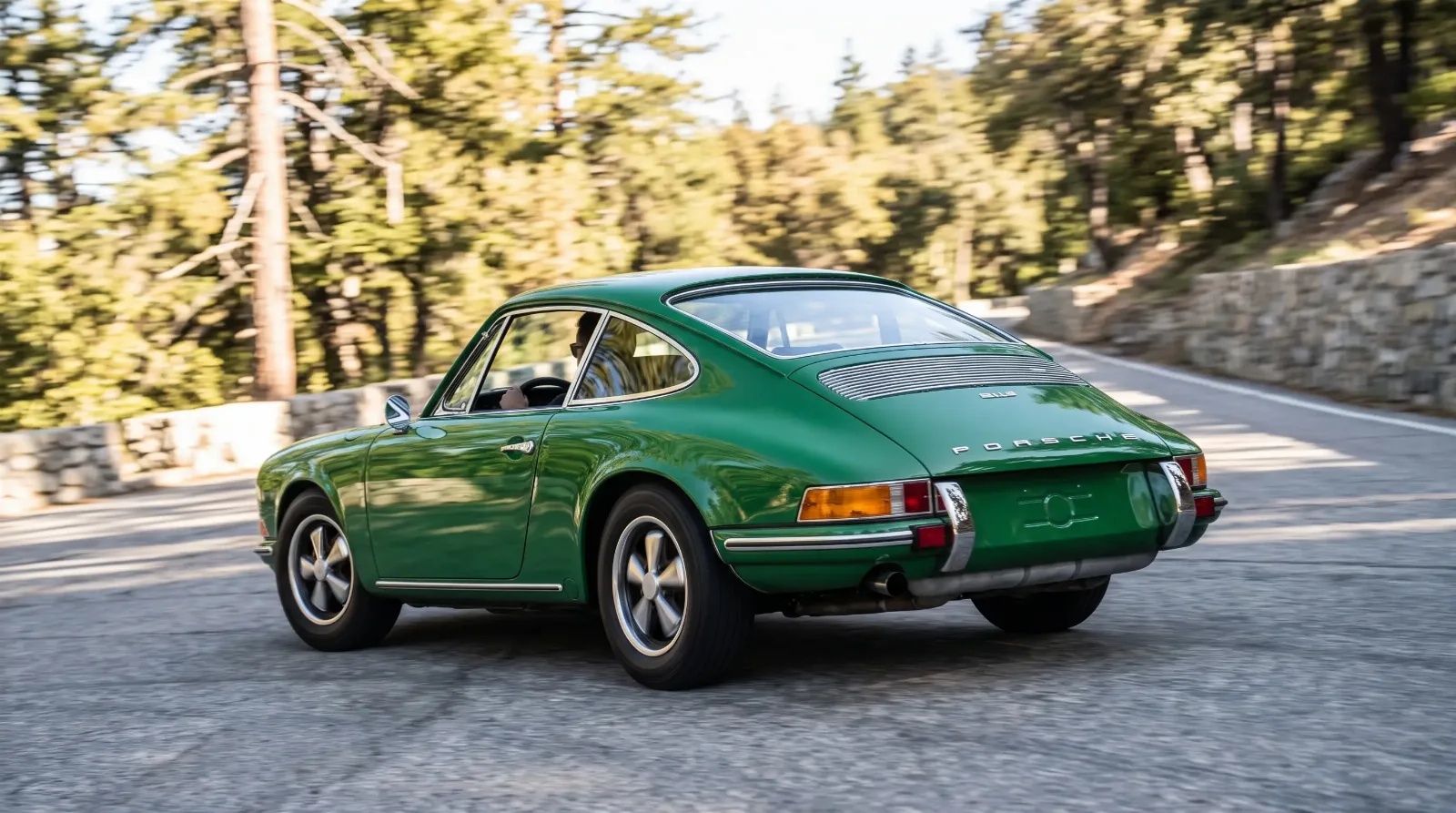
Take two Porsche 911s from the same decade, park them nose to tail, and most people will call them identical. Pop both trunks and measure the distance between the axles and you will find one number that explains why one car dances at the limit and the other simply grips. That gap, 87 inches against 89.4 inches of wheelbase, is the entire story of the short wheelbase porsche 911, and it is the reason two cars wearing the same badge can feel like they came from different companies.
Porsche built the original 911 on a 2,211mm wheelbase from its 1963 debut through the 1968 model year. Starting with the 1969 model year, Porsche stretched the chassis to 2,268mm, a change of roughly 57mm, or a bit over two inches, achieved mostly by moving the rear wheels rearward relative to the engine and transaxle. It sounds small. On a car this light and this rear-engined, it changed everything about how the 911 behaved when a driver pushed past what the car's tires could calmly manage.
Why Porsche lengthened the chassis in 1969
The short-wheelbase cars, everything from the 1963 901 prototype through the 1968 model year, carry their engine weight almost directly over the rear axle with very little to counteract a sudden weight transfer. Lift off the throttle mid-corner in an early car and the rear can snap around faster than an inexperienced driver can catch it, a trait that built the 911's reputation as unforgiving long before anyone used the word oversteer casually at a cars-and-coffee meet. Racing drivers loved that immediacy. Ordinary buyers occasionally found it out the hard way.
Porsche's engineers addressed the problem directly for 1969, moving the rear wheels back within the wheelbase and adding some additional trailing arm length. The result was a car with noticeably more stable weight transfer characteristics, less snap in fast direction changes, and a rear end that telegraphed its limits earlier. Porsche did not do this because racers complained. Everyday owners in wet climates were putting 911s into ditches, and a car built to be a daily-usable grand tourer needed to behave more predictably for people who were not professional racers.
"Drive a 1967 car back to back with a 1970, same road, same speed, and you'll feel the difference in the first corner. The short-wheelbase car talks faster and louder. It's not worse, it's just a different conversation, and you'd better be ready to answer it."
— Patrick Walsh
What the short-wheelbase 911 actually feels like
Enthusiasts who chase short-wheelbase cars specifically are not chasing a spec sheet number, they are chasing a sensation. The SWB 911 turns in with an eagerness longer cars lose, the nose responding almost before the wheel finishes moving, and the whole car rotates around a point that feels closer to the driver's hip than the long-wheelbase car's does. On a tight, technical road that immediacy is addictive. On a wet highway on-ramp taken carelessly, it is the same trait that built the car's early reputation for punishing overconfidence.
Steering feel changes too, though less obviously than the chassis behavior. The shorter wheelbase means less of a caster trail effect building up through a long, sustained corner, so the wheel loads up faster and unloads faster as the car transitions from turn-in to mid-corner to exit. Drivers coming from a long-wheelbase 911, or from almost any modern car, describe needing a beat to recalibrate their inputs, dialing in smaller, quicker corrections rather than the smoother, more sustained inputs a longer chassis rewards. It is not a harder car to drive well. It is a car that punishes hesitation more specifically than it punishes speed.
Collecting short-wheelbase cars today
The market has developed strong opinions about this distinction. Short-wheelbase 911s, particularly S and racing-oriented variants from 1965 through 1968, command a real premium over comparable long-wheelbase cars of similar condition and mileage. Part of that is scarcity, Porsche simply built fewer of them across a shorter run. Part of it is the mystique of the harder-edged driving experience, which collectors who grew up reading about the "widowmaker" reputation want to experience firsthand rather than take on faith.
Documentation carries more weight in this corner of the hobby than almost anywhere else in the 911 world. A short-wheelbase car with its original engine case numbers, factory build sheet, and a paper trail connecting it to known ownership stretches back decades commands a real premium over a visually identical car missing that history. Buyers are not just purchasing a chassis dimension, they are purchasing certainty that the car in front of them is what the seller says it is, and in a market where engines and transaxles have been swapped between generations for fifty years, that certainty is worth paying for.
- Confirm the wheelbase and chassis details against the actual VIN rather than trusting a seller's era label, since running gear gets swapped between cars over sixty years.
- Expect a short-wheelbase car to need a more experienced hand at speed, and budget for fresh, correctly rated tires rather than whatever came with the car.
- Rust inspection matters even more here, since many SWB cars have led harder lives, including amateur racing histories that add character but also stress.
Why this distinction still matters to buyers
None of this is academic trivia. A buyer deciding between a 1967 and a 1971 911 of similar spec is choosing between two genuinely different cars to drive, not just two cars with different trim tags. Reading the Porsche 911 chapter on this site lays out the model's full arc, but the wheelbase change deserves its own attention because it is the single mechanical decision that most changed how the car rewards or punishes a driver's inputs.
Where the short-wheelbase story goes next
The wheelbase question also feeds directly into why certain 911 generations became collectible for reasons beyond styling or rarity. Anyone who wants to follow that thread further should look at the next story in this set, which picks up where the driving dynamics leave off and explains how those characteristics became part of the air-cooled 911's broader appeal to collectors decades later. The short-wheelbase 911 was never meant to be a museum piece. It was built to be driven hard, and that is exactly why people still argue about it.