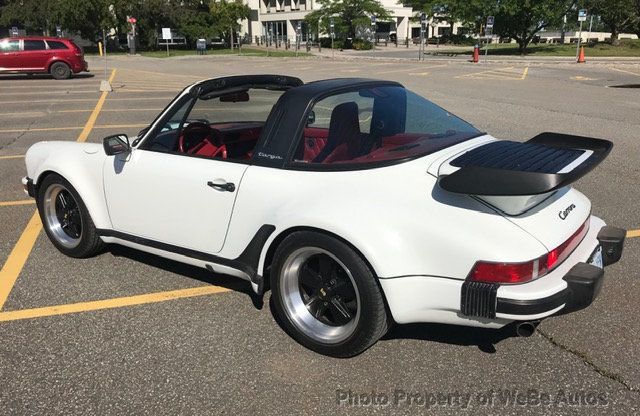
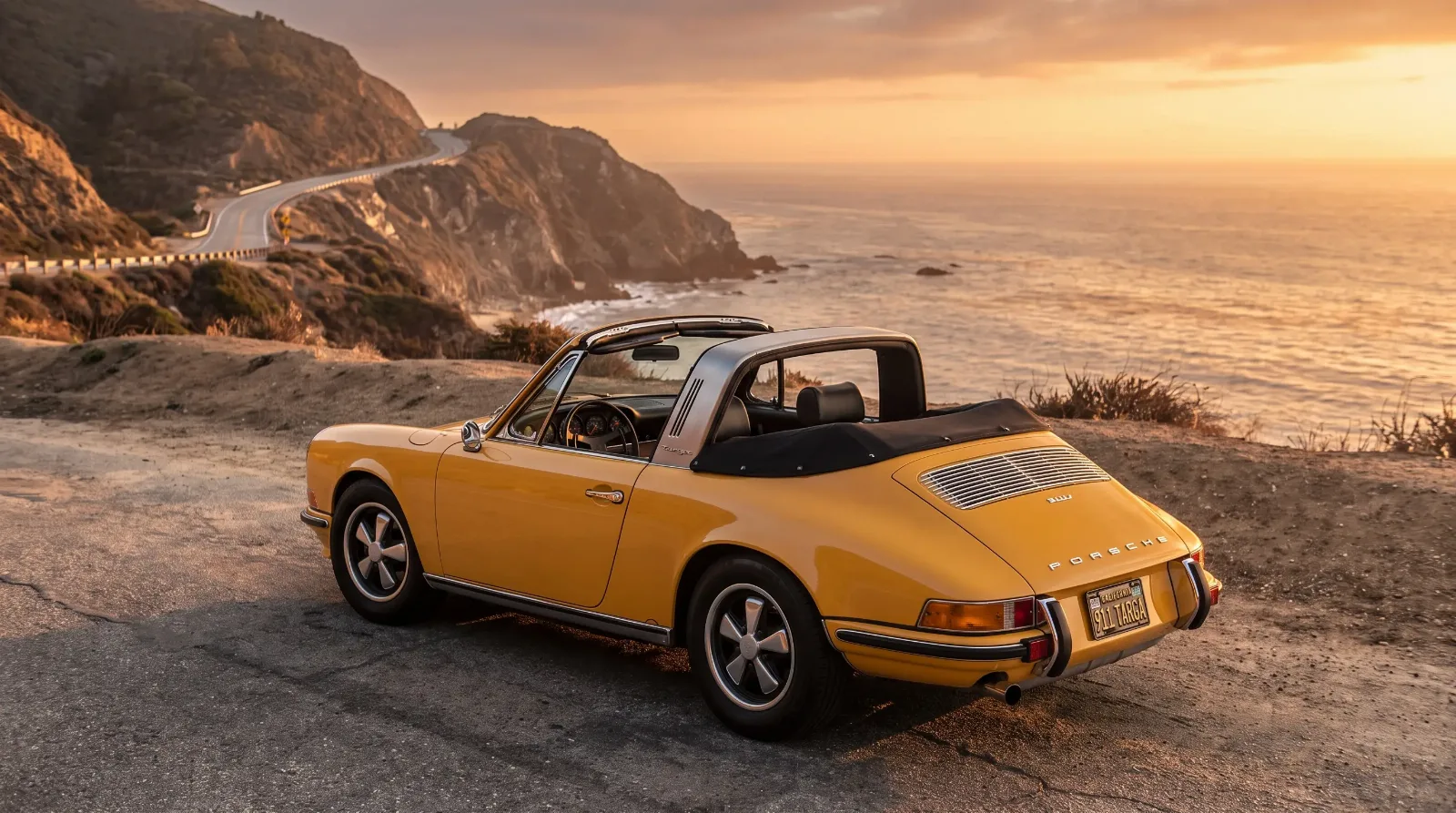
A guy I met at a Carlisle swap meet a few years back had a theory about why the Porsche 911 Targa never quite got the respect of the coupe sitting next to it in every showroom photo. "Everybody assumes it's a convertible for people who were scared of convertibles," he told me, turning the brushed steel roll bar of his 1970 example over in the afternoon light. "Nobody remembers it was actually the smart engineering answer to a law that never even passed." He was right, and the classic Porsche 911 Targa deserves better than the also-ran reputation it picked up somewhere along the way.
A roll bar built for a law that never happened
In the mid-1960s, word moved through the auto industry that the United States government was preparing to ban traditional convertibles outright, worried about rollover protection on cars with no fixed structure overhead. Porsche, with a big chunk of 911 sales riding on the American market, needed an open-air car that could survive whatever regulation came next. The answer, introduced for the 1967 model year, was a removable roof panel paired with a fixed stainless steel roll hoop behind the seats, strong enough to satisfy a rollover standard that, in the end, Washington never actually wrote into law.
Porsche named it Targa after the Targa Florio, the brutal open-road race through the mountains of Sicily that the company's cars had dominated for years. The name stuck to the roof design itself, not just that one 911, and it has been attached to open-top Porsches with a similar structure ever since.
The soft window years, and why they went away
Early Targas used a fold-down plastic rear window alongside the removable roof panel, which let owners drop the whole rear section open in warm weather for something close to a true convertible feel. It also aged badly. The flexible plastic yellowed, clouded, and cracked well before the rest of the car showed its years, and Porsche made a fixed glass rear window standard starting with the 1969 model year, though the soft window remained available as a special order into 1971. That change is one of the first things worth checking on any early car; a Targa still running its original soft window is a rare survivor, and one that has clearly been babied.
How the design changed generation to generation
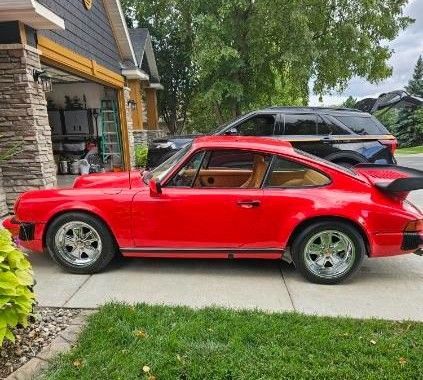
The classic look, that brushed stainless roll bar with the removable roof panel stored in the trunk, carried through the long-hood cars into the G-series 911s of the late 1970s and 1980s largely unchanged. It was the 993 generation, the last of the air-cooled cars, that reworked the formula in 1996 with a sliding glass roof panel that retracted electrically under the rear glass, dropping the fixed roll bar entirely and changing what "Targa" meant for the first time in three decades. Purists still argue over which approach is the real Targa. Both versions solve the same problem Porsche set out to fix in 1967: open-air driving without giving up the structure a true convertible has to do without.
| Feature | Original Targa (1967-1993) | 993 Targa (1996-1998) |
|---|---|---|
| Roof structure | Removable panel + fixed roll bar | Sliding glass panel, no roll bar |
| Rear window | Soft plastic (1967-1968, special order into 1971), then fixed glass | Fixed glass |
| Roof storage | Panel stows in the trunk | Glass retracts under rear window |
The Targa's place in the wider story only makes sense next to the coupe it was built alongside, and anyone curious about how the 911 became an icon will find the Targa's safety-first origin story running through the whole family tree, including the smaller, less celebrated 912 that shared the same body during those early years.
"People call it a compromise car. I call it the only 911 that was actually designed around a problem that never showed up, and it still turned into one of the best-looking roofs Porsche ever built."
— Patrick Walsh
A body style Porsche never fully abandoned
Even after Porsche discontinued the Targa within the 993 generation's run, the concept never disappeared for long, and the company would return to some version of a removable or retractable roof panel on nearly every 911 generation that followed. That staying power says something about how well the original 1967 solution actually worked. A design built to satisfy a law that never passed ended up outliving most of the regulations that inspired it in the first place, because it turned out plenty of buyers simply wanted the format regardless of what Washington required.
Values on early Targas have followed a familiar pattern for air-cooled Porsches generally, climbing steadily as clean, honest examples get harder to find. Buyers chasing a long-hood car from the late 1960s or early 1970s should expect to pay a premium over an equivalent coupe from the same year, not a discount, which surprises people who still think of the Targa as the compromise version of the 911.
Why it still matters to buyers today
Collectors chasing a classic Porsche 911 Targa now split fairly evenly between two camps: people who want the original roll bar look for its historical honesty, and people who prefer the cleaner glass roof of the later 993 cars. Neither is wrong. What both groups are really buying is a solution Porsche built for a law that never arrived, refined across three decades, and somehow more interesting today than a straightforward convertible would have been. There's more from this chapter worth reading if the early Targa years caught your attention, since the 912 rode on the same platform through much of that same stretch of Porsche history.
The guy at Carlisle still drives his every summer, roll bar gleaming, top panel stowed in the trunk exactly where Porsche put it in 1967.