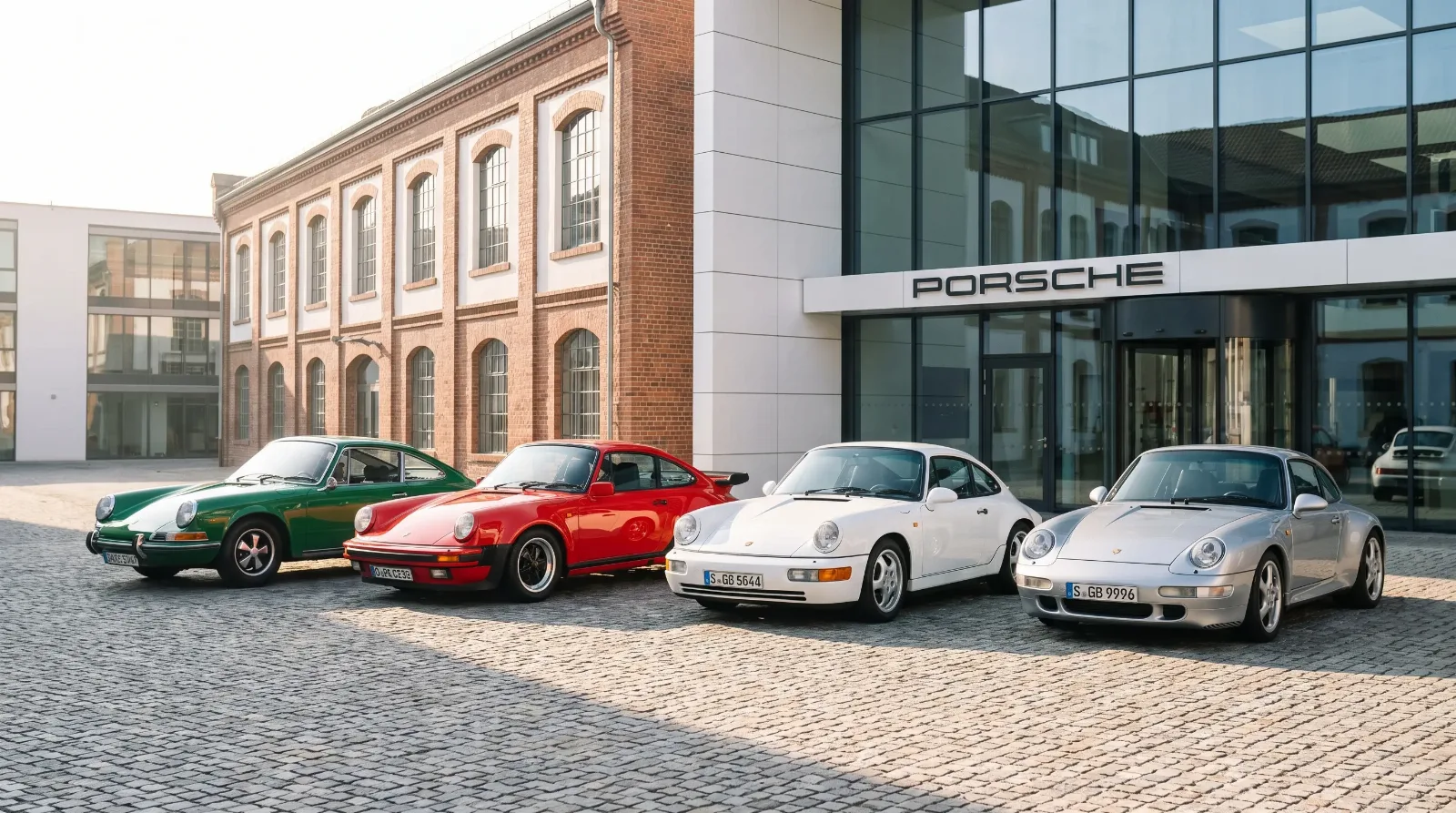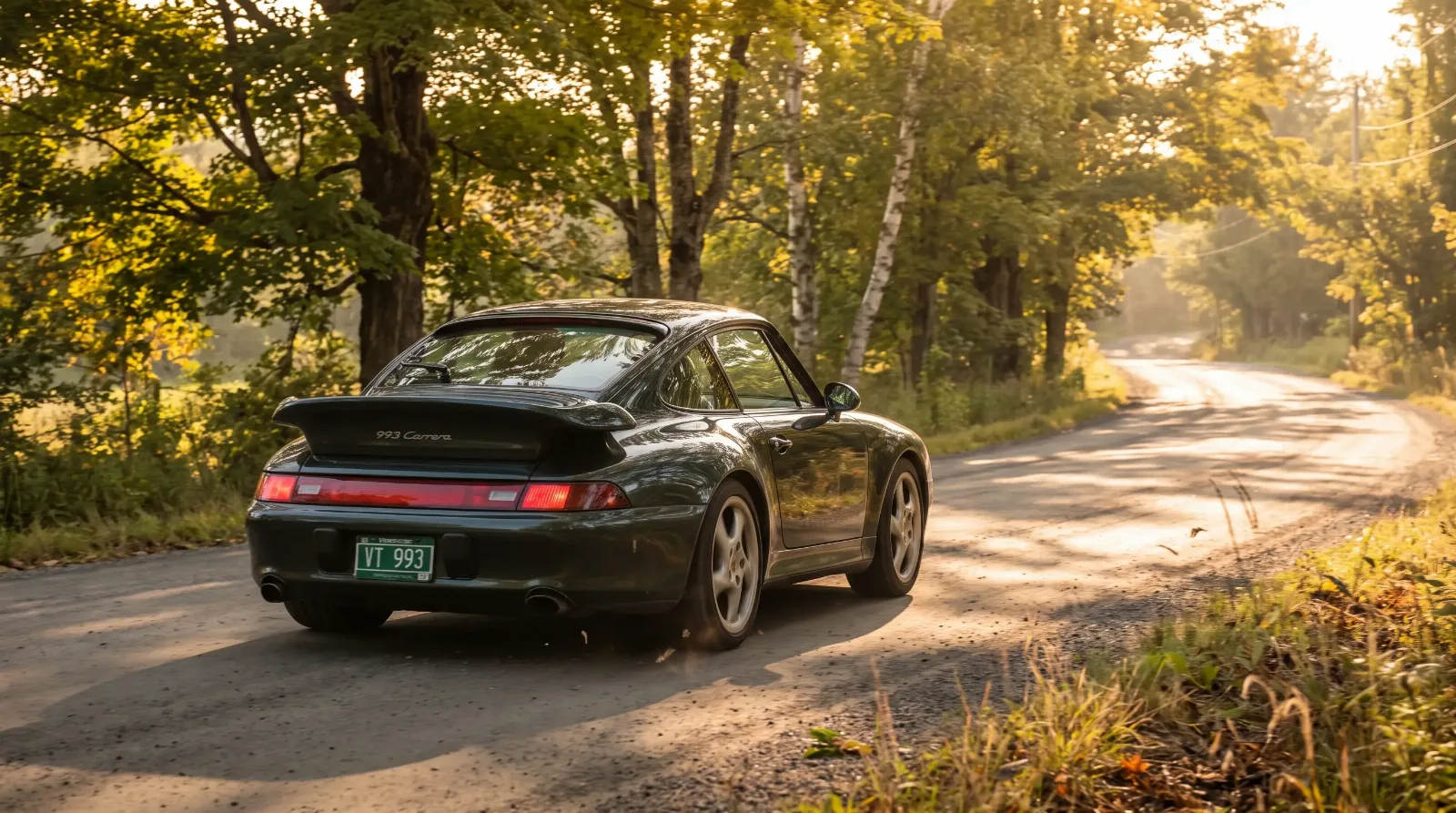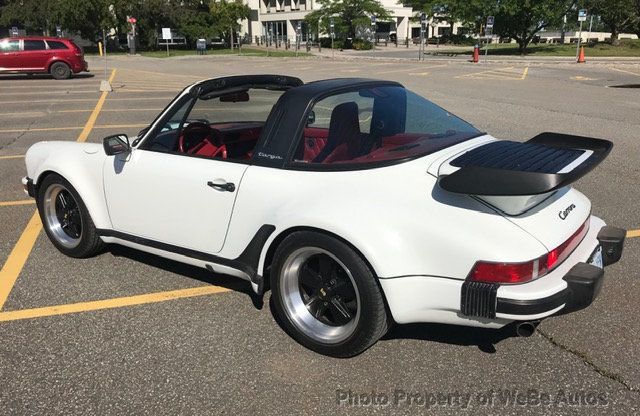
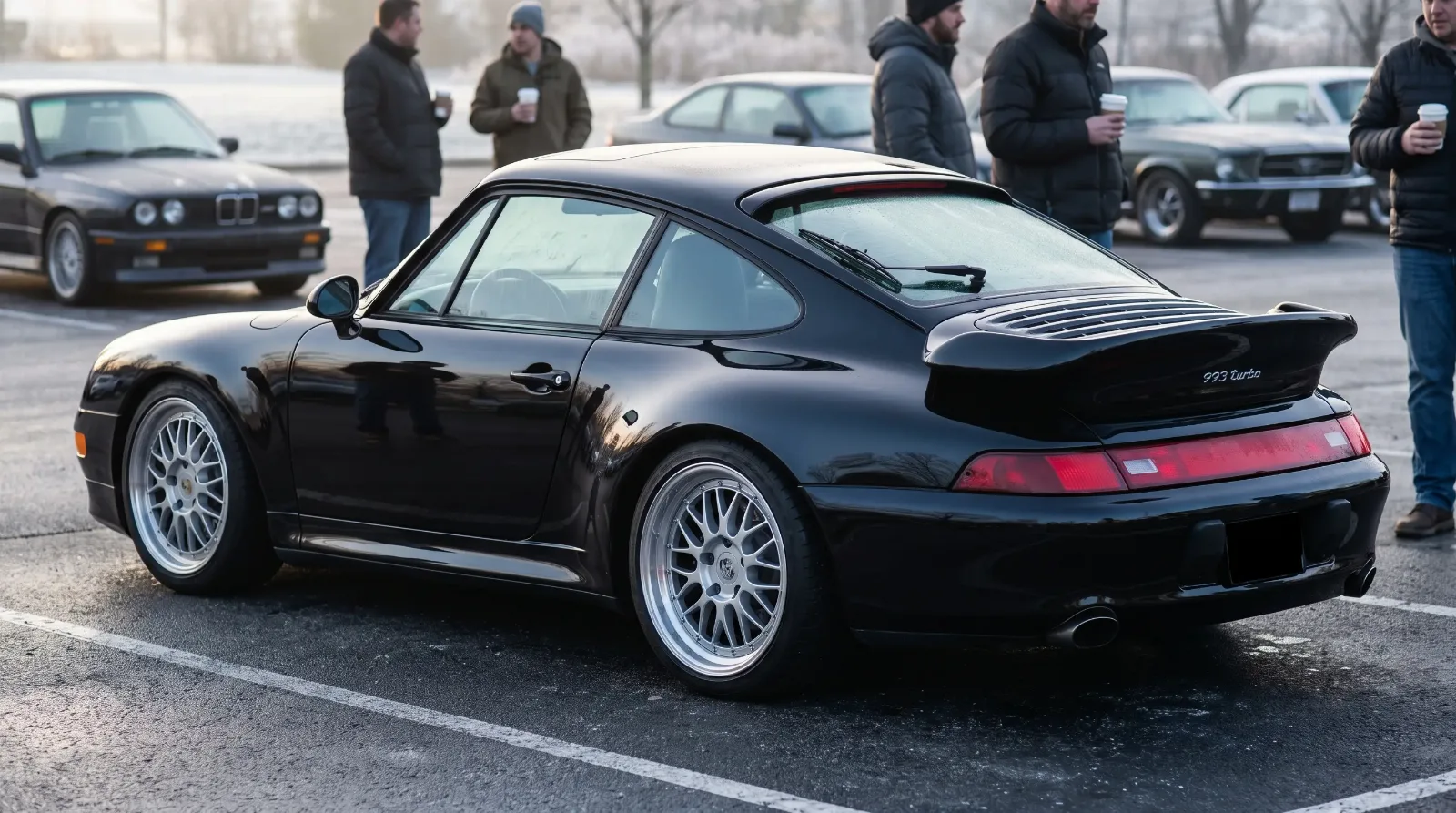
At a cars and coffee outside Nashville a few winters back, a man in a Titans jacket stood next to a black Porsche 993 Turbo for twenty minutes without saying a word to anyone, just running his hand along the rear wing like he was checking for a pulse. When I finally asked him about it, he laughed and said he'd waited eleven years to afford one, and that the wing alone had been worth the wait. That fixed rear wing, wide hips, and the low hard growl of a twin-turbo flat six are the whole reason the 993 Turbo still stops people cold at a parking lot full of newer, faster machinery.
The Porsche 993 Turbo arrived for the 1995 model year as the performance flagship of the last air-cooled 911 generation, and it changed the formula in ways that still ripple through every 911 built since. It was the first Turbo-badged 911 with all-wheel drive as standard equipment, and the first to run two turbochargers instead of one.
Why two turbos instead of one
Earlier turbocharged 911s, going back to the 930 of the late 1970s, ran a single large turbocharger that built boost slowly and then arrived all at once, a character quirk that collectors now describe fondly and that terrified plenty of period owners in the moment. The 993 Turbo's engineers split the job between two smaller turbochargers, one per bank of the 3.6 liter flat six, which spooled up faster and delivered power in a far more linear, predictable way. Output landed around 402 horsepower, a substantial jump over the previous generation's Turbo, and it arrived with none of the drama that had defined the earlier cars.
That shift, from a single big turbo that punished inattention to a pair of smaller ones that rewarded confidence, is really the story of how modern 911s learned to behave. It is also central to how the 911 became an icon rather than a car that only experts could drive well.
All-wheel drive changes the conversation
Putting power to all four wheels was not a small decision for Porsche. The rear-engine 911 had built its entire reputation, good and bad, on rear-wheel drive, and grafting a viscous-coupling all-wheel-drive system onto the Turbo meant admitting that raw power alone was no longer enough to keep the car manageable. It worked. The 993 Turbo could put its horsepower down in wet weather and cold pavement in a way none of its predecessors could, and that all-wheel-drive layout became the template for every 911 Turbo that followed.
The hollow-spoke wheels and the wider hips
Look at a 993 Turbo next to a standard Carrera from the same year and the difference is obvious before the engine ever fires. The Turbo's rear fenders flare noticeably wider to cover a beefier set of 18-inch hollow-spoke aluminum wheels, a design new to this car and the first of its kind on a production 911, both for brake cooling and for shaving unsprung weight. The fixed rear wing, which the man in the Titans jacket kept touching that morning, sits there for real aerodynamic reasons rather than just visual drama, generating downforce that keeps the car planted at the kind of speeds most owners will never actually reach on public roads.
Inside, Porsche kept the changes modest. The seats, dash layout, and switchgear carried over almost unchanged from the Carrera, which tells you something about where the company's attention went during development. This was an engineering exercise built around a drivetrain, not a luxury refresh built around a cabin.
The car that closed out an era
Production ran only through 1998, making the 993 Turbo the final air-cooled Turbo 911 before Porsche moved to water cooling with the 996 generation. That short window, combined with genuinely strong performance for its day and a shape that has aged better than almost anything else from the mid-1990s, is why prices for clean examples have only moved in one direction. A well-sorted 993 Turbo with documented maintenance and no accident history now commands a serious premium over a standard Carrera from the same years, and the gap keeps widening as fewer honest cars come up for sale.
| Spec | Porsche 993 Turbo |
|---|---|
| Engine | 3.6L twin-turbocharged flat six |
| Drivetrain | All-wheel drive, standard |
| Output | 402 hp |
| Production years | 1995-1998 |
| Notable firsts | First AWD 911 Turbo, first twin-turbo 911 |
Anyone chasing one of these should go in with clear eyes about the market, and the used listings tell their own story about where prices sit today; a search through classic 911s for sale will show just how few clean 993 Turbos surface in a given year.
Standing next to it in the parking lot
What struck me most about the man in the Titans jacket was that he never once mentioned the horsepower number. He talked about the sound of the wastegates on deceleration, the way the wing sat exactly level with the roofline, the particular shade of black the paint turned in low winter light. That is the real legacy of the 993 Turbo, not the spec sheet but the fact that people who own one tend to talk about it the way they'd talk about an old friend rather than a machine.
"The single-turbo cars taught you respect. The 993 Turbo is the first one that let you trust it, and that trust is why people still cross state lines to buy a clean one."
— Patrick Walsh
If this is your first stop into the 993 story, it is worth continuing; there is more ground to cover if you keep reading the series, and the full arc of the marque sits within our Porsche retrospective. The Nashville lot has thinned out since that winter morning, but I still think about that man's hand on the wing every time one rolls past.