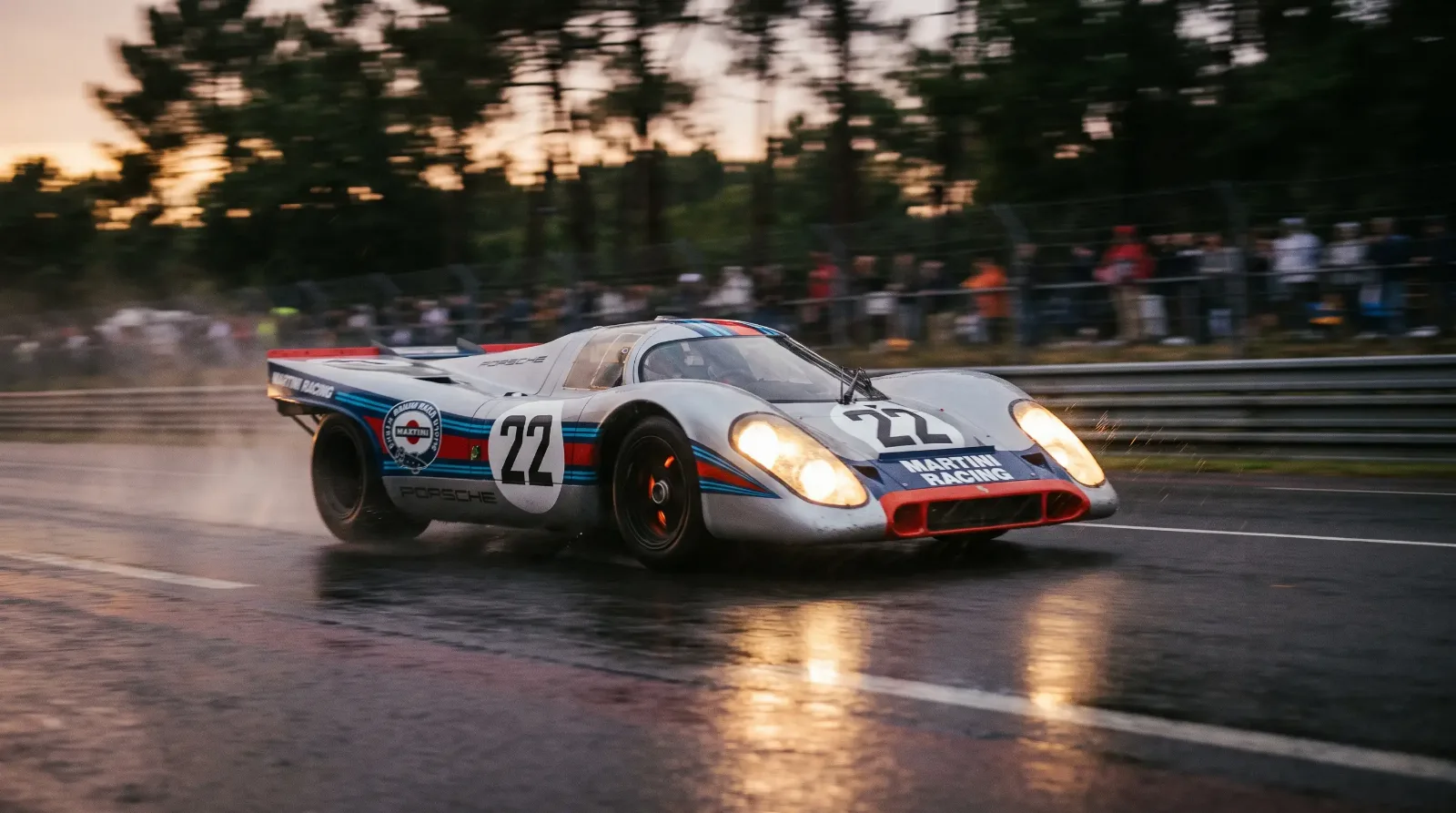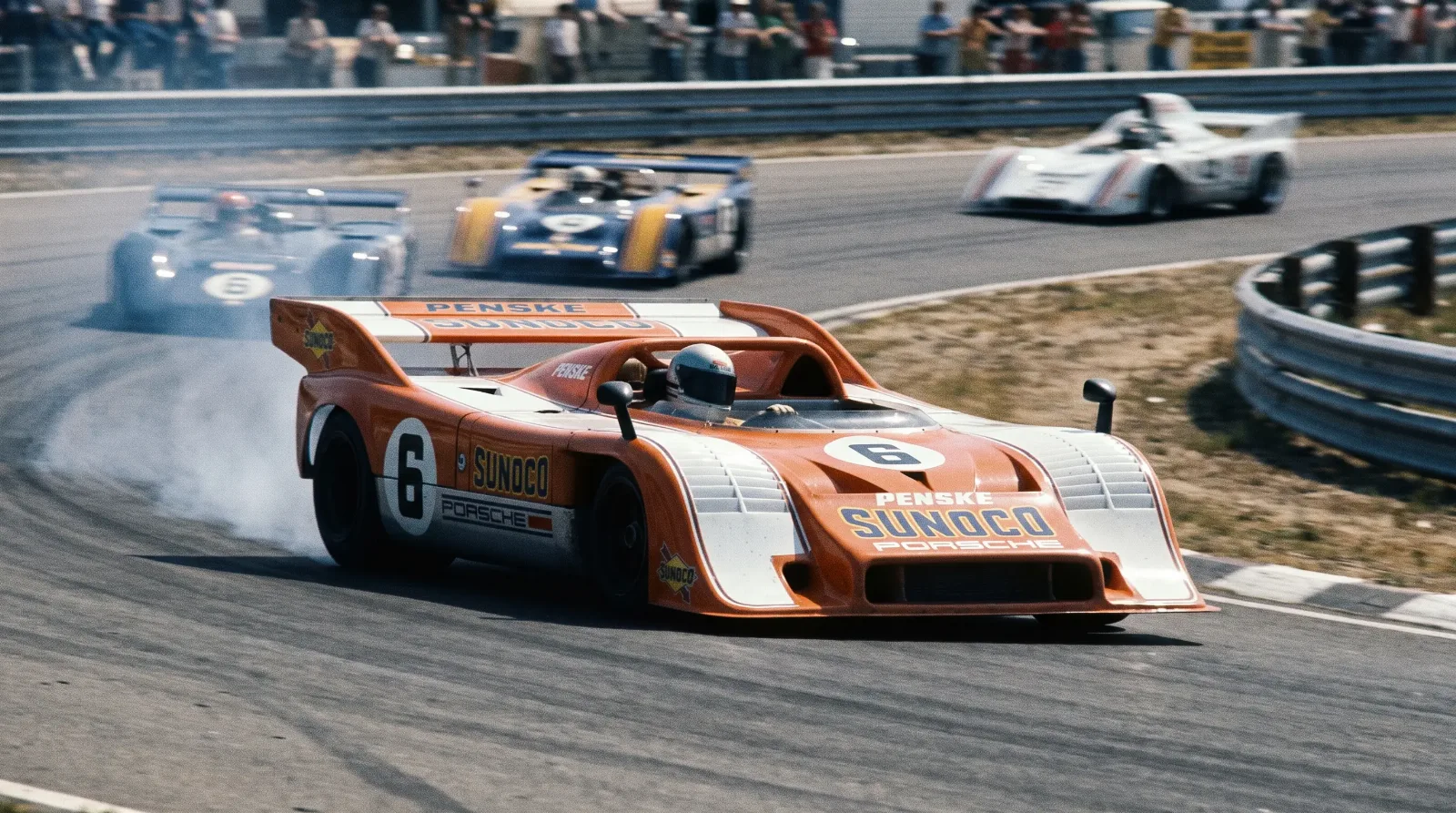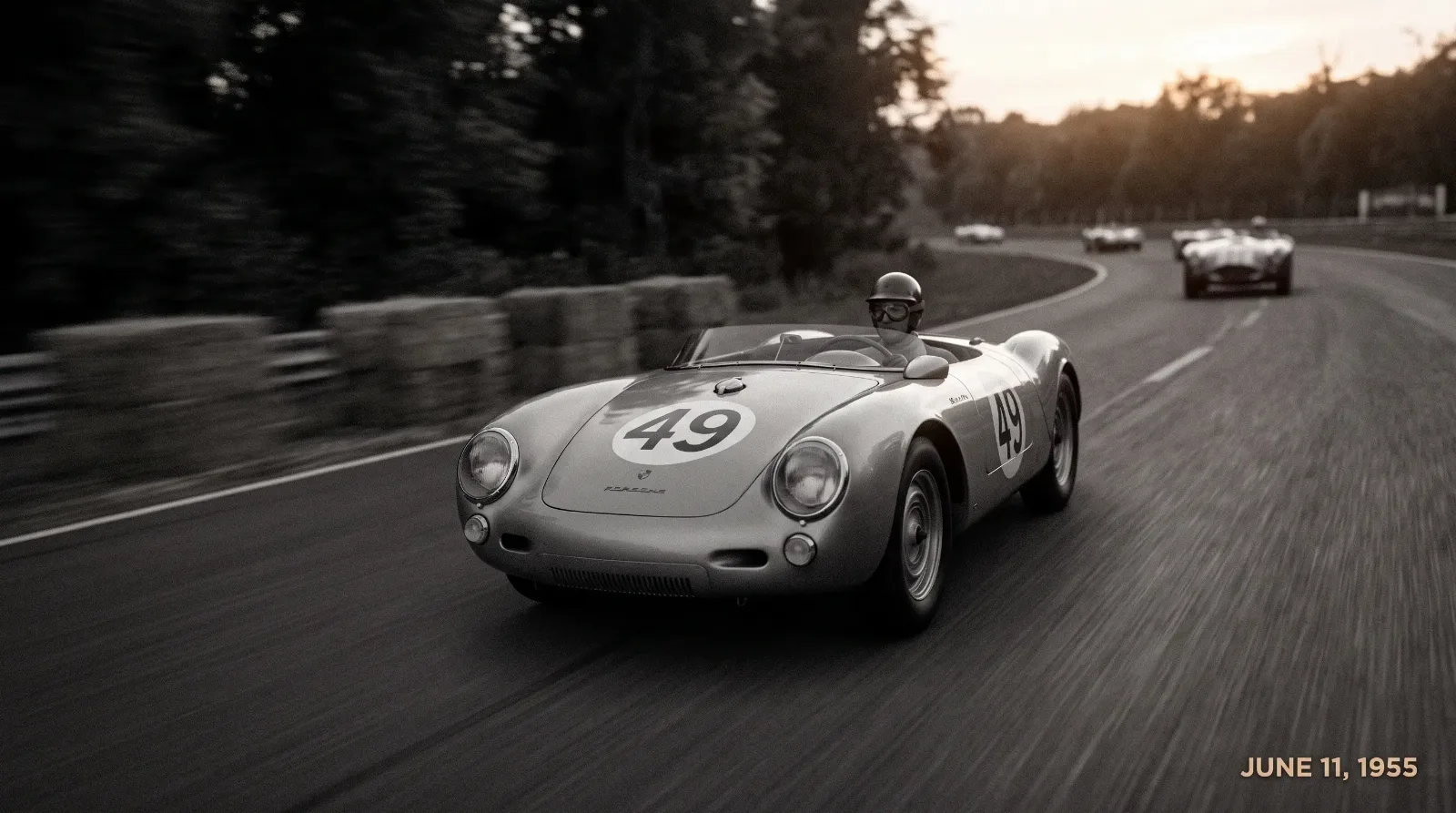
In June 1970, Steve McQueen showed up at the Circuit de la Sarthe not as an actor but as a driver, filming background plates for a movie that didn't have a finished script, a confirmed studio, or, for long stretches, a plan. The Porsche 917 he would eventually be filmed driving became one of the most recognizable race cars in American popular culture, and the movie he made, simply titled Le Mans, is still argued about by racing fans and film critics for entirely different reasons.
McQueen wasn't cosplaying at motorsport. He had finished second overall at the 1970 12 Hours of Sebring driving a Porsche 908 with a broken foot in a cast, an injury from a motorcycle accident weeks earlier that he refused to let slow him down. He wanted Le Mans to be the definitive racing film, shot with real cars at real speed, no rear-projection trickery, no stand-ins pretending to hold a wheel. That ambition is exactly what nearly sank the production, and it's exactly what makes the finished film worth revisiting more than fifty years later.
A production built on real speed
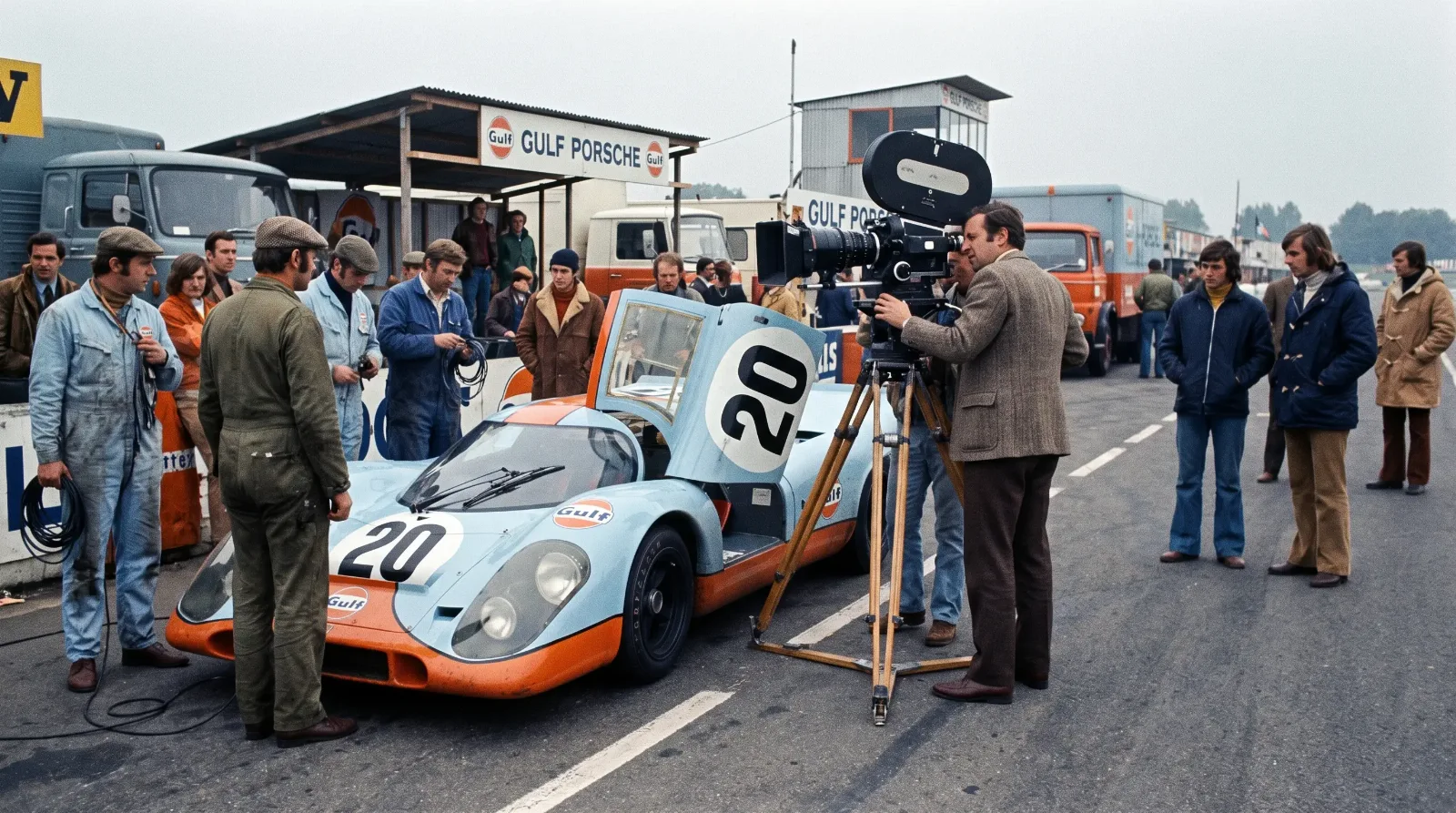
Solar Productions, McQueen's own company, secured cars and cooperation that no ordinary film crew could have arranged. Porsche loaned genuine 917 and 908 chassis, several of them recently retired from actual Le Mans and Can-Am competition, alongside Ferrari 512s brought in to recreate the rivalry that had defined 1970s sports car racing. The production filmed actual practice and race sessions at the 1970 24 Hours of Le Mans to use as background footage, then shot additional high-speed runs on the closed circuit afterward with McQueen and professional racing drivers behind the wheel of the same 917s that had competed days earlier.
That commitment to authenticity came at a cost that had nothing to do with money at first. During filming, veteran British driver David Piper, brought in as a stunt and camera-car driver, crashed a 917 at high speed and suffered injuries serious enough that part of his right leg was later amputated. It remains one of the most sobering reminders of what was actually being risked to get footage that looked real, because it was real.
The production nearly collapsed
Behind the scenes, Le Mans was in genuine trouble. There was no finished script when filming began, an approach McQueen defended as letting the racing tell the story, but one that alarmed the studio, Cinema Center Films, as costs climbed and a clear narrative failed to materialize. Partway through production, McQueen was removed from creative control of his own project. Director John Sturges, who had worked with McQueen on The Great Escape, left the production over creative disagreements, and Lee H. Katzin was brought in to finish the film with a more conventional plot bolted around the racing footage already shot. McQueen's marriage strained under the production's demands, and Solar Productions absorbed financial losses that took years to recover from.
A commercial flop that became essential viewing
When Le Mans was released in 1971, critics and audiences were lukewarm. The plot was thin by design, dialogue was sparse, and general moviegoers found the pacing, built around long stretches of racing with minimal exposition, difficult to connect with emotionally. It underperformed at the box office relative to its cost, and for years it was regarded inside the industry as a cautionary tale about a star letting personal obsession override commercial storytelling.
Time has been considerably kinder. Among racing enthusiasts and car collectors, Le Mans is treated less as a conventional film and more as a document, the closest thing available to sitting in the cockpit of a factory 917 at full speed on the Mulsanne in period. The Gulf-liveried 917K that McQueen drove in the film's most famous sequences has become one of the most reproduced images in motorsport culture, appearing on posters, model kits, and countless restorations that chase that specific look. The film gave Porsche's racing legend a permanent foothold in mainstream culture well beyond the paddock, in a way that no factory marketing campaign of the era managed on its own.
| Detail | Fact |
|---|---|
| Release year | 1971 |
| Production company | Solar Productions (McQueen's company) |
| Primary cars used | Porsche 917, Porsche 908, Ferrari 512 |
| Filming location | Circuit de la Sarthe, France |
| Notable incident | David Piper injured in 917 crash during filming |
Why it still matters to collectors
Ask anyone who restores or campaigns a period 917 today what drew them to the marque in the first place, and the film comes up more often than any race result. It didn't just document Porsche's era of dominance, it made an entire generation of future collectors fall in love with the shape of the car, the sound of the flat-twelve, and the specific danger of that period of endurance racing. For a broader account of how that whole chapter of the marque came together, the classic Porsche story traces the wider arc, and if the American road racing scene of the same period is more your interest, a companion piece covers the earlier car that first put Porsche on that map.
"There's a difference between a movie about racing and a movie that is racing. McQueen chased the second thing so hard it nearly ruined him, and fifty years on that's exactly why the footage still holds up when the plot doesn't."
— Patrick Walsh
If watching the film sends you looking for the real thing, the market for cars from this exact era is very much alive, and classic Porsches for sale today still trade on the reputation this one movie helped build.
What the footage actually preserved
Set aside the plot entirely and Le Mans functions as something closer to an archive than entertainment. The cars in front of the camera were genuine competition machines, several with real race history already on their chassis plates, filmed at speeds a studio insurance policy would never approve today. Engine notes, gear changes, the way a 917 unsettles slightly under braking into the Mulsanne corner, all of it is unfiltered. Modern racing films lean on digital effects and speed-ramped edits to fake a sense of danger. McQueen's production had no such option available in 1970, so what audiences see on screen is simply what happened when these specific cars were driven this hard on this circuit, which is precisely why restorers and historians keep returning to it as reference material rather than nostalgia.