
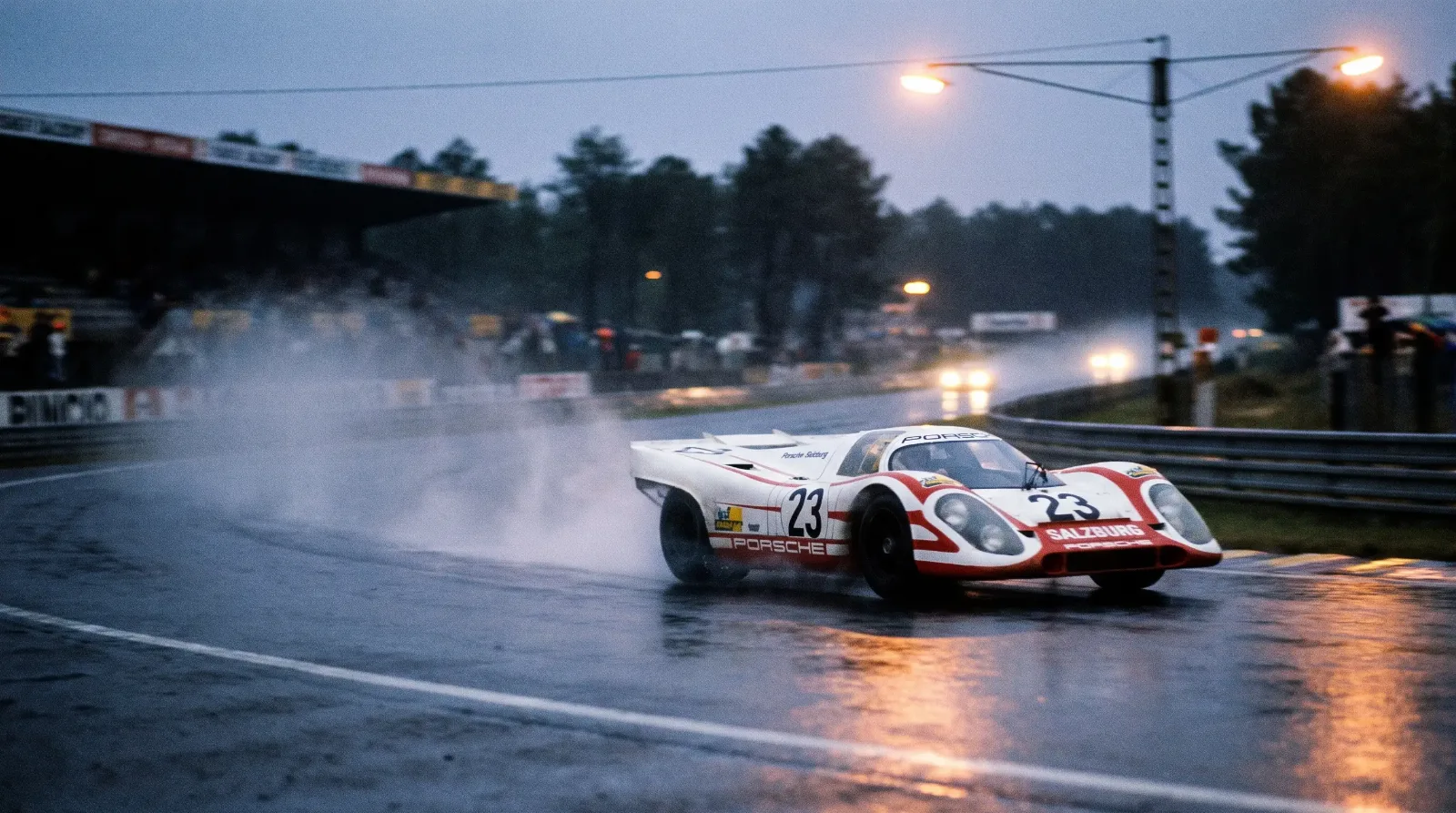
On the morning of June 14, 1970, a mechanic in the Porsche pit at Le Mans reportedly could not watch the last hour. Twenty-one years of trying, of showing up with small cars and clever engineering and coming home with class wins and heartbreak, all of it hung on a red-and-white coupe driven by Hans Herrmann and Richard Attwood. When the flag fell and the Porsche 917 crossed the line first overall, the marque that had always been the plucky underdog of the Sarthe became, in a single wet afternoon, the thing it had chased for a generation. That car did more than win a race. It rewrote what people expected a Porsche to be.
Car Features
10 min read
Porsche's Racing Legend: 917, 935 & the Le Mans Years
How the Porsche 917 finally won Le Mans in 1970, and how the 935, 956 and 962 turned motorsport glory into the road-car legend collectors chase today.
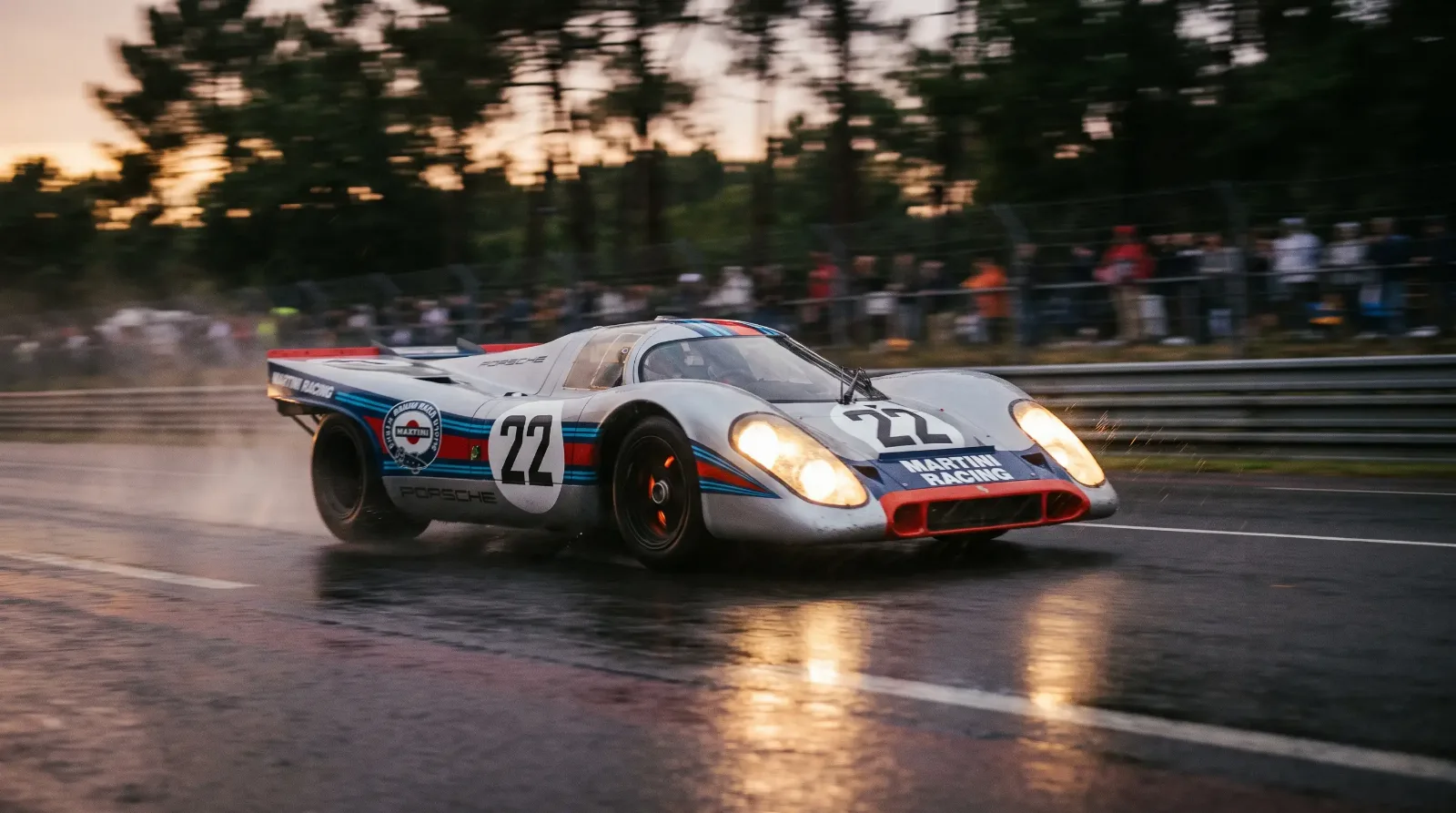
The story of Porsche's racing legend is really the story of how a company that built modest flat-four sports cars talked itself into building a 240-mph monster, nearly killed a few of its own drivers doing it, and then spent the next two decades turning that hard-won knowledge into the road cars enthusiasts still argue about today. It runs from the 917 through the outrageous 935 to the Group C machines that owned the 1980s. If you want the wider arc, from Gmund aluminum coupes to the water-cooled era, read the complete Porsche history. This is the part where Porsche learned to win.
The 917 and the loophole that changed everything
The 917 exists because Porsche read the rulebook more carefully than anyone else. For 1968, the FIA capped prototype engines at 3.0 liters but left a door open for 5.0-liter sports cars, provided a manufacturer built 25 identical examples. Ferrari assumed nobody would spend the money to homologate a 5-liter car for such a small series. Ferdinand Piech, Porsche's engineering chief and a man not known for reasonable ambitions, decided Porsche would.
In early 1969 the factory rolled out 25 finished 917s for the inspectors to count, an enormous gamble for a company Porsche's size. The car used a 4.5-liter air-cooled flat-twelve, essentially two flat-sixes sharing a crankcase, making around 520 hp in its first form. The chassis was a spidery aluminum tube frame so light the whole car weighed roughly 800 kg. It was also, in its original long-tail bodywork, genuinely frightening. Drivers reported the tail wandering at speed on the Mulsanne Straight, and the 1969 season was fast but unstable.
The fix came from an unlikely place. Late in 1969 the John Wyer team, working with Porsche engineers at a test session, cobbled together a shorter, upswept tail out of aluminum sheet and duct tape, chasing downforce instead of top speed. The car stuck. That short-tail 917K (K for Kurzheck, short tail) is the shape most people picture when they hear porsche 917, and it turned a dangerous prototype into a winner.
Le Mans 1970 and 1971, finally
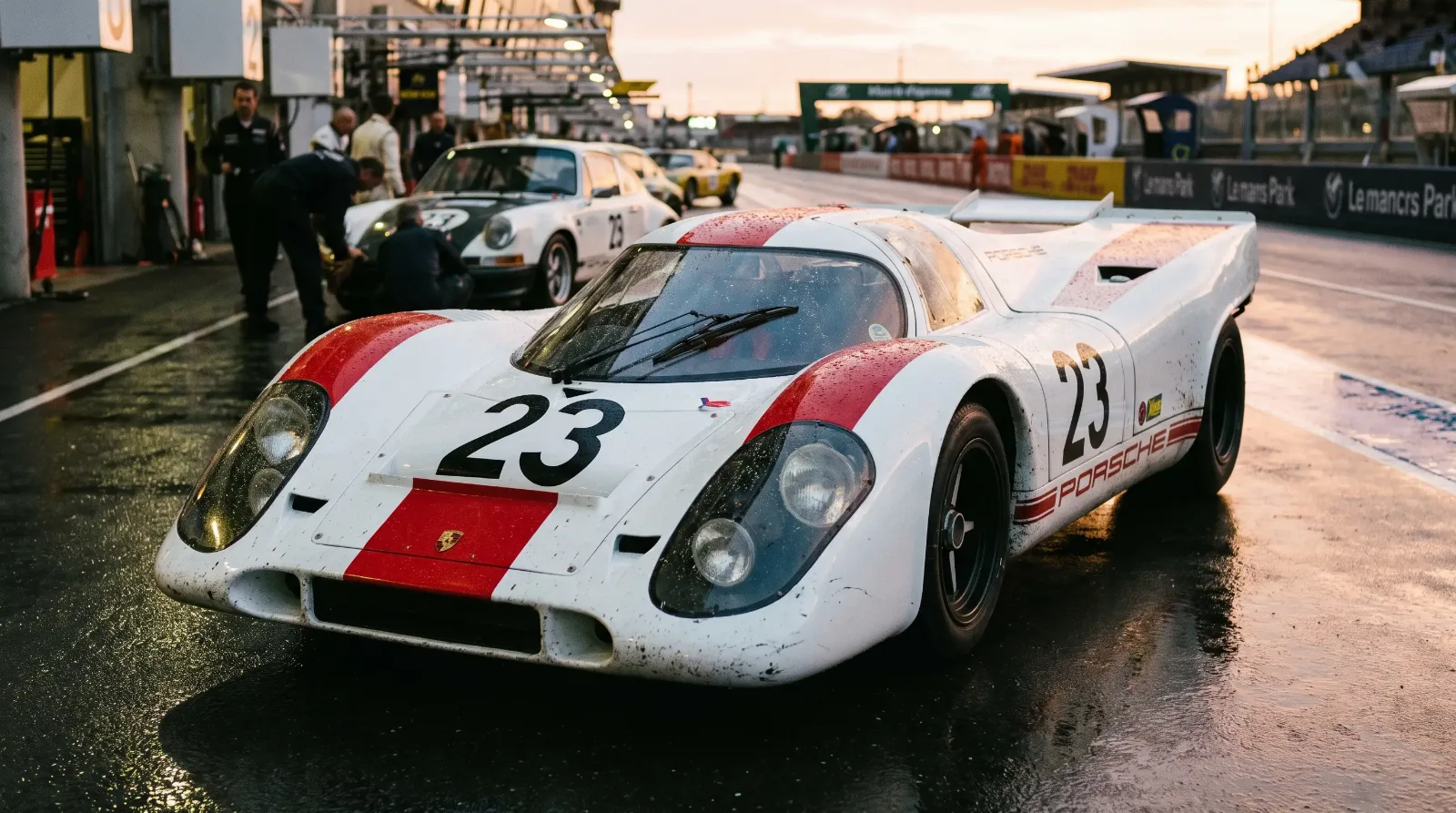
The 1970 win by Herrmann and Attwood in the Porsche Salzburg car, wearing that red-and-white livery, was the breakthrough, but it was a brutal race. Rain fell for much of the 24 hours and only seven cars finished. Porsche took first and second, the second car a long-tail 917 in the psychedelic green-and-purple hippie livery run by Martini Racing. For a factory that had never won overall, taking the top two steps at once was the kind of statement that reorders a sport.
They did it again in 1971. Helmut Marko and Gijs van Lennep won in a magnesium-framed 917K, and that car set a distance record of 5,335 km that stood for decades because the rules changed the following year. Their average speed was over 138 mph for a full day and night on public-road-derived circuits, a number that still reads like a typo. The 5-liter sports cars were banned for 1972, and just like that the 917's era at Le Mans was over after only two wins. Two was enough.
"Every marque has a car it was building toward without knowing it. For Porsche, the 917 was that car, the moment the engineering finally caught up to the ambition, and everything since has been a conversation with it."
Patrick Walsh
Gulf and Martini, the liveries that outlived the cars
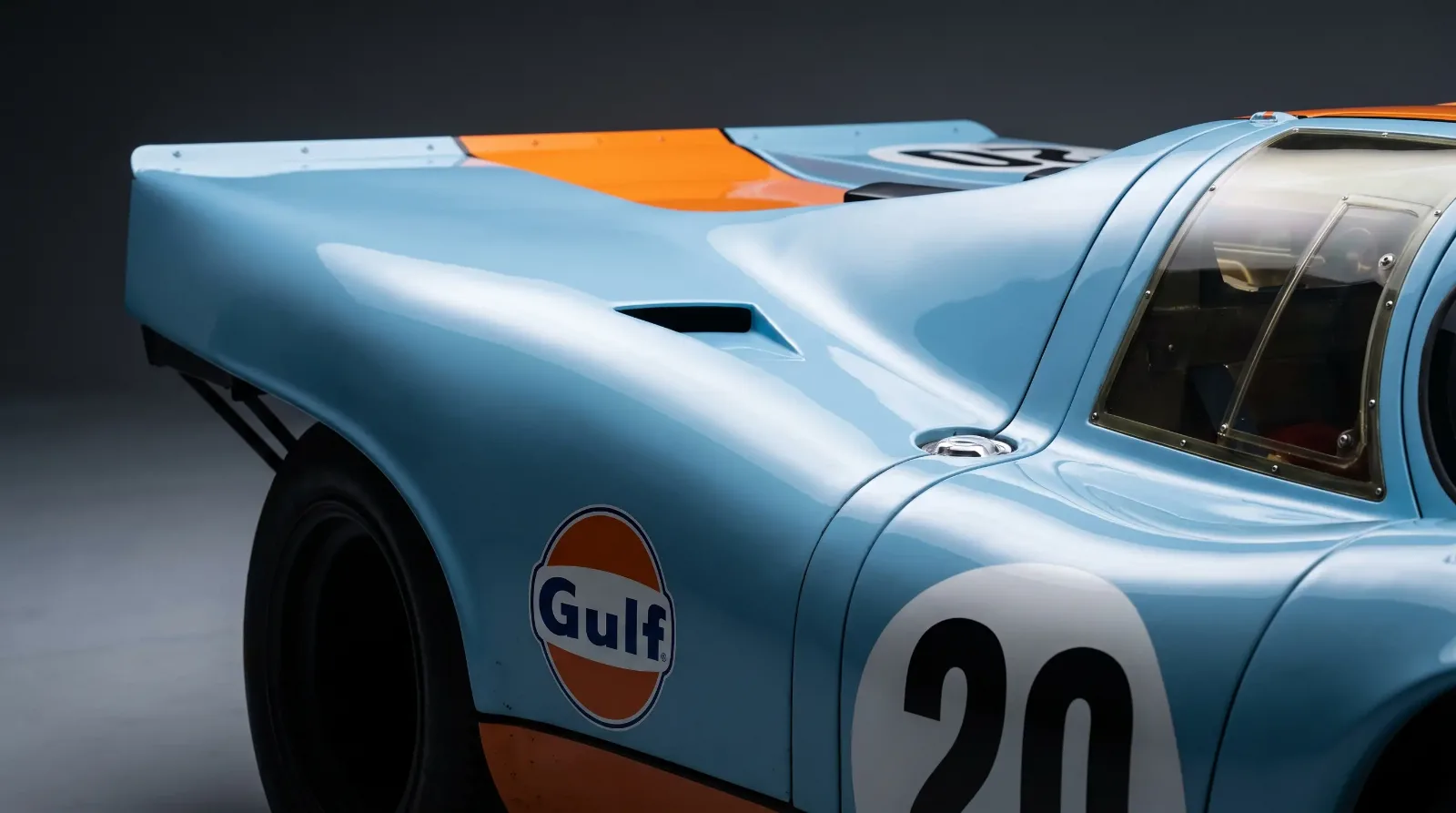
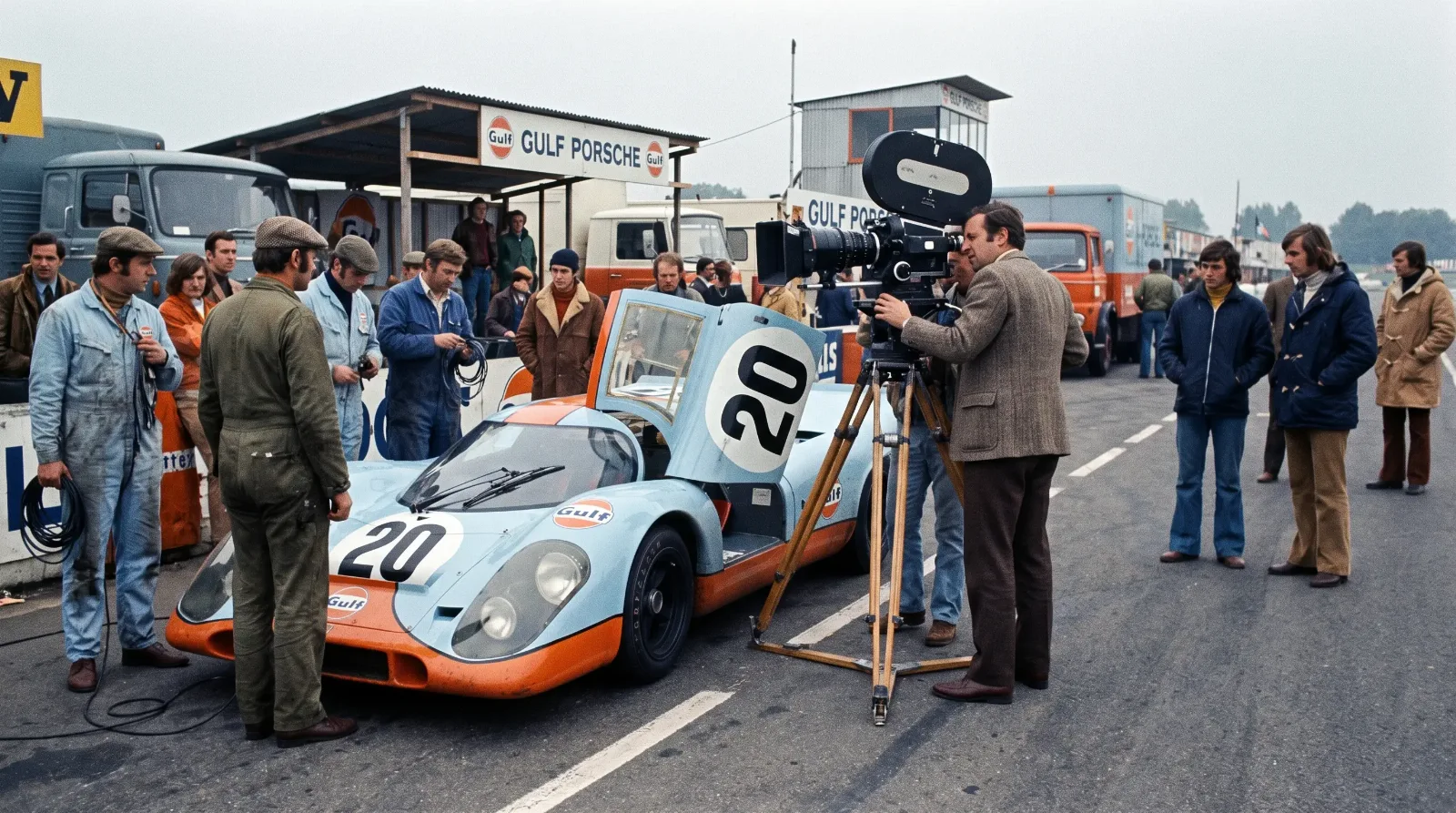
Part of why the 917 lodged so deeply in the culture is that it looked incredible standing still. The powder-blue-and-orange Gulf scheme worn by the John Wyer cars is arguably the most recognized racing livery ever painted, and it owes a good deal of its fame to Steve McQueen, who parked a Gulf 917 at the center of his 1971 film Le Mans. McQueen wanted to actually race one; the insurers said no, but the movie put the car in front of millions who would never see the Sarthe in person.
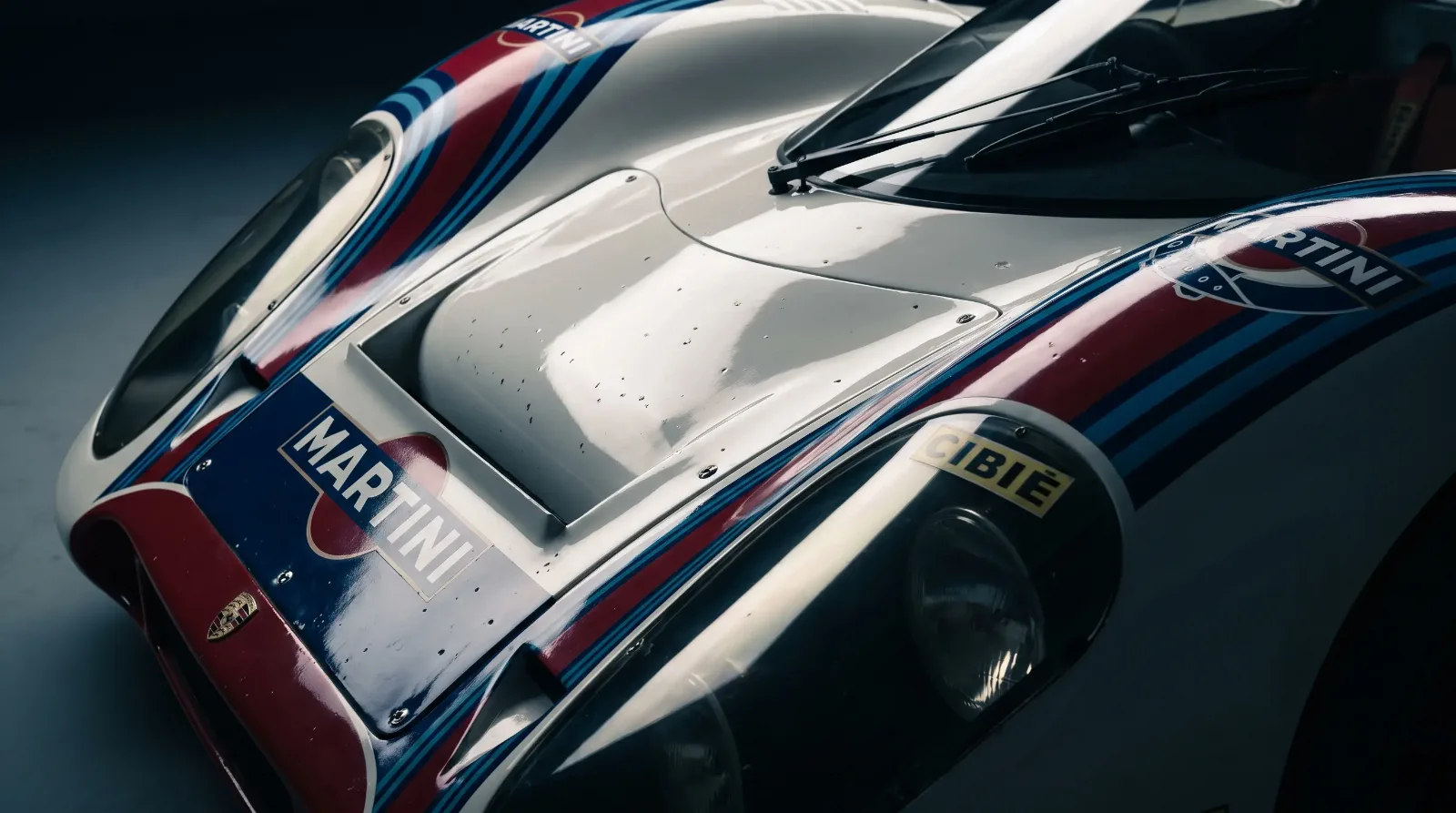
Martini Racing's silver cars with the red-and-blue stripe came a little later and carried Porsche through the mid-1970s. The liveries mattered because they gave the machinery a personality that ordinary people could latch onto. A kid with a poster on the wall did not need to know what a Kurzheck tail did. He knew the blue-and-orange one was fast, and that was enough to sell him a 911 fifteen years later.
Moby Dick and the 935, turbocharging goes to sea
When the sports-prototype rules closed, Porsche did not retreat. It went to the production-based Group 5 category and built the 935, a 911 turned into a fire-breathing silhouette racer. The early 935s already looked wild, but the version that lives in legend is the 1978 935/78, nicknamed Moby Dick for its long white whale of a tail and its enormous size. Its 3.2-liter twin-turbo flat-six made around 750 hp in its Le Mans tune, and at Le Mans that year it hit something close to 227 mph on Mulsanne.
The 935 mattered as much for who drove it as for what it did. Porsche sold customer versions, and privateer teams ran them for years, most famously the 1979 Le Mans win by the Kremer brothers' 935 K3 in a race where the works prototypes fell apart. The 935 was proof that Porsche's racing knowledge was becoming a product line of its own. You did not have to be the factory to buy a piece of the legend, you just had to write a big check and be brave.
Group C, the 956 and 962 dynasty
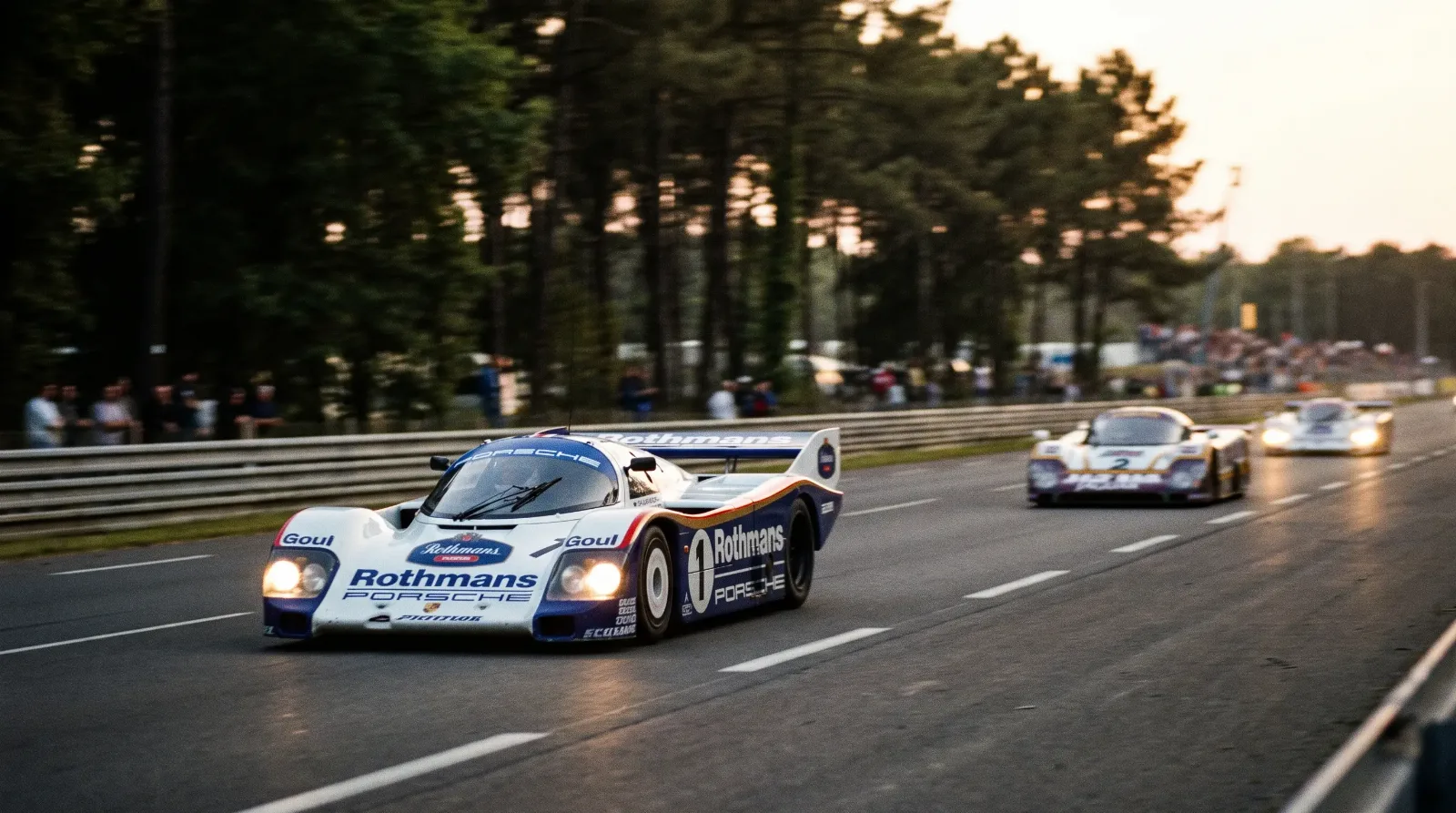
If the 917 announced Porsche's arrival, the 956 and 962 turned winning into routine. Group C launched in 1982 with a fuel-efficiency formula that rewarded engineering discipline, exactly the kind of problem Porsche liked. The 956 introduced a proper aluminum monocoque and ground-effect aerodynamics, and it won Le Mans on debut in 1982, then again, and again. In 1983 Porsche 956s filled the top places at Le Mans, a clean sweep of the podium and then some.
The 962, a longer-wheelbase evolution built partly to satisfy American IMSA safety rules that wanted the driver's feet behind the front axle, became one of the most successful racing cars of all time. Factory and customer 956/962s racked up Le Mans wins through the mid and late 1980s, with the type winning overall from 1982 clear through 1987 and privateers keeping them competitive into the 1990s. The turbocharged flat-six at the heart of these cars was a direct descendant of the 911's engine, which is the whole point of what follows.
How the track built the road car
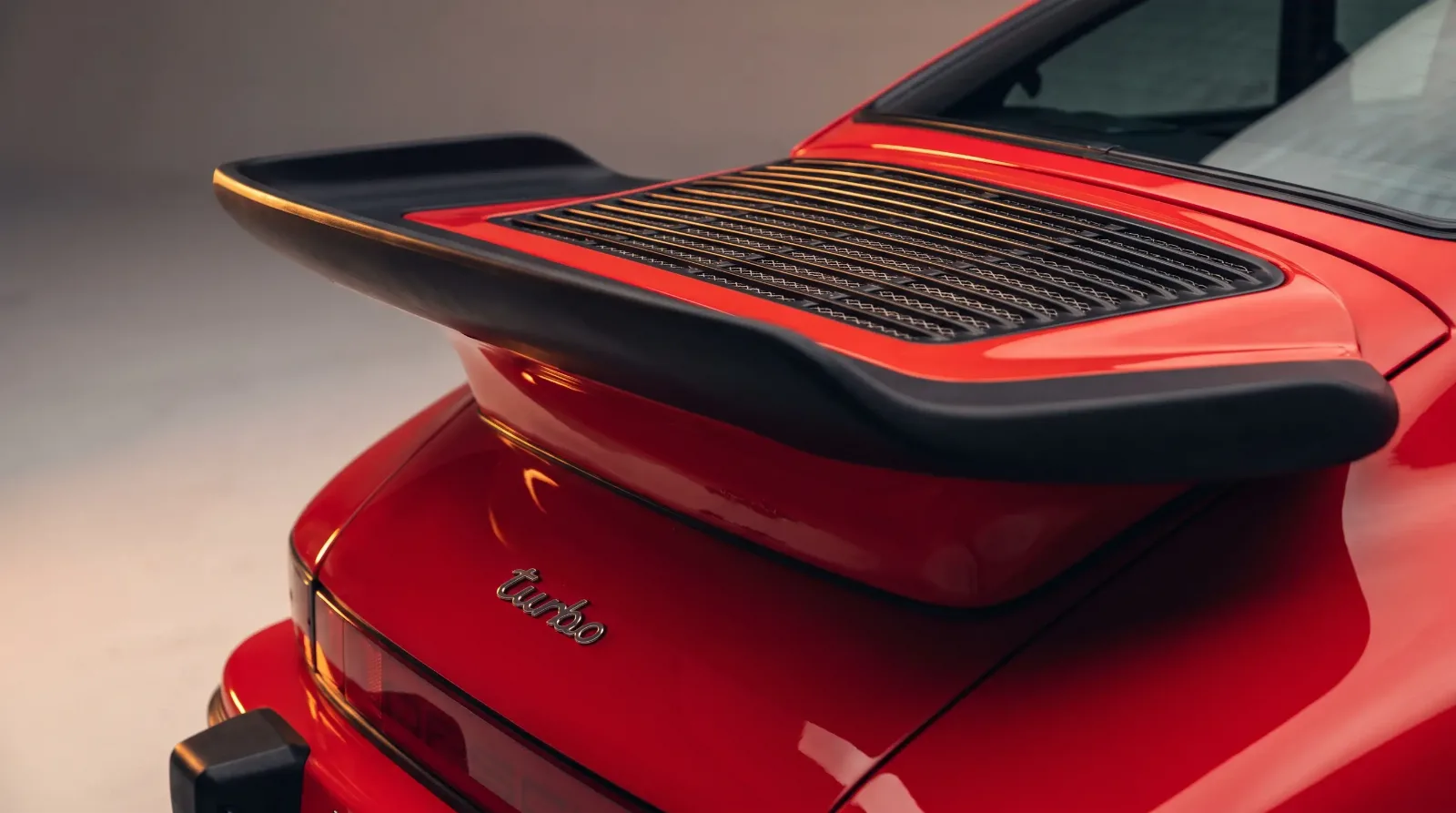
Here is the part that matters if you will never own a 917. Everything Porsche learned killing itself at Le Mans came home. Turbocharging, sorted out under the pressure of the 917/30 and the 935, produced the 911 Turbo of 1975, a car that put racing boost under a license plate. The relentless work on the air-cooled flat-six, revving it hard and keeping it alive for 24 hours, is why air-cooled 911s earned their reputation for durability. Even the aero lessons trickled down into whale tails and front spoilers that owners now treat as sacred.
The road-car legend and the racing legend are not two stories, they are one story told at different speeds. A collector shopping the classic 911 market today is buying, whether they know it or not, a receipt for two decades of prize money and hospital visits. If you are chasing that lineage yourself, browse the current classic Porsches for sale and notice how often the desirable ones trace straight back to a race the factory needed to win.
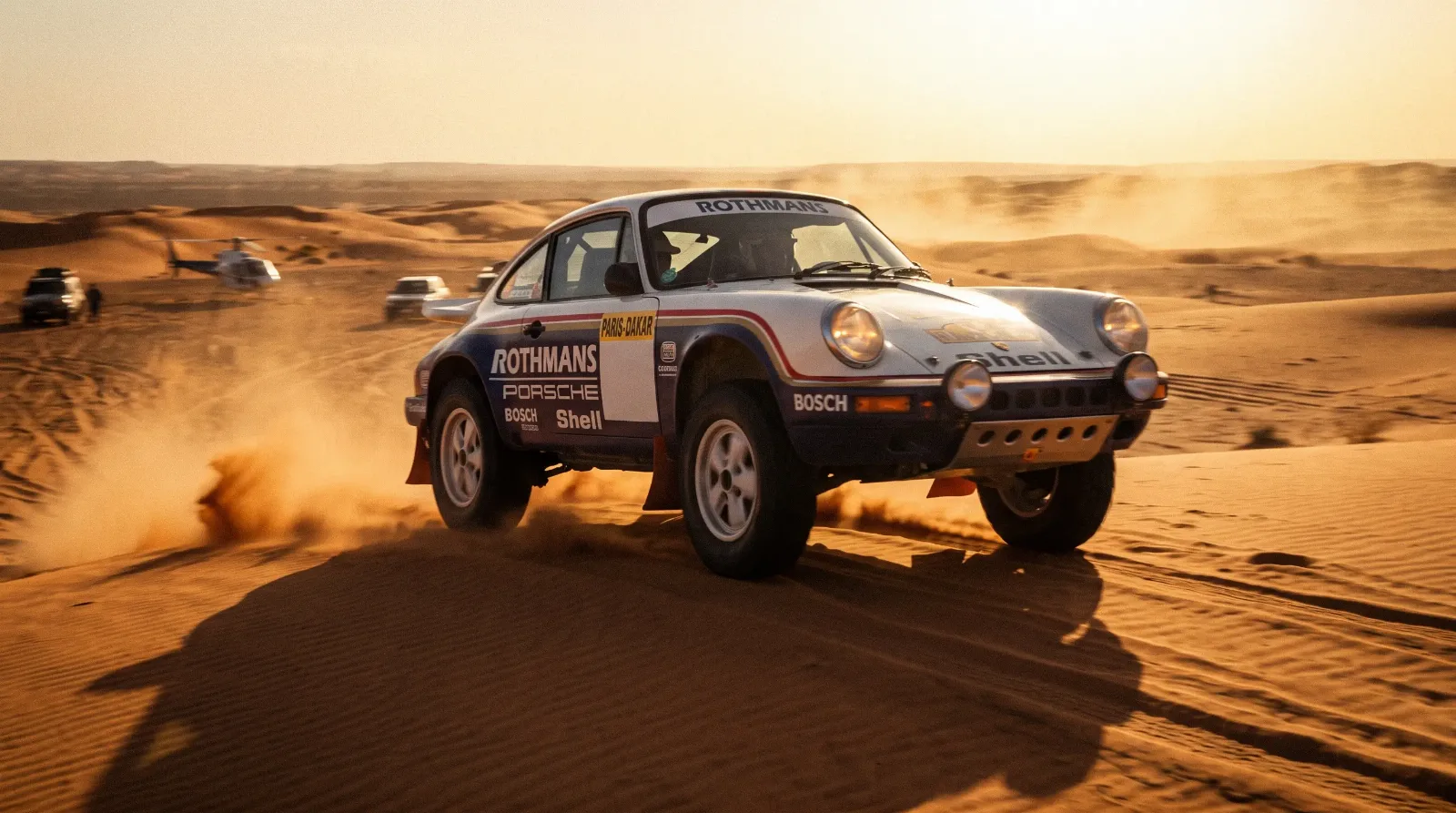
The 917 also opened a door that Porsche kept walking through. The company's willingness to build an outrageous halo machine and then justify it with real engineering shows up again decades later, which is why the 959 is another Porsche worth knowing if you care how the racing mindset produced the road cars people covet. From a taped-together tail at a test session to a supercar built to conquer a rally, it is all the same instinct: read the rules, find the edge, and build the thing nobody else was brave enough to attempt.
What the racing years are worth now
The competition cars themselves live in a rarefied air. Genuine 917s trade privately in the tens of millions when they surface at all, and the most storied chassis, the Le Mans winners and the McQueen film cars, are effectively priceless museum pieces. A 935 with real history is a seven-figure car, and even 962s, of which many more were built, command strong money because they are still eligible and thrilling to run in historic racing. These are not investments in the ordinary sense. They are artifacts.
For the rest of us, the legacy is more affordable and arguably more fun. The turbocharged and air-cooled road cars that inherited this DNA remain usable, ownable, and appreciating. The 917 taught Porsche how to win, the 935 taught it how to sell winning to customers, and the 956 and 962 taught it how to win without drama. Three lessons, one flat-six bloodline, and a company that never again had to pretend it was the underdog.
| Model | Years | Engine | Approx. Power | Signature Result |
|---|---|---|---|---|
| 917 K | 1969 to 1971 | 4.5 to 5.0L air-cooled flat-12 | 580 hp | Le Mans overall wins 1970 & 1971 |
| 917/30 Can-Am | 1973 | 5.4L twin-turbo flat-12 | 1,100+ hp race trim | Dominant Can-Am champion |
| 935/78 "Moby Dick" | 1978 | 3.2L twin-turbo flat-6 | 750 hp | ~227 mph at Le Mans |
| 956 | 1982 to 1984 | 2.6L twin-turbo flat-6 | 620 hp | Le Mans debut win 1982, 1983 podium sweep |
| 962 | 1984 to 1991 | 2.6 to 3.0L twin-turbo flat-6 | 680 hp | Multiple Le Mans wins, IMSA dominance |
Stand next to any of them and the family resemblance is obvious. The 917 started as a loophole and a leap of faith, and it ended as the reason a Porsche badge on a race car meant something the whole world had to take seriously. Everything after was just Porsche keeping the promise that wet June morning made.
Sources and notes
Related Reading
Article
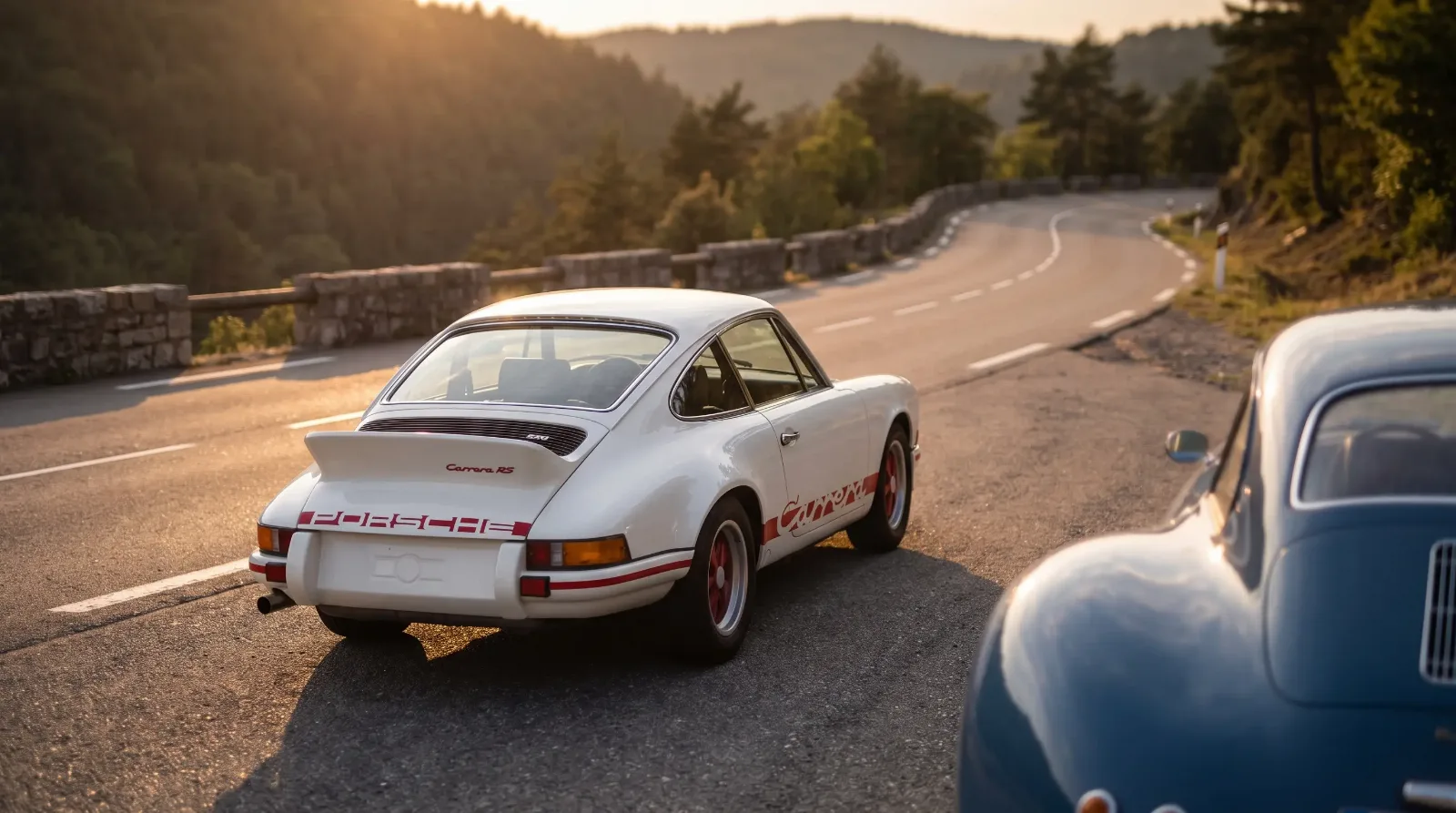
The Classic Porsche Story: From 356 to the Air-Cooled Icons
Article
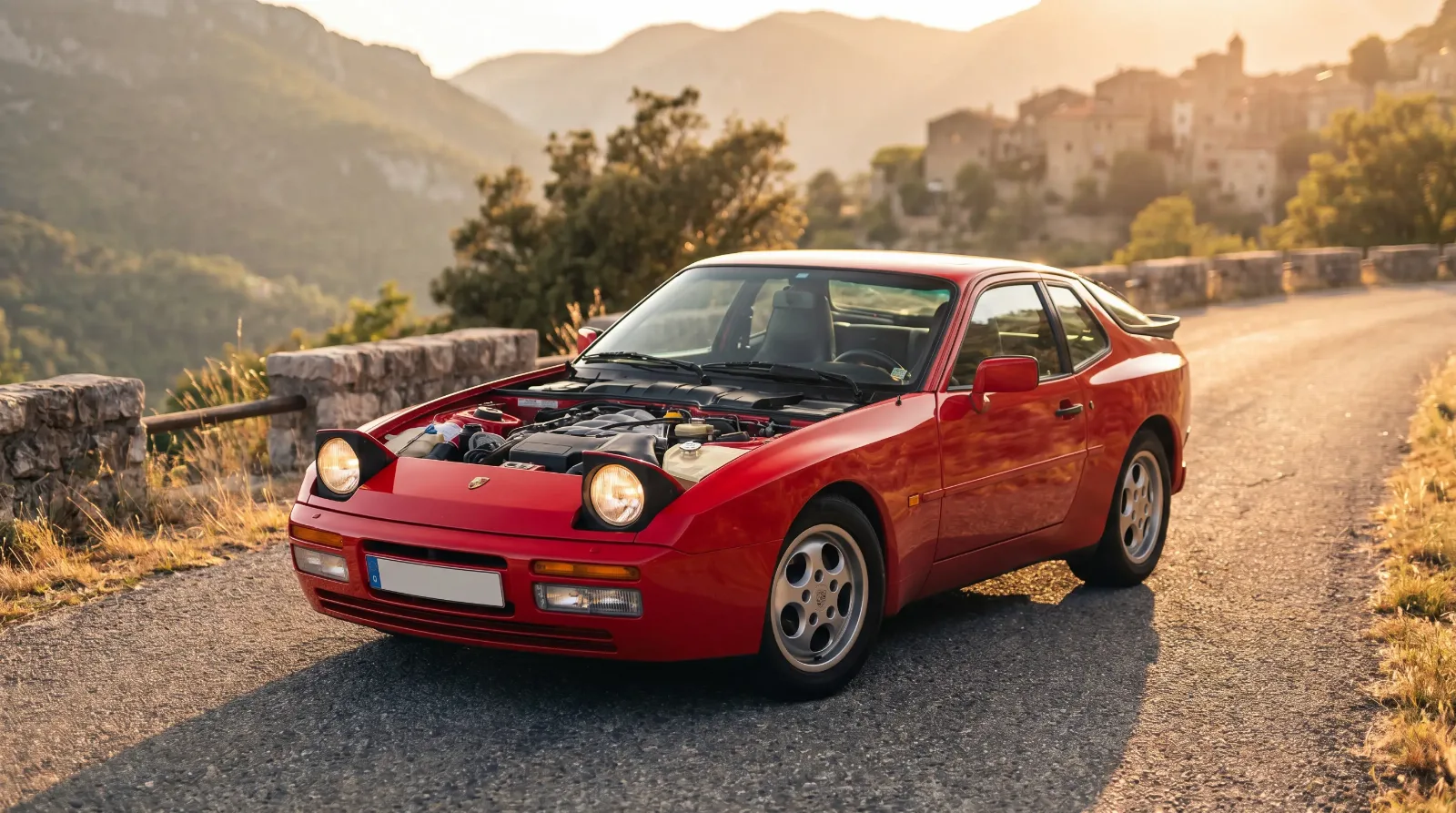
Porsche 944 & the Transaxle Heretics (924·944·968)
Article
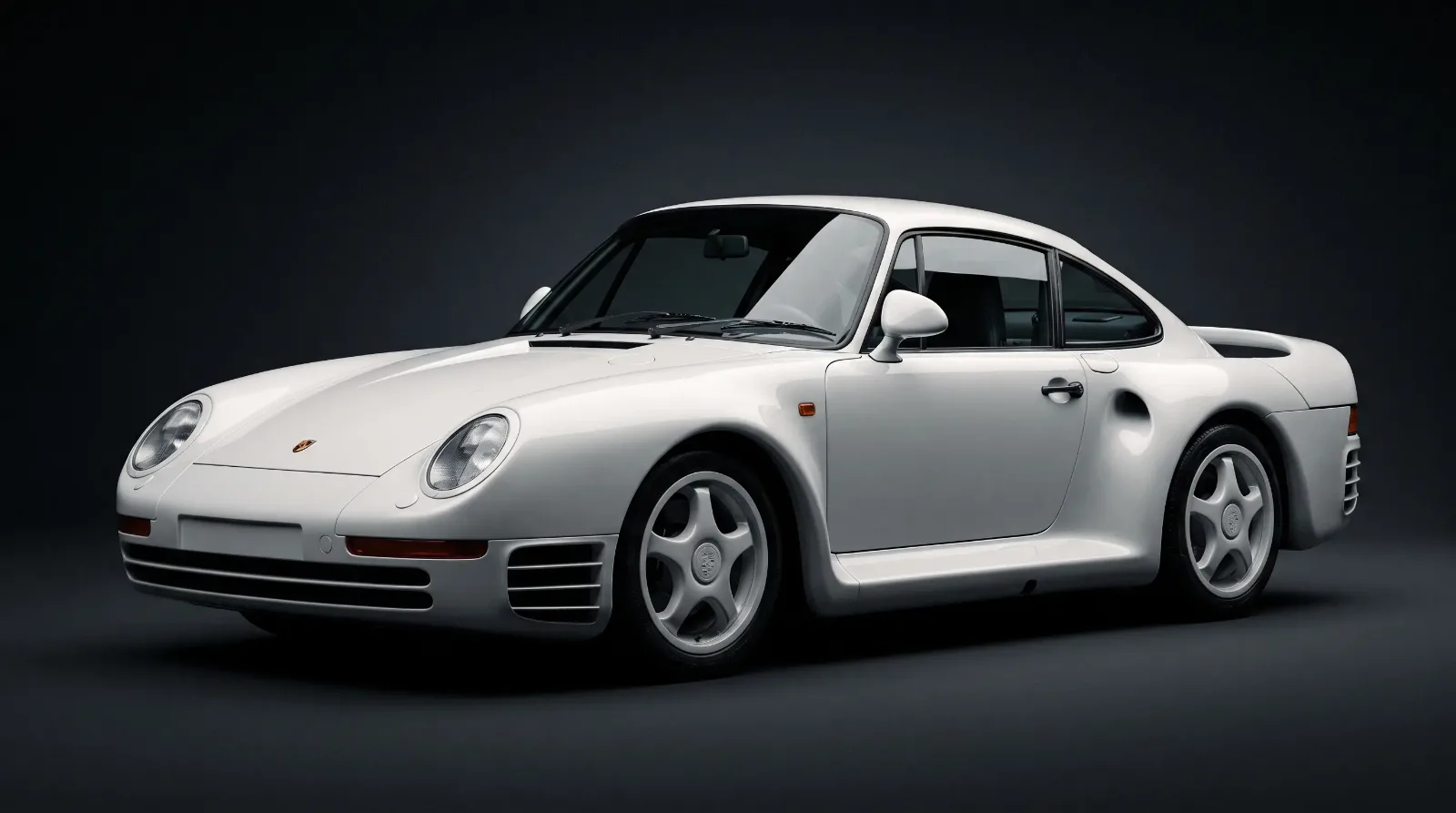
Porsche 959 & the Homologation Halo Cars
Article
The 917: The Car That Finally Won Le Mans
Article
Gulf Blue & Orange: The 917's Iconic Livery
Article
The Salzburg Red 917 That Won in 1970
Article
The Pink Pig: Porsche's Weirdest Livery
Article
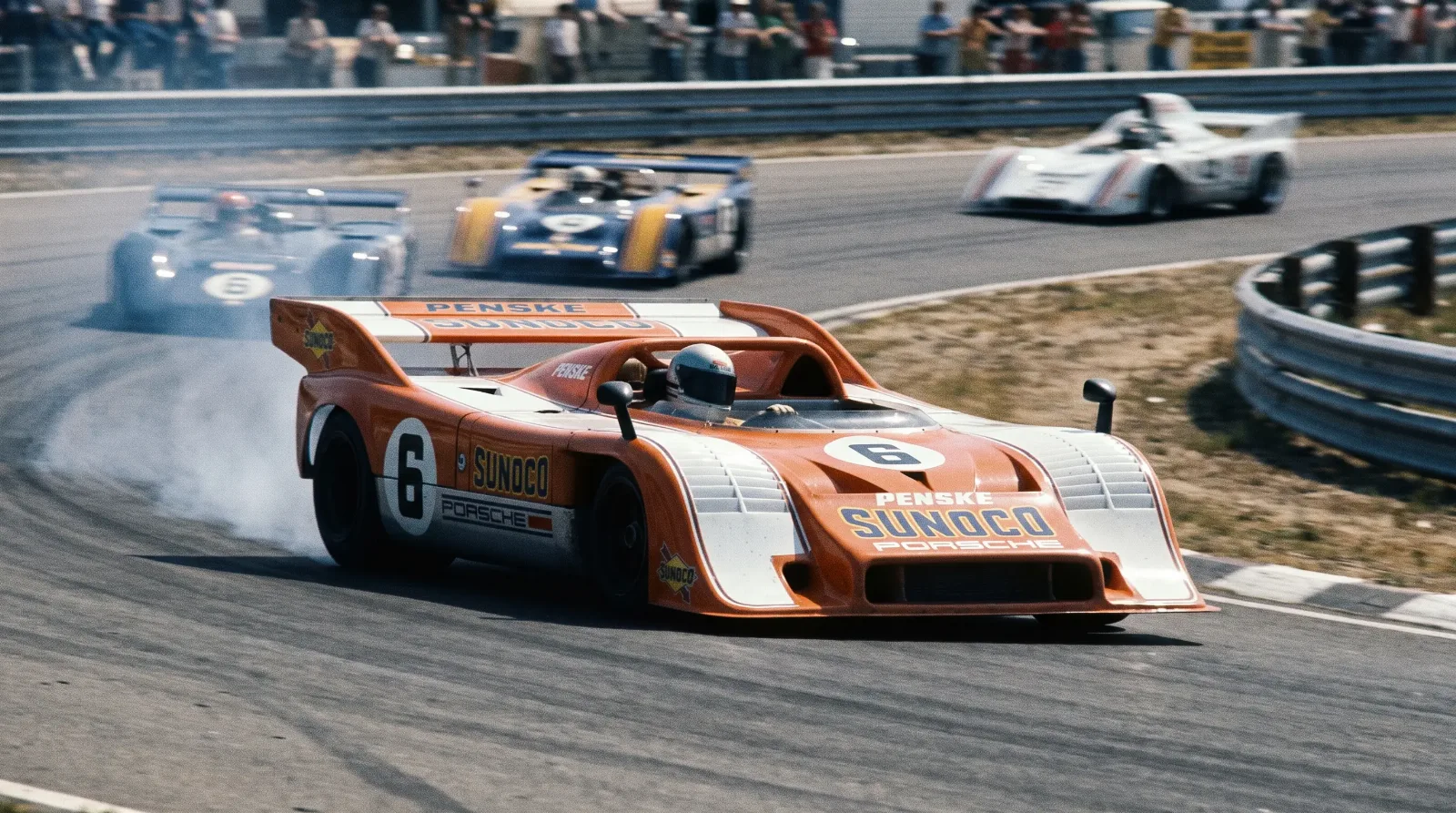
The 917/30 CanAm: Most Powerful Porsche Racer
Article
Steve McQueen's Le Mans & the 917
Article
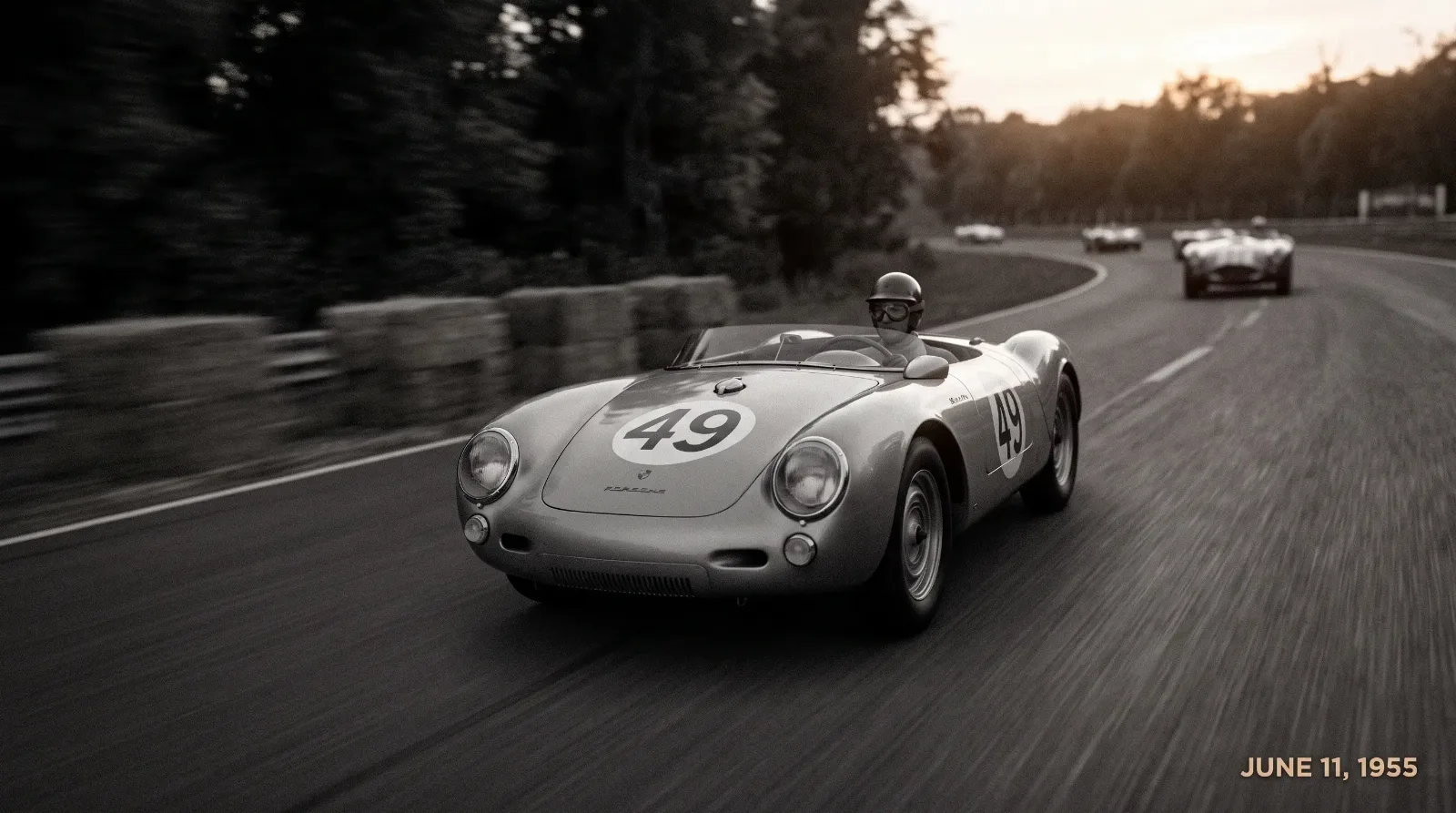
The 550 Spyder: The Giant-Killer That Started It
Article
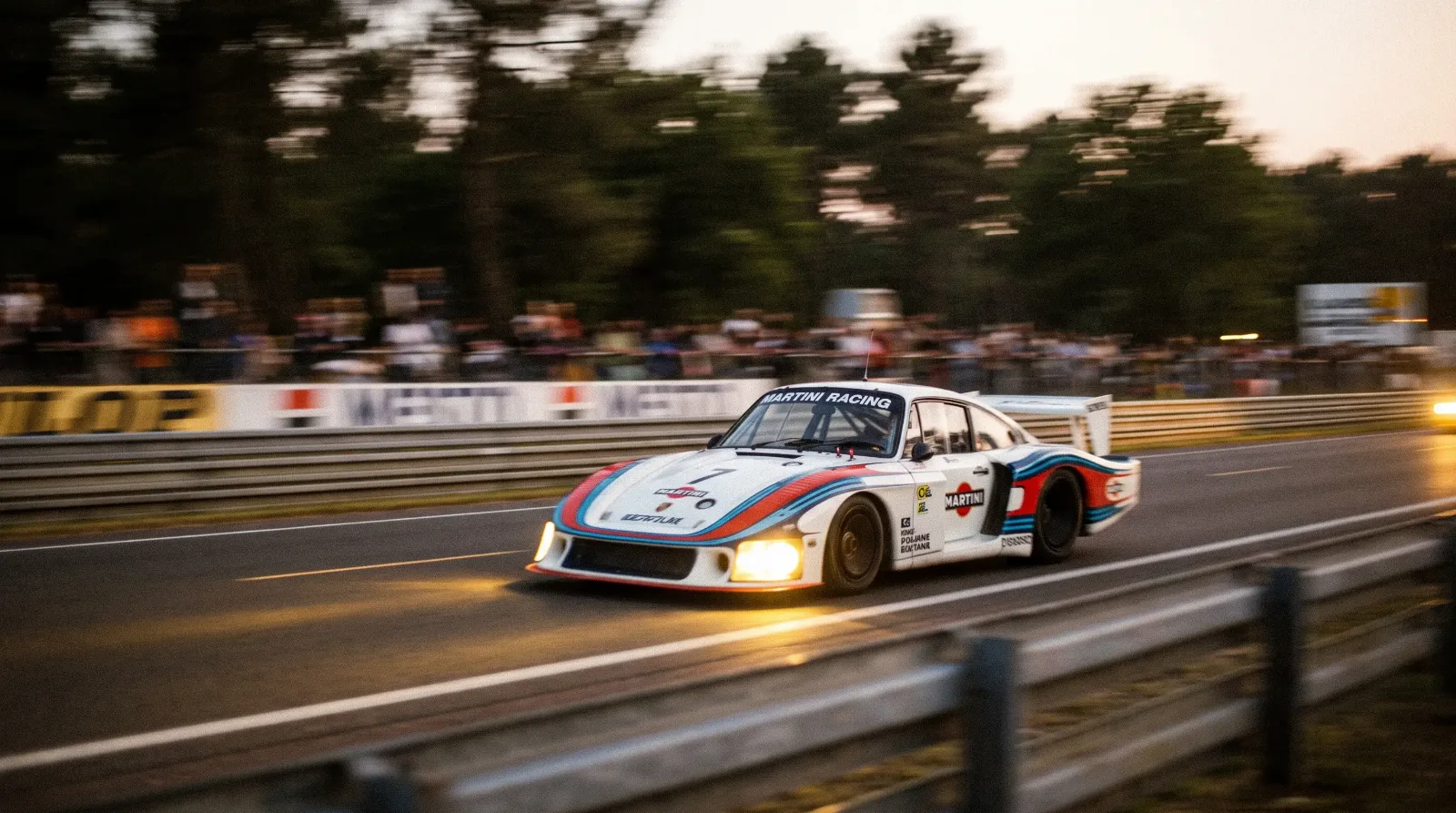
The 935 "Moby Dick": Aero Madness
Article
The 956 & 962: Group C Dominance
Article
The Carrera RSR: Racing the 911
Article
Martini Racing: Porsche's Most Beautiful Livery
Article
Norbert Singer: The Aero Genius Behind the Wins
Article
Brumos & Porsche's American Racing Legacy
Article
The Whale Tail: From Track to Street
Article
The Carrera Panamericana & Porsche's Name
Article
Paris-Dakar: Porsche's Safari 911s
Have a
Porsche
for Sale?
Reach thousands of serious classic car collectors across the US.
Sell It Here →
Are You a Classic Car Dealer?
List your full inventory and connect with targeted classic car buyers.
Join as a Dealer →

About the author
Patrick Walsh
Automotive journalist covering classic car shows, events, and the enthusiast community across North America.
Related Listings - Porsche




Comments (1)
M
Mark V.
2 days ago
Did they ever sort out that long-tail, or just run the short one?
They kept the long tail, Mark. Revised versions came back to Le Mans in 1970 and 1971, steadier than the frightening 1969 car, and the runner-up in 1970 was one of them, the psychedelic Martini car. On a circuit with a straight that long, the extra top speed was worth having once it stopped wandering. The short tail just became the shape everybody remembers.