
Porsche built roughly 400 examples of the 924 Carrera GT for one reason: racing rules demanded it. Group 4 homologation required a minimum production run of the road car before Porsche could field the racing version, and the Carrera GT exists purely because someone at Porsche did the math and decided the 924 platform was worth the paperwork. The road car that resulted is the most serious 924 ever built, and most of what makes it special traces straight back to a racetrack requirement, not a showroom wish list.
Car Features
6 min read
The 924 Carrera GT: Homologation Hero
The Porsche 924 Carrera GT exists because Group 4 racing rules demanded a homologation run. See what a 400-unit racing requirement did to the 924 platform.
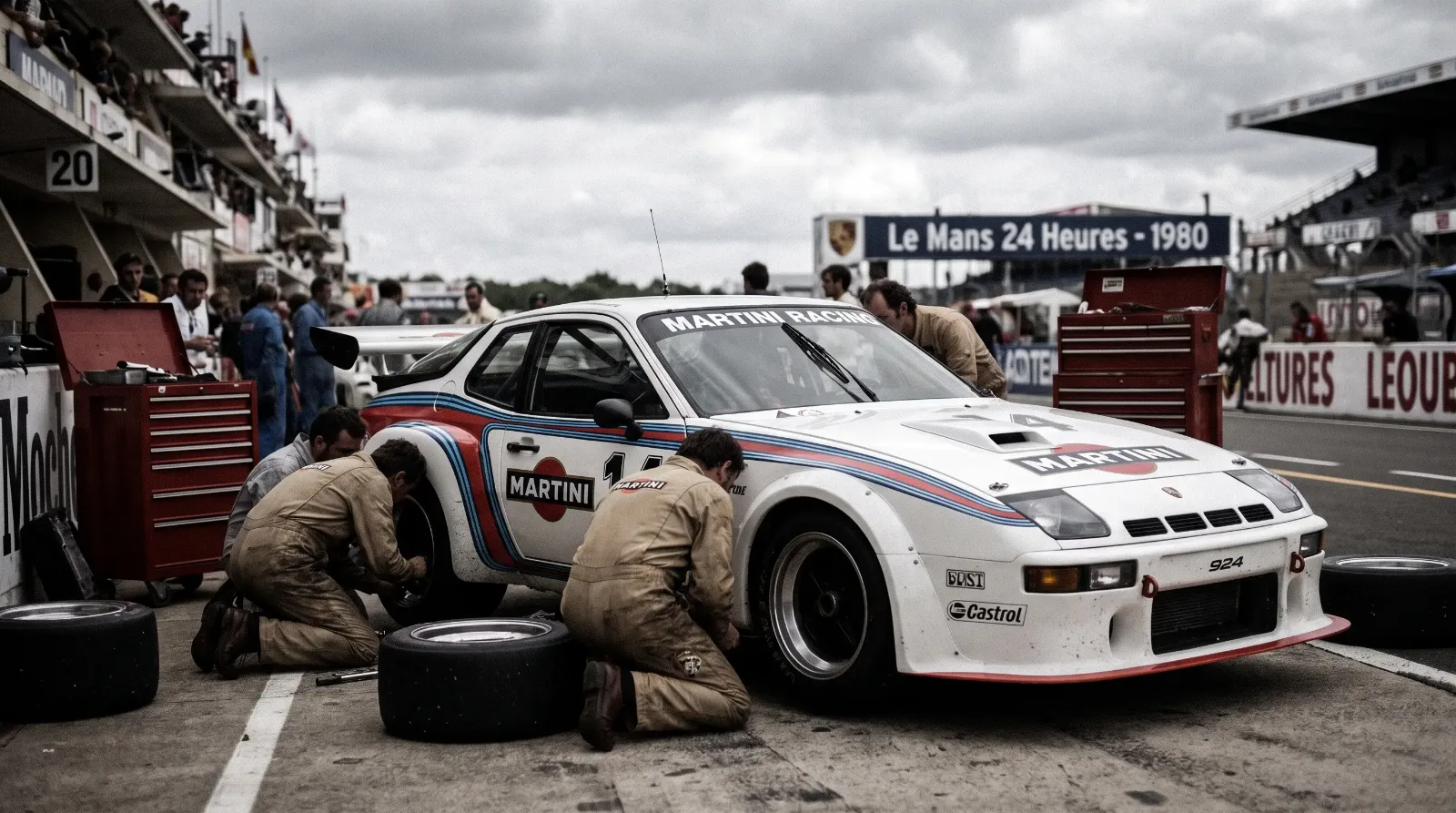
The homologation math behind the car
Group 4 rules in period required a manufacturer to build a set minimum number of a model to qualify it for competition. Porsche wanted a genuinely competitive 924 to run at Le Mans and in European endurance racing, and the existing Turbo simply was not stiff, light, or powerful enough to do that job against serious opposition. So Porsche built the Carrera GT: about 400 units, enough to satisfy the rulebook, each one substantially reengineered from the standard Turbo underneath a familiar silhouette.
This was not a case of Porsche building a handful of cars and hoping nobody checked the paperwork. The homologation rules were specific about production numbers, and Porsche's competition department worked backward from what the racing program actually needed on track, then built exactly enough road cars to legally support it. That approach explains why the Carrera GT feels overbuilt for a road car in some respects. It was never designed purely as a road car in the first place.
Power went up to 210 horsepower from the turbocharged 2.0-liter, a real jump from the 924 Turbo's output. That is not the headline, though. The headline is weight. Porsche fitted an aluminum hood, polyurethane front and rear bumpers, and flared fiberglass wheel arches to cover wider wheels and tires, all in the name of shedding mass the racing program could not afford to carry.
What the flared fenders are actually for
Those wide wheel arches are not a styling exercise. Wider wheels and tires need somewhere to live, and the racing program needed much more rubber on the road than the standard 924 body could physically accommodate. Porsche solved it with flared fiberglass fenders bonded to the body, wide enough to cover serious racing rubber while keeping the underlying 924 monocoque intact. It is a purpose-built solution to a mechanical problem, and it happens to look aggressive as a side effect rather than a goal.
| Spec | 1980 Porsche 924 Carrera GT |
|---|---|
| Engine | 2.0L turbocharged inline-four |
| Power | 210 hp |
| Production | 400 roadgoing units (406 including prototypes), homologation minimum |
| Body changes | Aluminum hood, polyurethane bumpers, flared fenders |
| Purpose | Group 4 homologation for racing |
What Porsche cut to save weight
Weight came off the Carrera GT in places most buyers never notice on a spec sheet. Sound deadening was reduced. Interior trim was simplified compared to a standard Turbo. The aluminum hood alone did more for the power-to-weight equation than the extra horsepower did, because mass removed from the nose has a compounding effect on a car whose whole reputation rests on front-rear balance. None of this made the Carrera GT uncomfortable as a road car, but it made clear this was never meant to be the plush version of the 924 range.
The polyurethane bumpers deserve a mention too. They look like a styling choice from a distance, but polyurethane at the time was lighter than the steel bumper assemblies on a standard 924, and Porsche was not going to leave heavy steel on a car built to satisfy a racing rulebook. Every panel change on this car traces back to either weight or aerodynamics, rarely to appearance for its own sake.
The racing variants that followed
Once the road car satisfied the homologation requirement, Porsche built dedicated racing variants on the same basic architecture, further stripped and further boosted for actual competition. Factory teams fielded these cars at Le Mans and in the European GT championship, running considerably more power than the road-going 210 horsepower figure and running considerably less weight. These cars put the 924 name in a place it never would have reached on the strength of the base car or even the Turbo alone.
The road-going Carrera GT is effectively the minimum viable version of a much more serious racing program, and every Carrera GT road car carries the DNA of that racing intent even though most of them never saw a track. Buyers who wanted the full racing package could order upgrade packages that pushed the car closer to competition specification, blurring the line between road car and race car more than any standard 924 ever attempted.
Why this matters for the 924's reputation
The base 924 spent years fighting the perception that it was a soft, Audi-engined placeholder. The Carrera GT is the hardest possible rebuttal to that argument: a factory-built, homologation-mandated, race-bred version of the same platform, running real power and real weight savings, built because Porsche needed it to win, not because marketing asked for a halo car. Anyone still skeptical about how far the transaxle Porsches could be pushed should look at what a 400-unit homologation run did to the formula.
"Nobody builds four hundred flared-fender race cars because they think it'll look good in a brochure. Porsche built the Carrera GT because the rulebook said it had to, and then did it properly instead of doing it cheap."
Dan Reeves
The Carrera GT and the 944 that arrived shortly after share more engineering lineage than most people assume, both pushing the same transaxle platform toward genuine performance rather than economy-car duty. For another angle on the same car, the 944's own story picks up where the Carrera GT's homologation work left off, with a purpose-built Porsche engine finally replacing the Audi-derived unit for good.
Sources and notes
Related Reading
Have a
Porsche
for Sale?
Reach thousands of serious classic car collectors across the US.
Sell It Here →
Are You a Classic Car Dealer?
List your full inventory and connect with targeted classic car buyers.
Join as a Dealer →
#classic porsche
#Porsche racing history
#Porsche 924 Carrera GT
#924 homologation
#Group 4 Porsche
#Le Mans Porsche

About the author
Dan Reeves
Performance engine builder from North Carolina's motorsports corridor, focused on swaps, forced induction and making real, repeatable power.
Related Listings - Porsche




Comments (1)
F
Frank DeLuca
2 weeks ago
Regional shows are a great way to see five or ten of these side by side and calibrate what the market actually looks like before you buy.