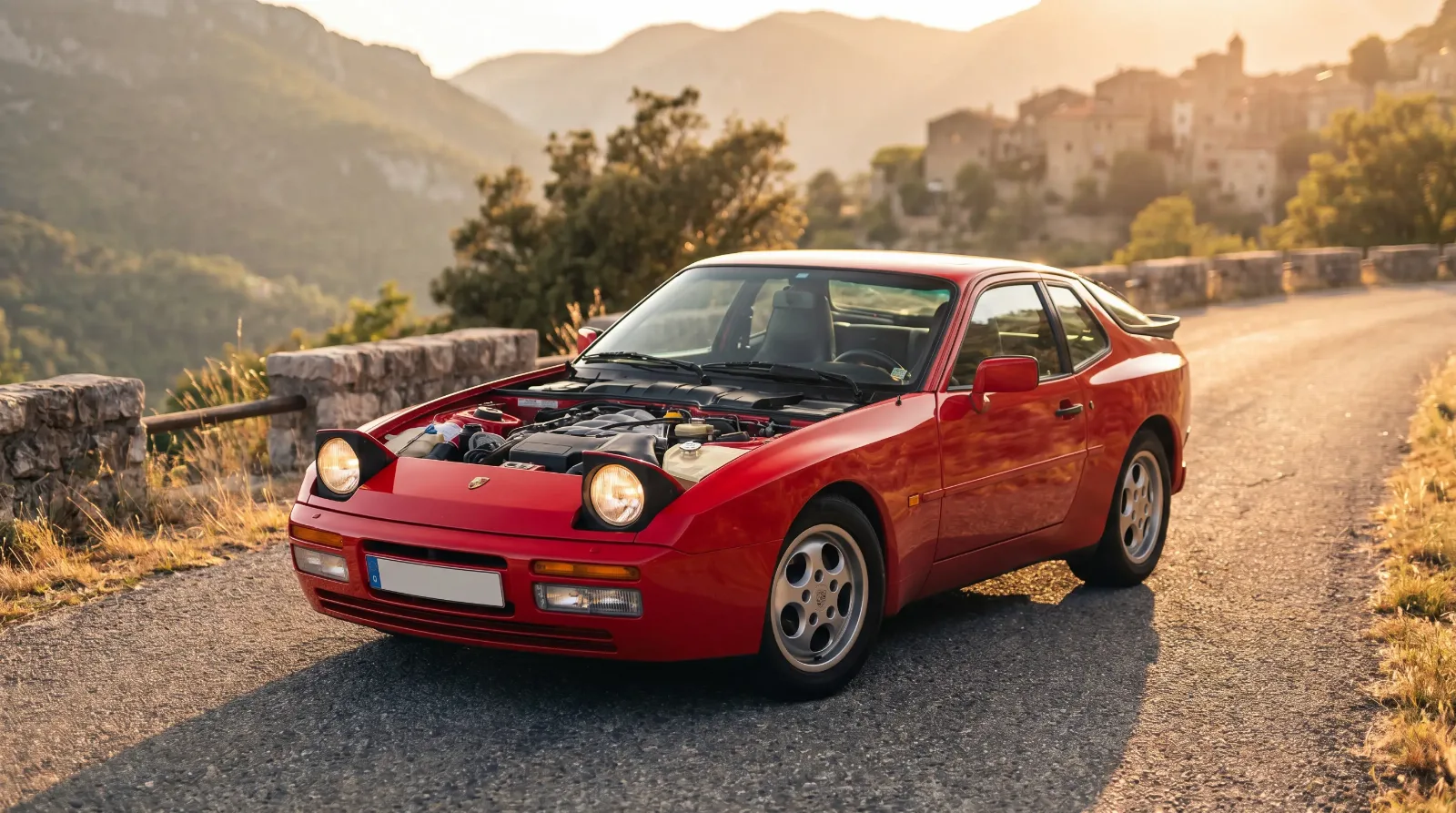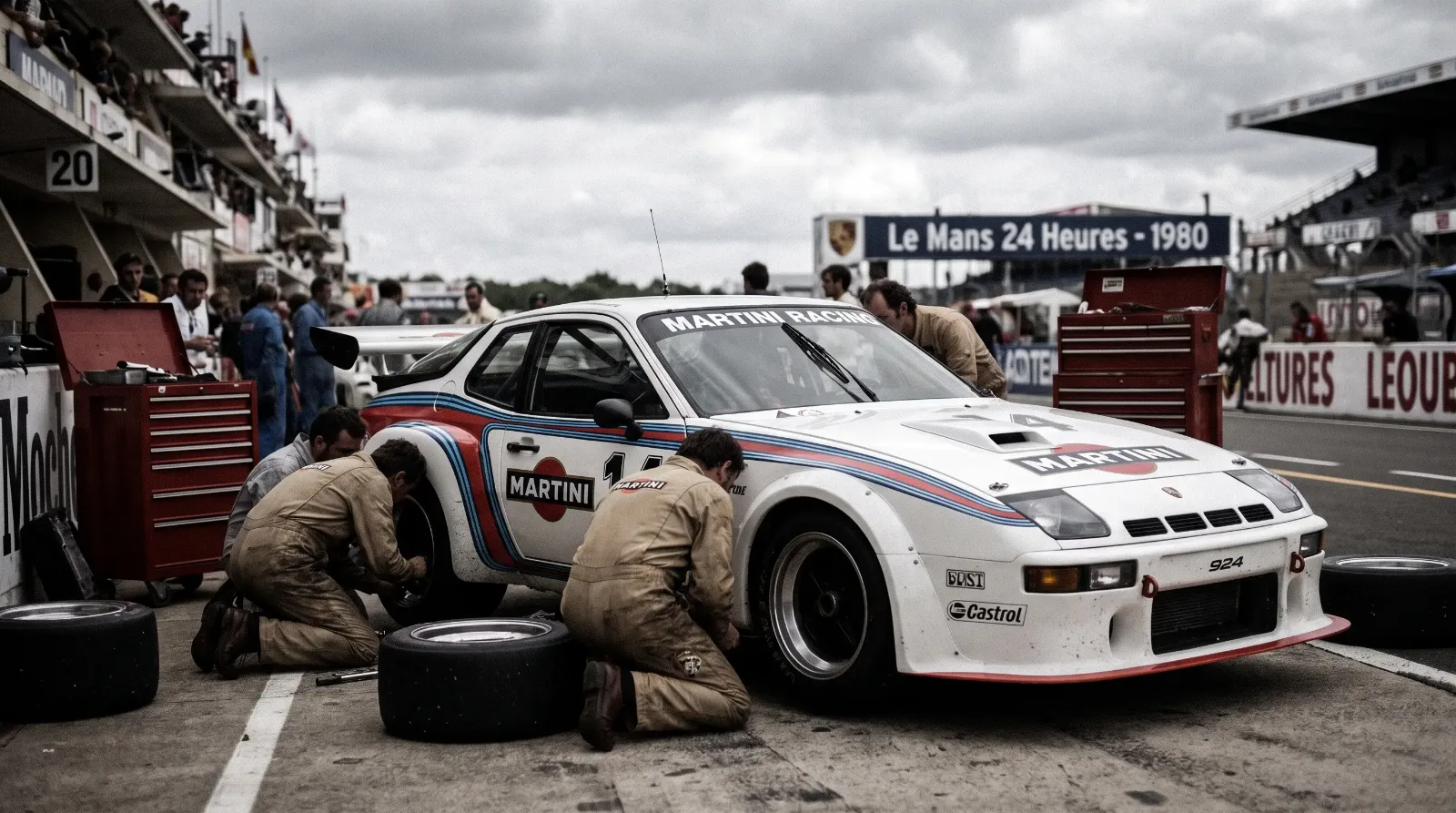
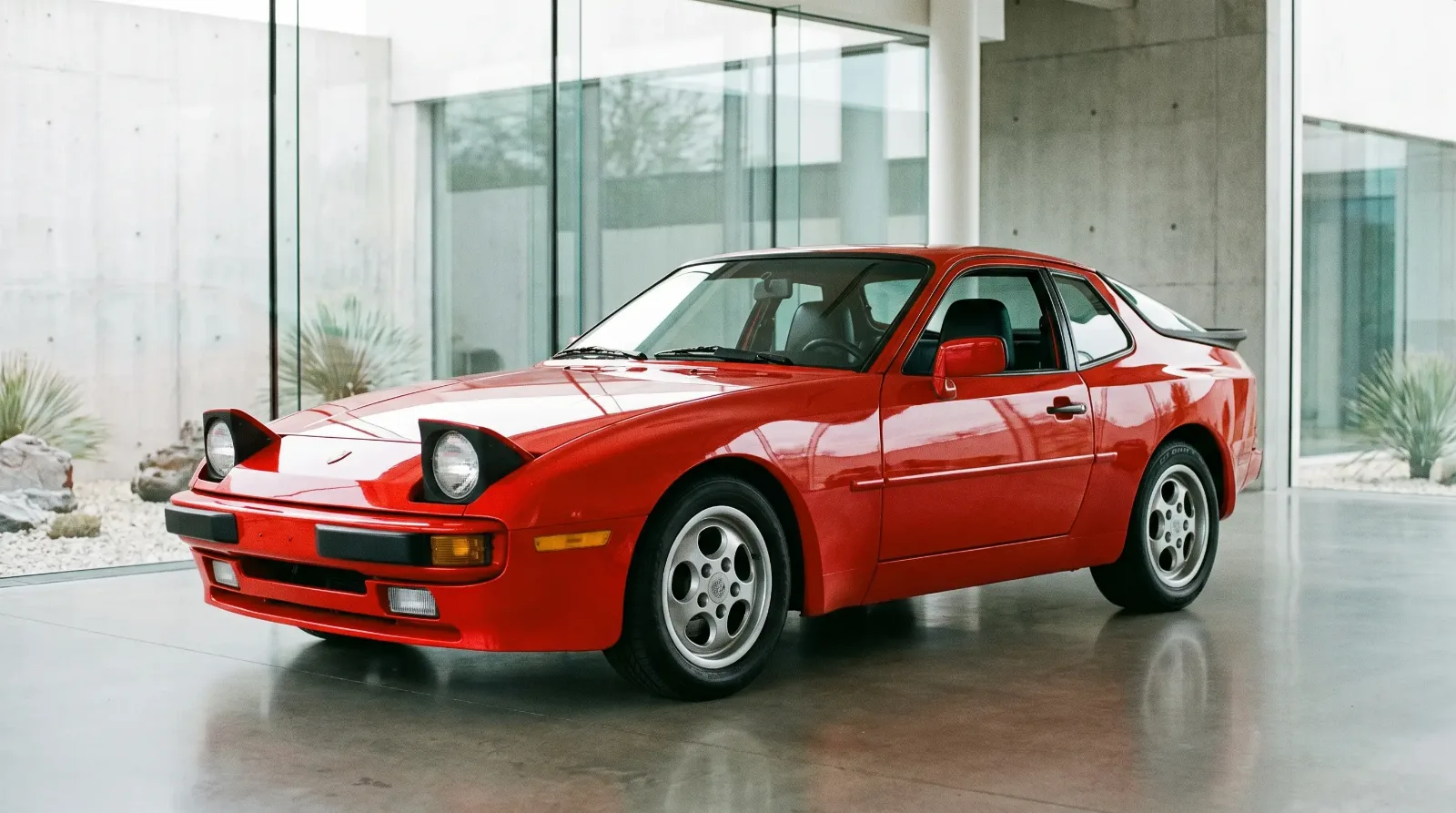
The Porsche 944 sold better than any Porsche before it, and the number that made that possible was a purpose-built engine, not a borrowed one. Launched in 1982, the 944 took the transaxle layout the 924 had proven and finally gave it an engine Porsche designed itself. That single change, more than the wider flared bodywork or the updated interior, is why the 944 is remembered as the car where this platform grew up.
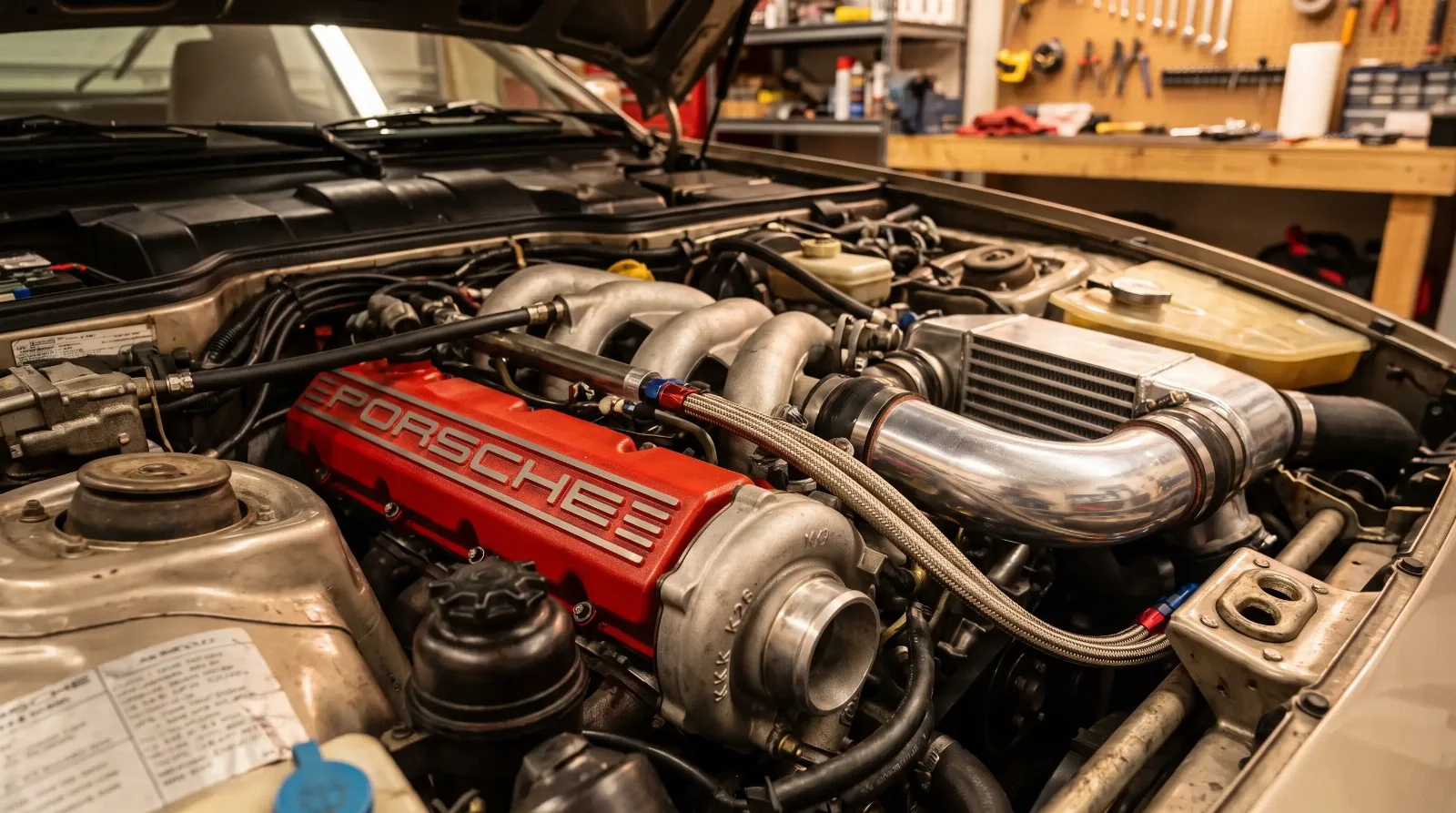
The engine was a 2.5-liter single-overhead-cam inline-four, essentially half of the 928's V8 cut down to four cylinders, rated at 143 horsepower in US-market form (European-spec cars ran a bit higher, closer to 160 hp). That is roughly what the 924 Turbo squeezed out of a boosted, reinforced two-liter, except the 944 got there naturally aspirated, with a bigger, purpose-built block instead of a turbocharged Audi-derived unit pushed to its limits.
Naturally aspirated matters more than it sounds like it should. A turbo engine making a given number is always a compromise between boost, heat, and reliability under load. A naturally aspirated engine making the same number, with more displacement to draw on instead of forced induction, tends to be a simpler, more predictable thing to own and maintain over the long run. Porsche traded outright complexity for durability, and for a car meant to be Porsche's high-volume seller, that was the correct trade to make.
Why a four-cylinder needed balance shafts
Big inline-fours vibrate. That is physics, not an opinion, and a 2.5-liter four is big enough that the vibration becomes a real comfort problem at speed. Porsche's answer was to license Lanchester balance shaft technology from Mitsubishi, twin counter-rotating shafts spinning at twice crank speed to cancel out the engine's inherent second-order vibration. It is not a flashy solution. It is the kind of unglamorous engineering that turns a gruff four-cylinder into something that feels smooth enough to sit next to a six.
This mattered because Porsche needed the 944 to feel like a complete car, not a stopgap. The 924 had always carried a bit of an apology in its spec sheet, an Audi engine standing in until something better arrived. The 944's engine had no such asterisk. It was built by Porsche, for this car, and the balance shaft solution is proof the company solved the four-cylinder's oldest problem instead of just tolerating it.
The body that finally matched the chassis
The 944 wore flared fenders as standard, wider and more aggressive than the base 924 had ever needed, borrowing visual language from the homologation-special Carrera GT and making it standard equipment rather than a limited-run oddity. Wider tires filled those arches, and for the first time on this platform the styling and the mechanical substance actually matched. This was not a modest coupe wearing race-car flares for effect. The chassis underneath had the grip to use them.
| Spec | 1983 Porsche 944 (US) |
|---|---|
| Engine | 2.5L SOHC inline-four, Porsche-designed |
| Power | 143 hp (US-spec) |
| Vibration control | Twin Lanchester balance shafts (Mitsubishi license) |
| Layout | Front engine, rear transaxle |
| Body | Standard flared fenders, wider track |
What changed underneath, beyond the engine
Porsche did not stop at the engine bay. The 944 got a stiffer chassis, revised suspension geometry to handle the wider tires the new fenders were built around, and improved brakes to match the extra performance. None of this shows up in a casual glance at a spec sheet next to the 924, but it is the reason a 944 feels tighter and more planted through a corner than even a well-sorted 924 Turbo. The transaxle layout stayed the same in principle, but every component around it was reworked to handle a genuinely stronger car.
The interior saw real attention too, with a dashboard and switchgear that felt like a step up from the 924's cabin rather than a shared part with minor trim differences. Porsche was positioning the 944 as a car buyers would cross-shop against a 911 on price and specification, not just against other four-cylinder coupes, and the interior work reflects that ambition directly.
Sales numbers do not lie
The 944 outsold the 924 by a wide margin and became, for a stretch, the best-selling model in Porsche's lineup. That is not a coincidence and it is not down to styling alone. Buyers who had been lukewarm on the transaxle chapter because of the Audi engine question got a car with a Porsche-built four-cylinder, real balance shaft refinement, and a factory-flared body, all at a price still well under a 911. The result was a Porsche that made sense on paper for a much wider range of buyers than the 924 ever managed.
What the 944 proved for the platform going forward
The 944 answered the two biggest complaints about the 924: not enough engine, and an engine that was not really Porsche's own. A Porsche-designed 2.5-liter four with balance shafts solved both problems in one move, and the sales numbers show buyers noticed. This was also just the beginning. A 16-valve 944S followed with meaningfully more power from the same displacement, then a genuinely quick turbocharged version arrived to close the gap to the 911 further still.
What matters for anyone shopping this platform today is understanding that the 944 was never a finished product frozen in 1982. Porsche kept developing the engine, the chassis, and the equipment list across the model's run, and the gap between an early 944 and a later 944S or Turbo is substantial. Buying the earliest example because it is cheapest often means buying the least developed version of a car that improved steadily over its production life. The next story in this set covers how Porsche took this same formula and pushed it even further with forced induction, and it is worth reading before deciding which era of 944 actually fits what you want.
"The 924 got the chassis right and borrowed the engine. The 944 got the engine right too. That's the whole difference, and it's why one car sold in the tens of thousands and the other spent years explaining itself."
— Dan Reeves
Sources and notes
- Wikipedia: Porsche 944
- Stuttcars: Porsche 944 Coupe (1983) Specifications & Performance
- Clark's Garage: Balance Shafts, A Little History and Why 944s Use Them
- Porsche Club of America: 944 Vibration, Balance Shaft Alignment
- Silodrome: A Quick History of the Porsche 944
- Automobile Catalog: 1983 Porsche 944 Specs Review