
The base Porsche 924 had one obvious problem: not enough power to match a chassis that deserved better. Porsche knew it before the critics said it out loud, and by 1978 the fix arrived as the 924 Turbo. This was Porsche's second turbocharged road car after the 930-generation 911 Turbo, and it exists because a good chassis with a weak engine is just a car waiting to be finished.
Car Features
6 min read
The 924 Turbo: Porsche Fixes Its Own Car
The base 924 had a great chassis and not enough power. The 924 Turbo history is Porsche fixing that with boost, a stronger bottom end, and a NACA duct.
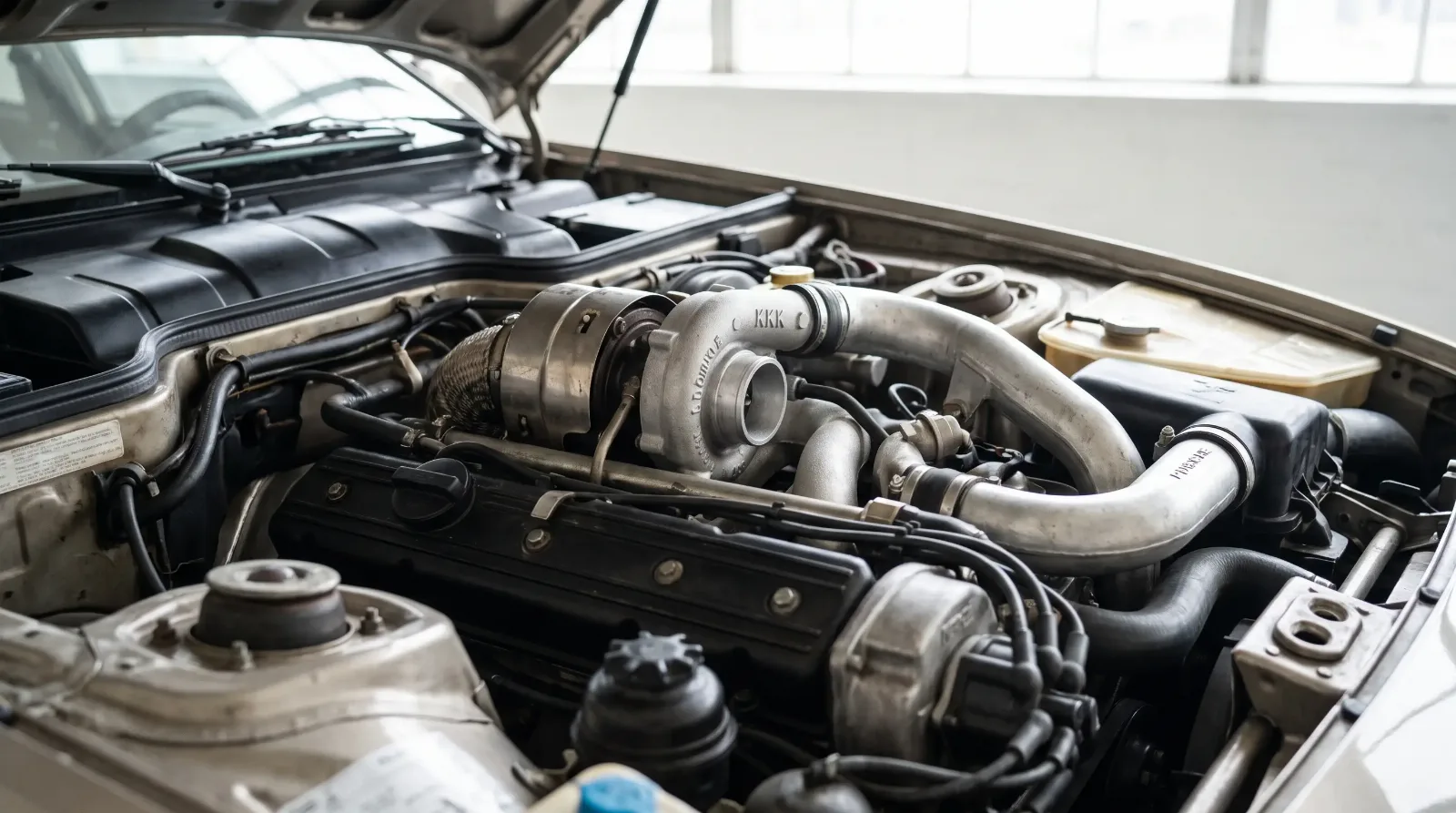
The number that tells the story: a KKK turbocharger bolted to the same 2.0-liter block took output from roughly 95 horsepower in the naturally aspirated Euro car to 170 PS, about 168 horsepower, in the European Turbo. US-spec cars, strangled by emissions gear and extra safety equipment, landed lower at 143 horsepower for the 1980 model year, rising to 154 horsepower for 1981. That is not a huge number by modern standards. In 1978, against the car's own naturally aspirated sibling, it was close to a 50 percent jump for the European car, and it changed what the 924 could actually do on a road.
Why Porsche turbocharged rather than redesigned
Porsche did not have the budget or the timeline in the late 1970s to build a new engine from a blank sheet for the 924. What it had was turbocharging experience fresh off the 911 Turbo program and an existing block that could take boost with the right reinforcement. So the internal factory code became 931 for the Turbo, and the engineering brief was straightforward: strengthen what needs strengthening, add boost, do not touch the chassis balance that made the base car worth improving in the first place.
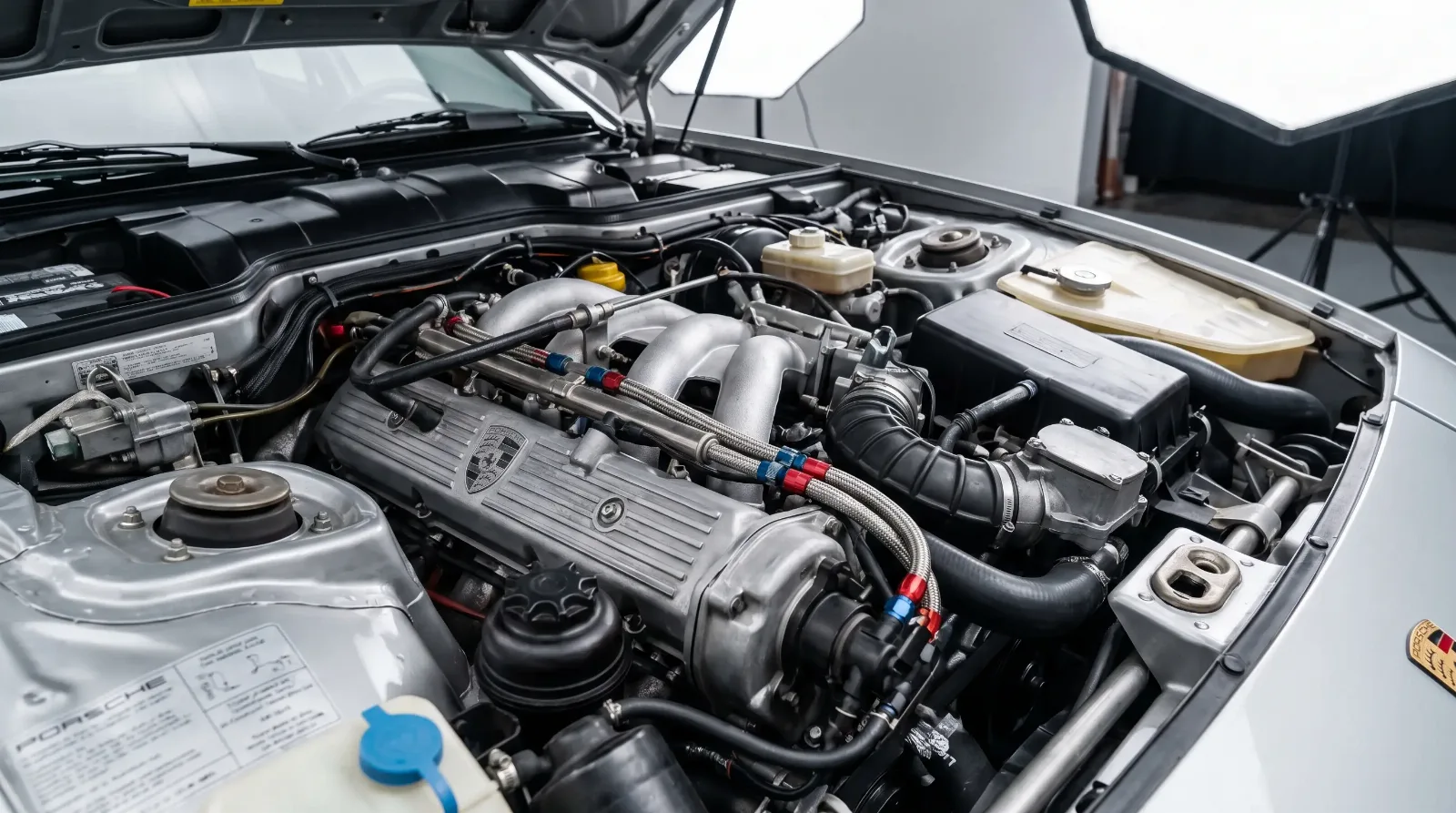
That meant a forged crankshaft, stronger connecting rods, lower compression to handle boost without detonating, and an oil cooler because turbocharged engines run hotter than anyone's marketing department wants to admit. None of this was glamorous work. It was the difference between a turbo engine that survives daily use and one that becomes a well-known cautionary tale in owners' forums.
The visual tells, and why they exist
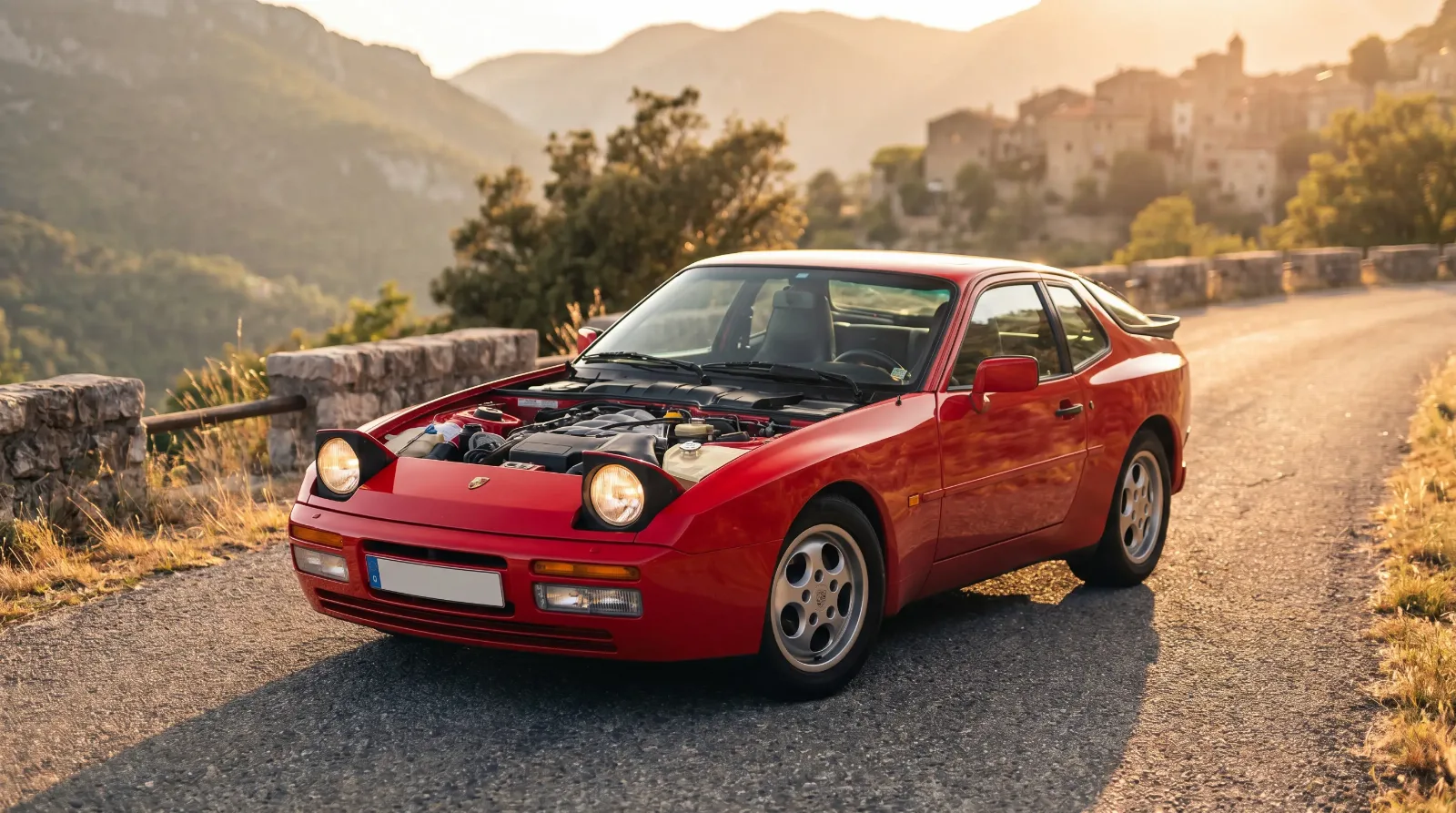
You can spot a 924 Turbo without popping the hood. It has a distinct front spoiler with a NACA duct feeding the intercooler, different wheels to handle the added power and cooling needs, and a slightly different rear treatment. None of this is styling for its own sake. The NACA duct is there because a turbo engine generates heat a naturally aspirated 924 never had to deal with, and Porsche was not going to sell a car that cooked its own intercooler on a hot afternoon.
| Spec | 1978 Porsche 924 Turbo (931) |
|---|---|
| Engine | 2.0L turbocharged inline-four |
| Power (Euro) | 170 PS (~168 hp) |
| Power (US) | 143 hp (1980), 154 hp (1981) |
| Turbocharger | KKK |
| Notable changes | Forged crank, oil cooler, NACA duct, front spoiler |
Driving one, and where the turbo lag lives
The KKK turbo on this engine is not a modern low-inertia unit. There is real lag below about 3,000 rpm, then the boost comes in and the car picks up its pace noticeably. That is worth knowing before you drive one expecting instant response, because the powerband feels almost like two different engines depending on where the tachometer sits. Below the boost threshold it drives like a slightly quicker base 924. Above it, the car earns the badge on the back.
This matters for how you should actually use one on the road. Short-shifting a 924 Turbo defeats the point of owning it. The engine wants to be worked into the upper half of its range where the turbo is doing something, and drivers who treat it like a lazy grand tourer end up wondering why they paid a premium over a naturally aspirated car. Drive it the way it was designed to be driven and the gap to the base 924 becomes obvious within the first few miles.
What this did for the 924's reputation
The base 924 got tagged early as underpowered, and that reputation stuck even after Porsche fixed it. The Turbo answered the criticism directly, and it did so without abandoning the layout that made the 924 worth driving: front engine, rear transaxle, weight balance intact. Anyone who read the transaxle chapter already knows why that balance mattered more than raw horsepower. The Turbo just gave the chassis an engine that could finally use it.
The added weight over the front axle from the turbo plumbing, intercooler, and reinforced block did shift the balance slightly compared to the base car, though not enough to undo the fundamental advantage of the rear transaxle layout. Porsche's engineers clearly treated this as an acceptable trade for the power gain, and reviews from the period back that judgment up rather than contradict it.
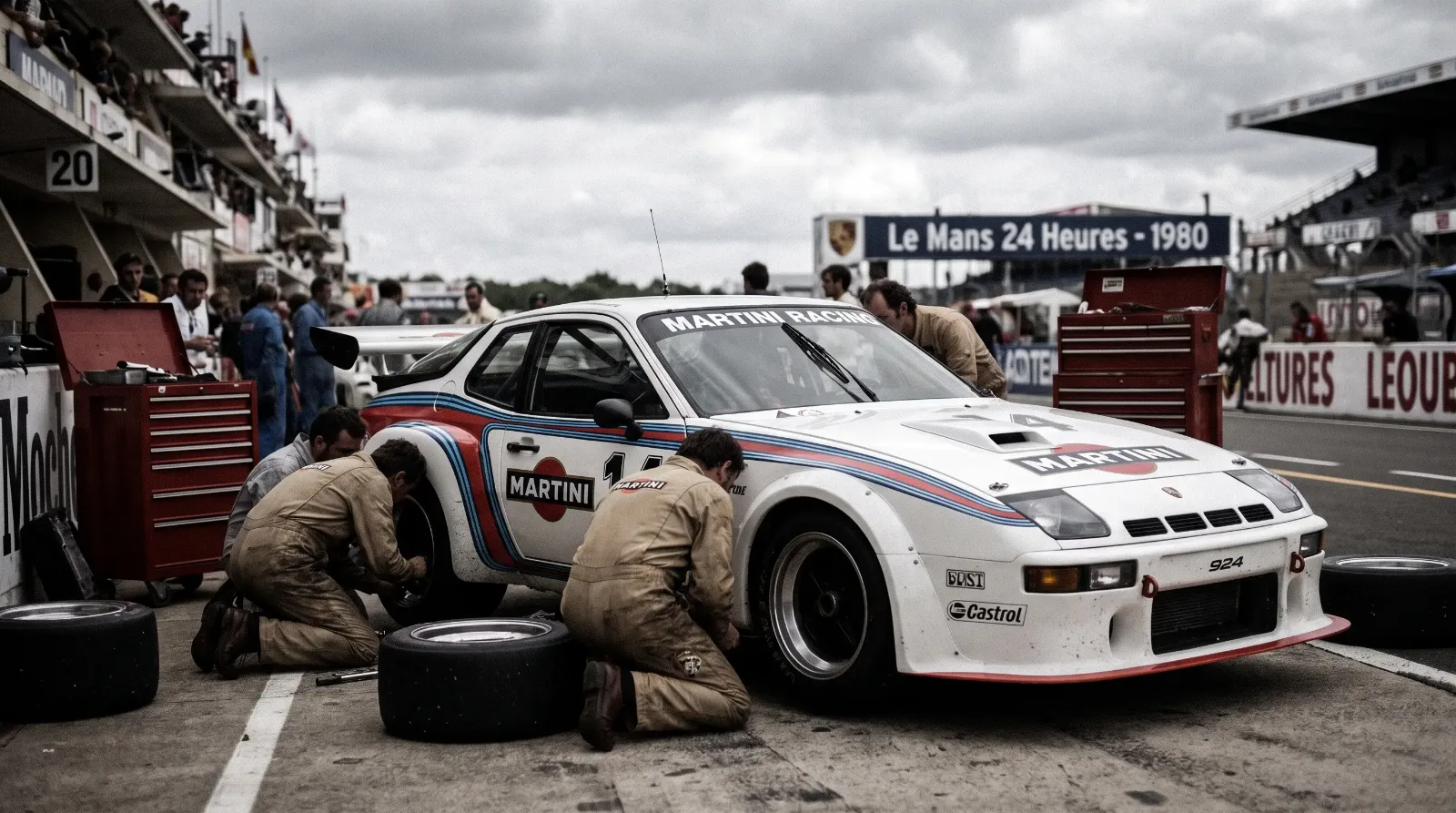
It also mattered for homologation purposes. Porsche needed a stronger, more serious 924 platform on the shelf if it wanted to go racing seriously with this car, and the Turbo's reinforced bottom end and boosted output were a necessary stepping stone toward that goal.
"The base 924 was a good chassis waiting for an engine. The Turbo is Porsche admitting that out loud and doing something about it. That's not a knock, that's how you build a car company."
Dan Reeves
Where the Turbo fits in the bigger 924 story
The Turbo was not the endpoint. It was proof that boosting the existing block could only go so far before Porsche needed a purpose-built engine, which is exactly what arrived with the 944. But as a standalone chapter, the 924 Turbo answers a real question: could Porsche take a car built around someone else's engine and make it genuinely quick without breaking what worked. The answer was yes, and the Carrera GT homologation special that followed is a companion piece to this one, pushing the same turbocharged formula toward the racetrack instead of the showroom.
Sources and notes
Related Reading
Have a
Porsche
for Sale?
Reach thousands of serious classic car collectors across the US.
Sell It Here →
Are You a Classic Car Dealer?
List your full inventory and connect with targeted classic car buyers.
Join as a Dealer →

About the author
Dan Reeves
Performance engine builder from North Carolina's motorsports corridor, focused on swaps, forced induction and making real, repeatable power.
Related Listings - Porsche




Comments
Be the first to comment on this article.