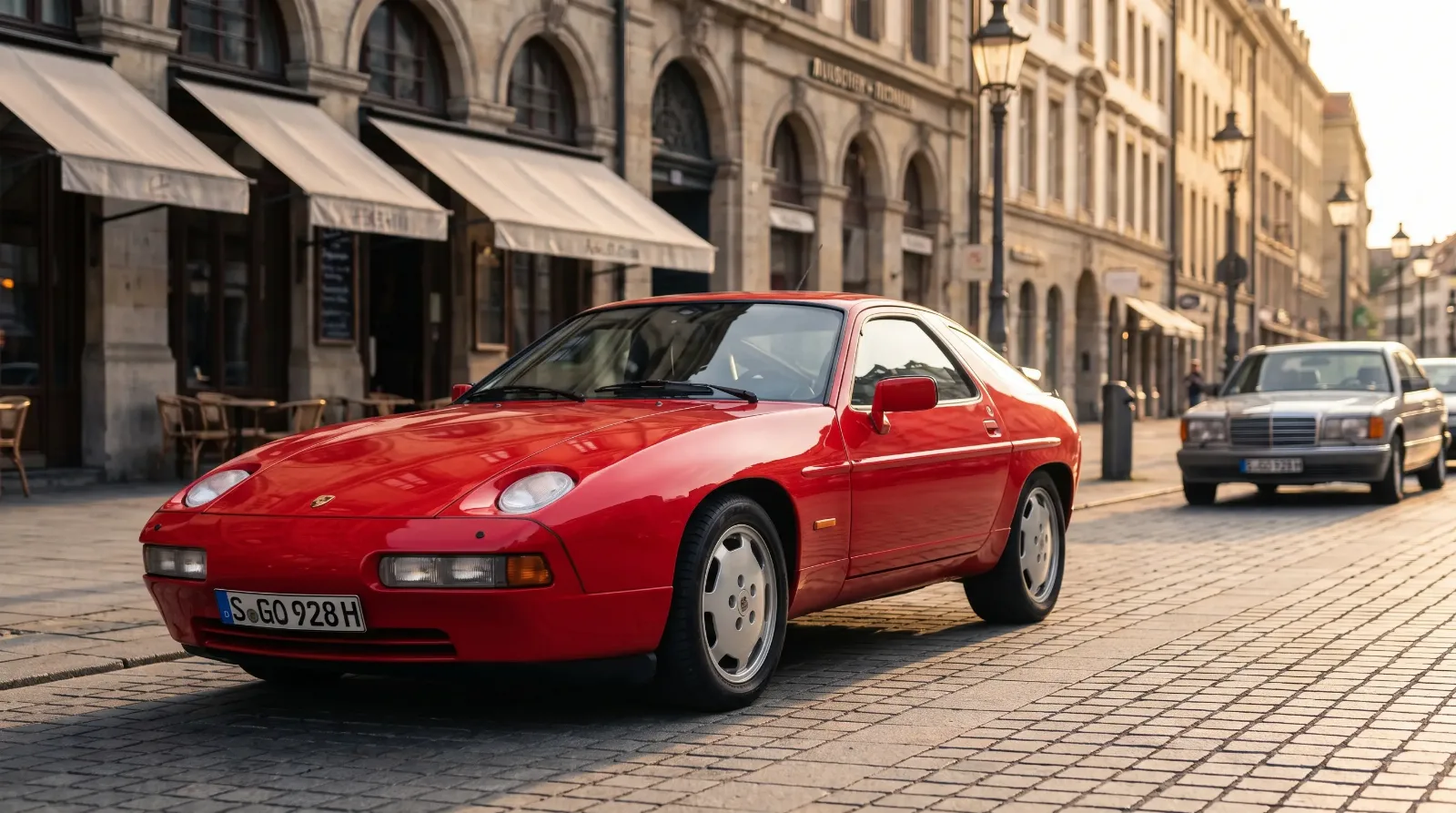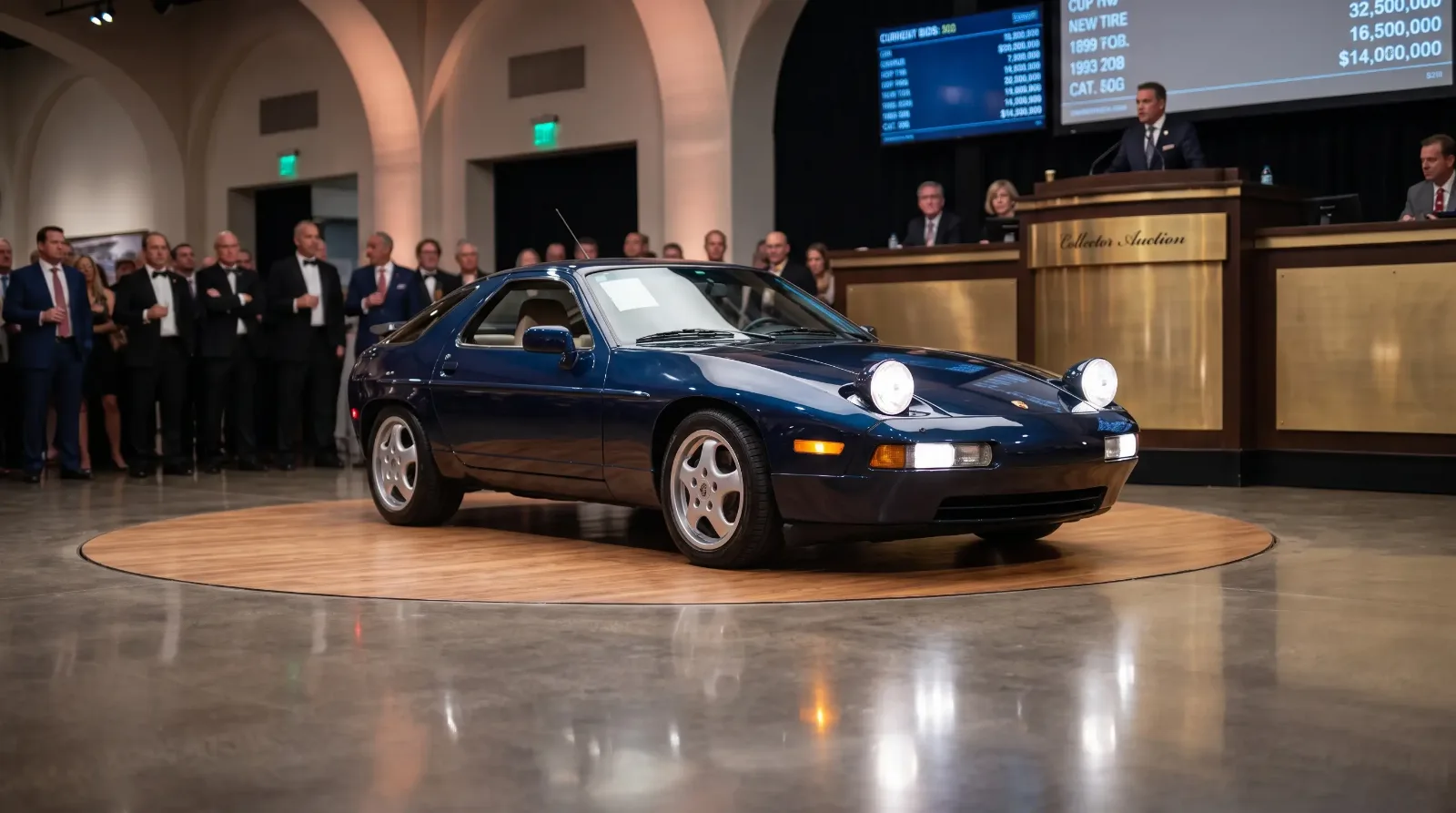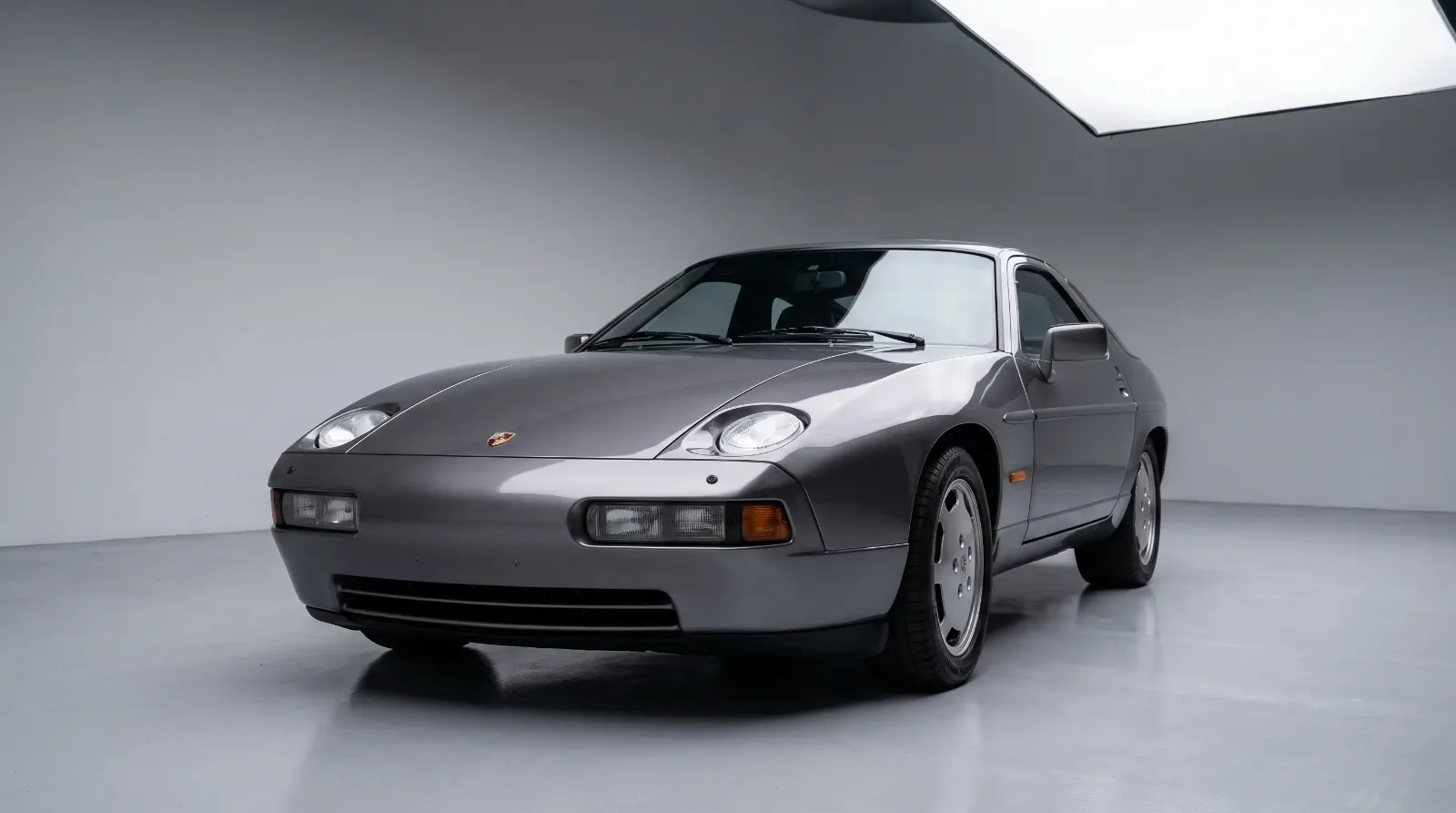
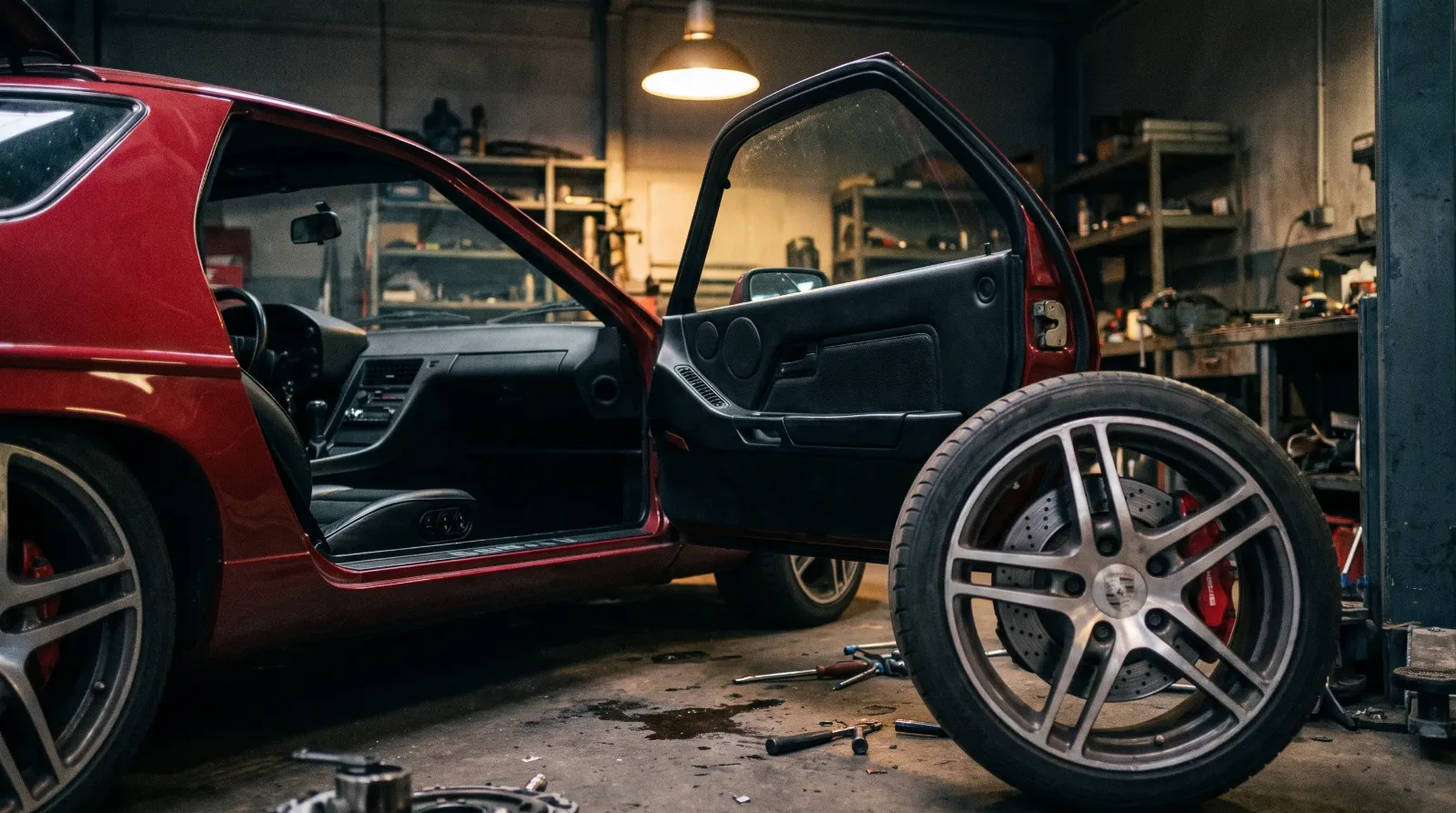
The Porsche 928 GT exists because of a decision that looks strange on paper and makes complete sense once you look at the build sheets. By the late 1980s, most 928s left the factory with the automatic transmission. Buyers wanted the grand-touring experience without the third pedal, and the sales numbers backed that up. Then, in 1989, Porsche introduced a version of the car available with a manual gearbox only, and no automatic option at all. That model was the GT, and it exists today as the version manual-transmission purists point to when the automatic-heavy production run of the 928 comes up.
Why Porsche built a manual-only 928
The GT was based on the S4 chassis, which by 1989 had matured into the most sorted version of the car Porsche had built. Rather than treat the GT as a separate model with its own engineering program, Porsche used it to package the S4's underpinnings with the equipment a manual-focused driver actually wanted: a limited-slip differential, firmer springs and dampers, and cross-drilled brakes carried over from the flagship. The interior lost some of the S4's comfort equipment in the process, a trade Porsche made deliberately rather than by accident.
Porsche built roughly 2,078 GTs across the trim's short run from partway through the 1989 model year to 1991. That is a small fraction of the 61,000-plus 928s produced in total, and it is consistent with every account of the GT as the rarest volume trim in the lineup. What is consistent across every account is that the GT was built in far smaller numbers than the automatic S4, and that scarcity shows up in how the model trades today.
What actually separates the GT from a standard S4
A buyer looking at a 928 GT alongside an automatic S4 needs to understand that the difference is not cosmetic. The manual gearbox changes the character of the car in a way that matters to how it drives, not just how it is optioned. Combined with the limited-slip differential and the stiffer suspension tune, the GT was built to reward a driver who wanted to work the car rather than let it do the work for them.
- Manual transmission standard and exclusive to the GT trim, with no automatic offered
- Limited-slip differential fitted as standard equipment
- Firmer spring and damper rates than the standard S4
- Cross-drilled brakes shared with the flagship trim of the era
- Reduced interior equipment compared to the comfort-focused S4
Where the GT sits in the model's timeline
Placed against the rest of the 928's run, the GT occupies a narrow window near the end of production, sitting between the long-running S4 and the final GTS flagship that closed the model out. It was never meant to replace either. The S4 continued to sell in far greater numbers with the automatic gearbox most buyers preferred, and the GTS arrived shortly after with a larger displacement V8 and its own automatic-only lineup. The GT's manual-only positioning made it something closer to a specialist trim slotted in for the smaller pool of buyers who wanted the S4's chassis without the automatic gearbox that came standard on nearly everything else in the range.
| Trim | Transmission | Positioning |
|---|---|---|
| S4 | Automatic standard, manual available | Volume grand-touring trim |
| GT | Manual only | Manual-focused, stiffer suspension, limited-slip standard |
| GTS | Automatic-only in most markets | Final flagship, 5.4-liter V8 producing 350 PS (345 hp) |
That narrow window is exactly why the GT reads as scarce today. It was a deliberate niche offering inside an already low-volume model, built for a buyer who wanted a specific driving experience rather than the broadest possible comfort and convenience package.
Reading the factory documentation
Anyone chasing a genuine GT needs to treat the build documentation the same way you would treat a build sheet on any low-production performance car. The factory records for these cars are the only reliable way to confirm original equipment, since the GT shared enough parts with the S4 that a car can be dressed up to look like one without actually being one. Confirming the original transmission, differential, and suspension specification against factory records is not optional if you are paying a premium for the genuine article.
This is not unique to the 928. It is the same discipline that applies to the front-engine 928 as a whole, where documentation separates a well-sorted example from a car that simply looks the part in photographs. The GT just raises the stakes, because the parts that make it a GT and not an S4 are exactly the parts a seller has the most incentive to claim without proof.
Why the manual purist's choice still holds up
The market has been slow and then fast about recognizing what the GT represents. For years it traded close to standard S4 money, priced by buyers who did not distinguish between the trims. That gap has narrowed as more buyers have learned to ask the right questions before writing a check. A documented GT, verified against factory records rather than a seller's word, is a different proposition than an S4 wearing GT badges, and the price should reflect that difference every time.
"I have looked at plenty of cars wearing GT badges that were, once you pulled the actual production record, just an S4 somebody dressed up. The badge means nothing. The build sheet means everything."
— Tom Ramirez
None of this happens in isolation from the rest of the 928's design story. The manual gearbox and stiffened chassis were choices made within a car whose whole shape and philosophy came from a specific design vision at Porsche, and understanding that context helps explain why the GT feels the way it does behind the wheel. For a related deep-dive into where that design language came from, the story is worth the read alongside this one.
For a buyer deciding between a well-kept automatic S4 and a documented manual GT, the choice usually comes down to what kind of driving experience you actually want out of the car. The GT was built for someone who wanted to shift for themselves, in a car that already handled better than most people gave it credit for. That has not changed in the decades since, and it is exactly why the manual purist's choice still means something today.