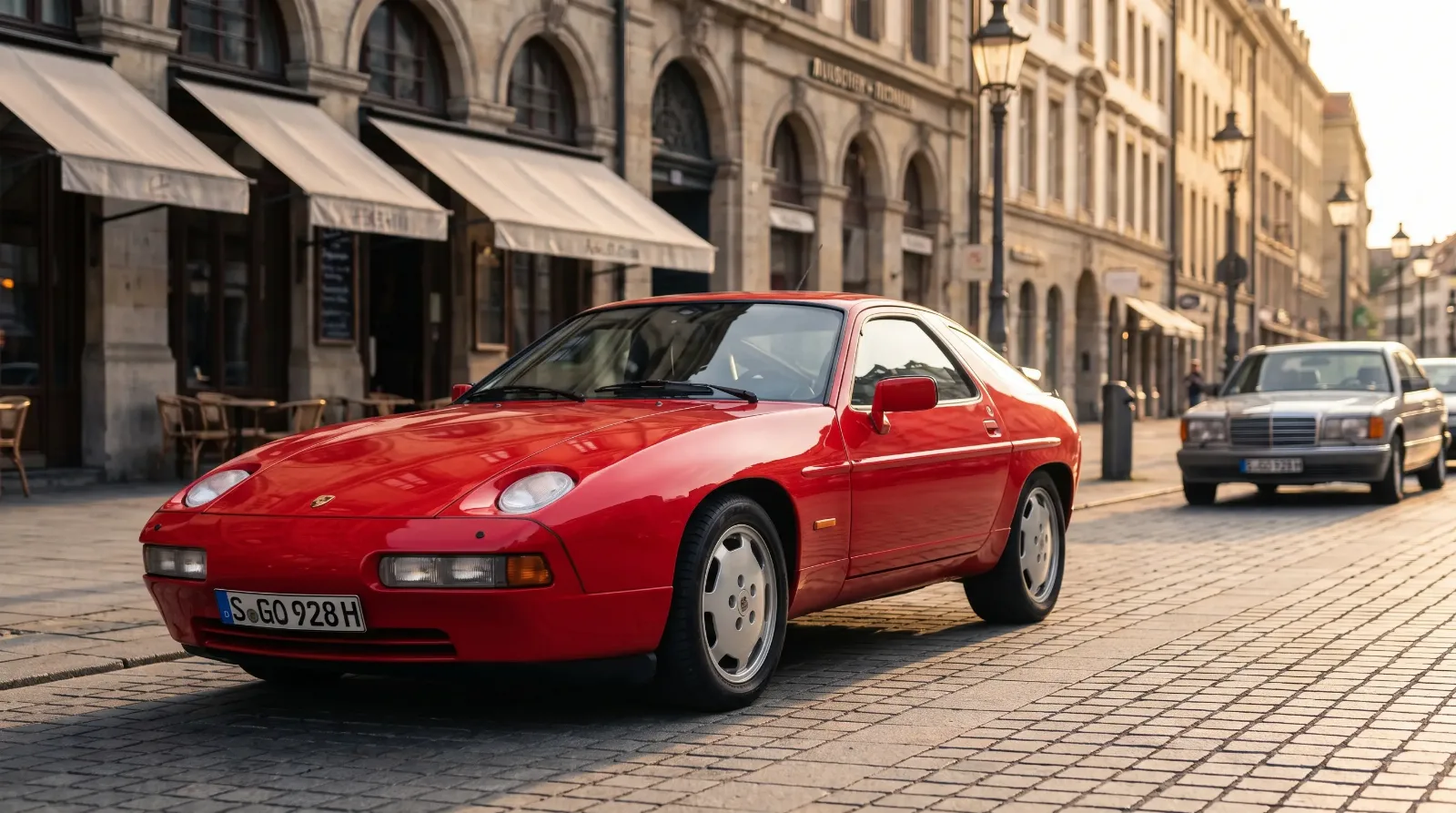
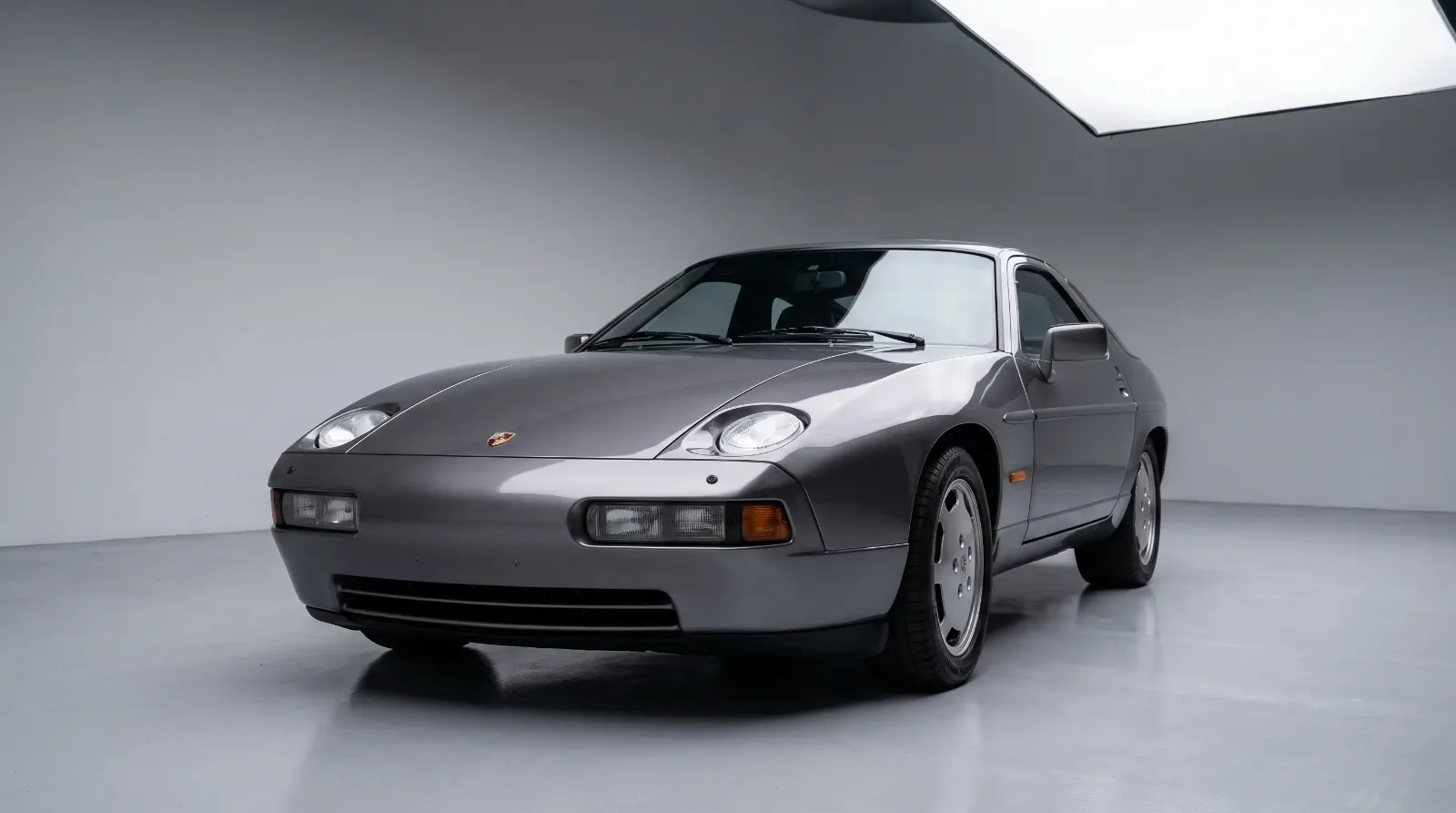
Tony Lapine did not set out to build a car that would earn the nickname "the shark," but that is what happened once the Porsche 928 started showing up at dealerships in 1977. Lapine ran Porsche's Style Porsche design studio through the years the 928 came together, and the wedge-shaped, pop-up-headlight body that resulted from his direction is still the single most identifiable thing about the model, more than four decades after it launched.
The design brief nobody expected
Porsche's design leadership in the early 1970s was working from an unusual brief. The 911 had become the company's identity, but there was real uncertainty inside Porsche about whether a rear-engine sports car could keep meeting crash safety and emissions requirements that were tightening across every export market, especially the United States. Lapine's studio was asked to design something that could stand as a genuine flagship in its own right, not a stopgap or a badge-engineering exercise. That meant a front-engine layout, a V8, and a body that did not simply copy the 911's silhouette with a longer nose bolted on.
What Lapine's team delivered was a smooth, low, wedge-profiled body with flush glass and integrated bumpers that were unusually clean for the era. The body panels were designed to flex slightly on impact rather than crack, using a polyurethane composite for the nose and tail sections, an approach that was genuinely unusual for a production car at the time.
Pop-up headlights as a design solution, not a gimmick
The retractable headlights are the detail most people remember first, and they were a direct answer to a practical problem rather than a styling flourish added for its own sake. A low, wedge-shaped nose does not leave much room for upright headlight housings, and regulations at the time required a minimum headlight height that a fixed lamp could not meet without breaking the line of the hood. Popping the lights up when needed and tucking them flush when not solved that conflict cleanly, and it let Lapine keep the nose as low and unbroken as the rest of the body demanded.
That single detail did more to define the 928's face than anything else on the car, and it became something of a signature move across Porsche's front-engine lineup in the years that followed, showing up again on the 924 and 944.
A shape built to age well
What separates the 928's design from a lot of its late-1970s contemporaries is how little it needed to change over an eighteen-year production run. Where plenty of cars from the same era gained awkward bumper extensions and trim changes to meet evolving regulations, the 928's original shape absorbed those requirements from the start because Lapine's team had designed around them rather than bolted solutions on afterward. The body that debuted in 1977 and the body still being built in 1995 are recognizably the same design, refined at the edges rather than reworked at the core.
How the design language evolved without losing itself
Lapine's studio did make changes across the run, but they read as refinements rather than redesigns, which is a distinction worth drawing out for anyone comparing an early car to a late one. Bumpers, mirrors, and wheel designs shifted across the years, and the S4's revised nose and tail treatment in the late 1980s cleaned up the aerodynamics without disturbing the basic shape Lapine's team had settled on a decade earlier.
| Era | Design detail | What changed |
|---|---|---|
| 1977 launch cars | Original nose and bumper treatment | Established the wedge profile and pop-up headlight signature |
| Early-to-mid 1980s (S, S2) | Wheel and trim updates | Refined details, largely unchanged silhouette |
| S4 and later (1987 onward) | Revised front and rear fascia | Smoother aerodynamics, updated bumper integration |
That restraint is part of why the design still photographs as a single coherent idea rather than a car that visibly aged in stages the way many of its contemporaries did. It is also why buyers shopping across model years can mix and match trim details without the car ever looking like it belongs to two different eras, a rare trait for a design this old.
Why the design still matters to buyers today
For a car that spent years being overlooked on price, the design is one of the things that eventually pulled the 928 back into serious collector conversation. A shape that reads as confidently modern next to cars built decades later does not need much explaining once you have seen one in person, and that staying power is a large part of why how Porsche's legend began is worth understanding before judging the 928 against its rear-engine siblings.
"Everybody at the shows argues about which era of Porsche design holds up best, and then somebody rolls a 928 in and the argument stops for a minute. That nose still looks like it was drawn yesterday, not in 1977."
— Wayne Coburn
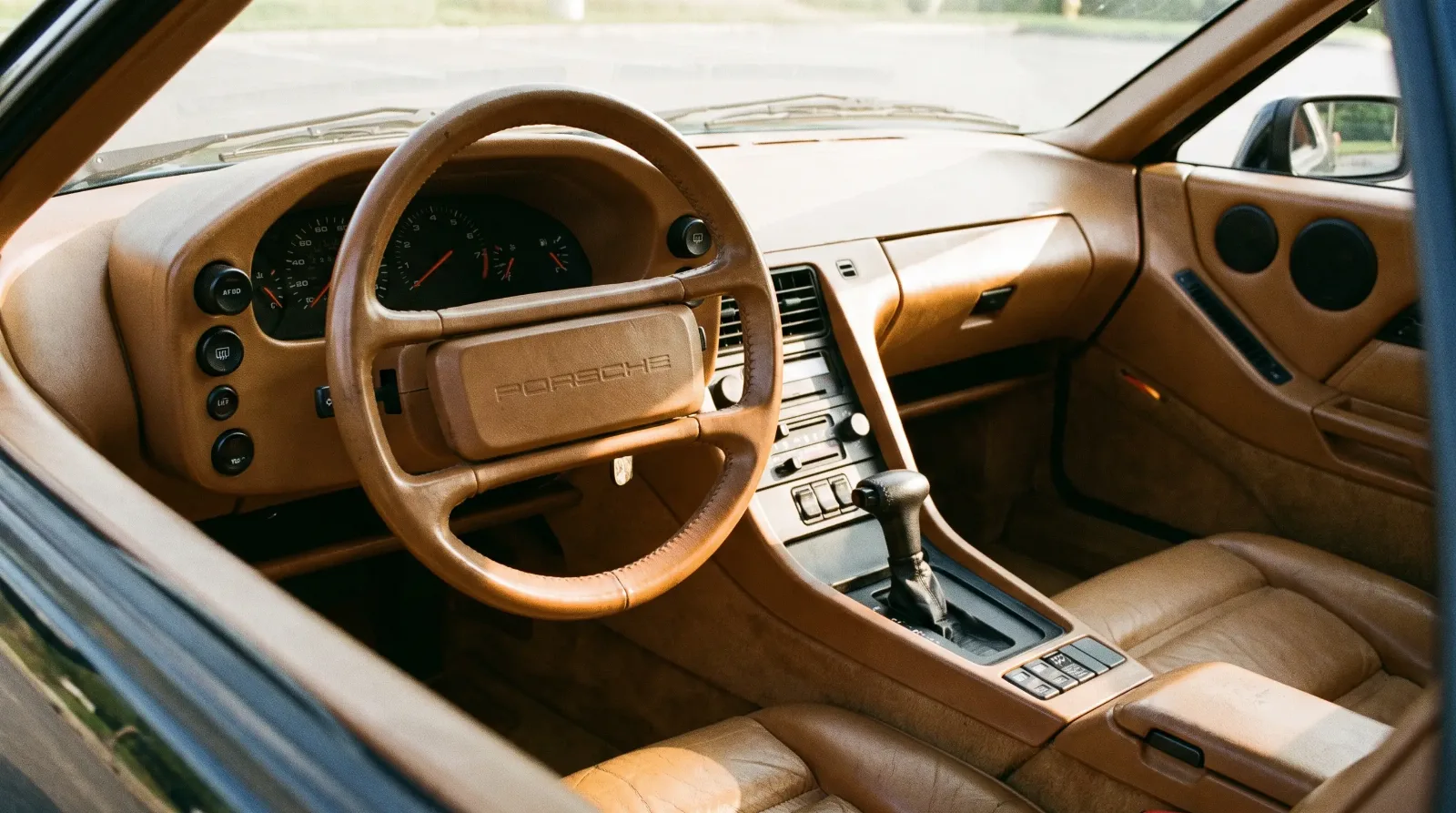
The design work did not stop at the body. Lapine's studio carried the same forward-looking philosophy into the cabin, where the dashboard and instrument layout pushed just as hard against convention as the exterior did. That part of the story is covered in more from this chapter, and it rounds out the full picture of what Lapine's team was trying to build.
Buyers today who want to see that design in person rather than just read about it have plenty of options. There is a steady supply of classic Porsche 928 for sale across every model year, and understanding the full arc behind that shape, covered in the 928 story, makes it easier to appreciate exactly what you are looking at when one shows up in person. Lapine's team built a car that had to earn its place next to the 911 on shape alone, and nearly fifty years later, it still does.