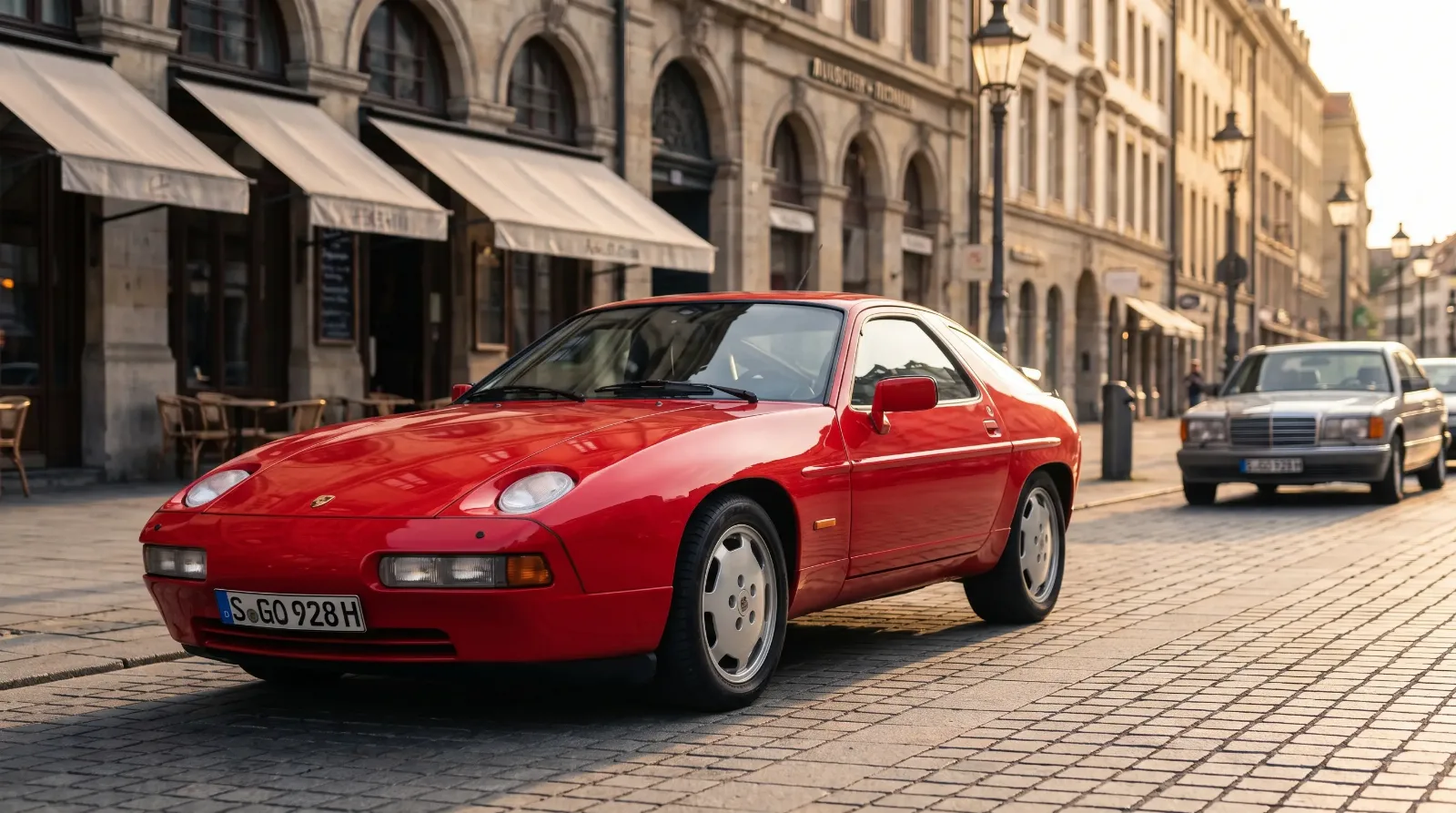
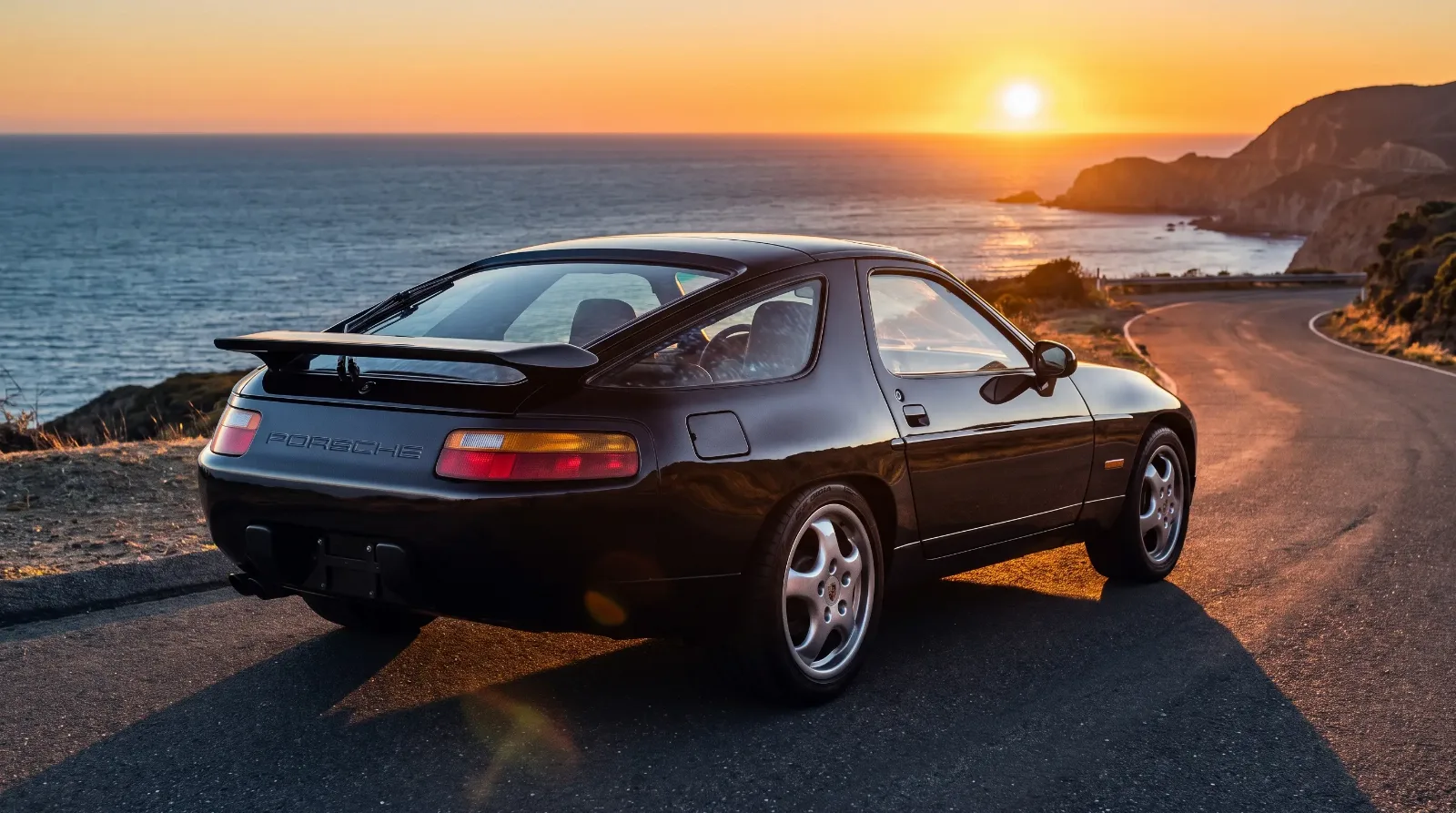
A guy at our club's spring meet once bet a round of drinks that his 928 GTS could out-torque anybody's air-cooled 911 in the room, no exceptions. He lost the bet on a technicality, somebody had trailered in a turbo car, but he wasn't wrong about the point he was making. The Porsche 928 GTS, built from 1992 through 1995, is the car that finally let the front-engine V8 argument win a room full of 911 loyalists, at least for a night. It's the last and, by most accounts among people who've owned several, the best 928 Porsche ever built.
This one picks up where the front-engine 928 leaves off, tracing the model to its final and most complete form.
What made the GTS different from every 928 before it
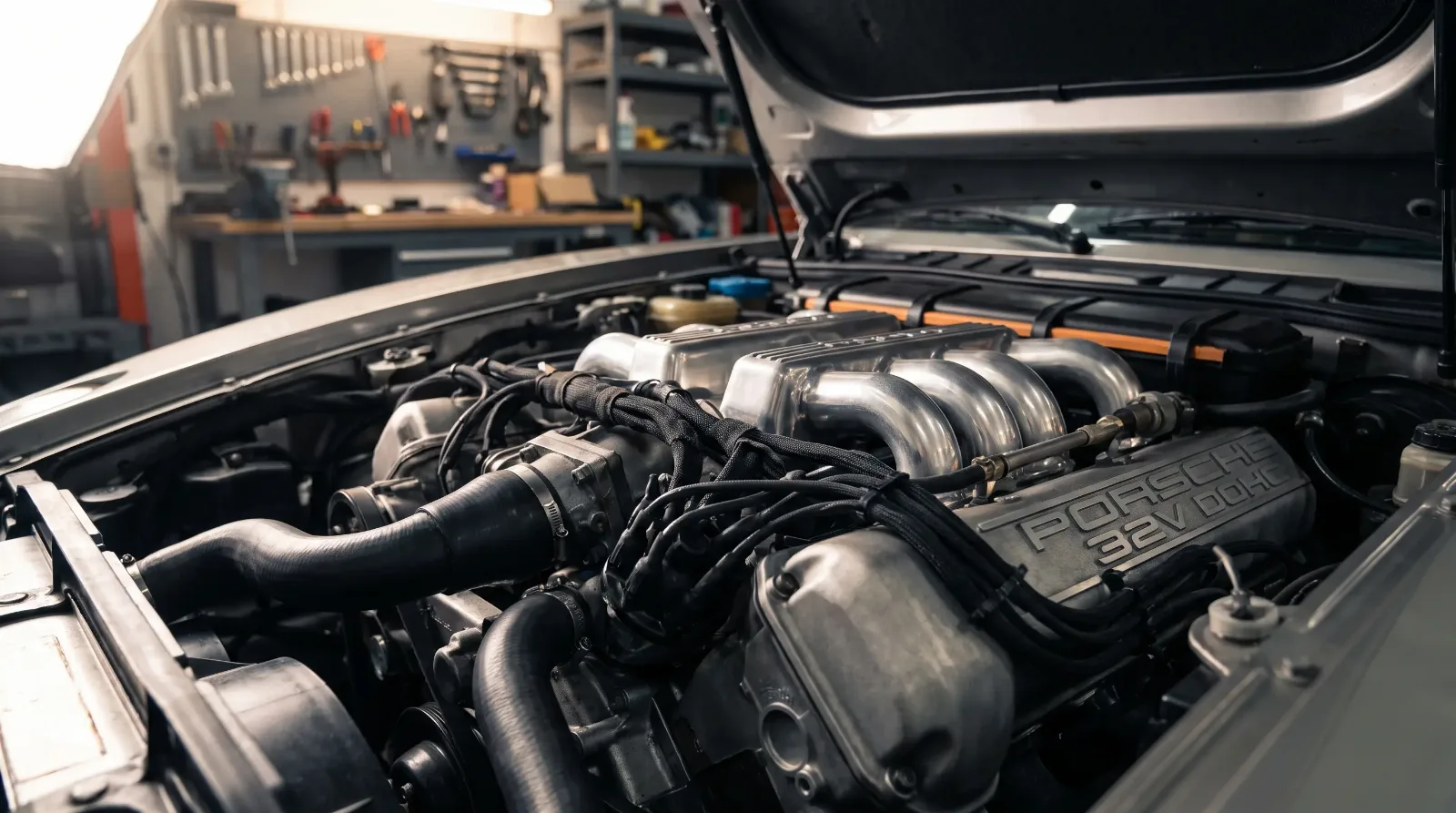
Porsche bumped the V8 to 5.4 liters for the GTS and fitted four-valve heads, the same basic architecture the S4 had introduced but pushed further. Output landed at 350 hp for US-spec manual cars (345 hp for the automatic), with torque around 369 lb-ft, both figures well ahead of anything the 928 line had offered before. It wasn't a subtle jump. Owners who'd driven an S4 back to back with a GTS noticed the difference in the first few hundred feet, not on some track chart three laps later.
Porsche also widened the rear fenders to cover a wider rear track and bigger wheels, giving the GTS a visually different stance from earlier 928s. It's the one variant you can usually spot from across a parking lot without needing to check the badge.
Inside, the GTS carried over the same broad, flat-topped dashboard and the two-plus-two seating that every 928 since 1977 had used, so buyers stepping up from an S4 wouldn't find anything unfamiliar behind the wheel. What they'd notice instead was the ABS calibration and the brake package, both upgraded to match the added performance. Porsche wasn't going to sell a car with this much torque and leave the stopping power at S4-era spec, and it shows the moment you push the pedal hard from real speed.
The mechanical story behind the numbers
A limited-slip differential came standard on the GTS, which matters more than it sounds like on paper. A heavy front-engine grand tourer putting down that much torque through an open diff would spend half its life fighting wheelspin on one side. The LSD, paired with the transaxle layout Porsche had been refining since the car's 1977 debut, let the GTS put power down evenly enough that the extra torque actually translated to real acceleration instead of tire smoke.
Buyers could still get a five-speed manual, though most GTS cars that came into the US left the factory with the four-speed automatic. That split shows up constantly in club conversations, because manual GTS cars in good documented condition tend to command a real premium over the automatics, sometimes a substantial one depending on mileage and history.
| Spec | 928 GTS |
|---|---|
| Production years | 1992-1995 |
| Engine | 5.4L V8, 32-valve |
| Power (US spec) | 350 hp manual / 345 hp automatic |
| Torque | 369 lb-ft |
| Differential | Limited-slip, standard |
| Transmissions | 5-speed manual or 4-speed automatic |
Why club members treat the GTS as the answer, not just a variant
Every 928 generation before the GTS was building toward something, more displacement here, a better cylinder head there, digital engine management somewhere in between. The GTS is where all of it landed at once. It has the biggest engine the 928 ever wore, the most valves, the widest rear track, and the standard limited-slip that earlier cars either lacked or offered only as an option depending on market and year.
That doesn't mean it's the right 928 for everyone. Parts and service on the wider rear bodywork and the 32-valve top end aren't cheap, and a neglected GTS can turn into an expensive lesson fast. But among people who've actually owned more than one 928 generation, the GTS is rarely the car anyone regrets buying, so long as the service records back up what the seller claims.
There's also the production number to consider. Because the GTS run lasted only a handful of model years and much of it landed in a soft market for grand tourers generally, total production stayed modest compared to earlier S and S4 volumes. That scarcity is part of why the car commands the respect it does at meets today. It isn't just the specification sheet talking, it's the fact that finding one at all takes real looking, and finding one with clean documentation takes longer still.
"I've heard every argument for why some other 928 is the smart buy. Then somebody drives a documented GTS for the first time and the argument's over before we get back to the clubhouse."
— Wayne Coburn
Buying one: what the paper trail should show
The GTS rewards patience more than any other 928. Because the run was short, only four model years, and because so few came to the US with a manual transmission, a good one takes time to find. When you do find a candidate, the service history matters more than the seller's story. Look for records covering the limited-slip differential, the timing belt and water pump service on the 32-valve head, and any suspension bushing work on the wider rear end.
For a look at the model's second life in film and popular memory, more from this chapter covers where the 928 showed up outside the garage and the racetrack.