
Every Porsche club has one member who brings up the same argument at every meeting, and at the Piedmont chapter it was Ernie, holding a coffee cup like a gavel, insisting the Porsche 928 was supposed to kill the 911. Not slow it down. Not sit beside it. Kill it, replace it, put it out to pasture. Half the room groaned because they had heard the speech before. The other half leaned in, because Ernie was not wrong, and the paperwork backs him up.
Car Features
6 min read
The Car Meant to Replace the 911
Porsche built the 928 to end the 911's run, not join it. Here is why the plan was real, and why the 911 refused to die anyway.
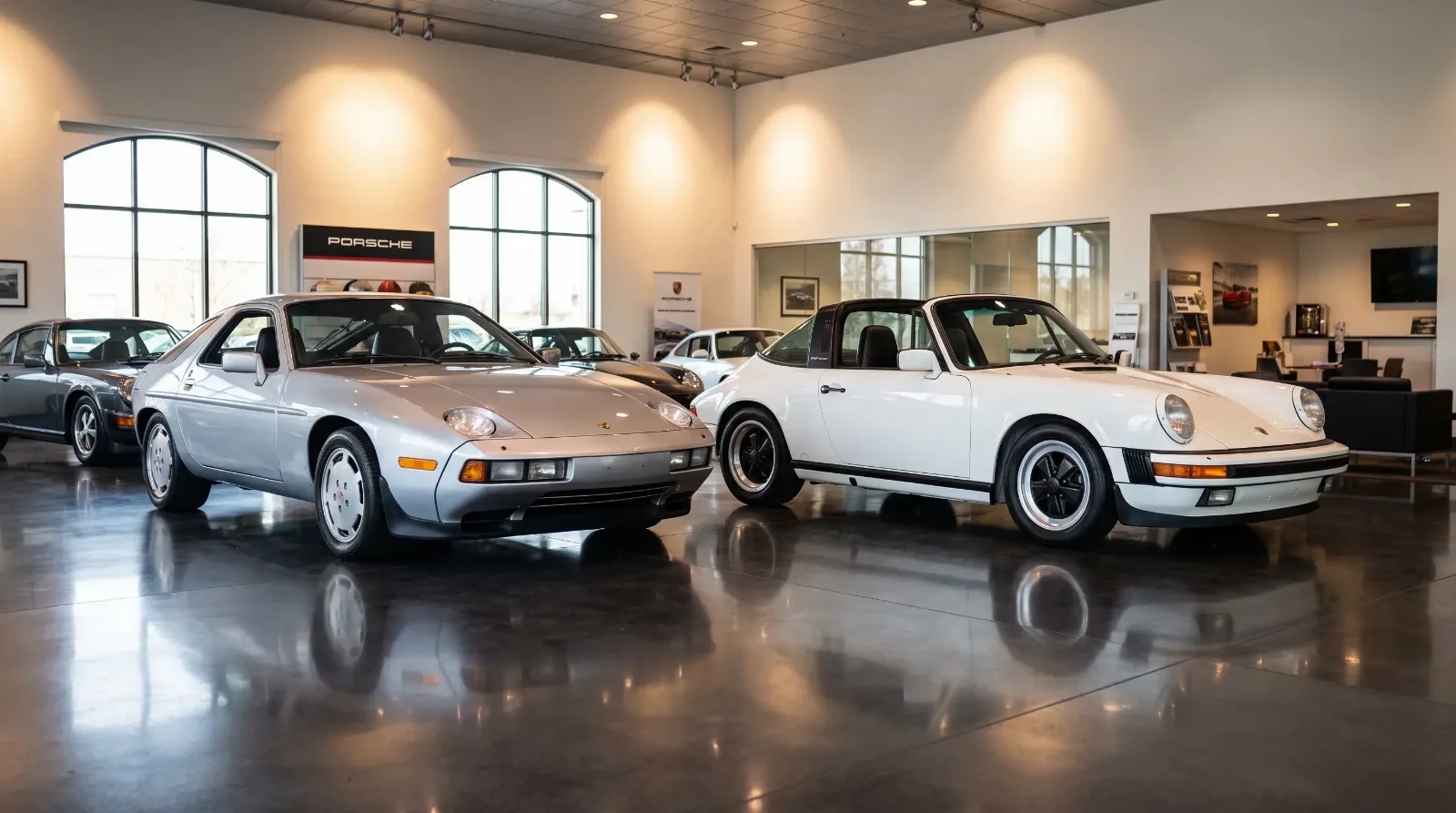
A clubhouse argument that refuses to die
The debate goes like this: was the 928 ever really meant to end the 911, or is that just a story enthusiasts tell to make the front-engine car sound more important than it was. Ernie's answer was always the same. He would pull out a photocopy of a period Porsche press statement and tap it twice. The company's own engineers, not fan fiction, called the 911 an aging design that could not meet the coming decade's crash and emissions rules forever. That is not folklore. That is a plan with a budget attached.
What makes the story land with a room full of skeptics is that nobody had to argue about intent. Porsche said the quiet part out loud in the mid-1970s, and then built a factory line to prove it meant it.
Why Porsche wanted the air-cooled car gone
By the early 1970s, Porsche's leadership looked at two things and did not like either one. First, the air-cooled, rear-engine 911 was already a decade old and its fundamental layout, engine hanging out past the rear axle, was the kind of thing a new generation of engineers would not have chosen from scratch. Second, American safety and emissions regulation was tightening fast, and there was real institutional fear inside Porsche that a rear-engine, air-cooled sports car simply would not have a legal path forward in the United States by the 1980s.
So the company did what serious companies do when they think a product line is a dead end: it built the successor first, and let the old car keep earning money while the new one got sorted. That successor was the front-engine, water-cooled 928, and Porsche wanted the world to read that layout as the future, not a detour.
The board bet real money on the front-engine car
This was not a styling exercise or a motor show flirtation. Porsche committed serious tooling and engineering budget to a car with an entirely different architecture from anything it had sold before: a water-cooled V8 up front, a transaxle at the rear for weight balance, and a body designed to meet crash standards the 911 had never been drawn around. That is the V8 grand tourer Porsche hoped would carry its badge into the next generation, and the company priced it, marketed it, and positioned it as the senior model in the lineup, above the 911, not beside it.
Wayne remembers a longtime parts counter guy at a since-closed dealership putting it plainly one slow Tuesday afternoon, and the line stuck with him for thirty years after.
"They didn't build the 928 to keep the 911 company. They built it to bury it, and then the customers refused to dig the hole."
Wayne Coburn
The customers who would not let the 911 go
Here is where the plan met the parking lot. The 911 kept selling. Not out of momentum alone, but because a meaningful share of Porsche's most loyal buyers wanted the exact thing the 928 was engineered to move away from: a light, small, air-cooled, rear-engine car that felt alive in a way a bigger, heavier grand tourer never quite matched. Dealers who expected to phase the 911 out over a few seasons kept writing orders for it instead. Club members who tried the 928, admired it, and then went home and bought another 911 became a recurring type at every regional meet through the 1980s.
Porsche's own internal debates over this period are well documented in the histories written since, and the short version is that engineering conviction lost to customer stubbornness. The 911 did not survive because Porsche changed its mind out of nostalgia. It survived because the market voted with its checkbook, year after year, and Porsche eventually stopped fighting that vote.
| Question at the club table | What the record shows |
|---|---|
| Was the 928 meant to replace the 911 | Yes, by Porsche's own stated product planning in the 1970s |
| Did the 911 get discontinued | No, it outlived the 928's original production run entirely |
| Why did the plan change | Sustained 911 demand from loyal buyers Porsche did not anticipate |
| Which car ended up the flagship | Neither, in the end. Both found their own audience |
What the record actually settles
So who wins Ernie's argument. Nobody fully, which is probably the most honest answer a club debate ever produces. Porsche's intent is not in dispute; the company said plainly it saw the 911 as a design with a shelf life and built the 928 as its planned successor. What is also not in dispute is that intent and outcome parted ways almost immediately, and the 911 outlasted the very car meant to end it by decades.
If you want the fuller history of how that front-engine car came together, and why Porsche believed so strongly in the layout it chose, a related deep-dive covers the engineering side in more depth than a clubhouse argument ever could. And if the whole arc of the model, from ambitious successor to respected car in its own right, is what you are after, the complete Porsche guide lays out the wider timeline.
Ernie still brings up the argument every few months. Nobody has managed to end it yet, and honestly, that might be the point. A plan this ambitious, and this thoroughly overtaken by its own customers, deserves to stay a live argument rather than a settled footnote.
Sources and notes
Related Reading
Have a
Porsche
for Sale?
Reach thousands of serious classic car collectors across the US.
Sell It Here →
Are You a Classic Car Dealer?
List your full inventory and connect with targeted classic car buyers.
Join as a Dealer →

About the author
Wayne Coburn
Longtime Corvette owner, judge and club figure who knows the cars, the records and the people behind them.
Related Listings - Porsche
Comments (1)
F
Frank DeLuca
2 months ago
This was the car I wanted at 22. Could finally afford one a few years ago. Worth the wait.