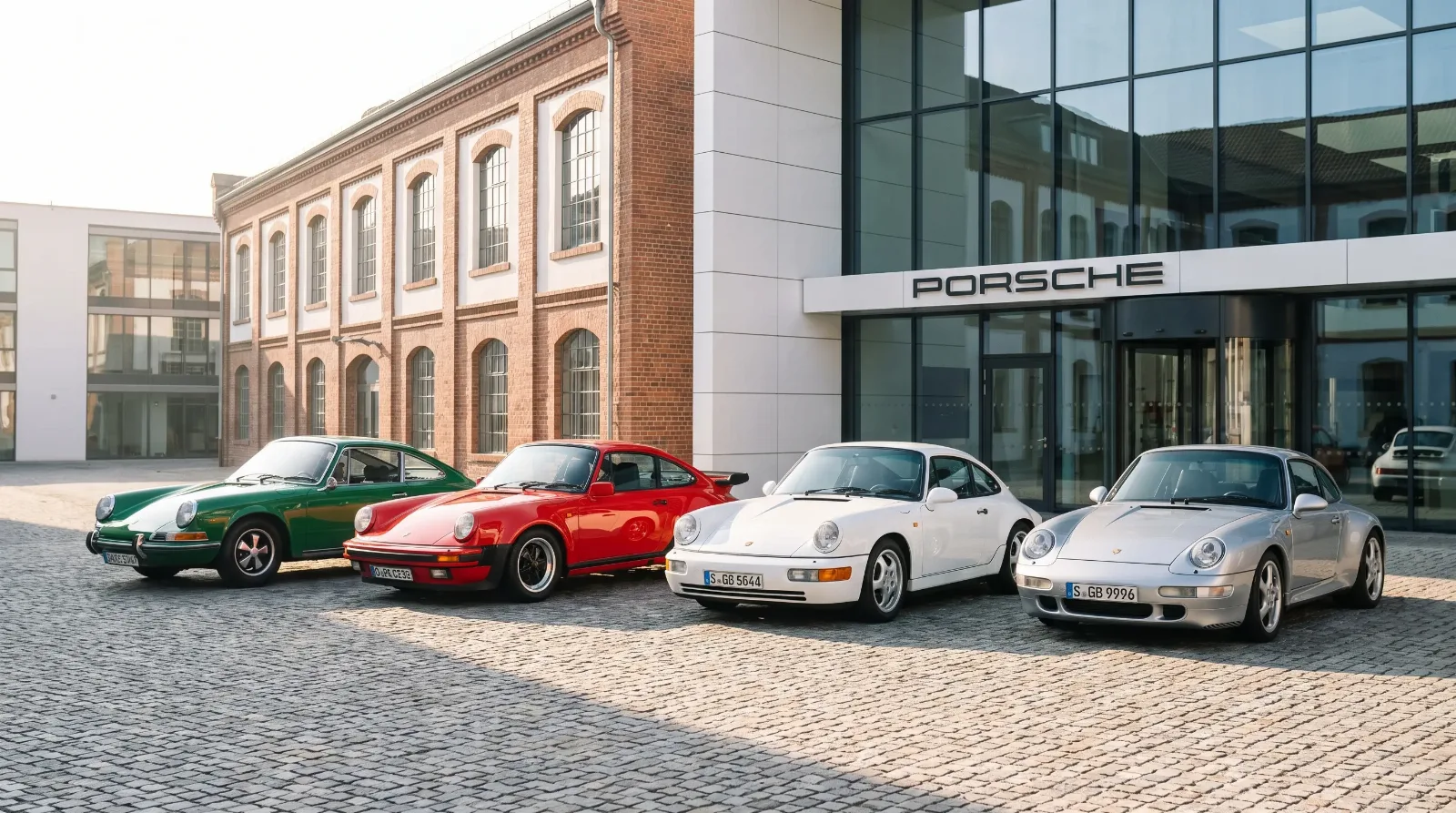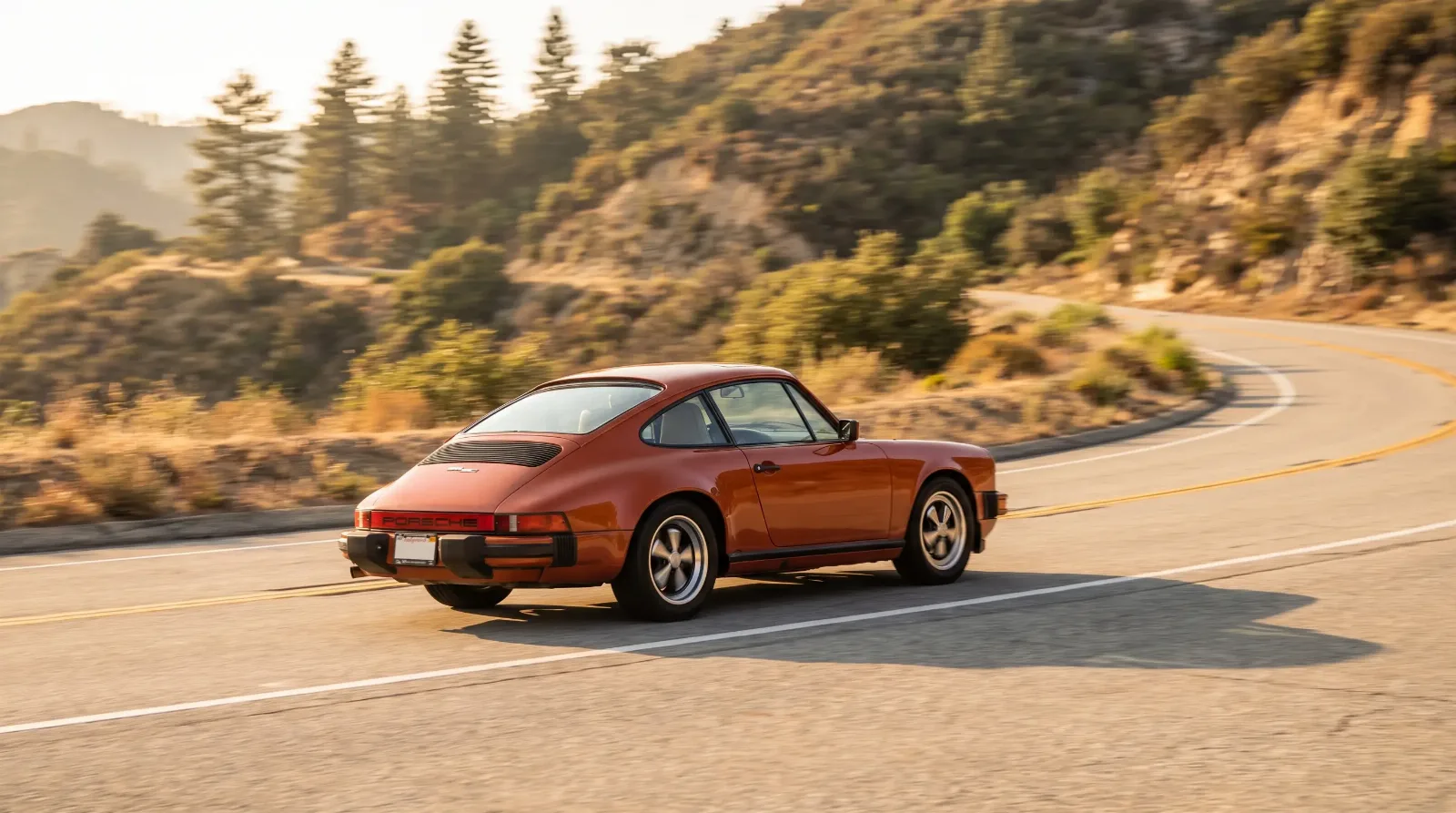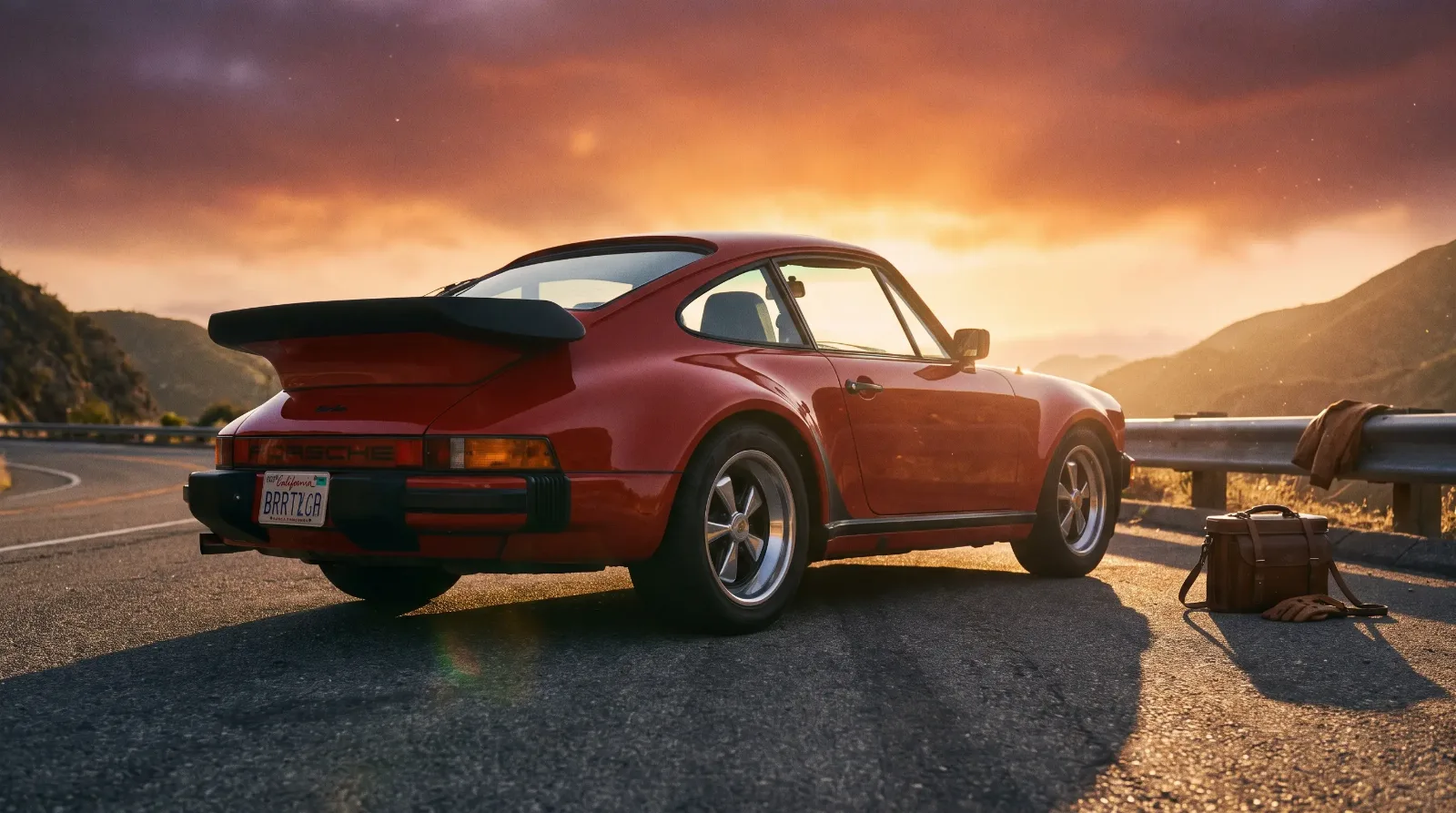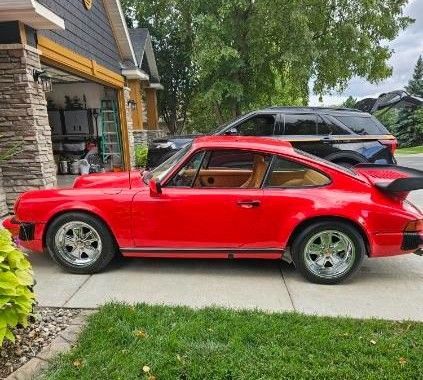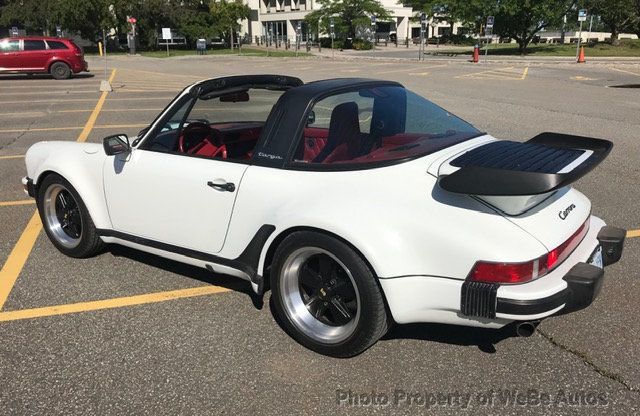
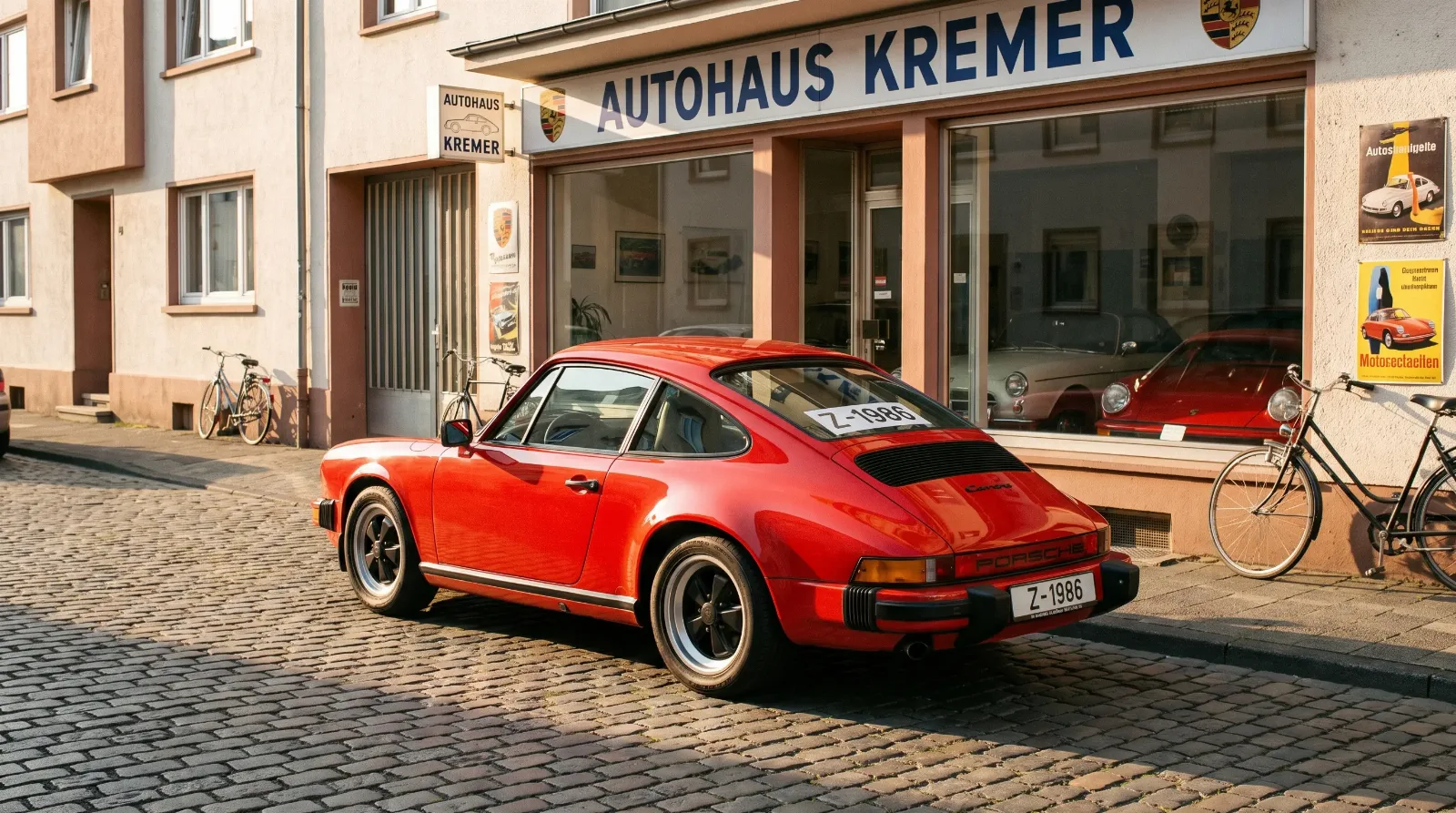
There is a photograph a friend of mine keeps on her desk, taken in 1986 outside a Stuttgart dealership, of her father in a bad tie standing next to a brand new Guards Red Porsche 911 Carrera 3.2. He had saved for four years. He drove it home the same afternoon with the paper plates still taped to the glass, and thirty-eight years later, the car is still in the family garage, still wearing most of its original paint, still smelling faintly of the leather that has never fully stopped being new. She tells me she learned to drive a manual transmission in that car, stalling it in a church parking lot on a Sunday morning while her father sat calmly in the passenger seat, waiting.
The Porsche 911 Carrera 3.2 is full of stories like that. It was not a car people bought as an investment or a museum piece. It was a car people bought to keep, and the people who bought them mostly did exactly that.
A car built to end an era gracefully
By 1984, Porsche knew the air-cooled 911, in the shape the world had known since 1963, was living on borrowed time. The G-series body, the one with the impact bumpers and the familiar low roofline, had been in production for over a decade, and everyone inside Porsche understood a new generation was eventually coming. What they built in the meantime was not a placeholder. The Carrera 3.2 took the 911 SC's foundation and refined nearly everything about it, from the fuel injection to the gearbox, and turned the outgoing shape into arguably its most complete version.
The name itself said something. Porsche had not used "Carrera" on a mainstream 911 since the early 1970s, reserving it for the cars that mattered most. Bringing it back for this one was the company's way of saying that even as an ending approached, they intended it to be a strong one.
What actually changed under the skin
The headline change was the engine: a 3.2 liter flat six replacing the SC's 3.0 liter unit, now fed by Bosch Motronic engine management rather than the older mechanical injection systems. Output rose to 231 hp in most world markets, though US, Canadian, and Japanese cars ran a lower-compression version rated at 207 hp initially and 217 hp from 1986 to meet emissions rules, still a meaningful jump that gave the car real urgency without losing the tractable, easy-to-live-with character the SC had built its reputation on.
The gearbox changed too, and this is the detail longtime owners talk about most. Early Carrera 3.2s used the older 915 transmission, a gearbox with a reputation for being notchy and unforgiving of a rushed shift. From 1987 onward, Porsche introduced the G50 transmission, with a hydraulic clutch and a noticeably smoother, more modern shift action. Among people who actually drive these cars regularly rather than store them, the G50 cars are often the ones people quietly seek out first.
Suspension and braking also received a steady stream of small refinements across the model's six year run, the kind that rarely make a headline but add up to a car that simply feels more finished with each passing year. Larger brakes arrived partway through production, and the anti-roll bars were retuned to calm some of the earlier 911's nervousness at the limit. None of it changed the fundamental character of the car. It just sanded down the rough edges, one small revision at a time, until the shape that had started as the SC felt entirely resolved.
| Model years | Transmission | Notable detail |
|---|---|---|
| 1984-1986 | 915 five-speed | Bosch Motronic introduced, engine grows to 3.2 liters (231 hp ROW, 207 hp US/Canada/Japan) |
| 1987-1989 | G50 five-speed | Hydraulic clutch, smoother shift action widely preferred by drivers; US/Canada/Japan output rises to 217 hp from 1986 |
The quiet virtue of being unremarkable in its time
It is strange now to think of the Carrera 3.2 as unremarkable, but that is close to how it was regarded when it was simply the current 911. It was not the fastest car in Porsche's lineup. The 930 Turbo held that title, loudly, with a reputation that scared as many people off as it attracted. The Carrera 3.2 sat one step below that spectacle, and in doing so became the 911 that ordinary, careful people actually bought, drove to work, took on holiday, and handed down.
That is why so many surviving cars carry the kind of paperwork that makes an appraiser's morning: original window stickers, service books stamped at the same dealership for a decade, a single family of owners. Cars that were bought to be driven and loved, rather than cars bought to be flipped, tend to arrive at the present day with their history intact.
My friend's father, the one in the bad tie in that photograph, sold his other car the same week he picked up the Carrera 3.2. He never owned another Porsche, and he never needed to. When people ask his daughter why the family never traded it in for something newer over the decades, she just shrugs and says nobody ever gave her a good enough reason to. That is, in a small way, the whole appeal of this particular 911 distilled into one family's habit of simply not letting go.
"You can tell a loved car from a stored one within about thirty seconds of sitting in it. The stored ones smell like a museum. The loved ones smell like somebody's Sunday."
— Nora Beckett
Where this car sits, and where to find one
To understand why a car like the Carrera 3.2 could exist at all, a car this refined arriving at the tail end of a model Porsche had already tried once to discontinue, it helps to know how the 911 became an icon in the first place. The Carrera 3.2 is not the beginning of that story. It is closer to its most graceful pause, the last full breath before the shape changed for good.
If the idea of the 930 Turbo's reputation has you curious about the wilder sibling this car lived alongside, keep reading the series to see how that story unfolds. And if a photograph like the one on my friend's desk has you thinking about starting a story of your own, there are classic 911s for sale worth a look, G50 cars especially, the ones built to be driven home with the paper plates still on.