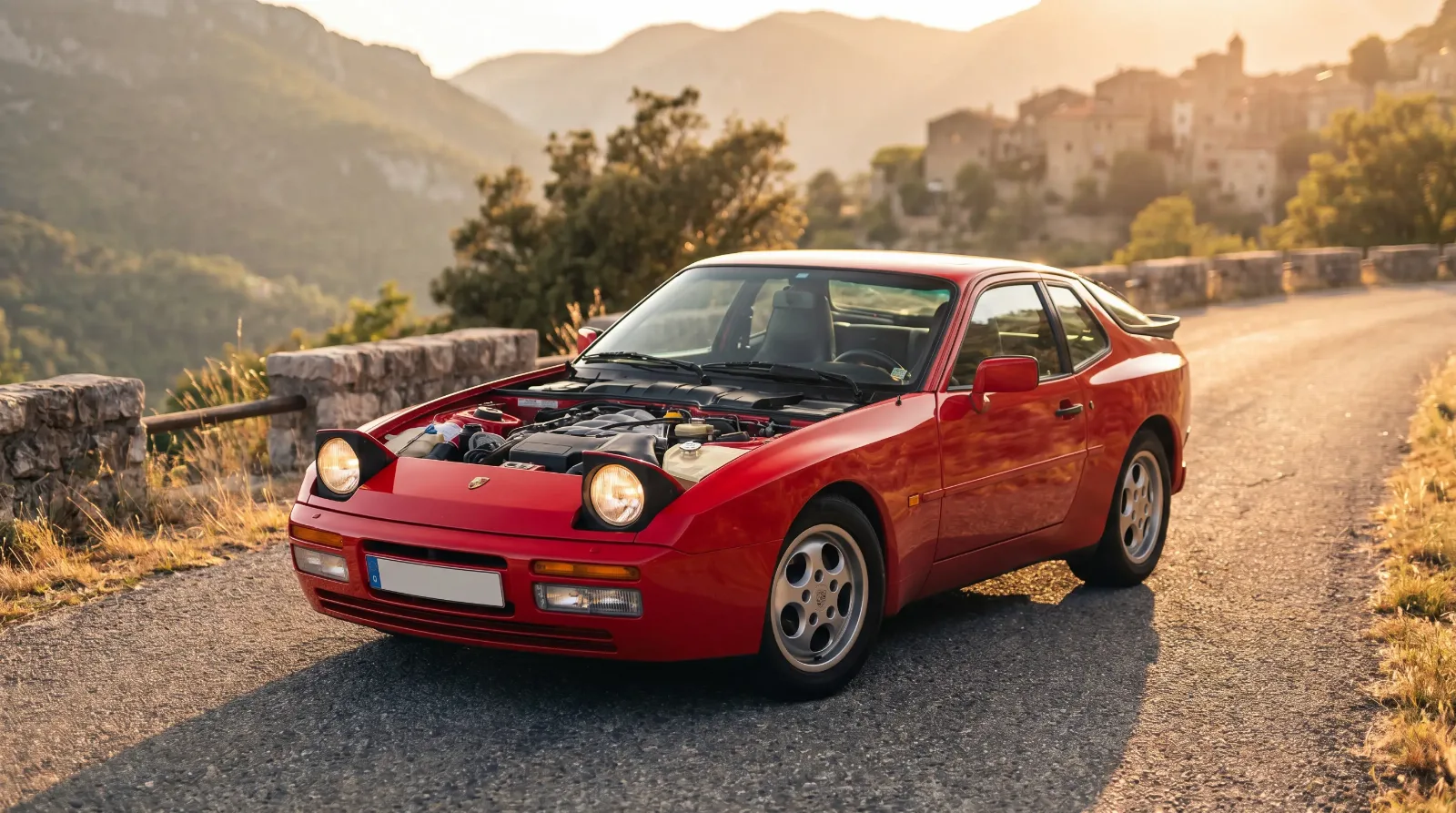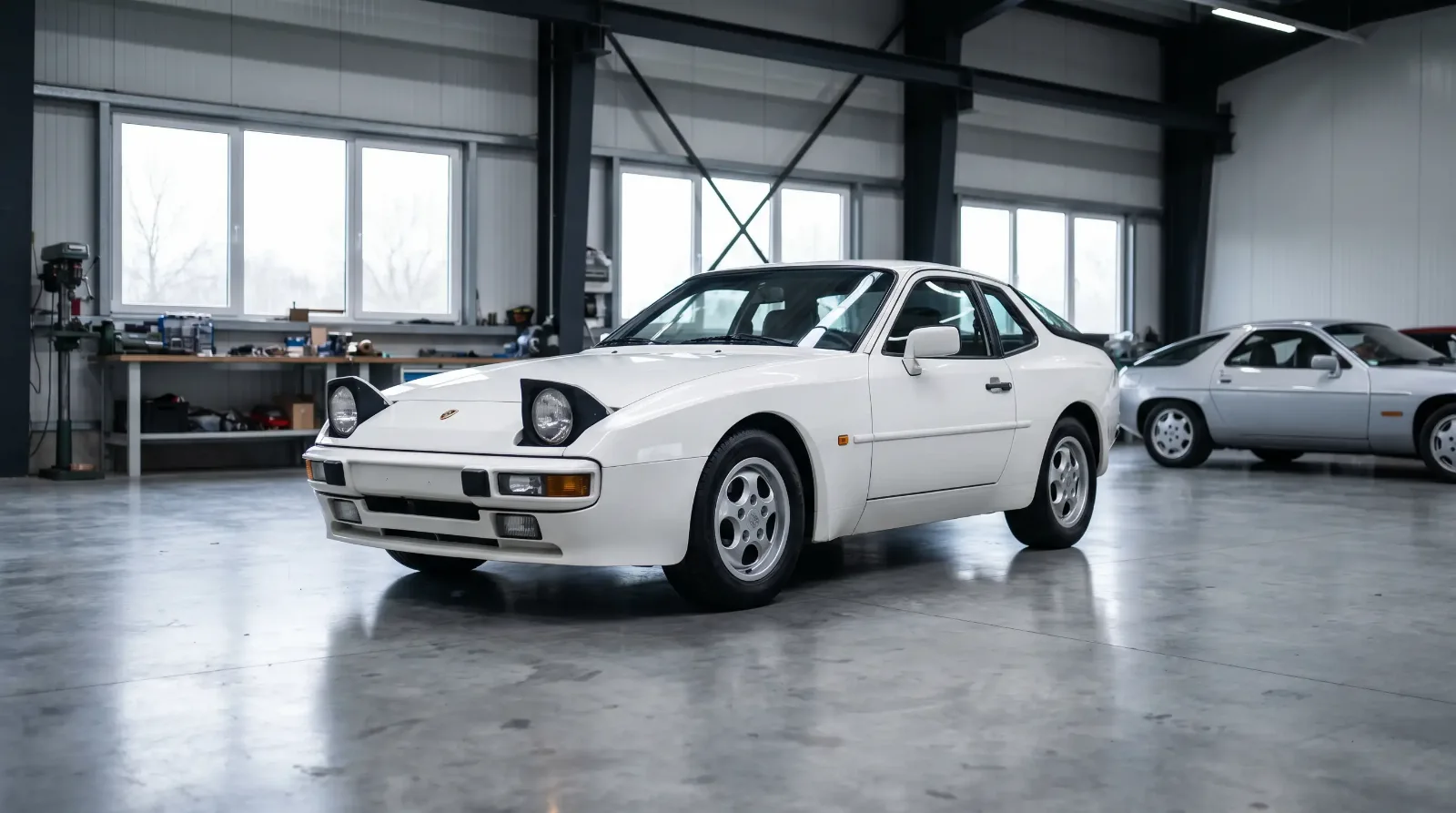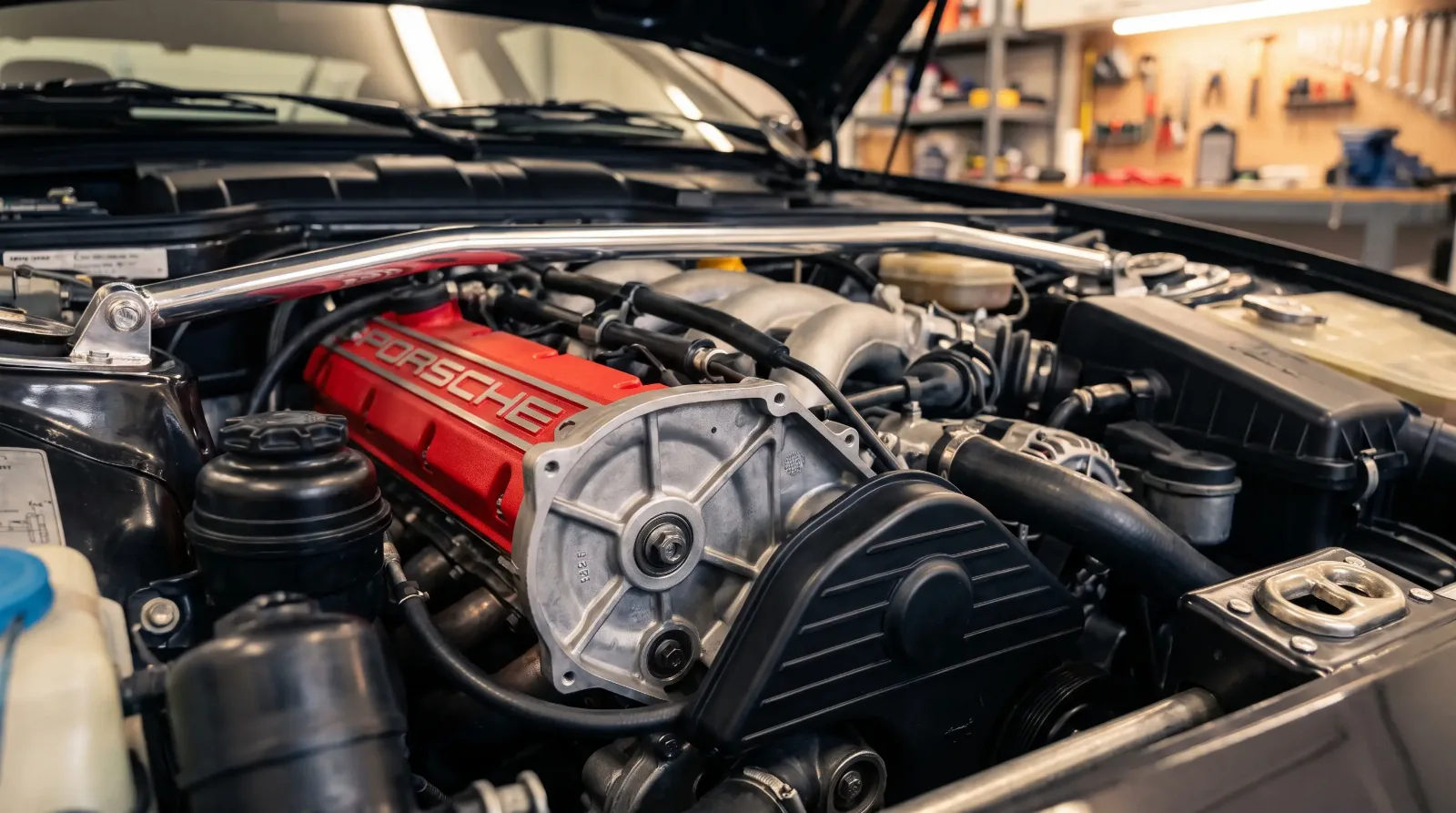
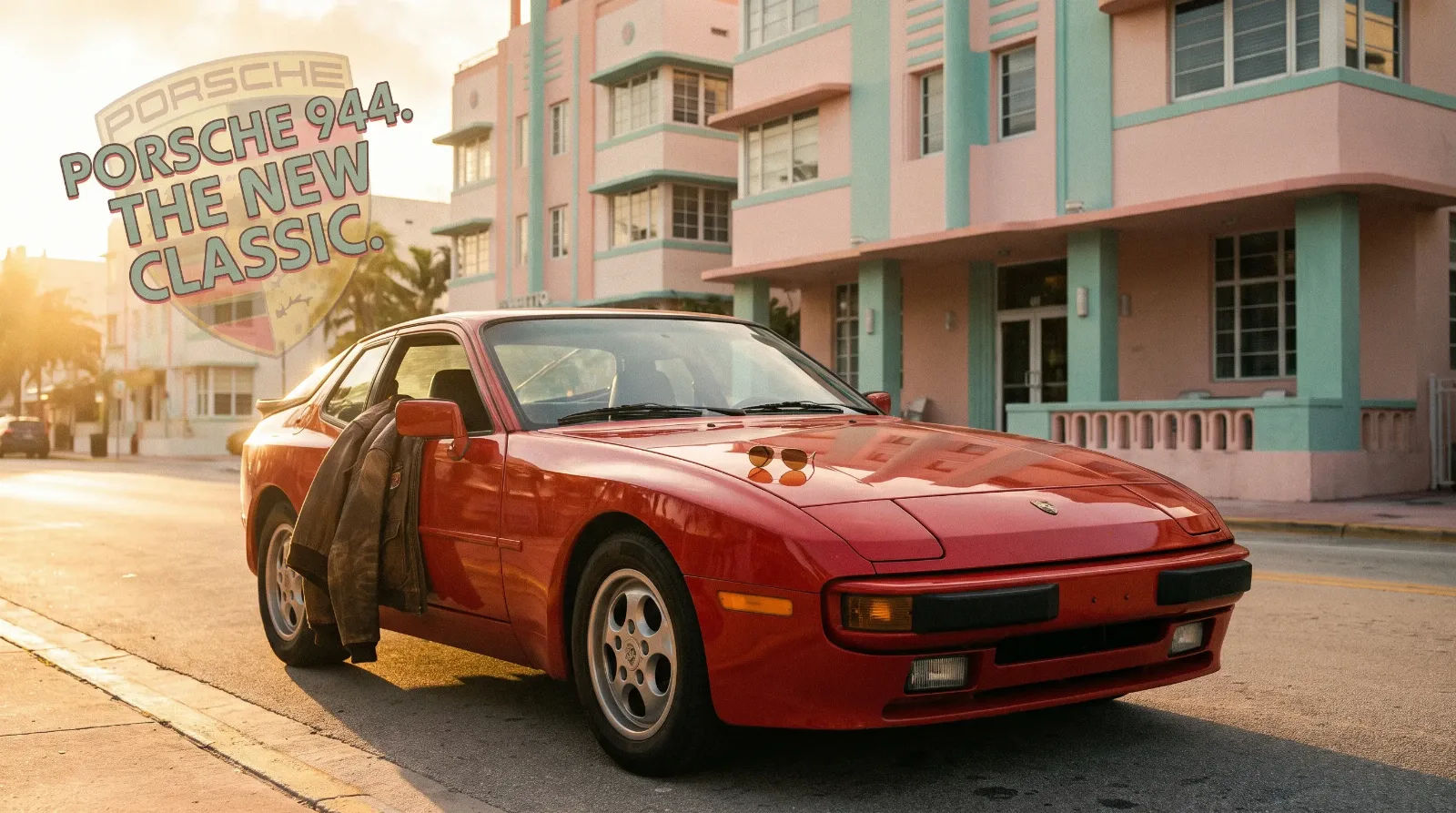
The Porsche 944 sold better than the number of people who actually wanted a 911 could explain. Part of that answer is culture, not spec sheets. Through the 1980s the 944 showed up in movies, magazines, and enough teenage bedroom posters that it became shorthand for a certain kind of success, the kind that was reachable rather than aspirational fantasy. That distinction mattered more than any single horsepower figure.
The number that explains the poster phenomenon
A new 944 started around $19,000 for the 1983 model year, climbing to roughly $21,500 by 1984, less than half what a contemporary 911 cost. That gap put a Porsche badge within reach of a doctor five years out of residency or a lawyer three years into a firm, not just old money. Marketing noticed. Print ads leaned into the idea that this was the smart buyer's Porsche, the one for people who did the math and didn't need a bigger badge to feel like they'd arrived. That positioning is why the 944 ended up everywhere in the visual culture of the decade while the 911 stayed the aspirational ceiling nobody's neighbor actually owned.
Screen time adds up faster than people remember
Risky Business put a 928 through a lake, not a 944, and that mix-up gets repeated constantly, so let's be clear about it. But the 944 got plenty of its own screen time across the decade in less famous but more frequent appearances, background cars in teen movies, magazine ads photographed against pastel backdrops, and enough MTV-era set dressing that it became visual wallpaper for the decade the same way a boombox or a pair of Wayfarers did. None of that required box office numbers to matter. Repetition is its own kind of marketing, and the 944 got repetition in volume.
Print media did more of the heavy lifting than film did. Car magazine covers, department store catalog spreads for driving gloves and sunglasses, even unrelated lifestyle ads that used a 944 in the background because the silhouette read as "successful young professional" without any dialogue needed. That's a specific kind of cultural work, the car doing a job without a single line of script, and it's easy to undercount because nobody keeps a tally of magazine page appearances the way box office numbers get tracked for movies. The volume was there even if the receipts are harder to pull than a box office report.
The real number behind the image was performance, not just styling
Here's where I separate the poster from the spec sheet. The base US-spec 944 made 143 hp and hit 60 mph in the mid-8-second range, respectable but not a headline number. The Turbo variant changed that story completely, reaching 217 hp and cutting that 0-60 time by roughly two seconds. That's the version that backed up the cultural image with an actual number worth bragging about at a dinner party. A lot of cars get remembered fondly for looking fast in a magazine spread. The 944 Turbo was one of the rare ones that actually was fast, and that gap between image and reality is usually where nostalgia falls apart under scrutiny. It didn't here.
| Variant | Approx. power | Cultural footprint |
|---|---|---|
| 944 base | 143 hp | The accessible-Porsche image, magazine and print ad staple |
| 944 Turbo | 217 hp | Backed the image with genuine performance credibility |
| 944 S2 | 208 hp | Late-decade refinement, less cultural visibility than Turbo |
Why the 1980s image still drives buyer demand today
People shopping this segment now weren't necessarily alive to see the original ads, but the aesthetic got recycled hard through synthwave playlists, retro car meets, and a wave of 1980s nostalgia that shows no sign of slowing down. That recycled image is doing real work in the current market. Buyers under 40 are chasing the 944 pop culture aesthetic as much as the driving experience, and that's a legitimate reason to want the car, not a lesser one. Nostalgia has always been a market force. It just took Porsche 944 pricing about three decades to catch up to it.
Watch a modern car auction stream and you'll hear bidders reference the poster on their childhood wall before they mention the compression ratio. That's not a criticism, it's just an honest accounting of what actually moves people to raise a paddle. The 944 pop culture wave of the last several years has pulled in buyers who never would have shopped this segment on driving dynamics alone, and the market is better for it because those buyers are funding the belt services and paint jobs that keep good examples alive instead of parted out.
"People ask me if the 944's 1980s image was manufactured or earned. Both. The marketing built the image, the Turbo backed it up with a real number, and that combination is rarer than people think."
— Dan Reeves
Separating the myth from the receipt
If you're buying into the transaxle chapter of Porsche's story because of the image rather than the mechanicals, that's fine, just go in knowing which parts of the legend are documented and which are barroom repetition. The lake scene belongs to a 928, not a 944. The sales volume claims are close enough to check before you repeat them as fact. What isn't in dispute is the Turbo's real-world performance numbers, and those alone justify the car's reputation without needing the poster to do any of the heavy lifting.
The practical upshot for buyers is that image-driven demand and mechanically-driven demand are converging on the same cars right now, which is unusual and worth noting. A well-sorted 944 Turbo satisfies both the person who wants the 1980s aesthetic on their driveway and the person who wants a genuinely quick car to drive on weekends. That overlap is part of why prices on clean examples have moved as much as they have in the last few years. Two separate buyer motivations pulling on the same limited supply of good cars tends to do that.
For the engineering side of that same story, including how the balance shaft engine actually works, a related deep-dive on the platform sits in a related deep-dive.