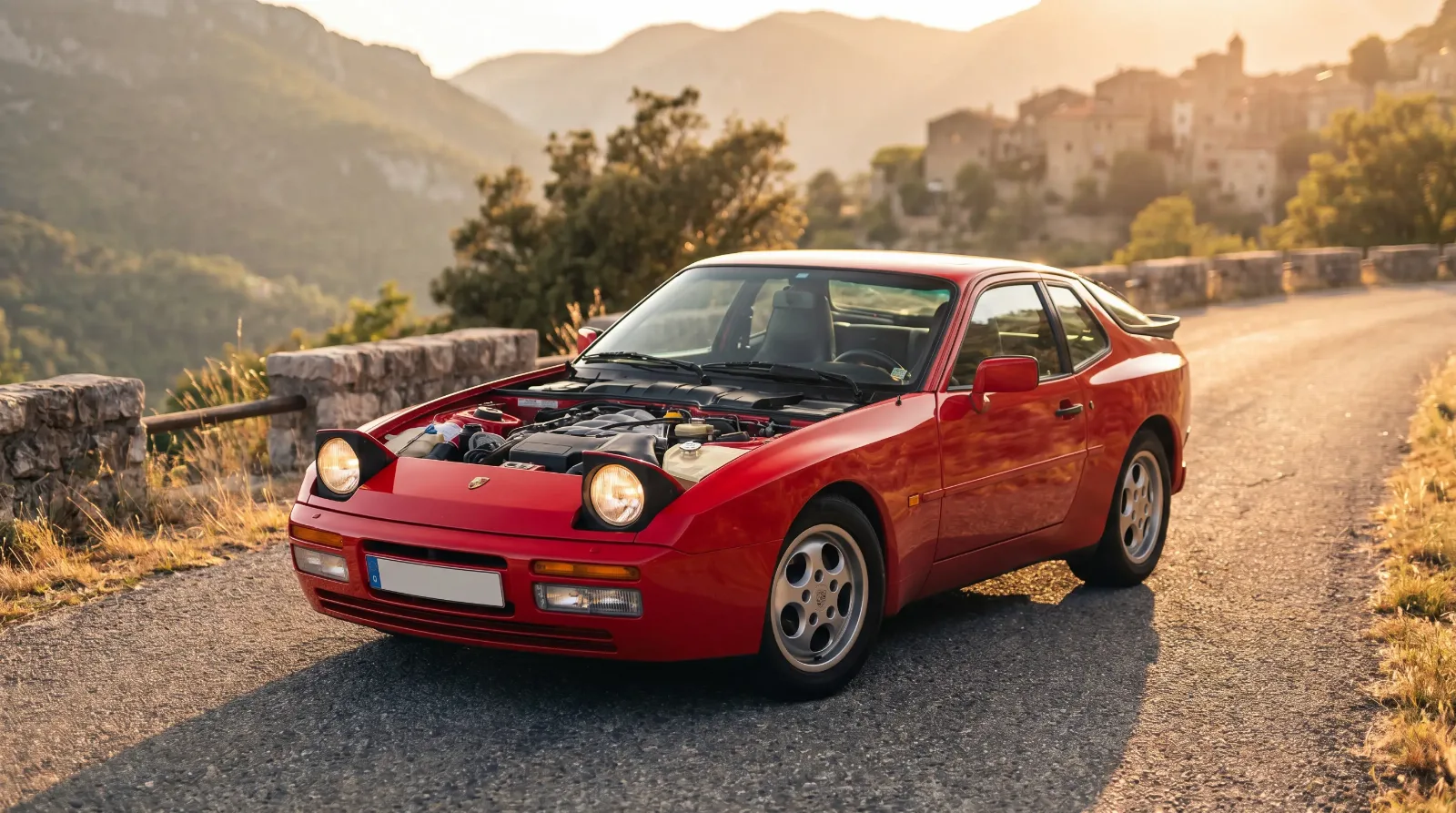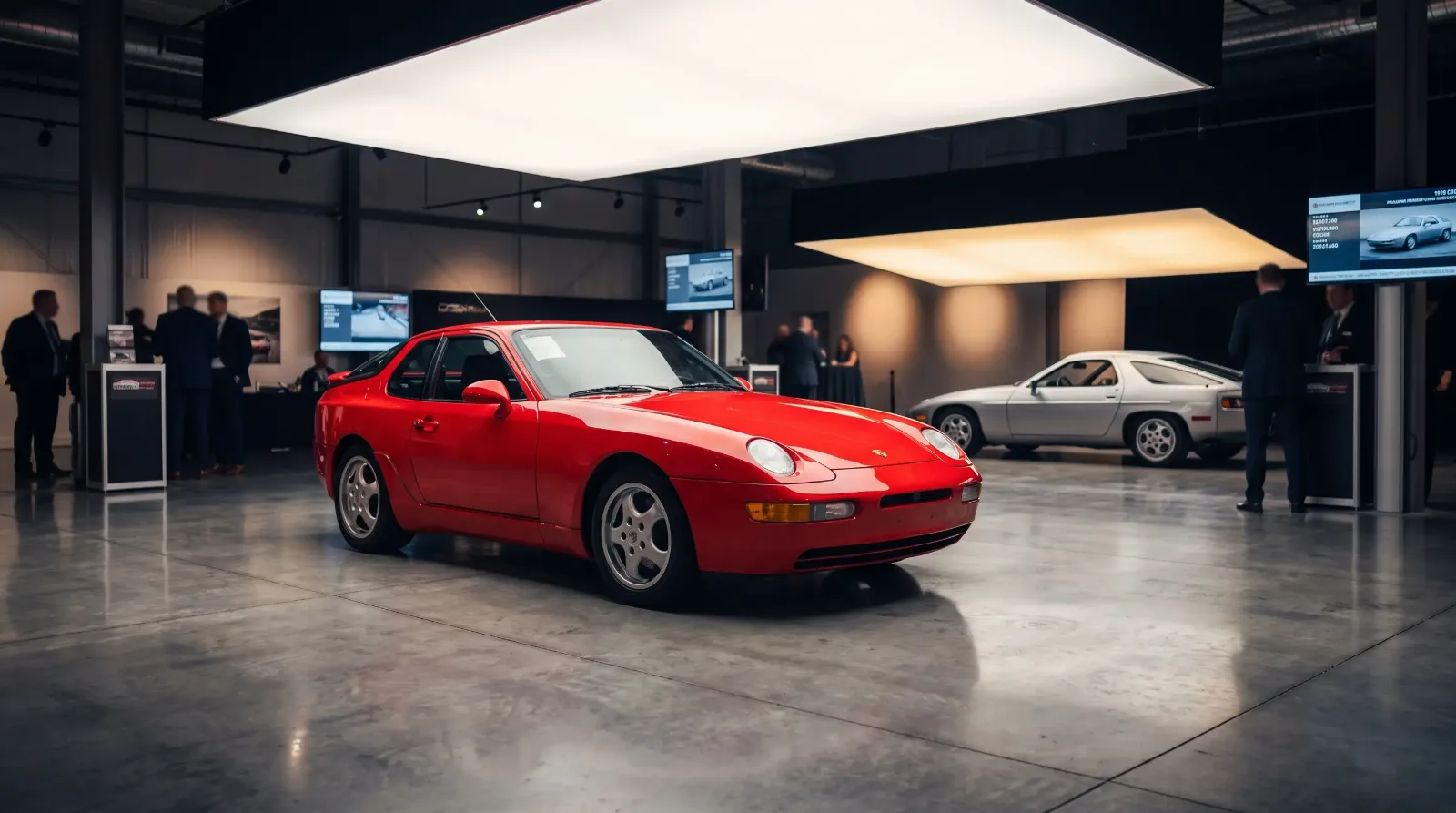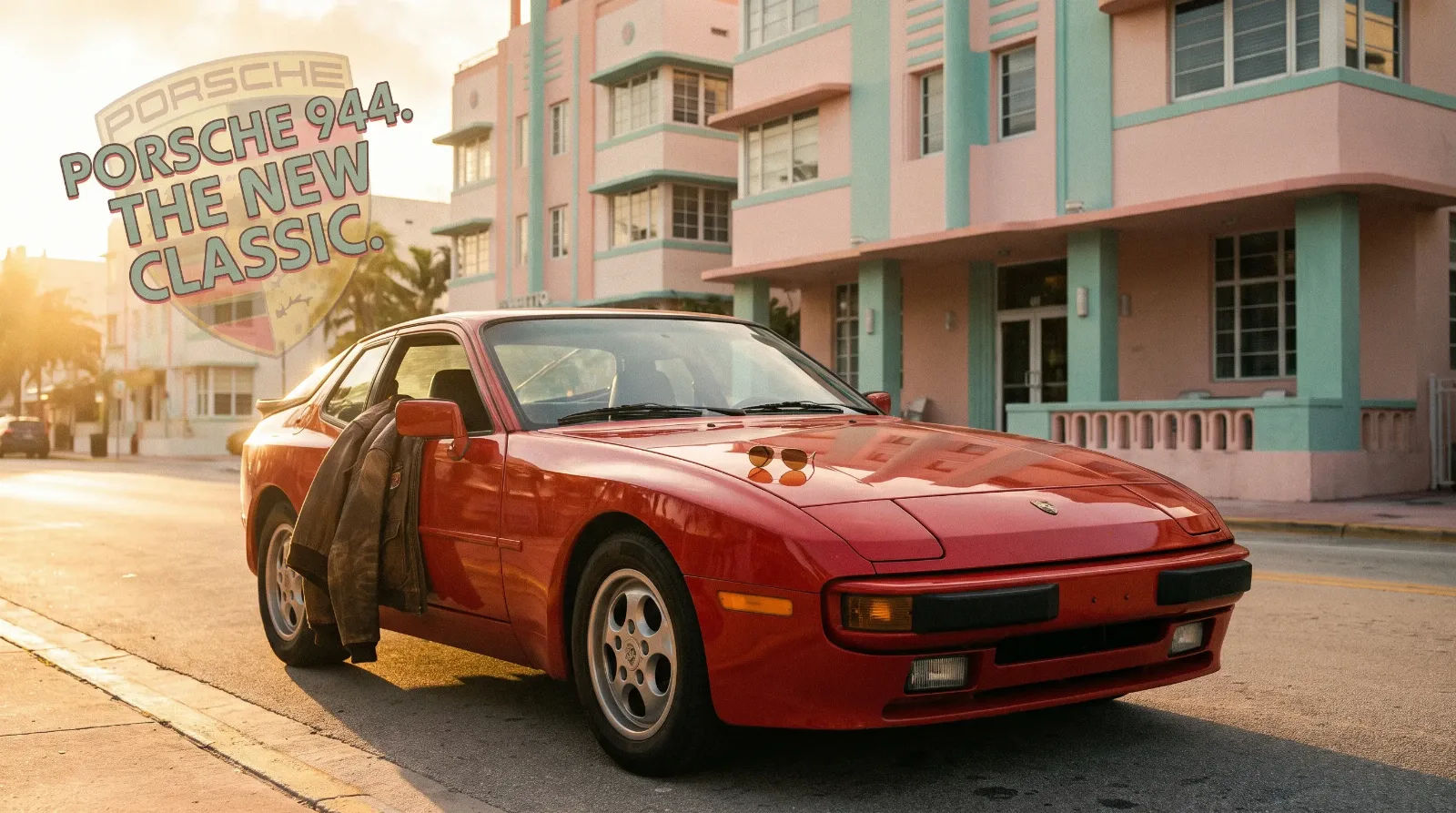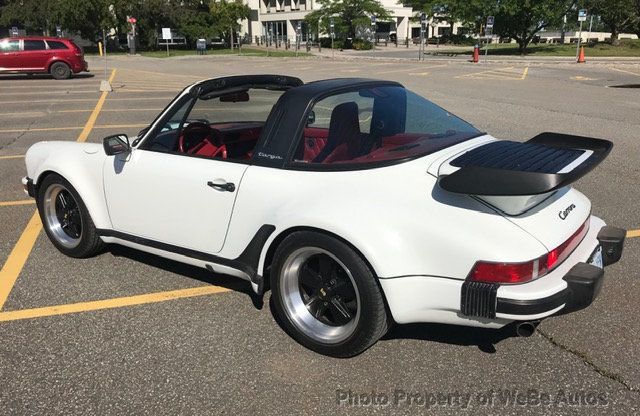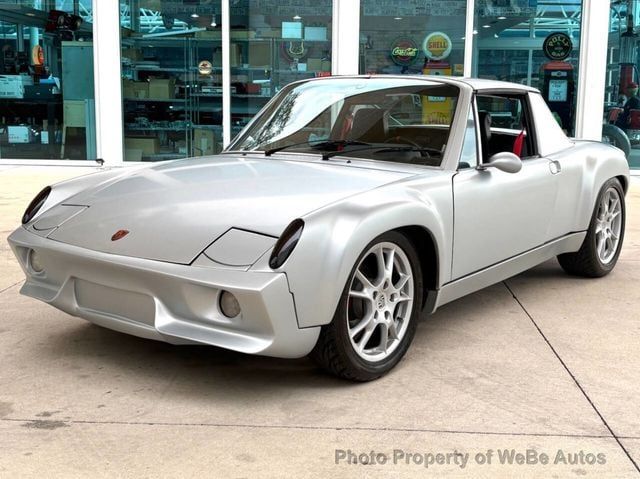
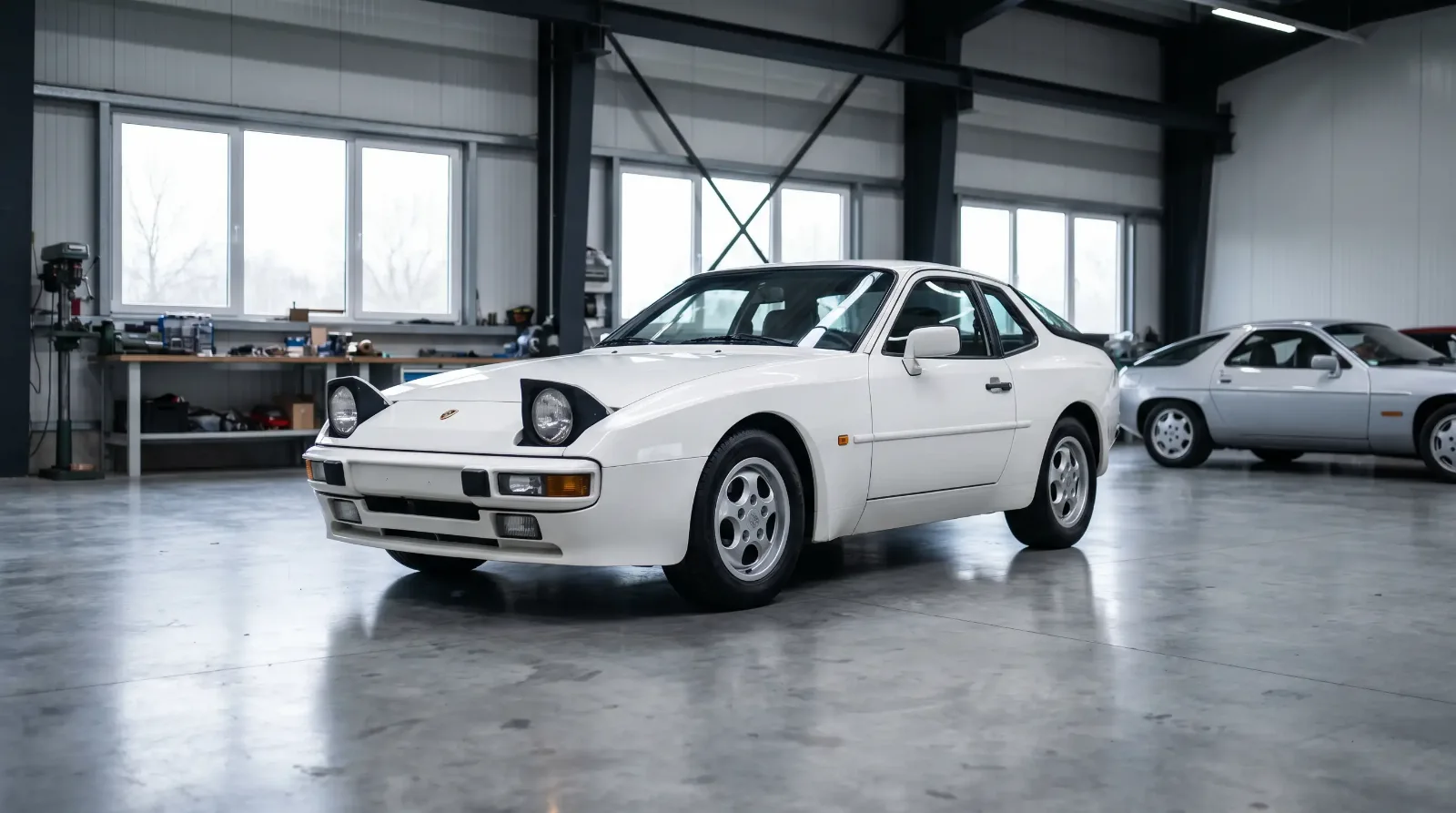
Four cars, one family, and most people only know two of them. Porsche transaxle cars run from the 924 in 1976 to the 968 in 1995, and if you only know the 944 you're missing where it came from and what it turned into. I've had all four on the lift at one point or another, and the family resemblance under the skin is closer than the badges let on. Engine up front, transmission at the back axle, and a straight line of engineering decisions connecting every one of them.
The 924 started as somebody else's project
The 924 began life as a joint venture with Volkswagen, using a VW/Audi-sourced 2.0-liter four that Porsche people still bring up when they want to needle a 924 owner. It wasn't meant to wear the crest at all originally, but VW backed out of the program and Porsche took the whole thing over. That's why the early 924 feels a little different under the hood than the rest of the family. It's not a bad car. It's just the one built with somebody else's parts bin before Porsche fully committed to the idea.
The 924 Carrera GT and GTS variants in the early 1980s got Porsche's own turbocharged engine work and a lot more credibility, but the base 924 spent its life as the affordable door into the lineup, and it still does today.
The 944 is where Porsche stopped borrowing
The 944 arrived in 1982 with an engine that was actually Porsche's, essentially half of the 928's V8 turned into a 2.5-liter four with a pair of balance shafts to smooth out the inherent roughness of a big four-cylinder. That balance shaft design came from a licensing deal with Mitsubishi, and it's the reason the 944 doesn't shake itself apart at highway speed the way a lot of four-cylinders from that era did. The 944 Turbo added forced induction and real power. The 944 S and S2 pushed displacement up to 3.0 liters. By the time the S2 landed, this was a genuinely quick car, not a placeholder while you saved for a 911.
The 928 was never supposed to be a side story
Here's the part people get backwards. The 928 wasn't a spinoff of the 944, it came first, launched in 1978 as Porsche's planned replacement for the 911. It has its own V8, its own transaxle layout, and its own separate design lineage from the four-cylinder cars. Porsche wanted a grand tourer that could out-luxury a Mercedes and out-run a 911, and for a while corporate leadership genuinely thought the 911 would get phased out in its favor. That obviously didn't happen. But the 928 ran in parallel with the four-cylinder transaxle cars for its entire 18-year production run, from its 1977 debut through 1995, sharing the layout philosophy without sharing much hardware.
| Model | Introduced | Engine | Family role |
|---|---|---|---|
| 924 | 1976 | 2.0L I4 (VW/Audi-sourced, then Porsche) | Entry point, originally a joint venture |
| 928 | 1978 | 4.5L-5.4L V8 | Parallel flagship, planned 911 successor |
| 944 | 1982 | 2.5L-3.0L I4 | Porsche's own transaxle engine, replaced 924 base car |
| 968 | 1992 | 3.0L I4 | Final evolution, most parts-shared with 944 |
The 968 is a 944 wearing a graduation gown
By 1992 Porsche had run the 944 platform about as far as it could go without a full redesign, so the 968 showed up as a heavy update rather than a clean-sheet car. New nose styling borrowed from the 928 and the 964-generation 911, a variable valve timing system Porsche called VarioCam, and a six-speed manual option. Under the skin it's still recognizably a 944, and that's not an insult. It means the 968 inherited a decade of fixes and refinements to a design that was solid from day one. The 968 Club Sport, built lighter and stiffer for track use, is the version enthusiasts talk about with the most reverence, and it's also the rarest.
"I tell people the 968 is what the 944 was always trying to become. Same bones, better everything else. If you're cross-shopping the two, buy the 968 if the money lines up and don't feel bad about it."
— Mike Sullivan
What this means for buyers today
Understanding the transaxle Porsches as one continuous engineering story instead of four unrelated models changes how you shop them. Balance shaft belt service matters across the 944 and 968 the same way, and skipping it is how a good running engine turns into a parts car overnight. Rust in the rear subframe and torque tube area is a shared weak point across the entire family, not just one model, so a rust-free 924 tells you almost as much about the seller's care as a rust-free 968 does. The inspection checklist barely changes from one model year to the next, which is unusual for a lineup that spans nineteen years and four distinct model names.
Documentation is the real currency here, more than mileage or even condition photos. A car with a stack of service receipts going back to new is worth chasing even if the paint has a few chips. A car with no history at all is a gamble regardless of how clean it looks in the listing photos, because the balance shaft belt and the water pump don't announce themselves before they fail. I've seen guys buy a bargain 944 with no records, skip the belt service because "it sounded fine," and turn a $3,500 car into a $9,000 repair bill inside six months. That mistake isn't unique to the 944, it's baked into the whole family.
If you're browsing a classic classic Porsche 944 for sale listing right now, the same rules apply whether the seller is asking bargain money or top-of-market money. Ask for the belt interval history before you ask about the paint code.
For a related deep-dive into how these cars were seen outside the garage, in movies and magazines and teenage bedroom posters, check out a related deep-dive. And if you want the full arc of how the transaxle cars fit into Porsche's bigger picture, the classic Porsche story covers it.