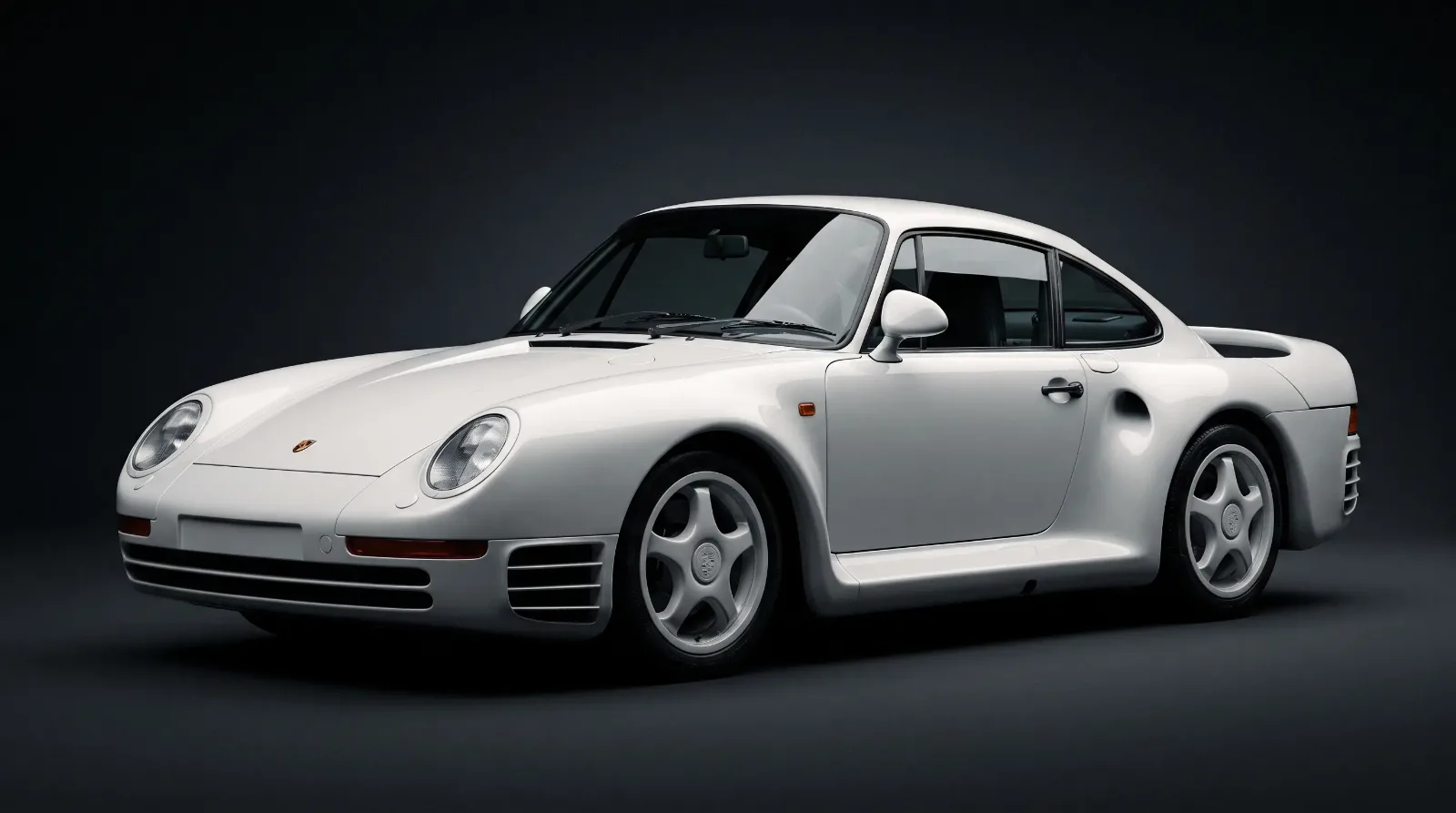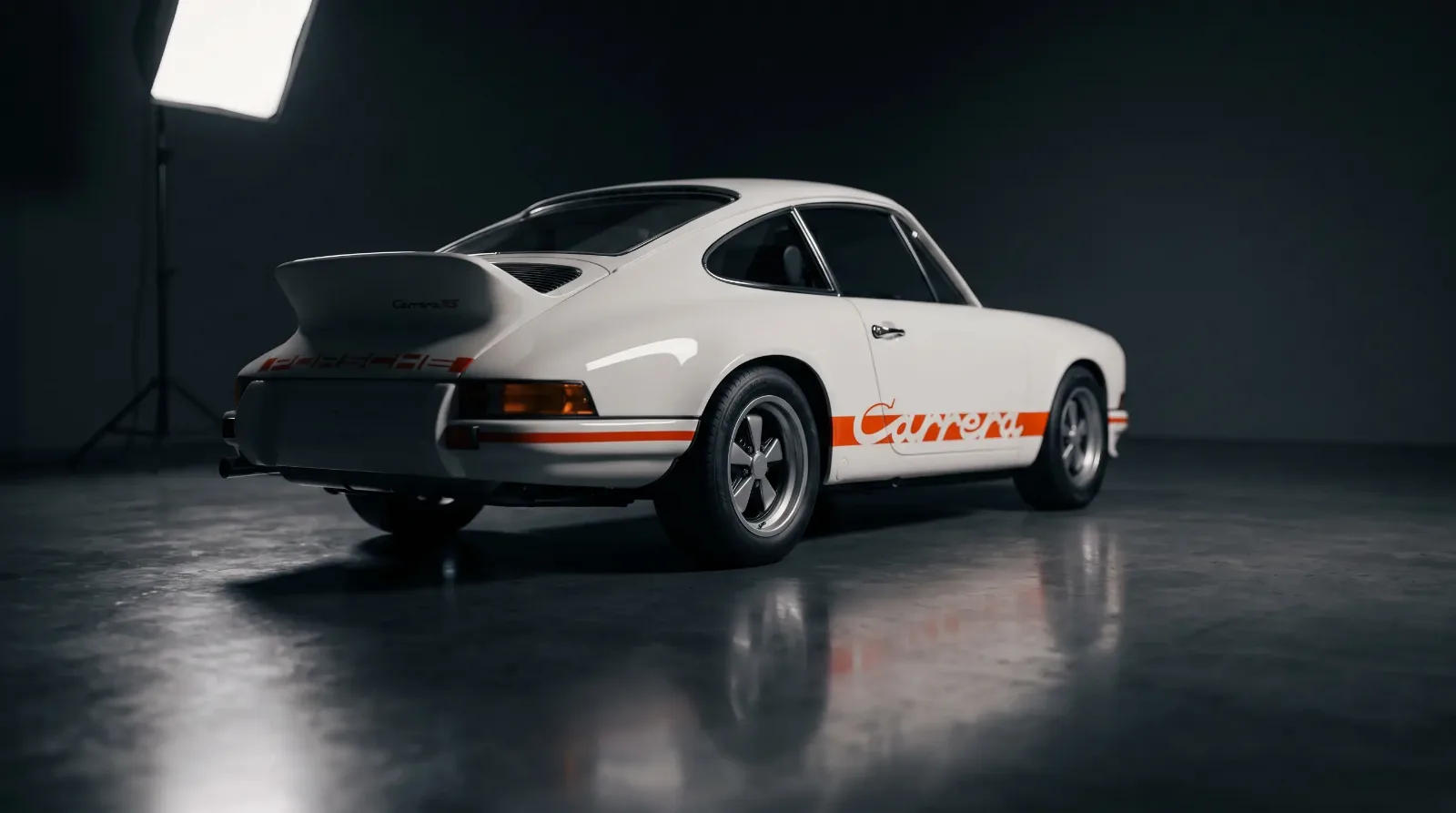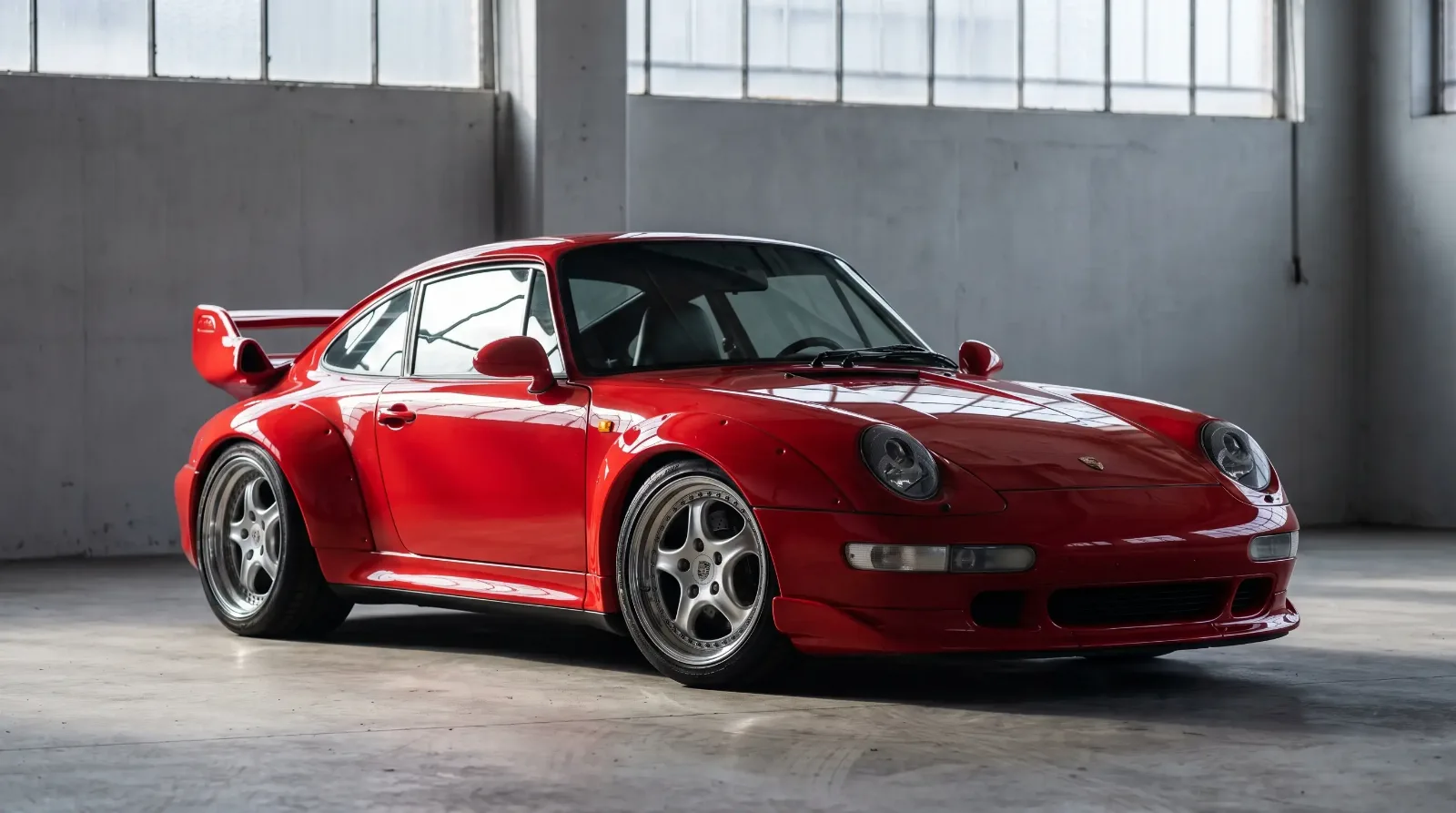
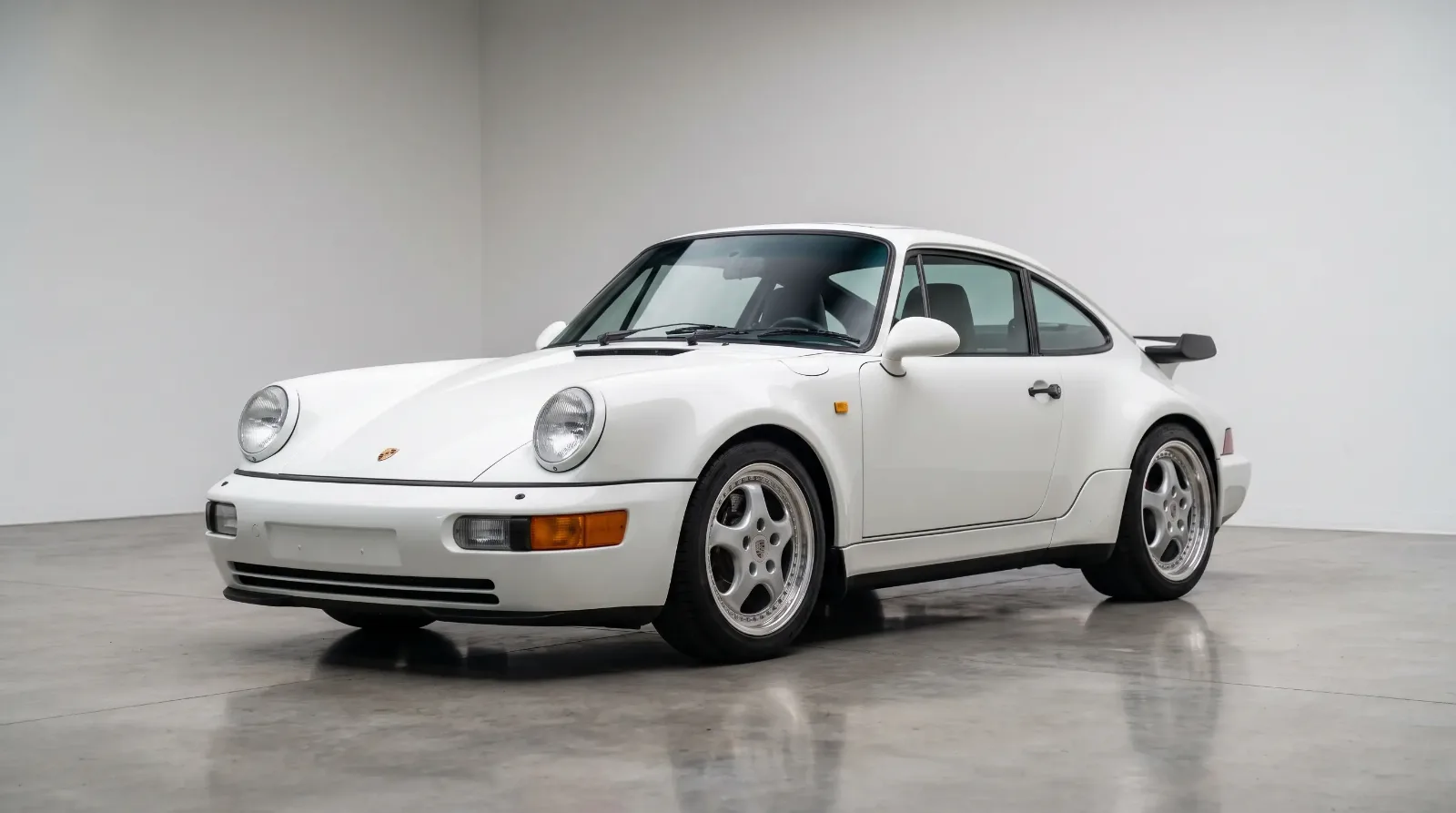
The porsche 964 turbo s leichtbau is one of those cars whose reputation has outrun the plain facts, which is exactly the situation an appraiser is supposed to correct. Built in 1992 in a production run small enough that most 911 owners will never see one in person, the Leichtbau (German for lightweight) was Porsche's answer to a specific competition problem, not a marketing exercise. Understanding why it exists explains most of what makes it valuable today.
Why Porsche built it
By the early 1990s the standard 964 Turbo had grown heavier and more comfort-oriented than the racing customers Porsche wanted to serve. The Leichtbau strips that back out: a lighter bumper treatment, thinner glass in places, reduced sound deadening, and an interior pared down close to bare function, with much of the standard Turbo's comfort equipment simply left off the build sheet. The result was a car built to homologate a lighter, more focused Turbo for club and national-level competition, not to sell as a boulevard cruiser with a badge.
Porsche built 86 examples between 1992 and 1993, after an initial plan for a much smaller run of 20 to 50 cars was expanded once demand became clear, and almost all were sold to buyers who intended to race or track the car rather than collect it. That matters for today's buyer, because it means a genuine, unmodified Leichtbau with an intact competition history is not a contradiction. It is the car doing exactly what it was built to do.
What separates it from a standard 964 Turbo
On paper the differences look modest: less weight, a modest power increase over the standard 3.3 Turbo it was based on, and a stiffer, more track-focused setup. In practice the differences compound. Porsche cut roughly 180 kilograms from the standard 3.3 Turbo's weight and raised output to 381 hp, about 61 hp more than the regular 3.3 Turbo, enough for a 0-100 km/h time of around 4.7 seconds. A lighter car with more power and a similar chassis is a meaningfully different driving experience, and the market has priced that difference accordingly, with genuine Leichtbau examples commanding a substantial multiple over a standard Turbo in comparable condition.
The catch, and it is a significant one, is that the visual differences between a genuine Leichtbau and a well-executed clone built from a standard Turbo are small enough that authentication has to rest on factory documentation, not appearance. This is not a car to buy on photographs and a compelling story.
| Attribute | Standard 964 Turbo | 964 Turbo S Leichtbau |
|---|---|---|
| Approx. production | Several thousand across the model run | 86 units (1992-1993) |
| Interior | Full comfort equipment | Stripped, reduced sound deadening |
| Intended buyer | Road use, occasional track | Club and national-level competition |
| Body treatment | Standard bumpers and glass | Lighter bumper treatment, thinner glass in places |
The authentication problem buyers underestimate
Because the visual cues are subtle, the single most important step before buying a claimed Leichtbau is independent verification against Porsche's factory records, ideally supported by a marque specialist who has handled multiple genuine examples and knows the specific chassis-number range and build details to check. A car titled or advertised as a Leichtbau without that verification should be priced and treated as a standard Turbo until proven otherwise, no matter how convincing the seller's story sounds.
This is the same discipline that applies across the rarest 911 variants generally. Buyers researching the broader field of scarce air-cooled cars will recognize the pattern from the halo-car chapter of Porsche's history, where a competition requirement, not marketing, drove a small and specific production run. The Leichtbau follows the same logic on a smaller scale.
"The Leichtbau rewards patience and punishes shortcuts. Buy the paperwork first and the car second. I have seen beautiful examples get discounted hard at sale because the documentation had a gap nobody could explain, and I have seen rougher cars bring strong money because every page of the file lined up."
— Marcus Feld
Where it sits in the market today
Values for genuine, well-documented Leichtbau examples have held up better than the broader 964 Turbo market over recent years, largely because the pool of confirmed cars is small and well tracked by specialists and clubs. The downside risk sits almost entirely in authentication, not in demand. A verified example with a clean ownership chain and intact competition history is close to as liquid as a car this rare can reasonably be. An unverified or disputed example can become very hard to sell at any price, regardless of how it looks in photographs.
Condition assessments on this model need to account for its intended use. A Leichtbau with visible track wear, period-correct roll bar mounting points, or a repainted nose from a minor competition incident is not automatically a lesser car. In many cases it is the more honest one. Buyers coming from a road-car background sometimes penalize exactly the wear that should reassure them the car lived the life Porsche built it for.
Ownership costs a buyer should plan for
Running costs on a Leichtbau track closely with a standard 964 Turbo mechanically, since the drivetrain shares most of its architecture with the wider Turbo line. What differs is parts sourcing for the model-specific lightweight components: certain interior panels, the bumper treatment, and some glass are not interchangeable with standard Turbo stock, and a damaged original piece can be difficult and expensive to replace correctly. Any pre-purchase inspection should specifically confirm these components are original rather than substituted with standard-Turbo parts during a past repair, since a substitution quietly erodes the car's authenticity even when the paperwork otherwise checks out.
For collectors comparing this car against its closest peers, a related deep-dive covers the model that picked up where the Leichtbau's competition mission left off. And for buyers ready to shop this tier of the market directly, current listings of exotic classic Porsches for sale are worth checking, with the same rule applying here as anywhere in this segment: the file matters as much as the car.
Sources and notes
- Elferspot: Porsche 964 Turbo S Lightweight (Leichtbau) magazine feature
- Stuttcars: The Ultra-Rare 1993 Porsche 964 Turbo S Leichtbau
- PCARMARKET: 1992 Porsche 964 Turbo S Leichtbau auction listing
- Tom Hartley Jnr: Porsche 964 Turbo S Leichtbau (previously sold)
- Classic Driver: 1992 Porsche 911/964 Turbo S Leichtbau Clubsport listing
- Carfolio: 1992 Porsche 911 Turbo S Leichtbau 964 specifications