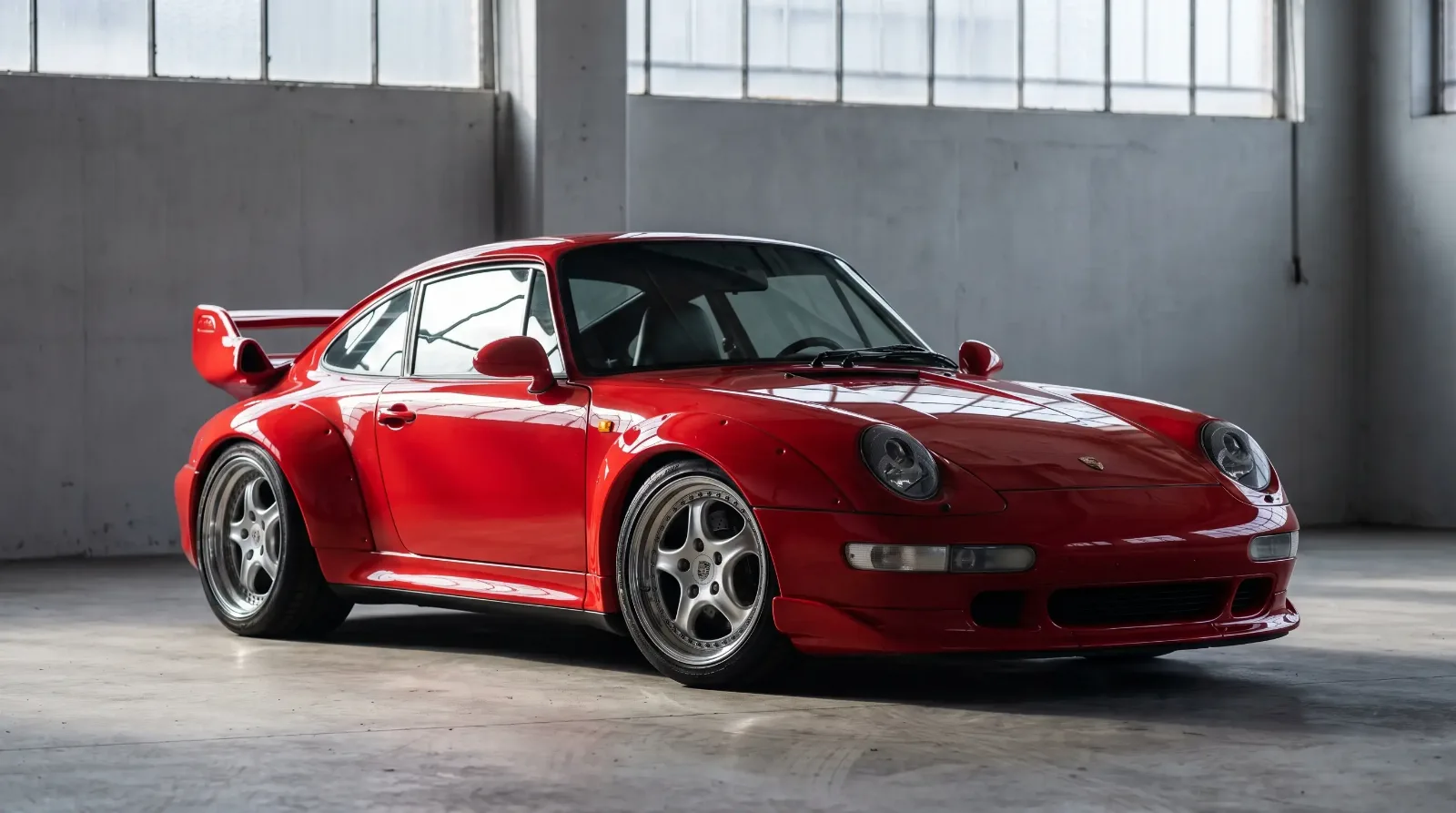
The Porsche 993 GT2 exists because a rulebook demanded it, not because a marketing department wanted it. FIA GT2 regulations required a homologated road car behind the race car, and Porsche built the bare minimum street version to unlock a widebody, twin-turbo monster for the track. What buyers got, almost as an afterthought, was one of the last air-cooled Porsches and arguably the rawest 911 the factory ever sold with a warranty attached.
Start with the premise, because it explains every decision that follows. Porsche needed the GT2 class car to compete in the BPR Global GT Series and later the FIA GT Championship, and homologation rules of the period required a defined run of road-legal examples built to the same core specification as the racer. That is the entire reason the 993 GT2 has rear-wheel drive when the 993 Turbo it is based on sends power to all four wheels. Porsche stripped the all-wheel-drive hardware, widened the bodywork over bigger wheels, bolted on a fixed rear wing sized for downforce rather than curb appeal, and called it done. The result reads less like a luxury coupe and more like a competition car that happens to have license plates.
What homologation actually forced Porsche to build
Under the twin-turbo 3.6-liter flat six, the street 993 GT2 carried an official output figure of 424 horsepower, a number that already sounds conservative next to what tuners extracted from the same block. Race-spec GT2 cars ran considerably higher output, and Porsche never pretended the street car and the racer were making equivalent power. That gap between catalog horsepower and what the car does under load is exactly the kind of detail an appraiser has to price around, because a car this close to its race counterpart invites owners to chase the difference themselves, and modified engines change a valuation conversation completely.
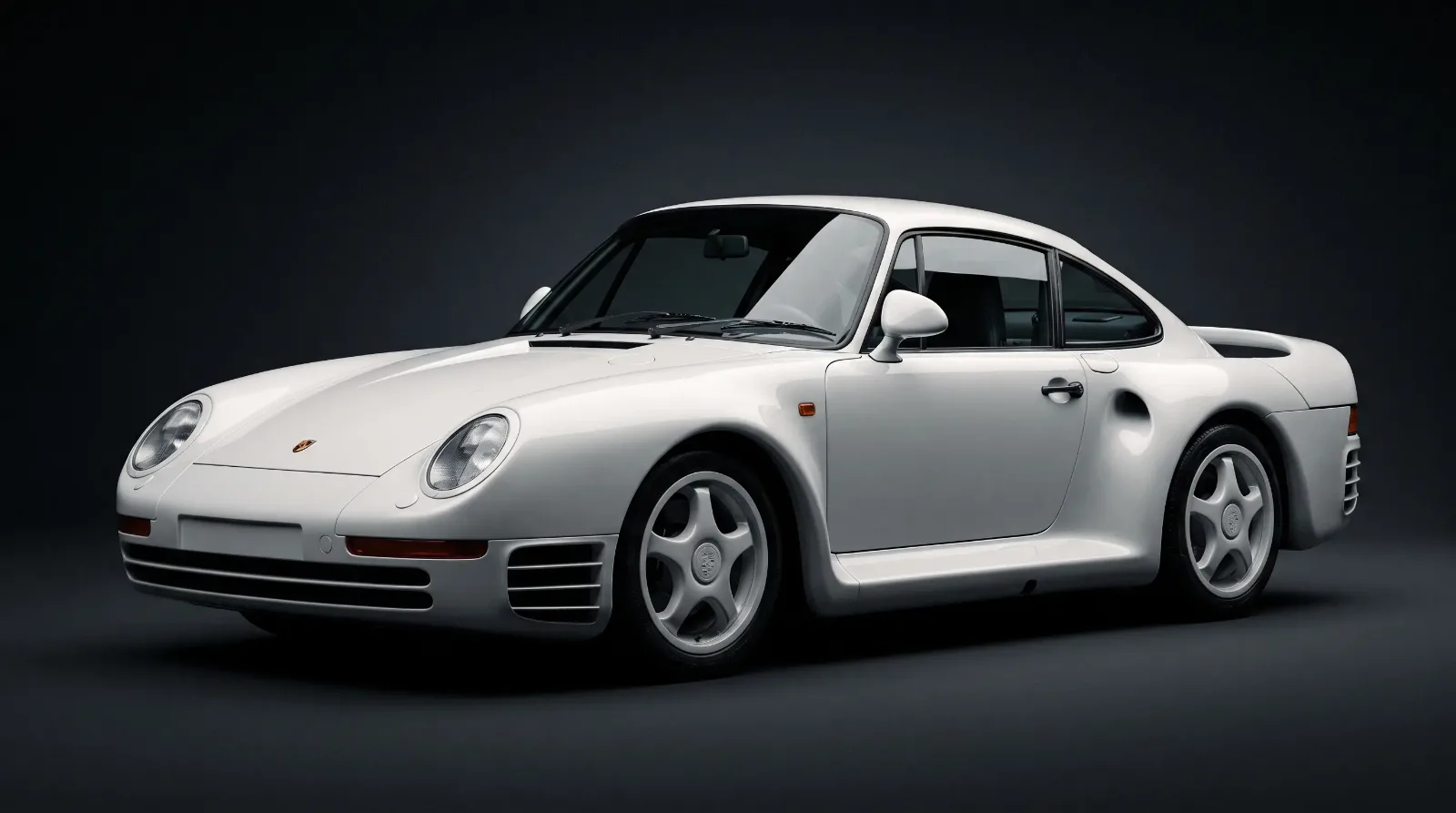
Weight tells the rest of the story. Porsche pulled sound deadening, simplified the interior, and skipped rear seats entirely on most examples. Air conditioning and a stereo were technically available, but plenty of buyers deleted them anyway, which is its own tell about who was buying this car in 1995. This was never pitched as a grand tourer. It was a homologation requirement wearing a price tag, part of Porsche's homologation specials lineage that runs back through the 959 and forward into the GT3 program that followed.
Production numbers and why they matter to value
Total production of the 993-generation GT2 across its run from 1995 to 1998 came to roughly 194 units, split between the original series and the later Evolution cars built for GT2 racing homologation updates. That is a small enough number that provenance research is not optional, it is the whole job. Every 993 GT2 that comes to market gets cross-checked against factory build records, and a car with a documented history commands a real premium over one with gaps.
| Spec | 993 GT2 (street) |
|---|---|
| Engine | 3.6L twin-turbo flat six, air-cooled |
| Drivetrain | Rear-wheel drive (Turbo donor is AWD) |
| Power | 424 hp (450 hp on later 1998 Evolution cars) |
| Production years | 1995 to 1998 |
| Homologation class | FIA GT2 |
"A homologation car's value is not the horsepower figure on the window sticker, it is the paper trail proving the car never left the spec that number describes," is how I frame it to clients weighing a GT2 purchase against a standard 993 Turbo. The road car and the class it created are inseparable, and buyers who understand that pay for documentation before they pay for options.
Where the risk actually sits
Modification is the single biggest value killer on this model. Because the GT2 shares so much hardware with cars that were genuinely raced, a subset of surviving examples have been recommissioned from track duty, re-engined, or altered in ways that are not always disclosed upfront. An appraisal on a 993 GT2 has to separate three categories: unmolested factory street cars, sympathetically restored cars with documented histories, and cars that saw hard racing life and were later civilianized for resale. Each category trades in a different bracket, and conflating them is the most common mistake I see buyers make.
Liquidity is the second consideration. This is not a car you sell in a weekend. The buyer pool is narrow, sophisticated, and typically already owns adjacent Porsche homologation specials, which means a seller without clean documentation can sit on a listing for months regardless of asking price. That illiquidity is the tradeoff for owning a genuinely rare, factory-built race homologation special rather than a common Turbo variant.
How it fits the broader story
The 993 GT2 does not exist in isolation. It sits inside a continuum of Porsche homologation thinking that stretches from the 959 through the water-cooled GT2 and GT3 models that followed, and understanding that lineage changes how a buyer should think about the car. If you are researching this segment, the next story in this set covers a very different but related collector consideration, and our Porsche retrospective lays out the full arc these homologation specials fit into.
For buyers who have done that homework and want to see what is actually available at this level of the market, a look through exotic classic Porsches for sale is the logical next step, provided the documentation checks come first. The GT2 rewards patience and punishes assumptions, which is really the appraiser's version of saying it is a serious car for a serious buyer.