The line between prewar and postwar American cars is real, and it is not just a convenient way to organize automotive history into decades. The factory record shows a genuine break in engineering, materials, and manufacturing philosophy, one that lines up almost exactly with the war years themselves. I want to walk through what actually changed, using the production and specification records rather than the general impression most people carry about "before" and "after."
This is not a nostalgia piece for either era. Both had real strengths and real limitations, documented in period sources rather than in retrospective sentiment. For the fuller decade context, the pre war vs post war cars story is worth reading alongside this one.
Construction methods, documented
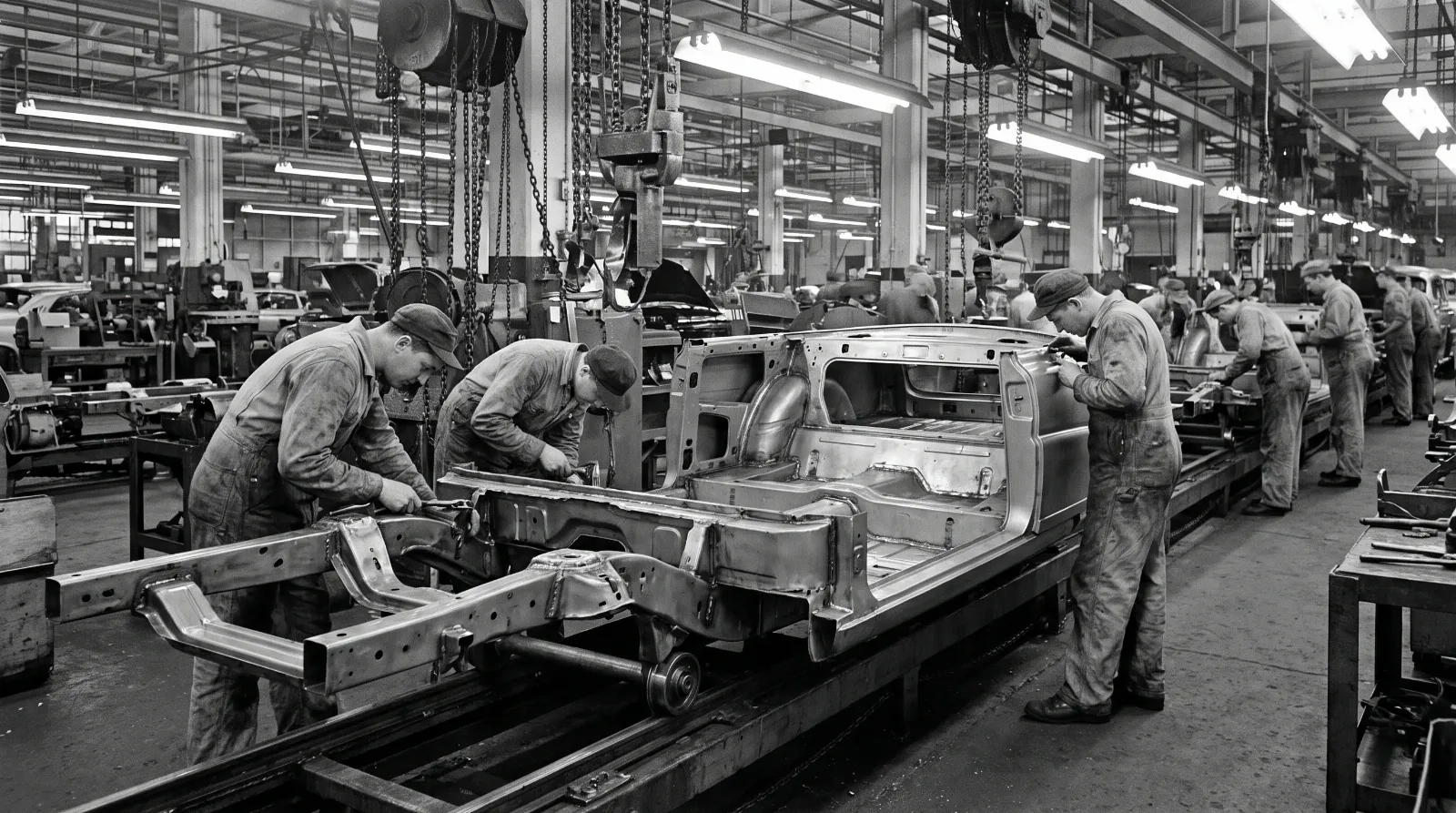
Prewar American cars relied heavily on body-on-frame construction with substantial use of wood in the body structure, ash framing under steel panels being common practice through the 1930s. Factory specifications and body-in-white drawings from the period confirm this construction method across most manufacturers, luxury and mainstream alike.
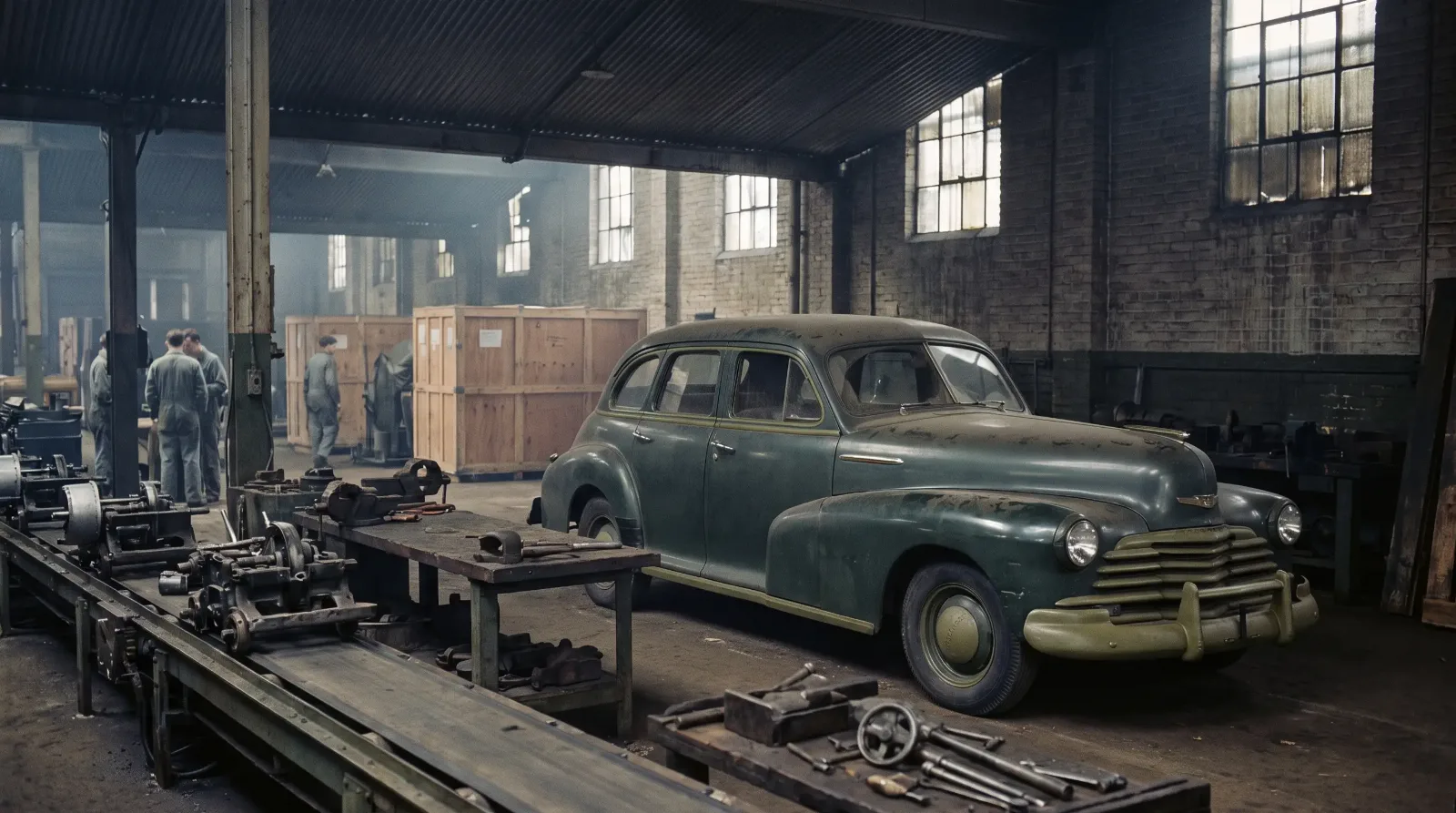
Postwar cars moved steadily away from wood-framed bodies toward all-steel unibody or reinforced body-on-frame construction, a shift driven partly by wartime advances in steel stamping and welding technology that manufacturers had refined for military production and then carried over to civilian cars once conversion happened. Hudson's step-down unibody design, introduced in 1948, is a well-documented example of how far this construction philosophy had moved by the end of the decade, with the passenger compartment sitting between the frame rails rather than on top of them.
Engine technology: the flathead to overhead-valve transition
Flathead, or side-valve, engine designs dominated prewar American production, including Ford's widely used flathead V8 introduced in 1932. The design was reliable and well understood by mechanics of the era, but it had real efficiency limitations built into its architecture, the valve placement restricted airflow and compression ratios in ways overhead-valve designs did not.
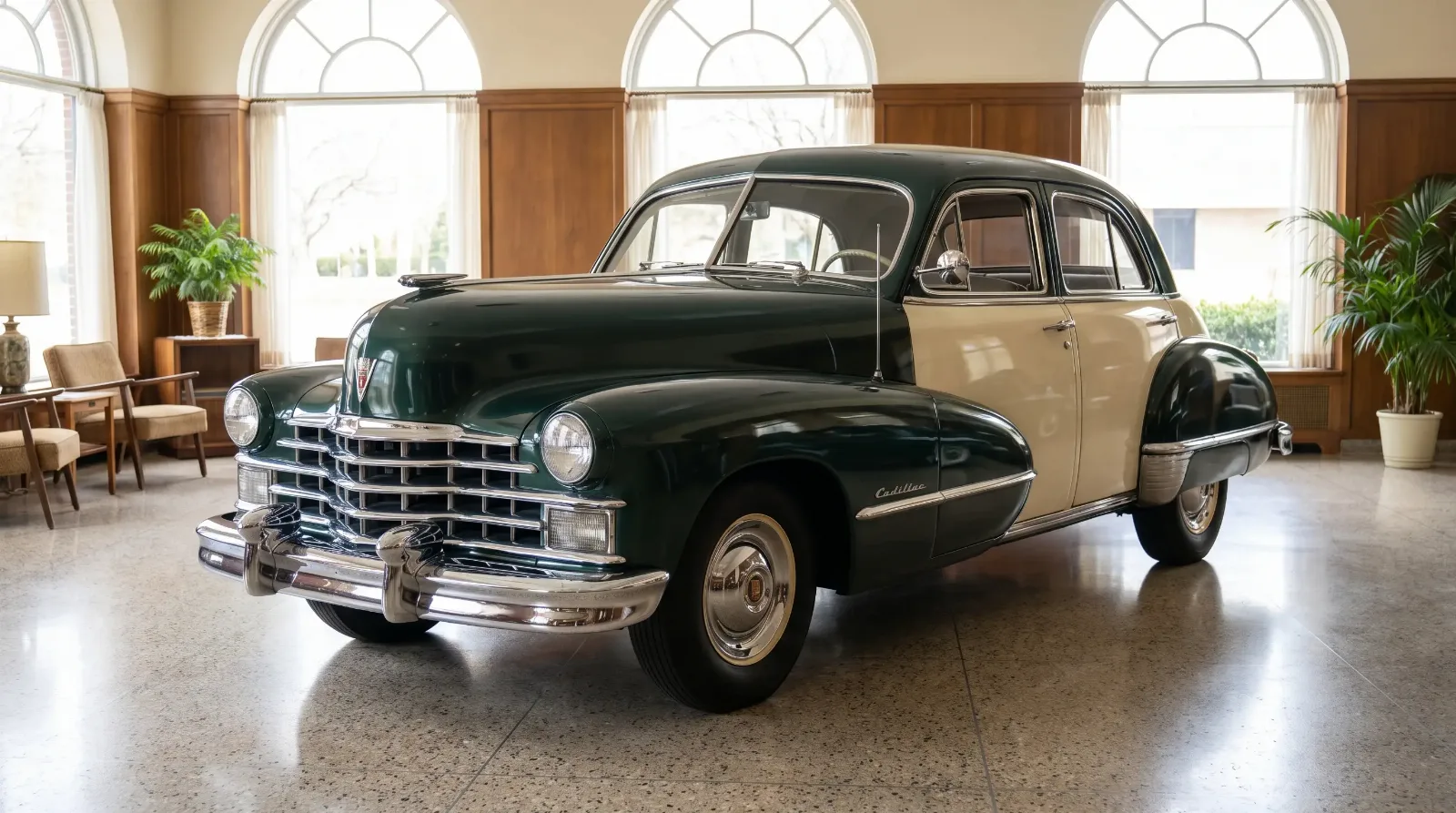
Oldsmobile and Cadillac's overhead-valve V8 engines, introduced for the 1949 model year, represented a documented engineering advance, with factory specification sheets confirming meaningful gains in both power and efficiency over comparable flathead designs. This was not a minor refinement. The overhead-valve architecture became the industry standard within a decade, and the flathead design retreated from mainstream production almost entirely by the mid-1950s.
| Category | Prewar norm | Postwar shift |
|---|---|---|
| Body construction | Wood-framed body over steel panels | All-steel construction, unibody emerging |
| Engine design | Flathead (side-valve) architecture | Overhead-valve V8 (from 1949) |
| Body styling | Separate fenders bolted to body | Ponton-style integrated bodies |
| Production scale | More coachbuilt and custom-body options | Standardized mass production, coachbuilding in decline |
Styling philosophy, before and after
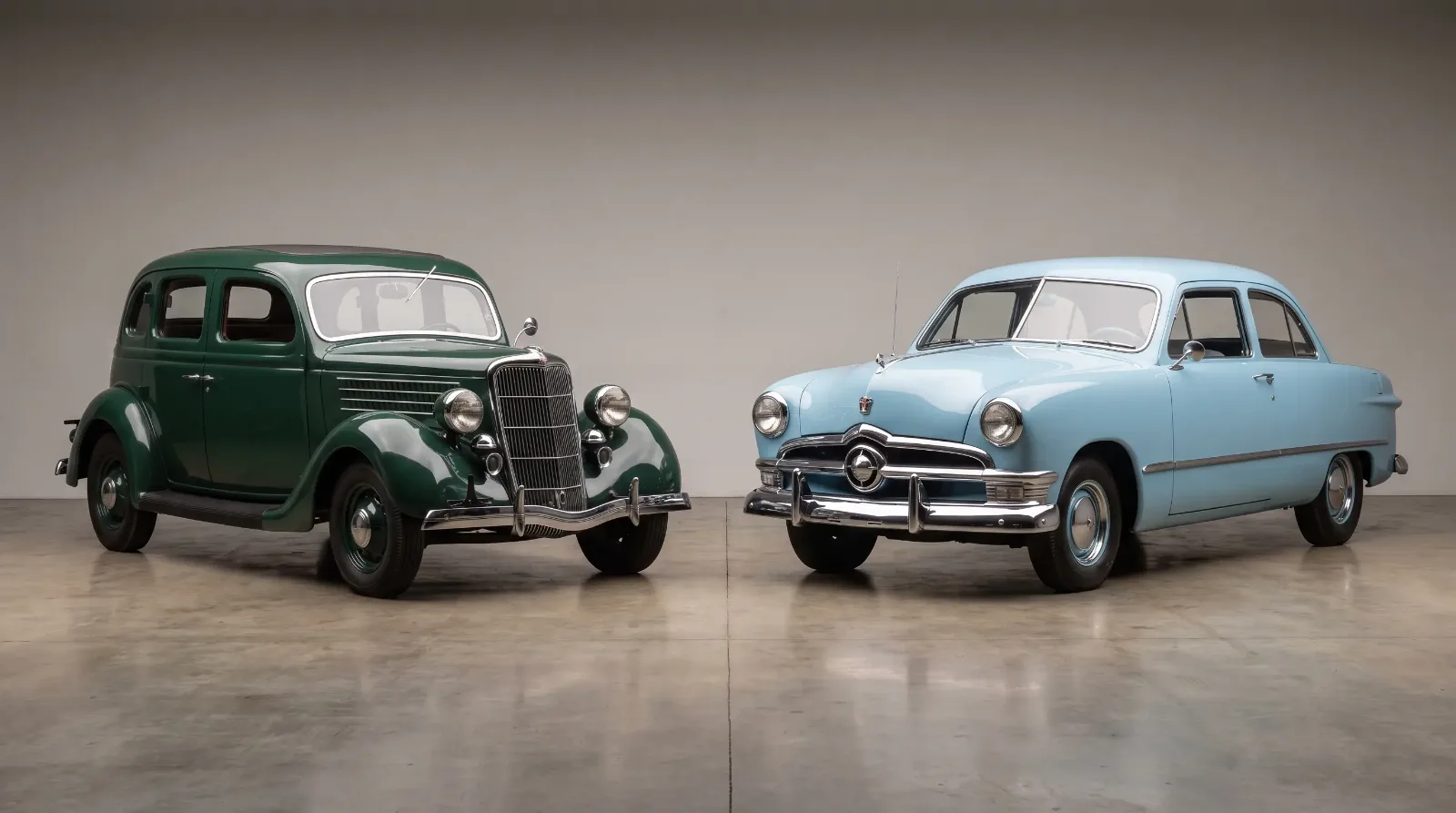
Prewar styling generally treated fenders, running boards, and the main body as visually distinct elements, even as designers worked to integrate them more smoothly through the 1930s. Coachbuilt customization, where a wealthy buyer's chassis went to an outside firm for a hand-built body, remained a meaningful part of the luxury market, though its practical decline was already underway before the war interrupted things entirely.
Postwar styling, especially by 1949, moved decisively toward ponton-style integrated bodies, where the fender line flows directly into the body rather than standing apart from it. This was not purely an aesthetic choice. It reflected manufacturing efficiencies as much as design taste, since a single stamped panel is cheaper and faster to produce than a separate fender bolted to a distinct body shell.
"I try to resist the framing that one era is simply better engineered than the other. The prewar cars were built to different constraints and different manufacturing capabilities, and judged against those constraints, plenty of the engineering holds up well. What changed after the war is the constraints themselves, not just the cleverness of the engineers working within them."
— Tom Ramirez
The transition years, and why they matter to the record
The years between 1946 and 1948 deserve their own note in this account, since they do not fit neatly into either category. These were postwar cars in the sense that they were built after the war and sold to a postwar market, but they were largely prewar in engineering, since manufacturers had not yet had the design and tooling time to bring genuinely new architecture to market. Factory records from this window show continuation-model designations rather than new-model announcements for most manufacturers, a distinction the trade press of the time noted clearly even if collectors today sometimes blur it.
That three-year gap matters for anyone building a serious understanding of the era, because it means the divide is not a single clean line at the war's end. It is closer to a gradual handoff, with the true postwar engineering not fully arriving across the industry until 1949, roughly four years after production resumed. Treating 1945 as the dividing line, as casual accounts sometimes do, misses that documented lag entirely.
What buyers actually experienced
A buyer stepping from a well-kept prewar car into a new 1949 model would have noticed the difference immediately: a lower, wider stance, a smoother ride from updated suspension engineering, and, in cars with the new overhead-valve V8s, noticeably stronger acceleration than a comparable prewar flathead offered. These were not subtle refinements. Period road tests from the era documented buyer reaction to these changes candidly, and the reaction was overwhelmingly positive.
What is easy to overlook, working backward from today, is that the prewar cars were not simply an inferior stepping stone to the postwar era. They represented a mature, refined engineering tradition in their own right, one built around wood-and-steel construction and flathead engines that manufacturers had spent decades perfecting. The postwar shift was not the correction of a mistake. It was a genuine technological transition, driven by wartime manufacturing advances that simply had not existed a decade earlier.
The end of the true prewar era, and exactly which cars mark that final chapter before the freeze, deserves its own close look. Keep reading for that story.
Sources and notes
- Wikipedia: Hudson Commodore, step-down unibody design
- Wikipedia: Ford flathead V8 engine, 1932 introduction
- Hagerty: Oldsmobile's 1949 overhead-valve V8 launched an engine revolution
- MotorCities: World War II and the interrupted production of 1942 models
- Wikipedia: 1949 Ford, the postwar clean-sheet redesign