
Nitrocellulose lacquer is a different animal from anything sprayed on a car today, and treating it like modern basecoat clear will get you into trouble fast. It is thinner, it is softer, and it ages in ways that can look like damage but are actually just the material doing what lacquer does over ninety years. If you have got a car with its original finish still on it, the first job is to stop, figure out what you actually have, and resist the urge to fix problems that are not really problems.
Car Features
6 min read
Preserving Original Nitrocellulose Lacquer Paint
Original 1930s lacquer carries documentation value a repaint can never replace. Here is how to read its condition and preserve it correctly.
Why original lacquer is worth saving in the first place
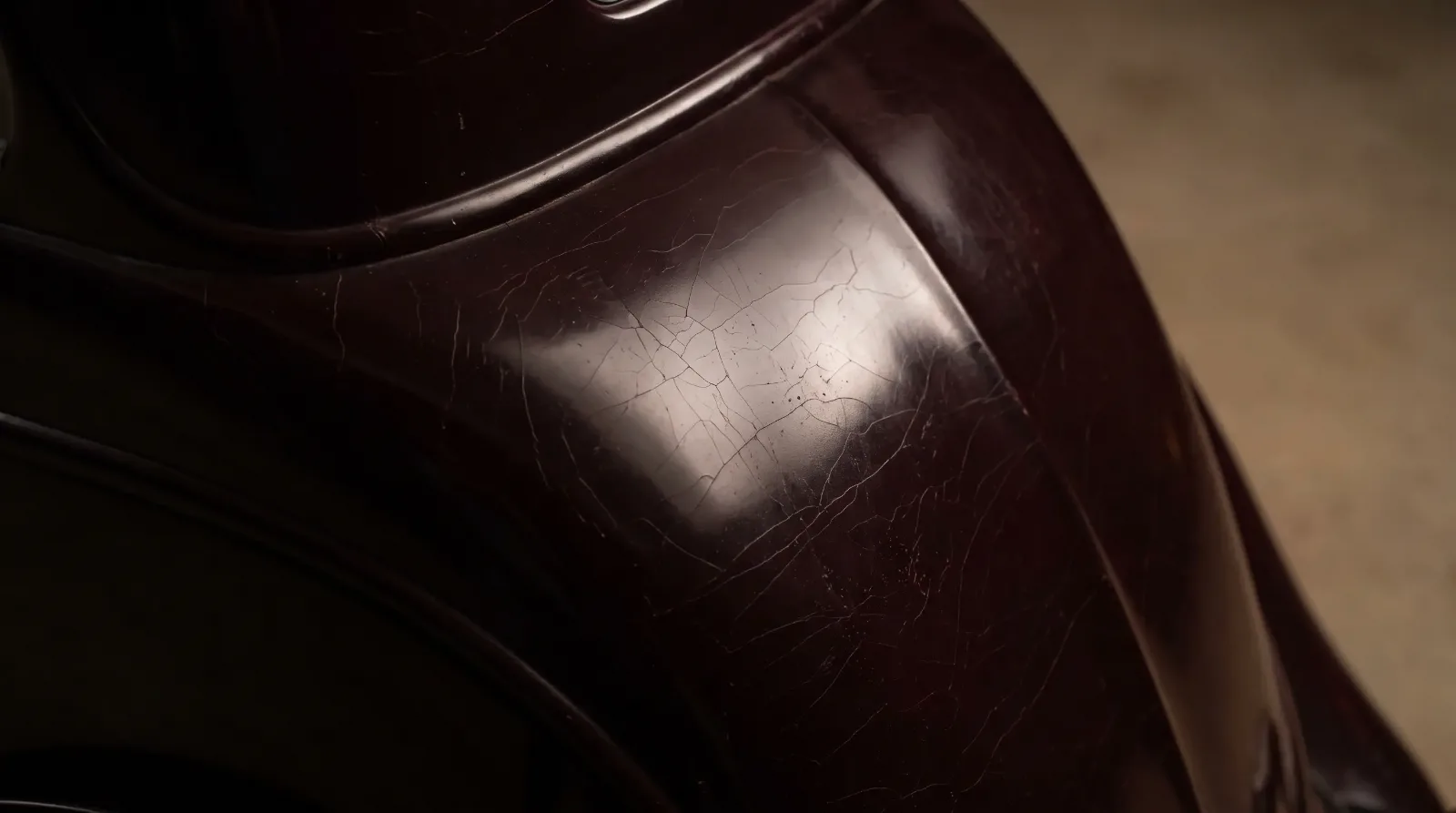
An untouched original finish tells a story a repaint never can. Collectors and appraisers can read a lot from surviving lacquer: the spray pattern, the color match to factory records, the way the paint has aged consistently across panels rather than showing the mismatch of later repair work. That documentation value disappears the moment you strip a car to bare metal, and it does not come back. On a car with real provenance, original paint, even in rough condition, is often worth more to a serious buyer than a flawless repaint, because it is proof rather than a claim.
That said, not every surviving finish is worth chasing. If the lacquer has been overpainted, badly repaired, or has failed down to bare metal in large areas, you are not preserving anything by leaving it alone, you are just delaying an inevitable repaint. Be honest about which situation you are actually in before you commit to a preservation approach.
Reading what the finish is telling you
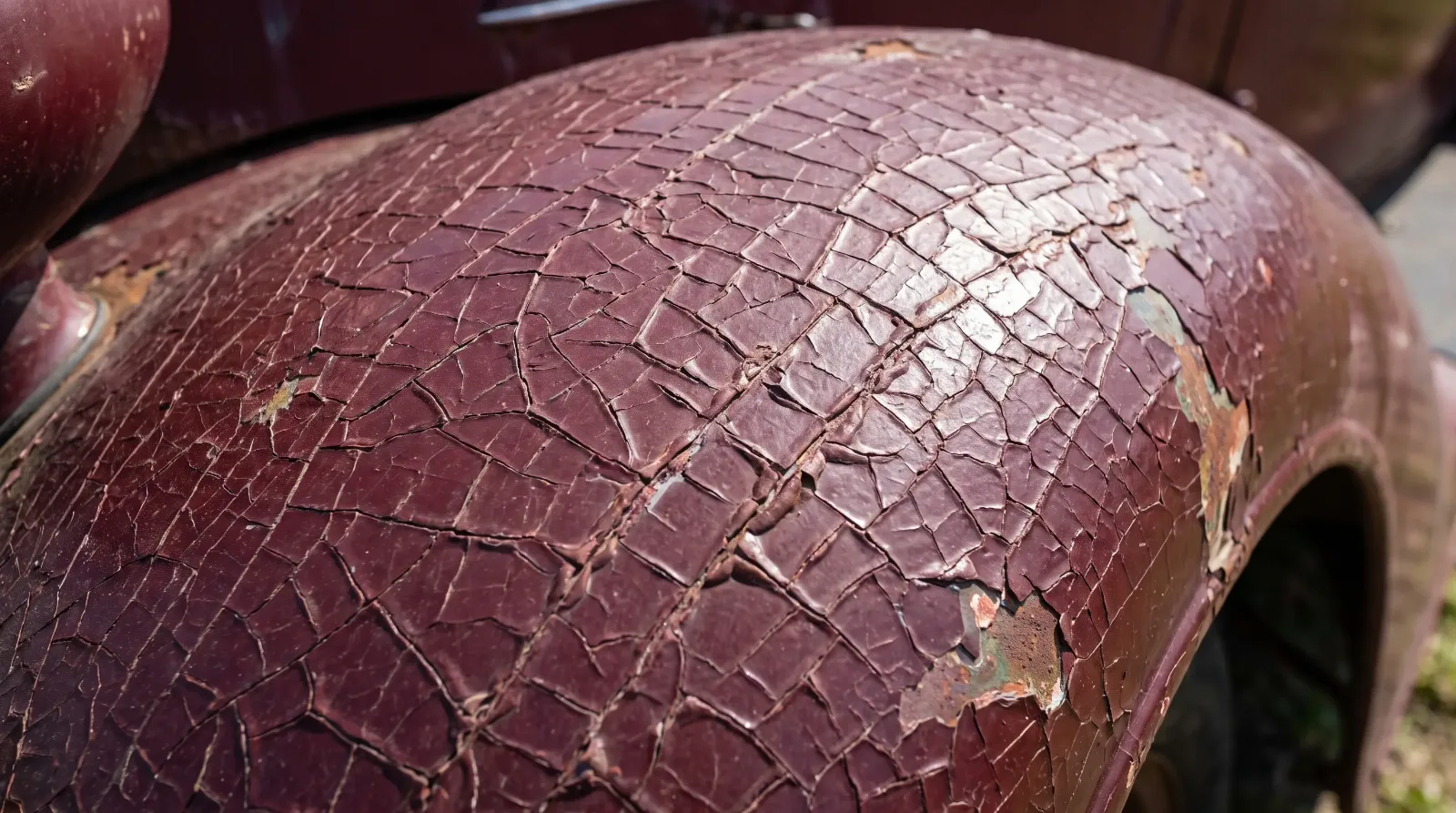
Lacquer ages through a handful of recognizable patterns, and knowing which one you are looking at changes what you do next. Fine surface crazing, sometimes called checking, is extremely common and is usually cosmetic rather than structural. Alligatoring, a heavier, more pronounced cracking, often means the paint has separated from an earlier layer underneath and is a more serious problem. Fading and chalking come from UV exposure and can often be improved without repainting at all. Bubbling or lifting, on the other hand, usually points to rust starting underneath, and no amount of surface treatment fixes that; it means the paint has to come off in that area regardless of how much you want to preserve it.
"People panic the first time they see checking in old lacquer and reach for a repaint. Half the time what that finish needs is a careful cleaning and a proper wax, not a spray gun."
Ray Delgado
Cleaning and stabilizing without doing damage
Modern polishes and compounds are formulated for tougher, more chemically resistant finishes than nitrocellulose lacquer, and using them aggressively on original paint will burn through decades-old material faster than you expect. Start with the gentlest option that works: a pH-neutral cleaner to lift grime, followed by hand polishing with a very fine, lacquer-safe compound only where oxidation genuinely needs it, and never with a high-speed buffer unless you have real experience judging how thin the remaining paint film has gotten. On original finishes, I do most of the compounding by hand specifically so I can feel how much material is left before I take more off.
A quality carnauba-based wax, applied regularly, does more long-term good for original lacquer than any aggressive polishing step. It is not exciting work, but it is the maintenance that actually extends the life of a finish that cannot be replaced without losing what makes it valuable.
| Condition observed | Likely cause | Reasonable response |
|---|---|---|
| Fine surface crazing | Normal age-related shrinkage | Clean and wax, leave alone |
| Alligatoring | Separation from an underlying layer | Evaluate area by area, may need local repair |
| Fading, chalking | UV exposure over decades | Careful hand polishing, then protective wax |
| Bubbling, lifting | Corrosion starting underneath | Localized paint removal and metal repair required |
When a partial repair makes more sense than a full repaint
Not every damaged panel requires stripping the whole car. If checking or fading is limited to one or two panels while the rest of the finish is stable, a skilled restorer familiar with lacquer can sometimes blend a localized repair into the surrounding original paint closely enough that the difference is not visible without close inspection under raking light. This is slower and more delicate work than a full repaint, because matching decades of natural fading and color drift is harder than matching a fresh factory color chip, but it preserves far more of the car's original material than starting over across every panel.
This approach only works with someone who has actually worked in nitrocellulose lacquer before, since the material behaves differently than modern basecoat and clear in how it lays down, how it dries, and how it ages afterward. A shop that only knows modern paint systems, however skilled, can still leave a repair that looks slightly wrong the moment it sits next to seventy years of natural patina.
Storage and environment matter more than product choice
Whatever you put on the paint gets undone quickly by bad storage conditions. Direct sunlight accelerates fading and chalking faster than almost anything else, and swings in humidity stress the paint film against the metal underneath it, which is part of what drives cracking over time. A stable, covered, climate-moderate storage space does more to preserve original lacquer than any product on the shelf, and it is worth prioritizing over spending on specialty cleaners if you have to choose one or the other.
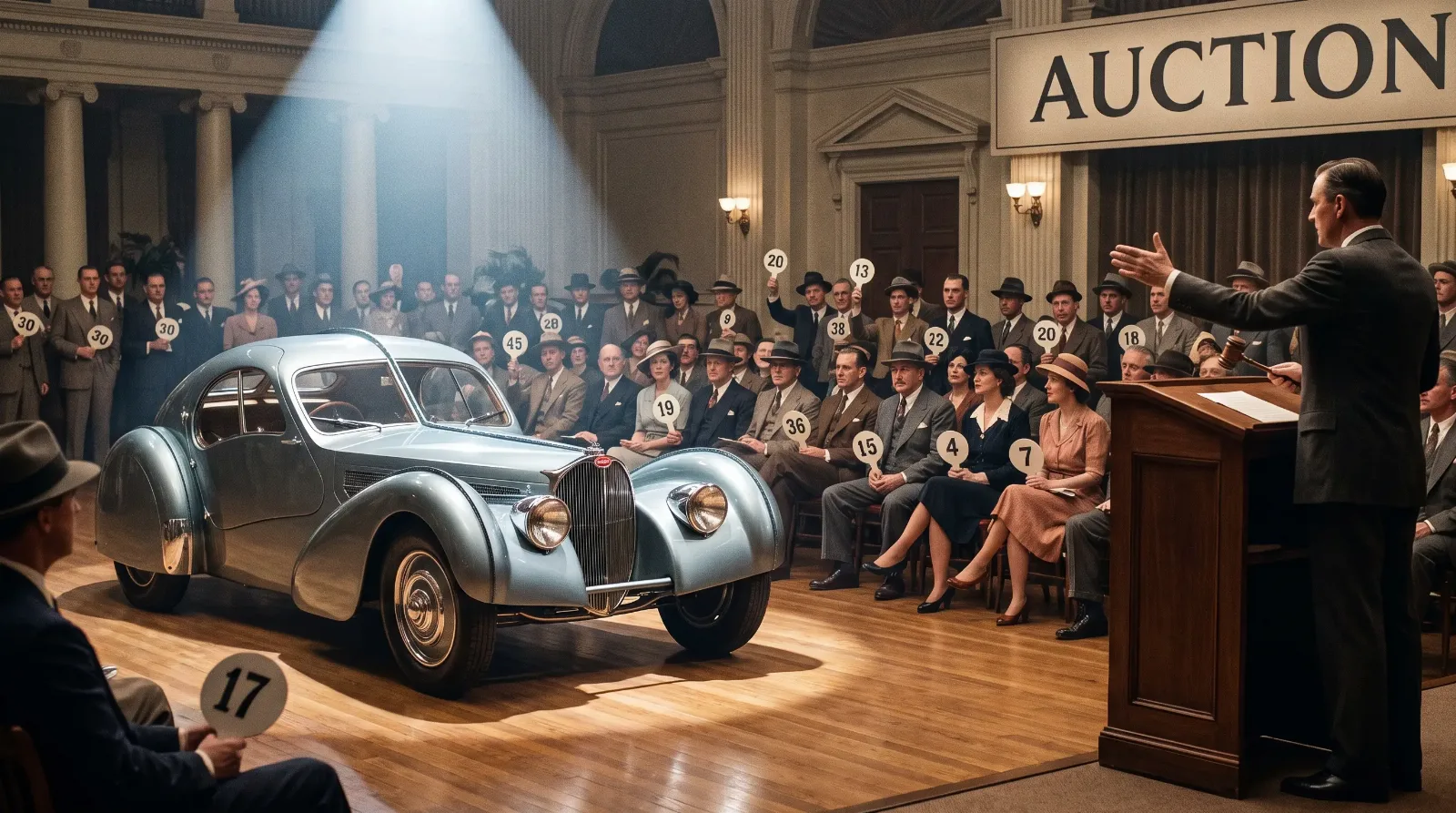
the preserving 1930s car paint story goes further into how original finish condition actually factors into a car's overall valuation, which is worth understanding before you decide how far to take a preservation effort versus a full repaint.
Paint from this decade did not happen in isolation. If you want the fuller picture of why factories were experimenting with new colors and finishes at exactly this time, read on for how the streamline era reshaped what cars looked like inside and out. And once the exterior is settled, the interior usually needs the same careful hand; the next story covers how to treat original leather and fabric with the same restraint.
Sources and notes
- Wikipedia: Duco nitrocellulose lacquer history
- Science History Institute - DuPont and the color revolution
- American Coatings Association: brief history of automotive coatings
- Hagerty - Preservation Class cars and original paint value
- Hagerty: a professional's perspective on cultivating patina
- Automotive American - a history of American automotive paint
Related Reading

About the author
Ray Delgado
Metal fabricator and chassis builder who has spent 25 years turning flat sheet and mild steel into hot rods, gassers and restomod underpinnings.

Comments
Be the first to comment on this article.