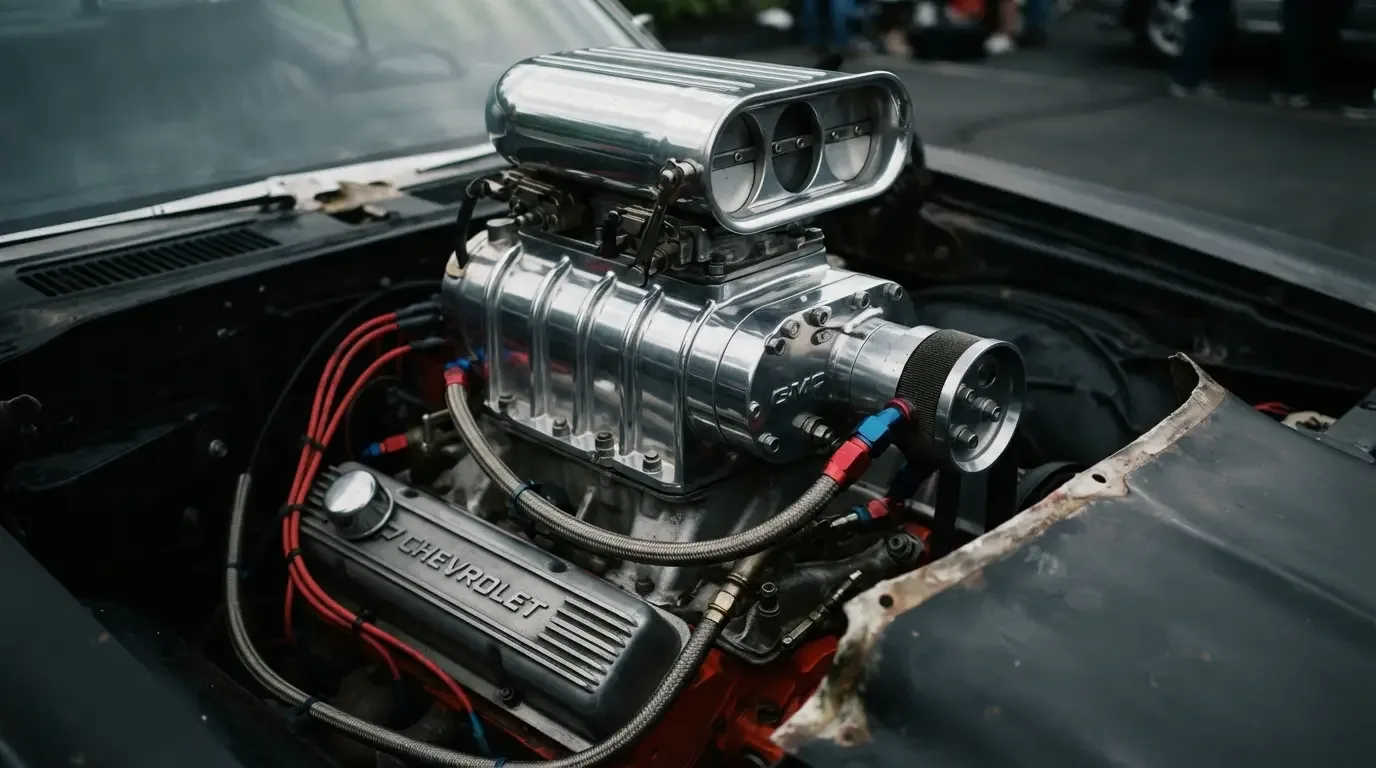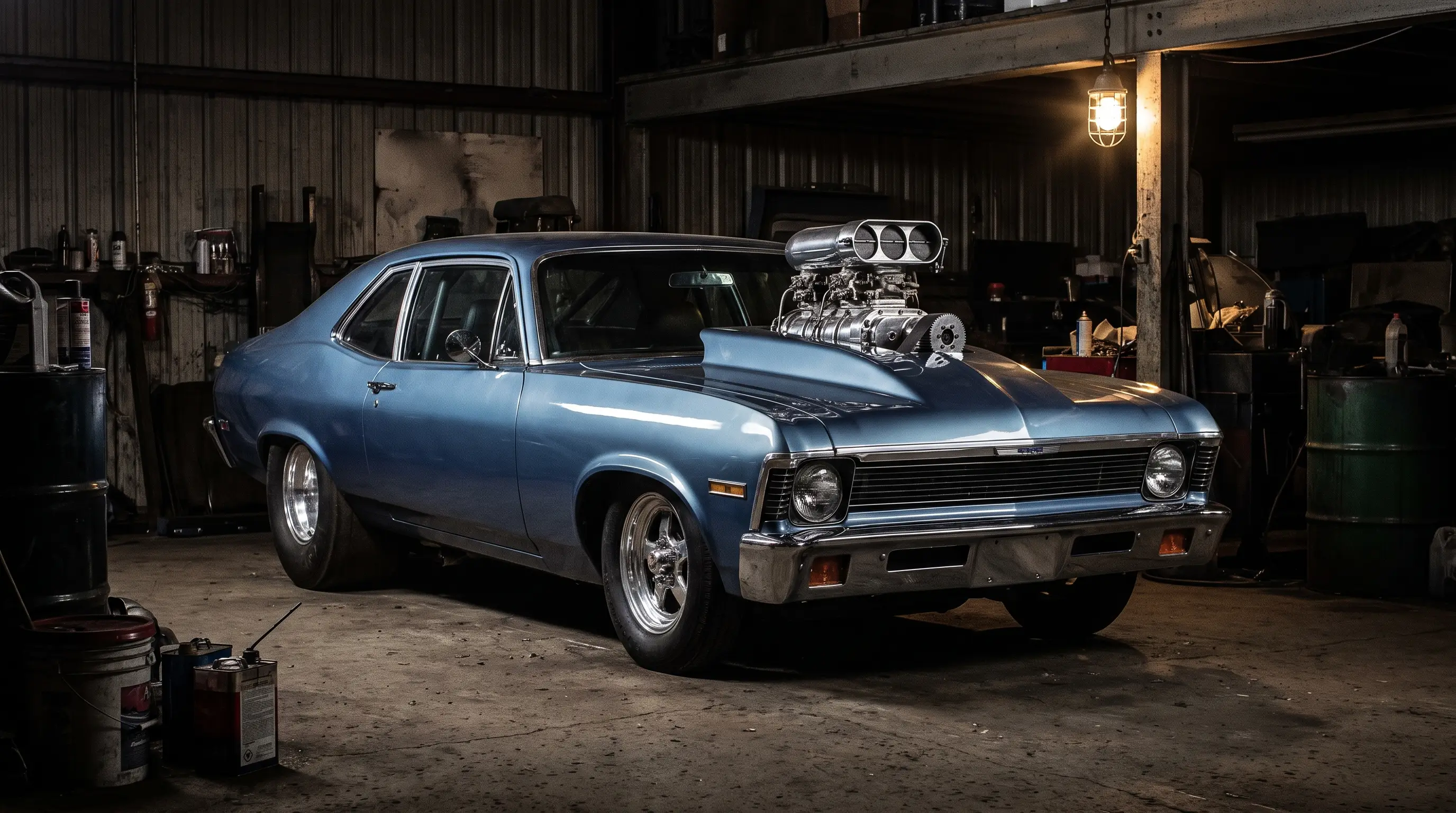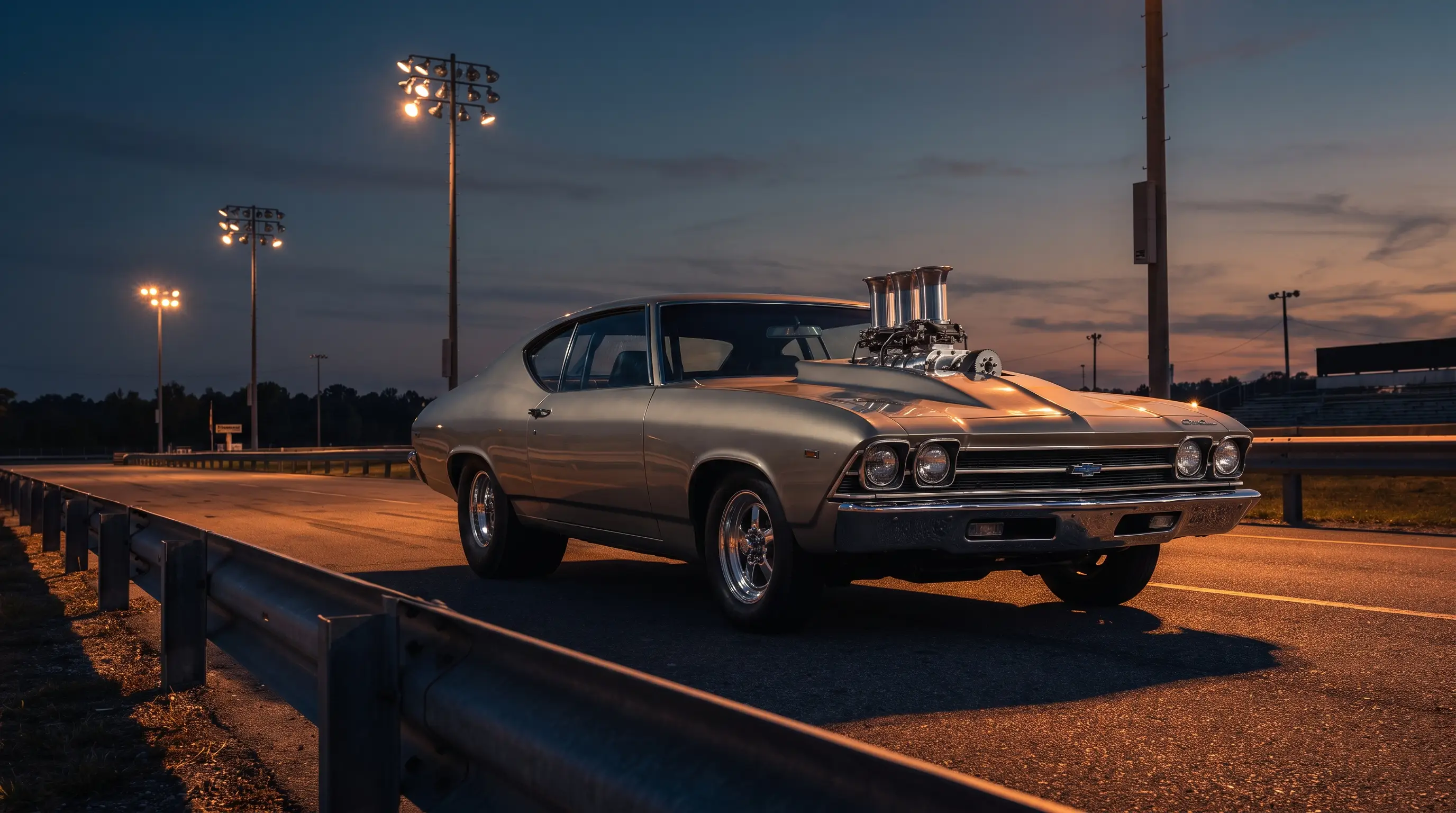
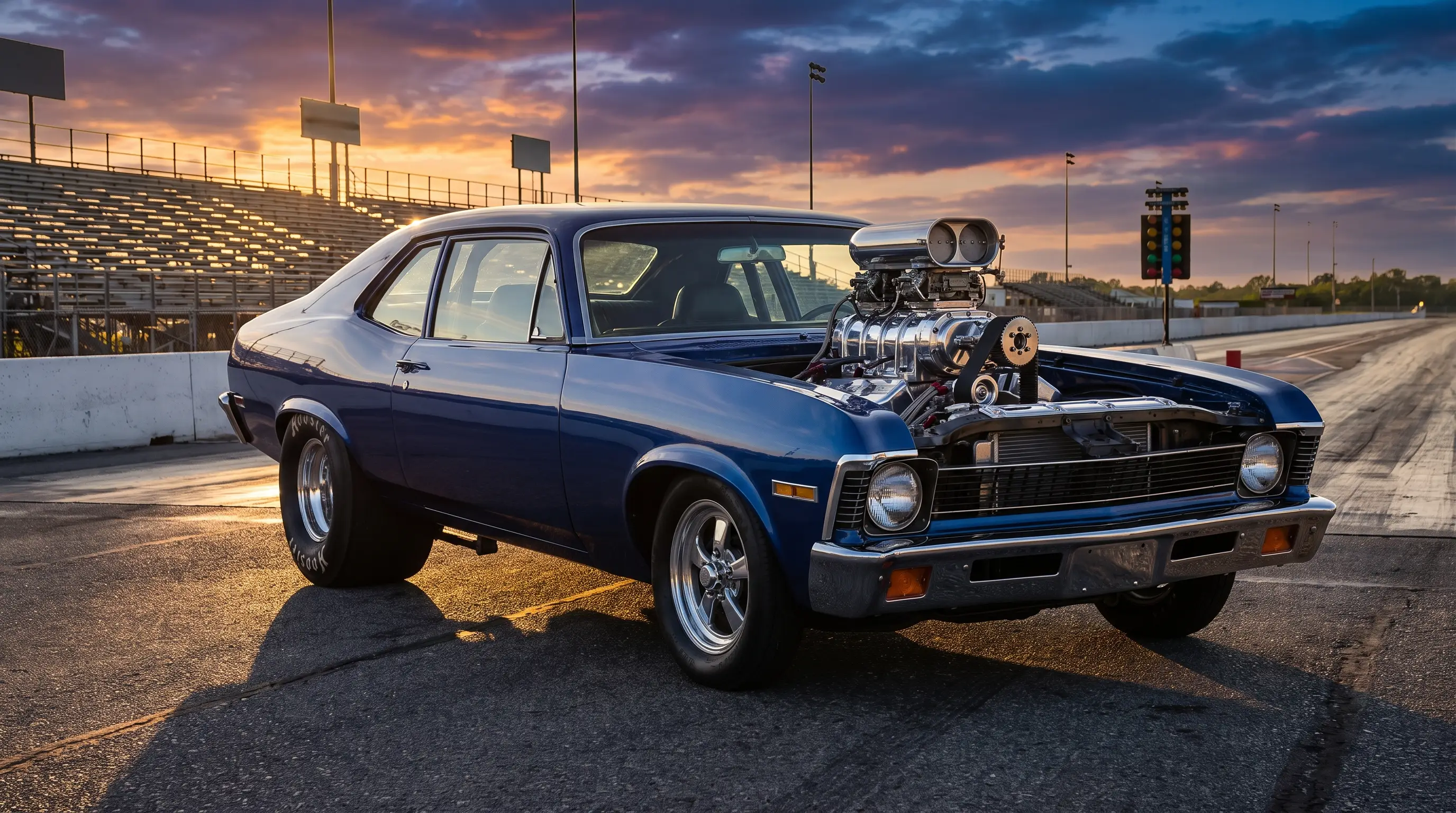
The 454 in Pro Street builds was never just another engine option, it was close to the default. Ask any builder from the golden era what sat under the cut hood of a serious Chevy-based Pro Street car and the answer, more often than not, was a 454, usually with a blower stacked on top and enough character to fill a driveway.
How the 454 became Chevy's Pro Street standard
Chevrolet introduced the 454 in 1970 as the top of the Mark IV big-block family, built for full-size cars and trucks as much as for performance applications. By the time Pro Street took off nearly a decade later, 454s were everywhere in salvage yards, pulled from trucks, wagons, and full-size sedans that had nothing to do with performance at all. That abundance mattered enormously to builders working with limited budgets. A 454 core could often be found for a fraction of the cost of a rarer or more desirable engine, and the aftermarket support for building one, from forged internals to blower manifolds designed specifically for the Mark IV block, was more developed than for almost any other big-block on the market.
What made the 454 a good blower candidate
Displacement is the whole story here. A 454 gives a builder more cubic inches to start with than a 396 or 402, which means less boost is needed to reach a given horsepower target, and less boost generally means less stress on the rest of the engine for the same output. That relationship made the 454 particularly well suited to running a 6-71 blower at moderate boost, a combination that thousands of Pro Street builders settled on because it delivered strong power with reasonable reliability. Builders chasing bigger numbers stepped up to an 8-71 on the same block, though that combination demanded a fully forged rotating assembly to survive the added cylinder pressure. Our pro street blower retrospective covers that pairing decision in more detail, since matching blower size to displacement was one of the most consequential choices in any build.
| Configuration | Common blower pairing | Typical use |
|---|---|---|
| Stock-based 454 | 6-71 at moderate boost | Street-driven Pro Street builds |
| Forged 454 | 8-71 at higher boost | Strip-focused, higher power targets |
| Stroked 454 (496+) | 8-71 or larger | Serious builds chasing maximum displacement and boost together |
A car that made the case for the combination
Plenty of period magazine features built their reputation around a tubbed Chevelle or Nova running a blown 454, and it is not hard to see why editors kept coming back to that combination. It photographed well, it ran real numbers at the strip, generally in the low-to-mid 10-second range depending on the specific build, and it represented an achievable target for a reader with a home garage and a reasonable budget, unlike a full tube-chassis race car that few average enthusiasts could realistically replicate. That accessibility is a big part of why the 454-and-blower combination became so closely associated with the entire Pro Street identity rather than being just one option among many.
"Everybody remembers the exotic one-off builds, but the 454 under a blower was the car most guys could actually build. That's the engine that really defined the era, not the rare stuff."
- Patrick Walsh
The 454 outside of Pro Street, and why that mattered
Part of what made the 454 such an easy choice was its life outside performance applications entirely. Chevrolet installed the 454 in half-ton and three-quarter-ton trucks, motorhomes, and full-size sedans throughout the 1970s, vehicles that were driven hard for towing and hauling rather than performance but were rarely pushed anywhere near the engine's actual limits. That meant a huge population of low-stress 454 cores entered salvage yards over the following decade as those trucks and cars aged out of daily use, giving Pro Street builders a deep, consistent supply of engines that had led comparatively easy lives despite years of service. A builder searching for a 396 or 402 core faced a smaller, less consistent pool by comparison, one more reason the 454 pulled ahead as the default choice among Chevy-based Pro Street builders specifically.
That same widespread factory use also meant parts interchange was well understood and well documented. Builders could find factory service manuals, aftermarket cross-reference guides, and a deep pool of other builders who had already solved common problems with the 454 specifically, a knowledge base that simply did not exist to the same degree for rarer or less common engine choices.
Getting a stock-based 454 ready for boost
Even builders who stuck with a stock-based short block rather than a full forged rotating assembly typically made a handful of key changes before bolting a blower on top. Head gaskets rated for boosted applications replaced the stock units, since a factory gasket was never designed to seal against the cylinder pressures a blower creates. Fuel delivery got upgraded to match the increased airflow, often with larger jets or a dedicated boost-referenced fuel system rather than the stock carburetor setup. Ignition timing curves were revised too, since a boosted engine is far more prone to detonation than a naturally aspirated one running the same static compression ratio, and a timing curve that worked fine unblown could destroy pistons once boost entered the equation. None of this required a fully built engine, but it required real knowledge of what boost actually does to an engine's operating environment, knowledge that separated builders who understood what they were doing from those simply chasing a look.
Where the 454 sits in the broader Pro Street engine lineup
Compared to a smaller-displacement blown build, like a 350 running a similar blower and boost combination, a 454 could reach comparable power with less boost, which generally meant a longer-lasting engine and fewer catastrophic failures at the track. Readers interested in how a small-block blown combination compares can find a related story that covers that side of the equation, since the displacement decision was one of the first and most consequential choices any Pro Street builder made before a single part was ordered.
Surviving cars with a documented, period-correct blown 454 remain some of the most desirable finds in the current Pro Street market, precisely because the combination was so common during the era yet so many original setups have since been swapped, modified, or lost to neglect over the decades. Buyers looking for that specific combination today can check Pro Street cars for sale now, where a genuine, documented 454-and-blower setup still commands real attention from serious collectors.
Casting numbers on the block itself remain the most reliable way to confirm a 454 is genuinely period-correct rather than a later replacement dropped in during a restoration. Serious buyers cross-reference those numbers against known production dates before paying a premium for what is claimed to be an original engine, since a mismatched or later-production block, while still a perfectly good engine, does not carry the same story or the same value as the car's actual original combination.
Sources and notes
- Big-Block Engine Timeline - Chevrolet Performance Parts
- The Chevy 454 Engine: The Big Block That Defined an Era - Autoblog
- Supercharged Pro Street 750-HP '66 Chevy Nova - autoevolution
- Pro Street: A Look Back At The Bow-Tie Style That Never Gets Old - Chevy Hardcore
- Blown Away: 6-71 Big Block - Street Muscle Mag