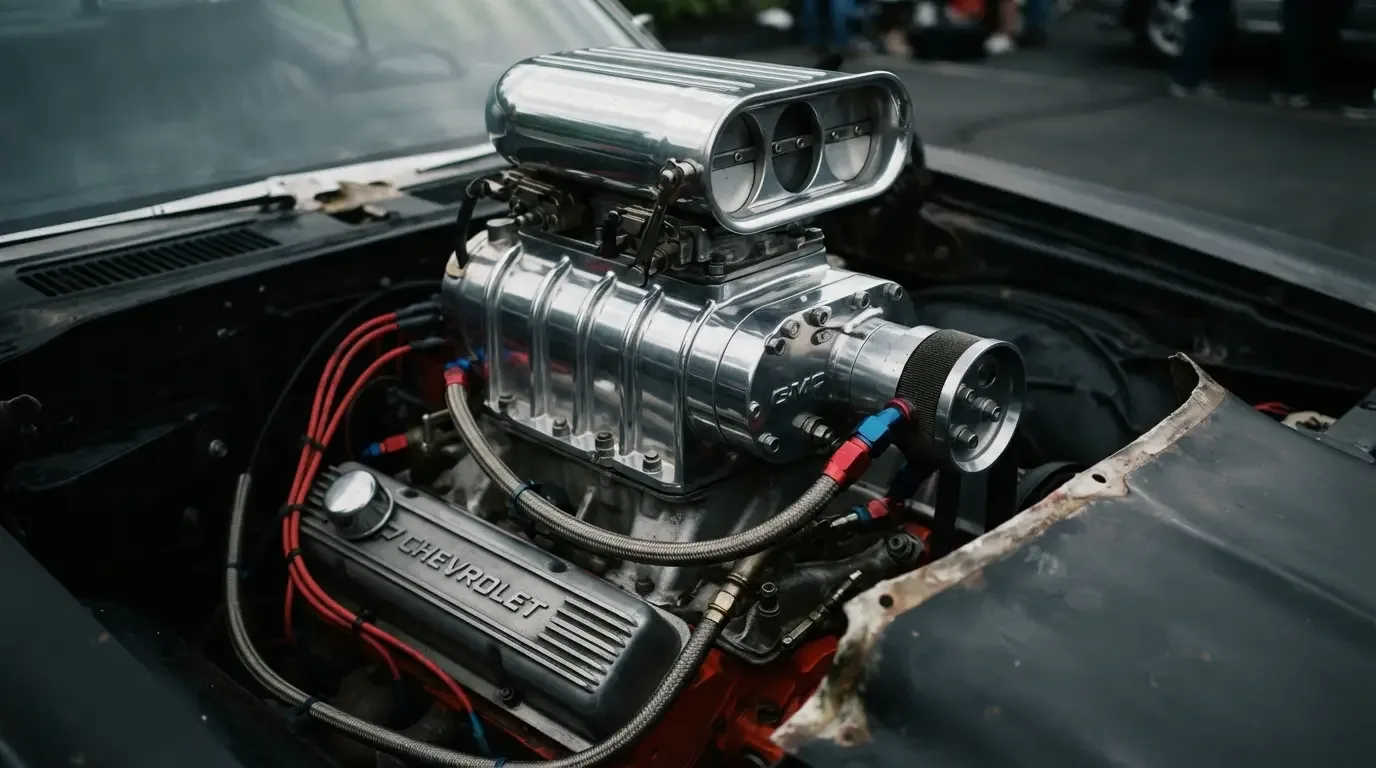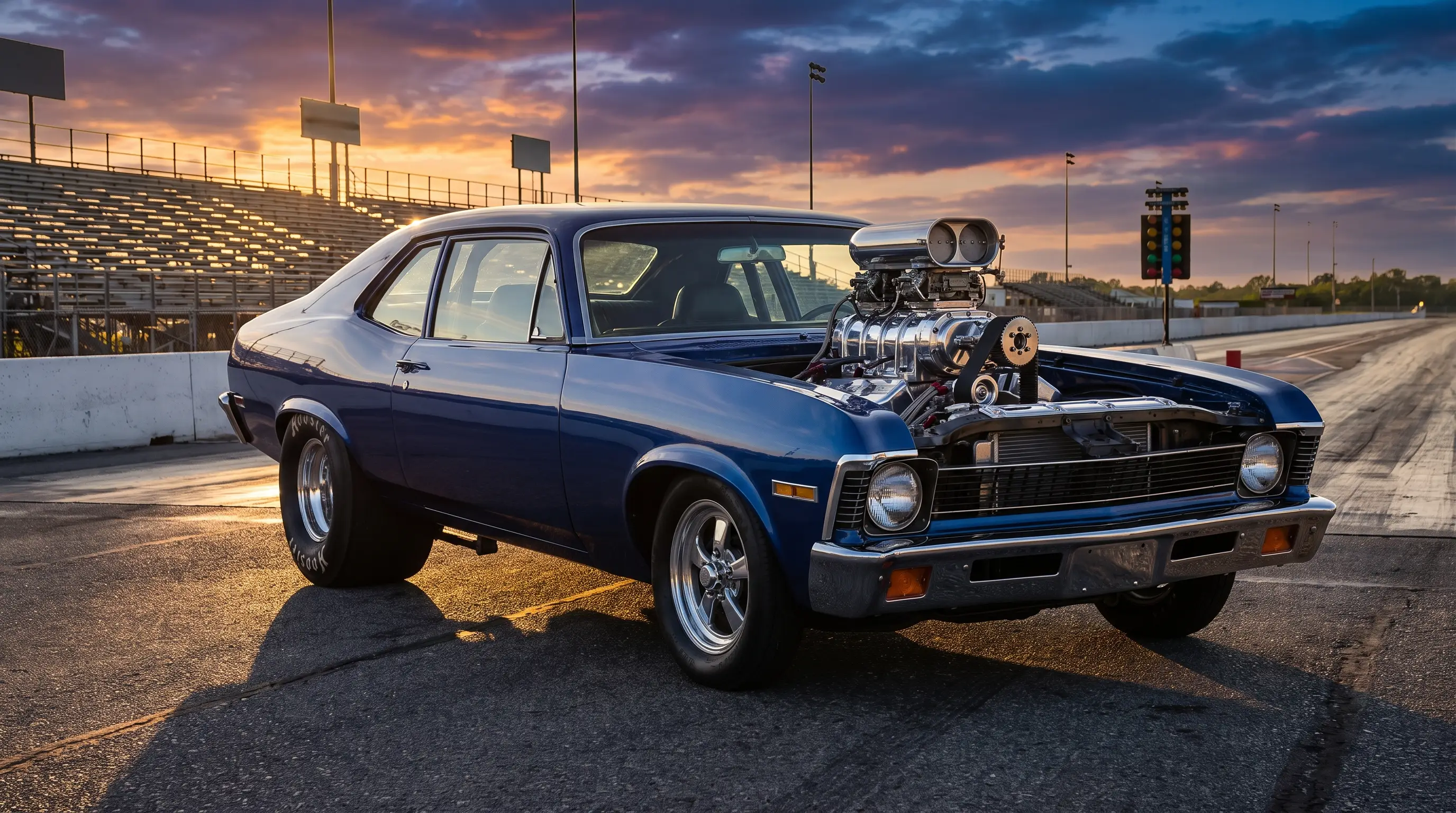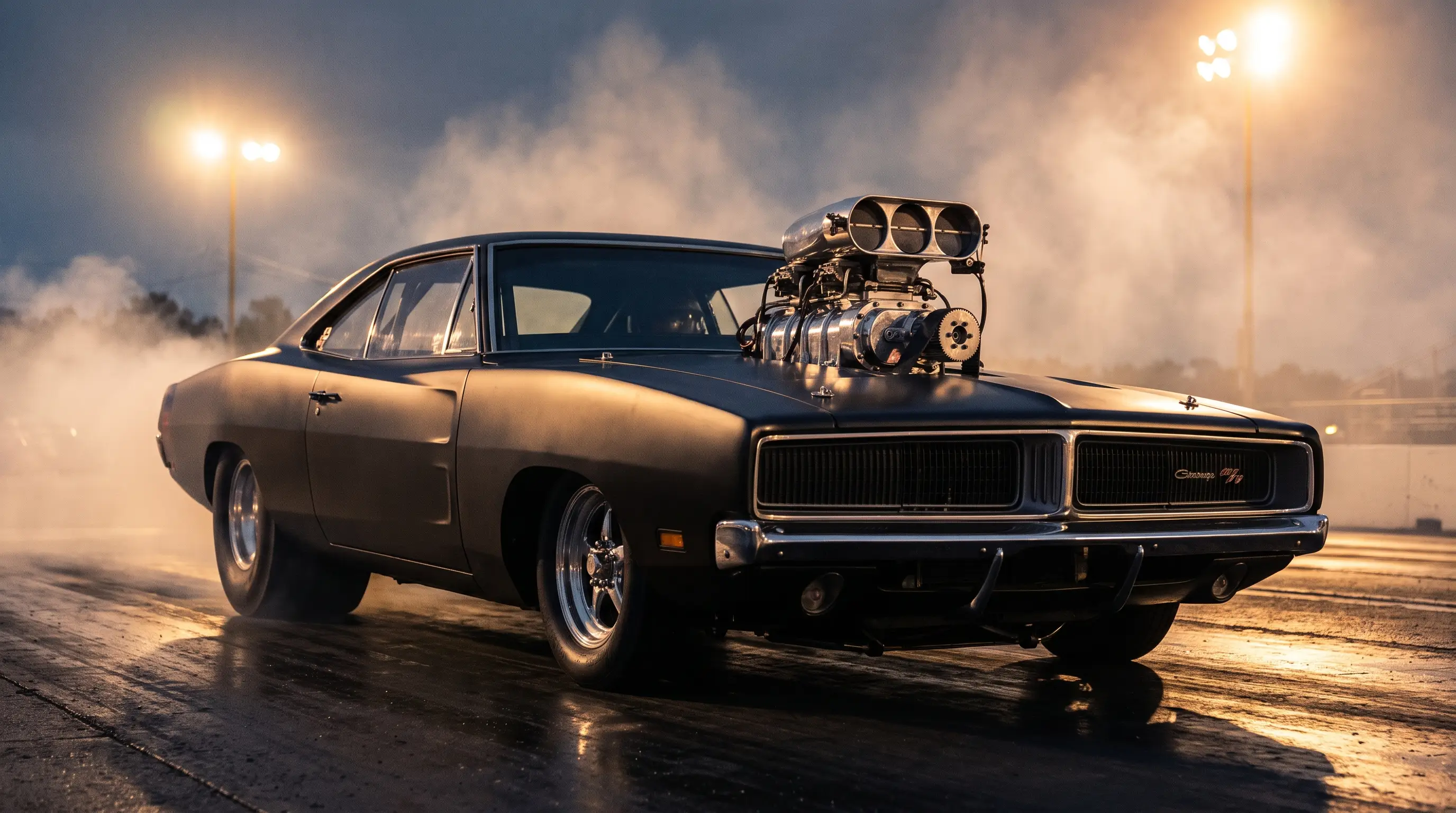
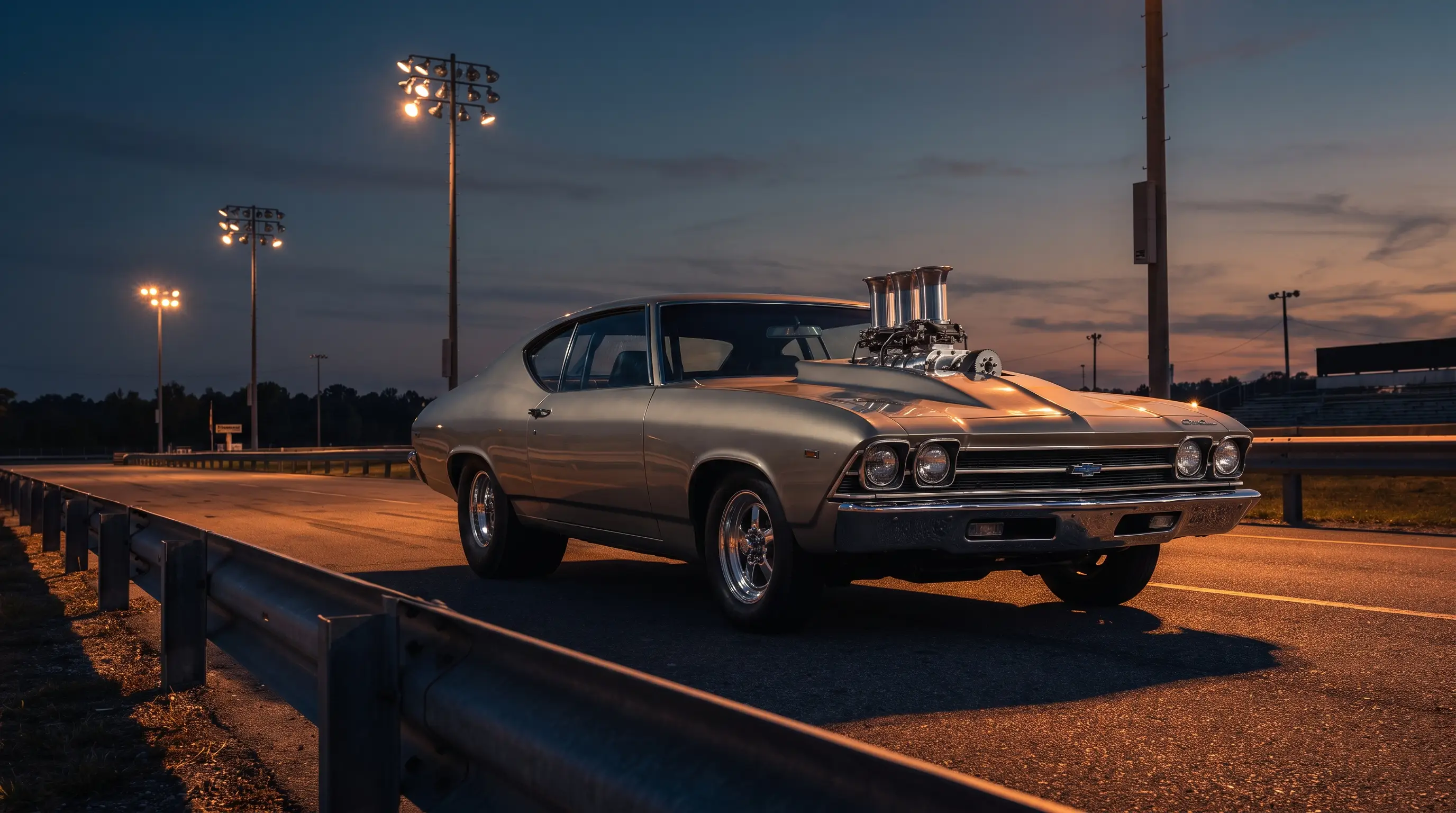
A blown 350 small block is the engine most people picture when they hear the words Pro Street, even though the small block Chevy was never the biggest or the meanest option on the menu. It was the most common one. Builders in the late 1970s and through the 1980s reached for the 350 because parts were everywhere, machine shops already knew the block inside and out, and a used one could be had for grocery money compared to a big block Chevy or a Mopar Hemi. Bolt a blower on top and that humble engine became the loudest thing in the pit lane.
Why the 350 became the default blower candidate
The 350 cubic inch small block was in millions of Camaros, Novas, Chevelles and trucks by the time Pro Street took off as a movement. That volume meant a builder on a budget could source a core engine, a set of aftermarket heads and a blower manifold without hunting for rare pieces. The bore spacing and deck height of the small block also happened to suit the popular 6-71 and 8-71 style Roots blowers that were coming out of drag racing at the same time. A blown 350 was not the most powerful setup a Pro Street car could run, but it was the most repeatable one, and repeatable mattered when a builder was working nights and weekends in a home garage.
Displacement alone tells only part of the story. Builders stroked plenty of 350s out to 383 or 406 cubic inches using aftermarket cranks and rods, chasing more area under the boost curve without moving to a heavier big block architecture. A stroked and blown small block could make numbers that embarrassed a stock big block, and it did so while keeping the front end lighter, which mattered on a car that already carried a tubbed rear end and a full cage.
What made the blower setup work on the street
A Roots-style supercharger forces air into the cylinders ahead of demand, and on a small block that meant real gains even at modest boost levels. Most street-driven blown 350s ran somewhere in the 6 to 10 psi range on pump gas or a mild race gas blend, which kept detonation manageable while still adding a substantial jump in output. Something in the neighborhood of 400 to 500 horsepower is a range that gets thrown around for a mild blown 350 street combination, though actual output varied enormously with cam timing, compression and blower pulley ratio.
Fuel delivery was the other half of the equation. Early builds ran mechanical fuel injection borrowed from drag racing, while budget builds leaned on a blow-through carburetor setup under a scoop. Neither was gentle to drive, and that was part of the appeal. A blown small block idled with a lope that announced itself before the car ever moved, and that sound became as much a part of the Pro Street identity as the tubbed rear tires.
| Element | Typical range on a street blown 350 |
|---|---|
| Displacement | 350 to 406 cubic inches (stock bore or stroked) |
| Blower style | 6-71 or 8-71 Roots, belt driven off the crank |
| Boost level | Roughly 6 to 10 psi on street fuel |
| Fuel system | Blow-through carburetor or mechanical injection |
| Compression | Lowered from stock to suit boost, often 8.5 to 9.5:1 |
Living with a blown 350 in a street car
Boosted small blocks are unforgiving of neglect. Ignition timing has to be conservative, fuel pressure has to be steady under load, and the drivetrain behind the engine has to be built to survive a torque spike that a naturally aspirated 350 would never produce. Clutches wore fast, transmissions got upgraded internals, and rear ends went from stock ten bolt housings to narrowed nine inch units that could handle both the power and the wider tubbed tires a Pro Street car needed to put it down.
None of that discouraged builders. If anything, the maintenance became part of the culture. Weekend work on the blower drive belt, the fuel system and the ignition curve was as expected as washing the car. Owners who wanted to read the background on where the whole supercharged Pro Street idea came from will find that the small block story sits right in the middle of it, since the 350 was the engine that put a blower within reach of an ordinary builder rather than a well-funded drag team.
"The 350 was never the biggest number on paper, but it was the engine everybody could actually finish building. That counts for more than peak horsepower when you are the one paying for parts."
- Emily Chen
Parts availability kept the 350 dominant for decades
One reason the blown 350 stayed the default choice for so long after Pro Street's peak years is that the aftermarket never stopped supporting it. Companies that built blower kits, manifolds and fuel systems for small block Chevy engines in the 1980s largely stayed in business, and their catalogs expanded rather than shrank as the platform kept selling. A builder restoring or recreating a blown 350 Pro Street car today has an easier time sourcing correct parts than someone chasing a similar build around a rarer engine family, simply because the small block Chevy never went out of production support the way some big block and Mopar options eventually did.
That continued support also shaped resale value. A blown 350 Pro Street car with documentation showing period-correct parts, receipts, and a clear boost history tends to command a premium over a car with an unknown or undocumented combination, even when the undocumented car claims higher output. Buyers in this segment of the hobby have learned to value paperwork and provenance nearly as much as raw numbers, since a small block with an unclear history carries real risk of hidden problems under the intake.
The blown 350's place in Pro Street history
By the mid 1980s the blown small block Chevy had become something close to a house style for the movement. Magazine covers featured Novas and Camaros with polished blower cases poking through hood scoops, and the visual language of Pro Street, huge rear tires, narrow front tires, and a supercharger on top, was built as much around the small block as any single big block combination. Later builds pushed toward big block power and modern EFI, but the blown 350 remains the entry point most enthusiasts associate with the era.
Collectors today value original blown small block Pro Street cars for exactly that reason. A period-correct 350 with a period-correct blower carries a story that a modern crate engine swap cannot replicate, even if the crate engine makes more power with less fuss. For buyers chasing that history, listings that find a classic Pro Street car often turn up small block builds first, simply because there were so many more of them built than any other configuration.
A blown 350 small block is not the fastest way to build power in a Pro Street car, and it never was. It is the version of the story that the most people actually lived, which is why it still defines the look and the sound of the movement for a lot of enthusiasts decades later.