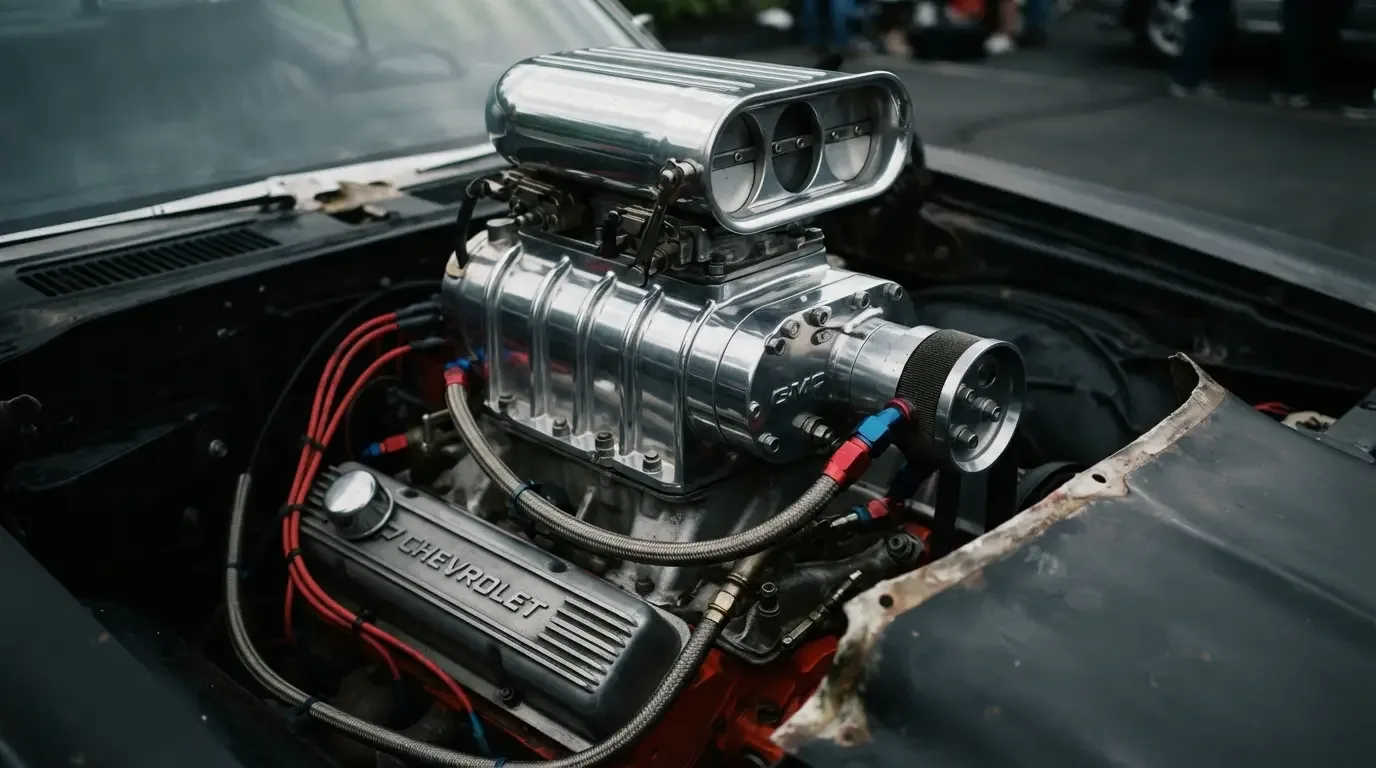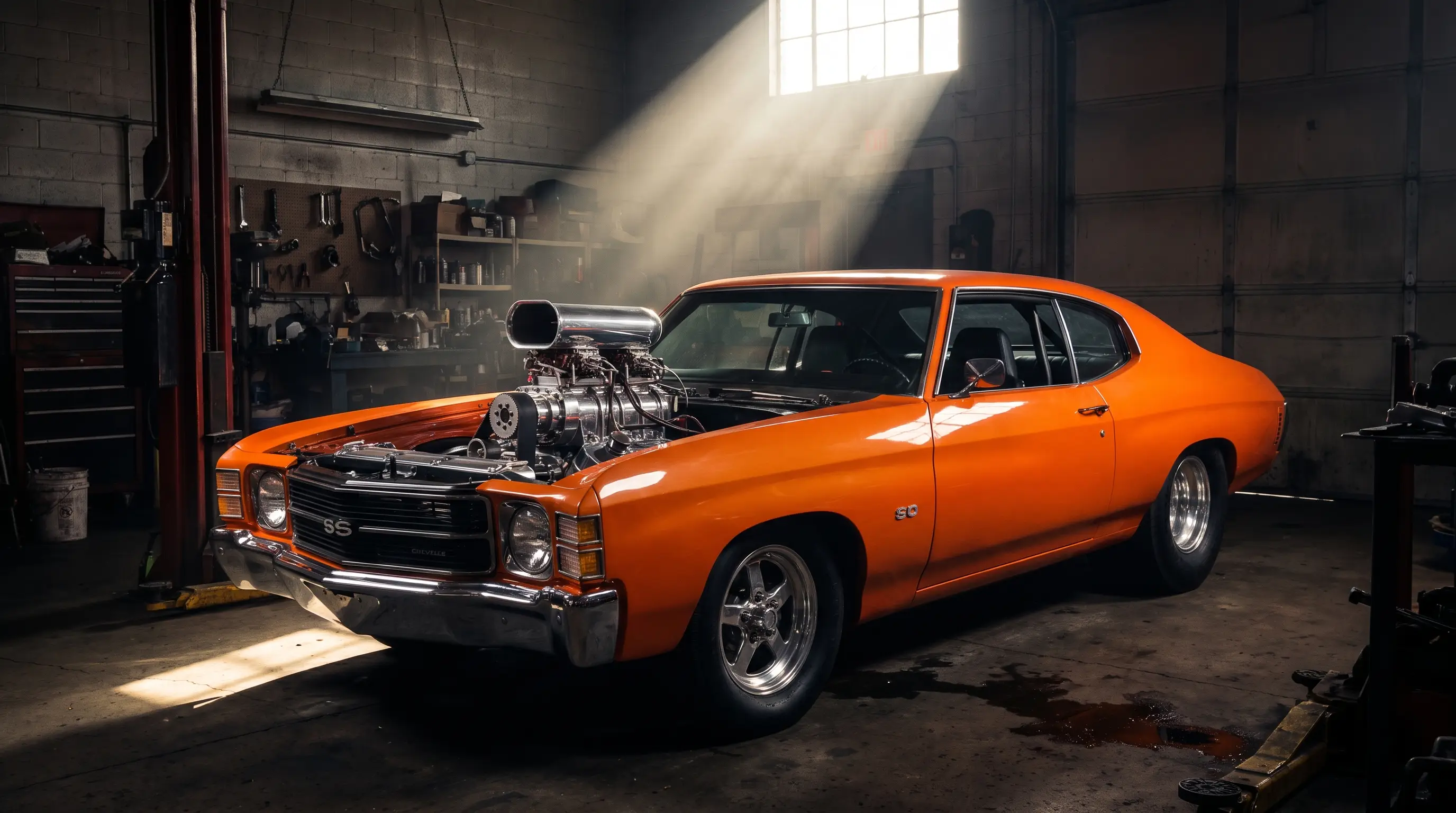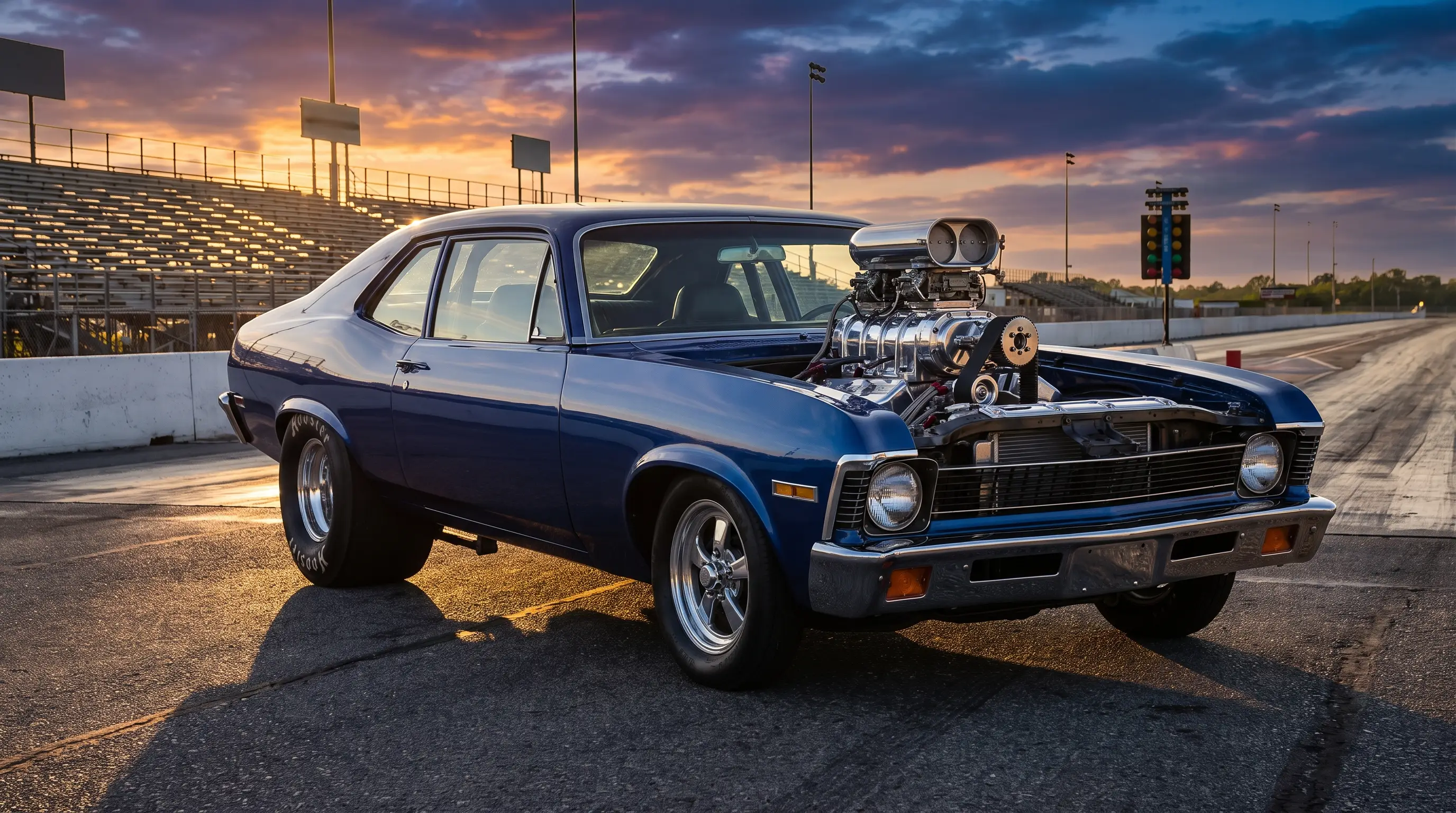
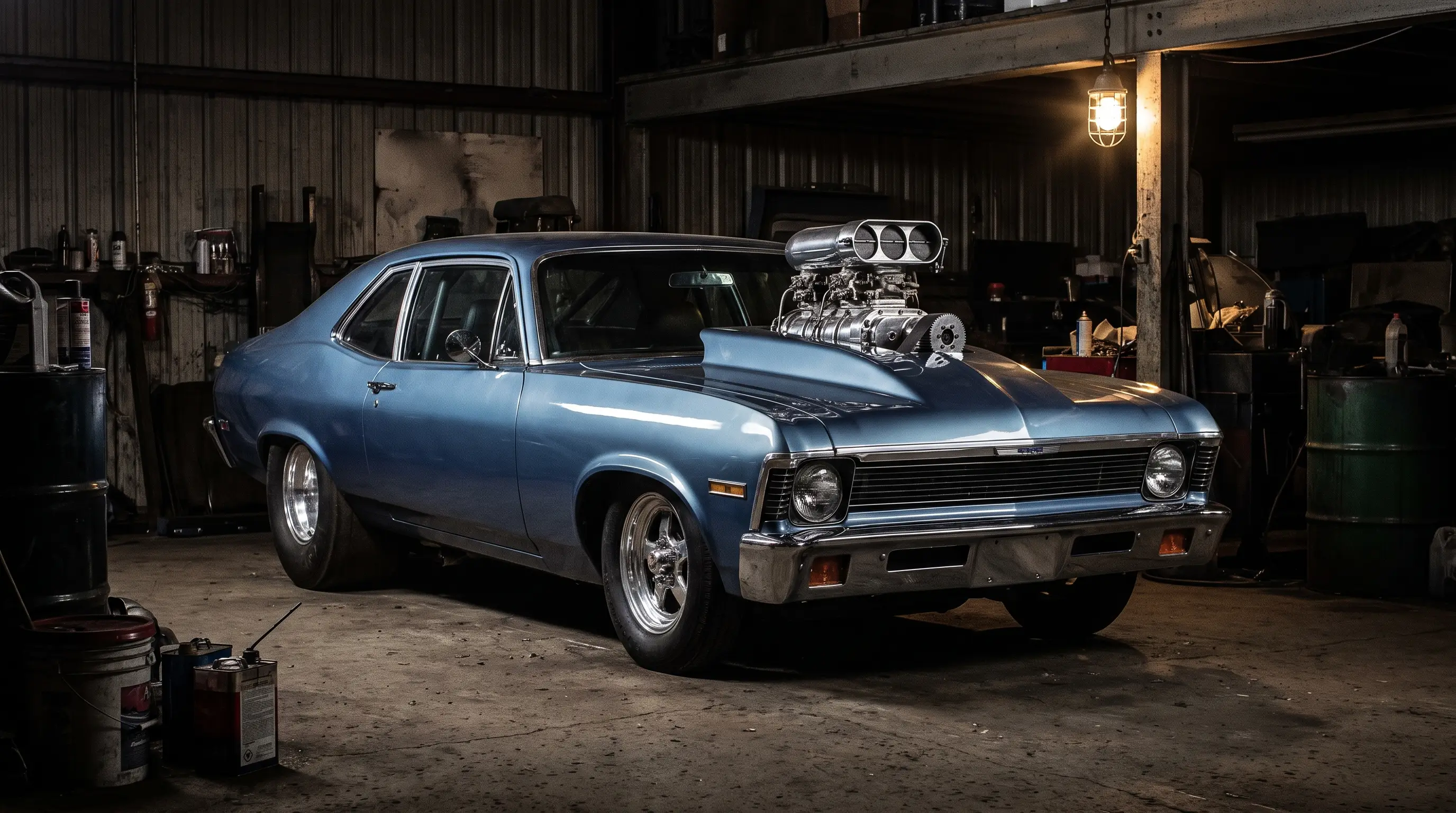
Pro Street big block engines are the reason the movement's cars look the way they do. The tubbed rear wheel wells, the cut hoods, the reinforced chassis, all of it exists to support the kind of displacement and power that only a big-block could reliably deliver in an era before aftermarket small-block technology closed the gap.
Why displacement won out over cleverness
In the late 1970s and early 1980s, when Pro Street was taking shape, the fastest path to serious horsepower was simply more cubic inches. Aftermarket cylinder heads, forged internals, and electronic fuel injection for small-blocks existed but were nowhere near as developed or affordable as they would become decades later. A big-block starting at 396 or 402 cubic inches and often built out to 454 or beyond gave builders a head start on power that a small-block of the same era could only match with far more expensive and exotic modifications. For a Pro Street builder working with a home garage budget, a stock-based big-block with a blower bolted on top was simply the more reliable path to the horsepower the whole movement was chasing.
The specific engines that defined the era
Chevrolet's big-block family, running from the 396 up through the 454, became the most common Pro Street foundation, largely because GM built so many of them that used cores were cheap and plentiful, and the aftermarket support for blocks, heads, and internals was more developed than for competing brands. Mopar's 440 wedge and 426 Hemi carried real prestige among Pro Street builders working Chrysler-based cars, the Hemi in particular commanding serious respect even in a scene where nearly everything was already loud and aggressive. Ford's 429 and 460 big-blocks saw use too, though Ford-based Pro Street builds were always a smaller slice of the scene compared to the Chevy and Mopar-dominated majority.
| Engine family | Common displacement | Typical role in Pro Street |
|---|---|---|
| Chevrolet big-block | 396-454 ci | Most common foundation, cheap cores, deep aftermarket |
| Mopar wedge/Hemi | 440-426 ci | High-prestige builds, especially in Mopar A/B-body cars |
| Ford FE/385-series | 429-460 ci | Less common, used mainly in Ford-based platforms |
What building a big-block for Pro Street duty actually meant
A big-block destined for blower duty needed more than displacement. Builders typically upgraded to forged pistons and stronger connecting rods to handle the cylinder pressure a blower creates, since a factory cast rotating assembly was never designed for boosted operation. Head gaskets, ARP fasteners, and a properly matched fuel system all became part of the standard build sheet once a blower entered the picture. None of this is restoration work in the traditional sense, it is closer to a wholesale reengineering of a factory engine into something built specifically to survive forced induction on the street rather than just look tough sitting in a driveway.
"A stock big-block under a blower is a countdown timer. The real builders understood that the block was just a starting point, not a finished product."
- Emily Chen
Sourcing and rebuilding a big-block on a real budget
Finding a usable big-block core was rarely the hard part in the 1970s and 1980s, given how many GM, Mopar, and Ford full-size cars and trucks were still being scrapped every year with these engines inside them. The real cost came in the machine work and parts needed to turn a tired, high-mileage core into something capable of surviving boosted operation. Boring, honing, line honing the main caps, and balancing the rotating assembly were standard steps regardless of whether the builder planned to keep the internals mostly stock or go fully forged. Machine shops that specialized in performance big-block work became valued local resources within the Pro Street community, the kind of shop where a builder might wait weeks for a slot simply because the quality of the work was worth the delay.
Budget realities meant plenty of builders phased their engine work over months or years, running a stock-based combination at moderate boost while saving toward forged internals and a bigger blower down the line. That incremental approach, building toward a final specification rather than assembling everything at once, was common enough that it shaped how the aftermarket sold parts, with many companies offering upgrade paths specifically designed to bolt onto an existing stock-based combination rather than requiring a complete teardown to install.
How chassis and driveline had to catch up to the engine
A big-block making serious boosted power created problems well beyond the engine bay itself. Factory frame rails, suspension mounts, and transmissions were never engineered for the torque a blown 454 could produce, which is why a proper Pro Street big-block build almost always came paired with a reinforced chassis, a stronger driveshaft, and a heavy-duty transmission built specifically to survive the power rather than a stock unit pressed into service beyond its limits. Builders who skipped this step and simply dropped a built big-block into an otherwise stock chassis often learned the hard way, usually through a broken driveshaft or a cracked frame rail, that the engine was never really the weak link once it was built correctly.
That interdependence between engine and chassis is part of why a genuine Pro Street big-block build represented such a serious commitment of time and money. It was never just an engine swap. It was a wholesale reengineering of the car around the power the engine was capable of producing, and that reality shaped nearly every other decision a builder made, from tire size down to which transmission cooler to run.
The lasting influence on how these cars are valued today
Today, the specific big-block under the hood of a surviving Pro Street car carries real weight with collectors, particularly when it is the numbers-matching or period-correct engine rather than a later replacement. A documented 454 with an original blower setup tells a more complete story than an unverified claim about what used to be there. Buyers evaluating a Pro Street car should always ask for build documentation on the engine specifically, since a big-block swap is common enough in this scene that assuming originality without paperwork is a mistake. The full story on how blowers paired with these big-blocks covers the mechanical side of that relationship in more depth.
Anyone shopping for a car with one of these engines intact and documented can browse classic Pro Street car listings, where the engine bay photos alone usually tell you within seconds whether a build was done properly or assembled for looks. The difference between the two is rarely subtle once you know what to look for.
Condition of the block itself, not just the parts bolted to it, is worth checking closely on any car being evaluated today. A big-block that has sat with boost applied for decades can show wear in places a casual inspection misses, and a seller who can produce machine shop receipts or a rebuild history alongside the car is offering something more valuable than a fresh coat of paint over an engine bay nobody has actually opened up in years.
Sources and notes
- Big-Block Engine Timeline - Chevrolet Performance Parts
- Pro Street: A Look Back At The Bow-Tie Style That Never Gets Old - Chevy Hardcore
- The Chevy 454 Engine: The Big Block That Defined an Era - Autoblog
- Blown Away: 6-71 Big Block - Street Muscle Mag
- A Quick History of the GMC 6-71 Blower - Mac's Motor City Garage