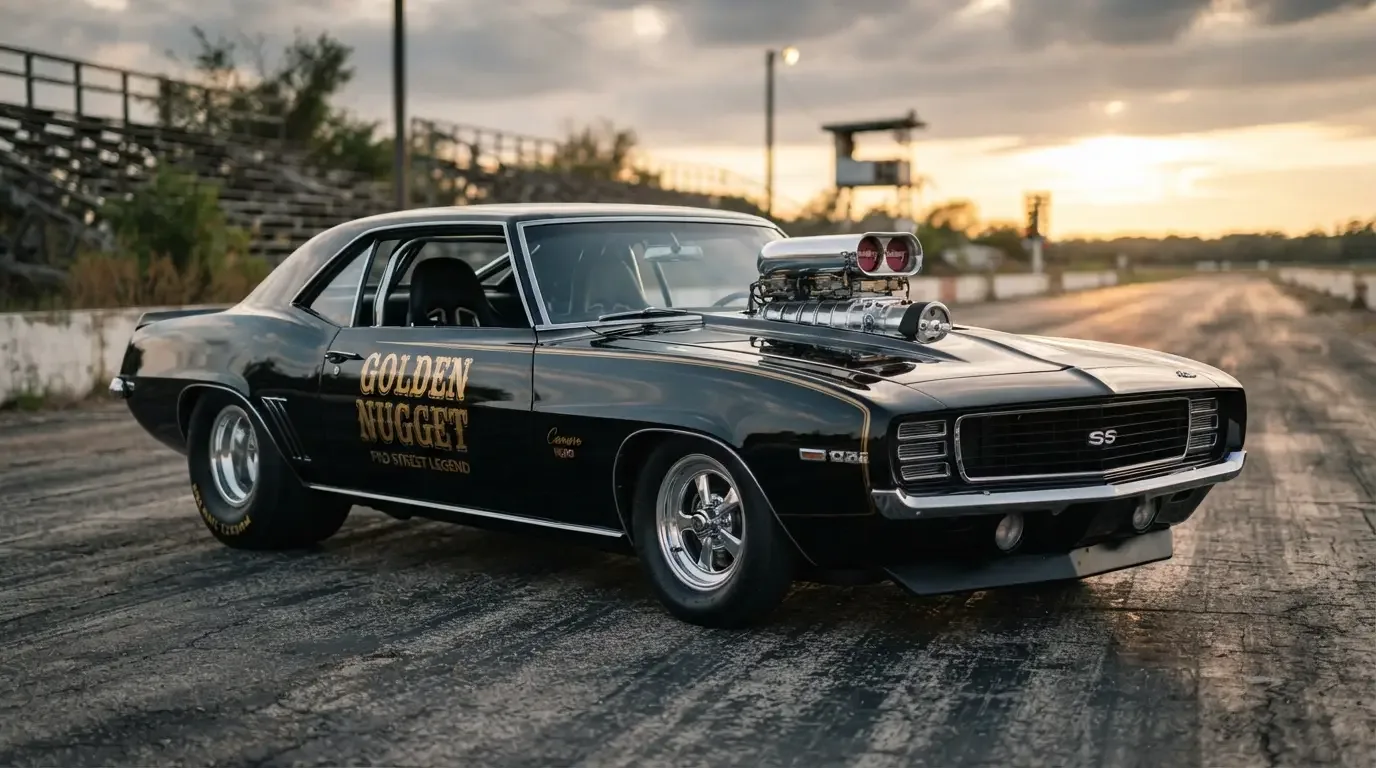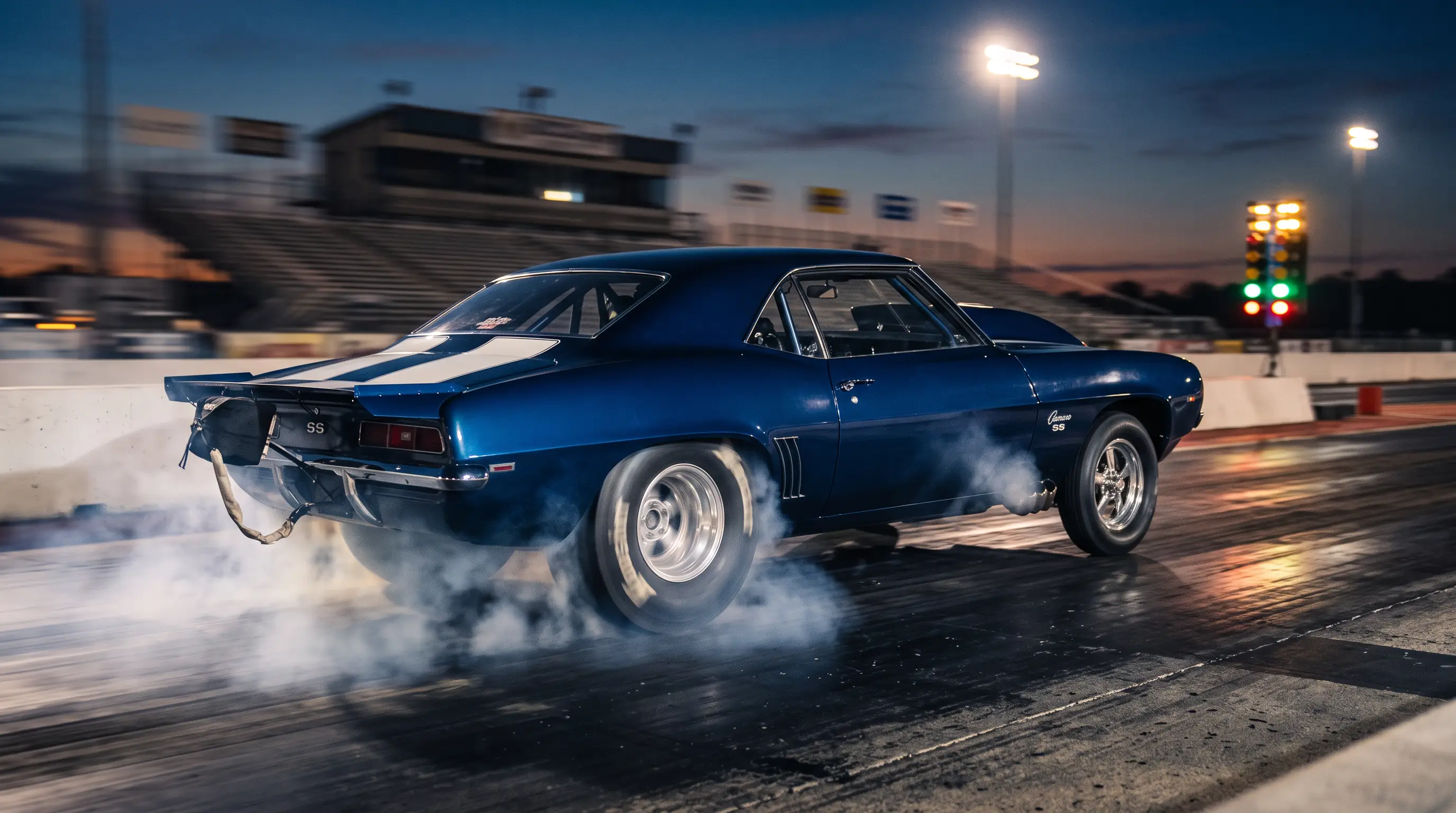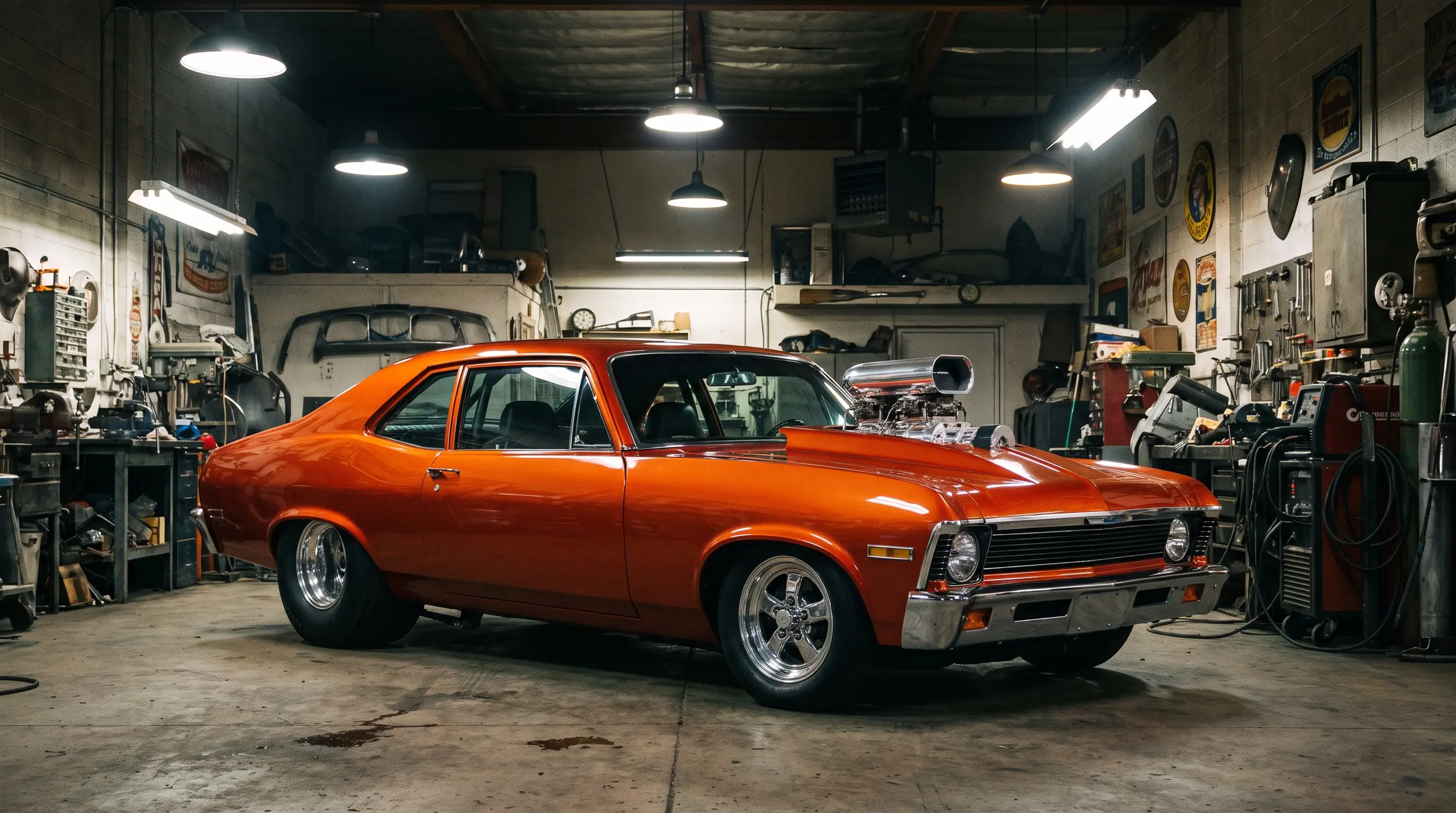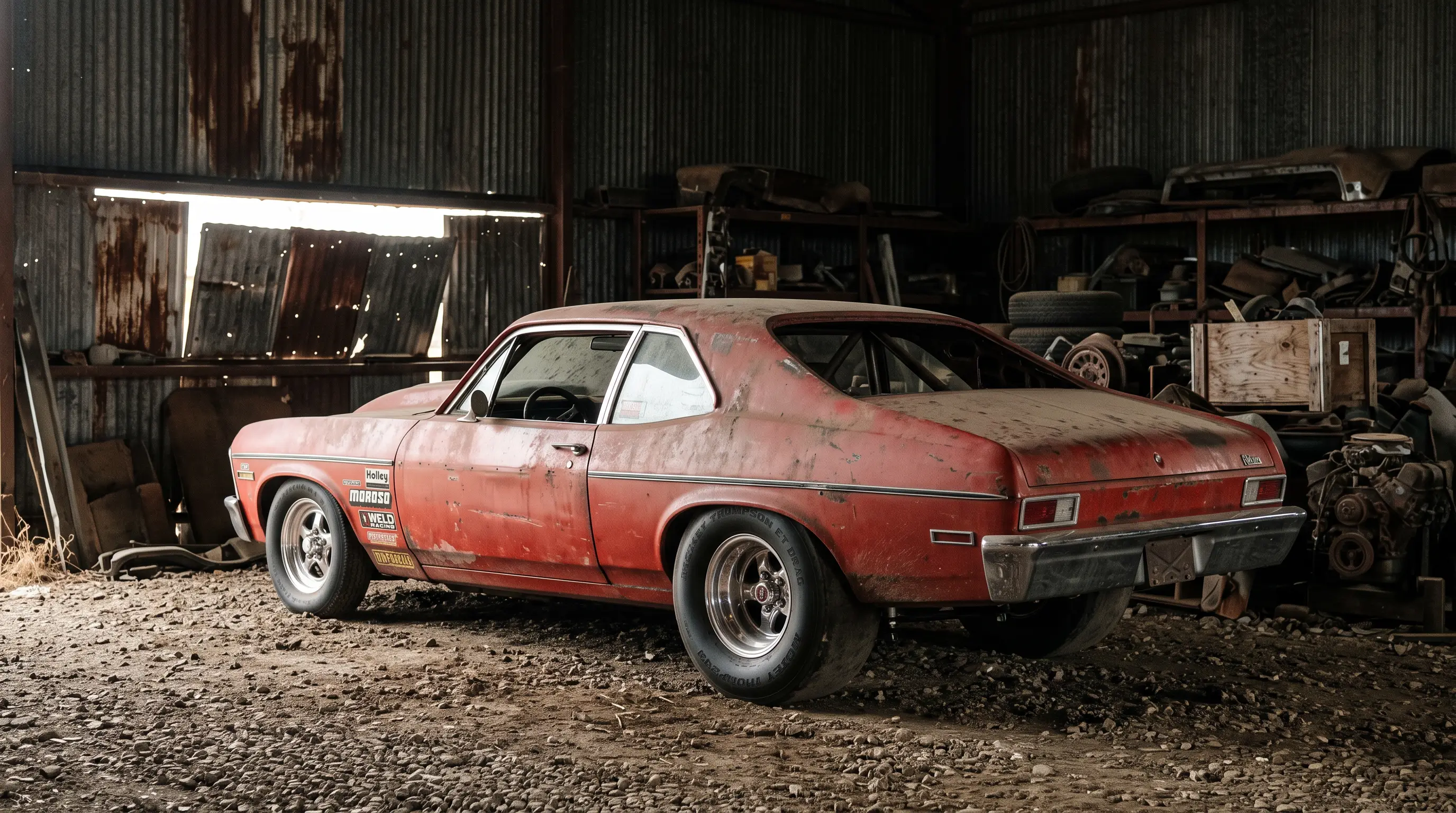
Every kid who had a Pro Street poster on their bedroom wall in the 1980s eventually grew up and started asking the same question: whatever happened to that car? It's a fair question, and the answer for most of the era's famous builds is messier and more human than anyone expects. Cars don't get preserved by accident. Somebody has to want to save them, at a moment when almost nobody else does, and for a lot of the most photographed Pro Street builds of the decade, that moment came and went before the market caught up.
Why so many famous cars simply vanished
The Pro Street boom cooled off fast once the 1990s got underway. Tastes shifted toward different builds, different classes, different magazine covers, and the tubbed-rear-end look that had defined a decade of drag strips and cruise nights started to feel dated to a new generation of builders. Cars that had been famous just a few years earlier suddenly weren't worth much to anyone outside a small circle of die-hards, and a lot of owners made the practical choice. They sold the drivetrain, sold the wheels, and either parted the body out or quietly converted the car back toward something closer to stock, because a stock-ish muscle car held more resale value in that market than a tubbed one did.
Rick Dobbertin's Pontiac J-2000, the 1986 Hot Rod of the Year and one of the most photographed Pro Street cars ever built, is a case in point even though it beat the odds. Dobbertin eventually sold it, and the car disappeared from public view for years before collectors Matt and Debbie Hay tracked it down and acquired it in 2023 with plans to restore it and put it back on display. That the single most famous Pro Street car of the era still took over a decade out of sight before resurfacing says something about how thoroughly even the biggest names in the class could vanish from view. That pattern repeated across the country. A car that had drawn a crowd at a regional show in 1986 could be sitting disassembled in a back corner of a shop by 1994, its parts scattered across three or four different buyers who had no idea what they'd actually bought pieces of.
The economics that drove the disappearing act
None of this happened out of carelessness. It happened because the numbers stopped making sense for a lot of owners. A tubbed, race-prepped muscle car that had cost a builder years of work and a serious investment in parts and labor was, by the early 1990s, often worth less on the open market than a comparable stock example in good condition, simply because buyer demand had shifted. Faced with that math, plenty of owners made the rational financial decision even though it meant breaking up a car that had once drawn crowds. Nobody was thinking about future collector value in a market that was actively moving in the opposite direction at the time.
That's the part of the story that gets lost when people romanticize the era in hindsight. The decisions that scattered so many famous builds weren't made by people who didn't care about the cars. They were made by people responding rationally to a market that had turned against them, at a moment when nobody could have predicted that same market would eventually swing back the other way.
The ones that did survive, and how
The cars that made it through intact usually had one thing in common: an owner who refused to sell for practical reasons, holding onto the build out of attachment rather than any expectation the market would eventually reward the decision. Some sat in storage for a decade or more, untouched, waiting for a Pro Street revival that nobody could have predicted when the car first got parked. Others stayed in active use the whole time, driven and maintained by owners who never stopped caring what the car represented even after the rest of the scene moved on to other trends.
| Fate | How common it was |
|---|---|
| Parted out or converted back toward stock | The most common outcome once Pro Street's popularity declined in the 1990s |
| Stored, untouched, for a decade or more | Less common, but the source of most surviving unrestored examples today |
| Kept in active use by an original or dedicated owner | Rare, and the source of the best-documented surviving cars |
The paper trail that made or broke a restoration
When a surviving car finally did resurface, the difference between a straightforward restoration and a years-long guessing game usually came down to documentation. Owners who had kept old magazine features, dyno sheets, photographs from the car's original build, or even just a stack of receipts from the shop that originally tubbed the rear end gave a future restorer something solid to work from. Cars that surfaced with none of that history attached required a much harder kind of detective work, cross-referencing period photographs, talking to anyone who might remember seeing the car at a specific show, and sometimes accepting that certain details of the original build would never be fully confirmed.
That gap in documentation is a big part of why some famous cars command such a premium over otherwise comparable builds. It's not just the car itself buyers are paying for. It's the certainty that comes with a verified history, the kind that lets a new owner say with confidence exactly what they own and exactly where it's been for the past forty years.
The revival that gave some of these cars a second life
Collector interest in Pro Street started climbing again in the 2010s, as the generation that grew up with these cars on their bedroom walls reached the point in life where they could afford to chase the real thing. That renewed interest sent a handful of long-stored survivors back into the spotlight, sometimes restored to their original specification, sometimes preserved exactly as they sat for twenty years, dust and all. It also created a market for tribute builds, recreations of famous cars whose originals had been lost to the parts bin years earlier, which tells you something about how much affection the era still commands even when the actual hardware didn't survive.
That revived appetite is part of a longer arc covered in famous pro street cars history, which traces how the movement's best-known builds fared across the decades. The builders who kept working through the lean years and into the revival get their own treatment in a related story, which fills in how the craft itself carried forward even when the market for it went quiet.
What the survivors are worth now
Documented, original Pro Street cars from famous 1980s builds command real money today, when they surface at all, precisely because so few made it through the lean decade intact. Collectors are paying for scarcity as much as for the car itself, and a build with a verifiable period history is worth substantially more than a well-executed modern recreation of the same look. If you're chasing a piece of this era for your own collection, whether an original survivor or a well-documented period-correct build, you can Pro Street cars for sale now to see what's currently on the market.
The honest answer to what happened to most famous 80s Pro Street cars is that they disappeared the way most cars from any faded trend disappear, quietly, piece by piece, sold to people who needed the money more than they needed the memory. The handful that survived did so almost entirely because somebody refused to let go.
"I talked to a guy who'd kept his car in a barn for almost fifteen years, past the point when anyone would have blamed him for selling it for parts. When he finally rolled it back out, half the people at the show didn't believe it was the same car they remembered."
- Patrick Walsh